

























Warmer days are finally coming and after being stuck inside the house all winter, it’s time to put on those gardening gloves and head outside to start sprucing up the yard. But the big question is: Where to start?
RiverheadLOCAL recently spoke to several professionals who offered spring cleaning tips to help homeowners get their yards ready for spring and summer.
The best place to get started, said Nancy Orientale, manager of South Side Landscape in Southold, is the lawn, where homeowners should look to clean up debris.
“We have had a lot of storms over the winter and you want to pick up all the sticks and branches that will get stuck in your lawnmower,” she said.
 Cleaning up all the debris will also help ensure your lawn won’t rot, she said.
“It is basic common sense.”
Next, evaluate all the trees in your yard.
“The spring is a good time to do a little pre-storm work. Trim back trees that are too close to the house and check to see if any trees are rotting and need to come down. It will save a lot of future damage,” Orientale said.
With trees evaluated and trimmed, homeowners should begin to fertilize and lime their lawns, but not plant grass.
“You should only plant grass in the fall,” said Orientale. “There is only a very small window in the spring to put down grass seeds.”
Orientale explained that grass seeds like cool weather and spring’s weather is often inconsistent with cooler days, as well as hot 90-degree days. Not to mention, she said, the birds will eat at least half of any seeds that are put down.
Instead, she recommended taking a soil sample to Cornell Cooperative Extension, in Riverhead to find out what nutrients your grass needs to thrive. Click here for more information on how to use Cooperative Extension’s soil testing laboratory.
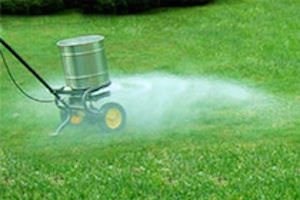 Soils on Long Island are naturally acidic, so adding lime to lawns and garden beds to raise pH is an annual spring ritual for legions of Long Islanders, says Bill Van Schaick, manager at Talmage Farm Agway in Riverhead.
“Most lawns and plants do well in soil pH between 6.5 and 7.0,” he said. “If the soil pH is in the correct range for what the plant prefers, all the nutrients both in the soil and from fertilizer that you add, will be more easily used by the plant.”
Talmage Farm Agway’s staff will do pH tests on soil samples brought in to their Osborn Avenue store. They also sell a soil test kit for under $6 so you can test your soil at home. Click here to read Van Schaick’s blog.
Chris Mohr, of Chris Mohr Lawncare and Landscaping in Cutchogue, also stressed the importance of testing soil before putting anything on your lawn, including fertilizer with crabgrass prevention.
“This is a good time to apply granular weed control, but lawns should get tested for pH. You don’t want your lawn too sweet or two sour.”
Mohr also recommended homeowners thatch their lawns if they haven’t in a while.
Thatching, said Mohr, is a process of removing all the dead grass.
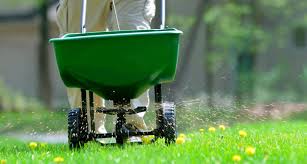 Fertilizer is something that must be applied judiciously, both to obtain the best results and to ensure you follow best management practices for protecting the drinking water aquifer and surface waters. Click here for more information on fertilizing your lawn.
With the lawn properly fertilized, Mohr and Orientale said homeowners should move on to work on garden beds by cleaning out debris, re-edging beds, fertilizing shrubs and perennials with spring fertilizer and, finally, add mulch.
While also in the garden, Robin Simmen, community horticultural specialist for Cornell Cooperative Extension, said homeowners should look to prune trees and shrubs.
“We are at the tail end of the good pruning season and it’s a great time to prune before the big burst of growth happens,” said Simmen.
Simmen also recommended paying close attention to gardens along the roadside this spring.
“Roadside gardens took a lot of abuse this winter from the salt spray from trucks,” said Simmen.
Homeowners should pull all the salt-laden mulch out of roadside gardens and flush out all the trees and roadside beds before laying down new mulch, Simmen said. Bu,t she warned, wait for a few shoots to pop up before adding new mulch.
With lawns and garden beds cleaned up, Simmen said homeowners should start looking forward to May planting.
The survival of local journalism depends on your support.
We are a small family-owned operation. You rely on us to stay informed, and we depend on you to make our work possible. Just a few dollars can help us continue to bring this important service to our community.
Support RiverheadLOCAL today.
