
















Turtles are coming out of hibernation and, as they’ve done for millions of years, will begin their search for mates.
This puts the reptiles, which are already in decline in New York, at risk of injury or death, especially as they cross local roadways, oblivious to vehicles — just as drivers are often oblivious to them.
Wildlife advocate Karen Testa, founder of Turtle Rescue of the Hamptons in Jamesport, is hoping the bright new signs appearing on local roads will raise motorists’ awareness and get them to slow down in areas where turtles are often in the roadway.
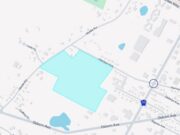
Turtles are usually active in areas where there are ponds or wetlands on both sides of the road — for example, in Riverhead on Osborn Avenue between Middle Road and Route 58. Turtles often become roadkill three and in numerous other “hot spots” in Riverhead and Southold towns.
Now, thanks to Testa’s persistence and the generosity of donors and town highway superintendents eager to help, there are bright new diamond-shaped signs going up on town roads in Riverhead and Southold — and in Southampton, Brookhaven and Babylon. The yellow and black signs urge drivers to be aware that turtles may be trying to cross the road.
The signs are being placed in areas where there is the highest turtle mortality rate, according to data collected by Testa over the 12 years since she founded the turtle rescue organization.

The Town of Riverhead has already placed a few signs on roads in Manorville near Swan Lake where turtles are active. And signs are going up on Osborne Avenue just north of the Riverhead Highway Department headquarters.
“There’s marshland near us and we are trying to help Karen because she has a good cause,” Riverhead Highway Superintendent Mike Zaleski said. “Unfortunately, people speed and they don’t always see turtles. We want to help.”
Andy Sabin, one of the founders of the South Fork History Museum, has been passionate about reptiles and amphibians, as he puts it, “since I caught my first frog when I was nine—so that’s 70 years!” Sabin arranged a meeting for Testa with the highway superintendents of the five towns. The meeting took place in November and, he said, “Everyone at the meeting was enthusiastic.”
Sabin paid for the materials and Ron Fisher of Fisher Signs & Shirts in Southampton produced the signs free of charge.
Testa gave the superintendents 20 signs each and a list of the roads with the highest turtle mortality rates.
Testa, Sabin and other wildlife advocates hope drivers will slow down when they see the new signs.
“A lot of people come out from the city and they’re not aware that turtles are crossing the road,” Sabin said. “Now when they see our turtle signs, they’ll look for them, hopefully. We’re trying to save all turtles,” he said.
Turtles tend to return to their home range, Sabin said. He encourages people to pick them up gently and put them on the side of the road in the direction that they are going. Sabin urged people to use caution, pointing out he’s almost been hit twice, stopping traffic to save turtles.
East Hampton has had wildlife crossing signs for a while and their roadkill rate is down, Sabin said. Brookhaven designed their own signs that are reflective and include the logo and phone number of Turtle Rescue of the Hamptons.
Testa said she tried for the past 12 years to get the State Department of Transportation to place the signs near “hot spots” on state roads, calling, faxing and emailing, to no avail.
“They kept denying me, saying the additional signs will be a hazard for drivers,” Testa said.
She got a completely different reaction from town highway officials.
“I hope our signs will make a difference,” Testa said. “I think people do slow down when they see deer crossing signs. Turtles are down on the ground and people in cars are texting so they’re not always looking,” she said.
The risks to turtles are increasing, she said because of habitat destruction.
“There’s nowhere for turtles to go. I’m so happy that the towns understand the importance of turtles to the ecosystem,” said Testa.
Turtles are keystone species, Testa said, meaning as their numbers dwindle, there’s a negative chain reaction affecting other native species.
Most of the species of land turtles native to New York are in decline, according to the State Department of Environmental Conservation.
Turtles are long-lived species and it takes many years for a turtle to reach maturity. Even losing one mature female can have a negative impact on a local population, the DEC says. It may take more than 10 years for a turtle to reach breeding age, and since they lay just one small clutch of eggs each year, the loss of a breeding female can have a significant effect on the local population, according to the DEC.
The agency said thousands of turtles are killed each year due to vehicle strikes as they migrate to their nesting areas.
Testa, a turtle surgeon, cares for more than 100 injured turtles at her turtke hospital and rehab center in Jamesport.
For information on what to do to help a turtle that’s trying to cross the road, visit the Turtle Rescue website.
Anyone that finds a distressed or injured turtle on the East End is urged to call Turtle Rescue at 631-779-3737.
The survival of local journalism depends on your support.
We are a small family-owned operation. You rely on us to stay informed, and we depend on you to make our work possible. Just a few dollars can help us continue to bring this important service to our community.
Support RiverheadLOCAL today.
