

























Two historic North Fork homes — one in Riverhead damaged by fire and another in Laurel undergoing extensive renovation — are being restored by owners determined to preserve pieces of the area’s architectural history.
In Riverhead, the Luce-Downs-Fenton House on Sound Avenue is being rebuilt after a devastating fire in August 2024. In Laurel, Patrick and Carrie Casey are renovating a 19th-century farmhouse on Main Road, working to preserve original details while updating the house for modern living.
The two projects stand in contrast to the fate of many older homes on the North Fork, where historic houses are often demolished, neglected beyond repair or replaced with new construction.
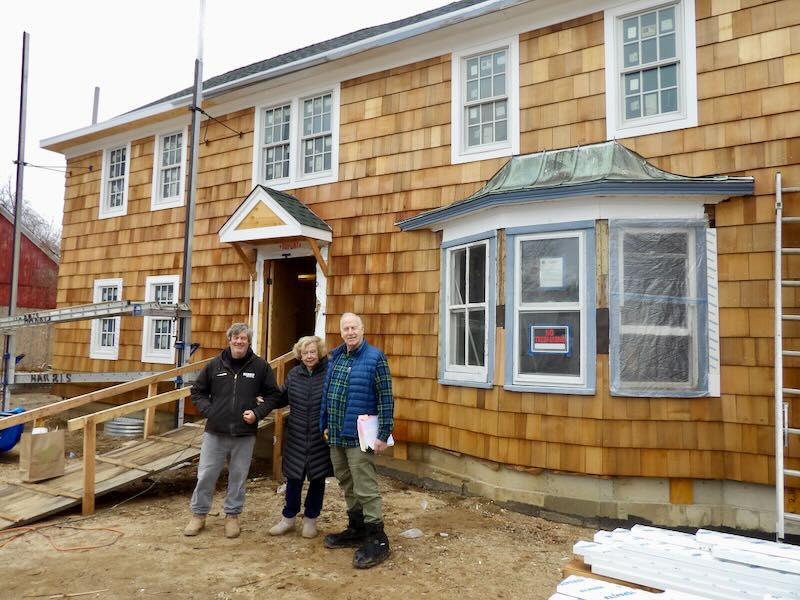
Built circa 1800, the Luce-Downs-Fenton House is about 225 years old and was designated a Town of Riverhead landmark in 1988. Owner Eileen Fenton said the fire broke out just over a month after the death of her husband, psychologist Neil Fenton.
“The fire started in the waiting room where Neil’s clients would sit before their appointment,” she said. “It took four hours to put it out. I was across the street sadly looking at my house on fire.”
Fenton said about 1,100 square feet of the 3,388-square-foot house was lost when the master bedroom collapsed into the first floor.
“It’s been difficult now making all of these decisions by myself,” she said.
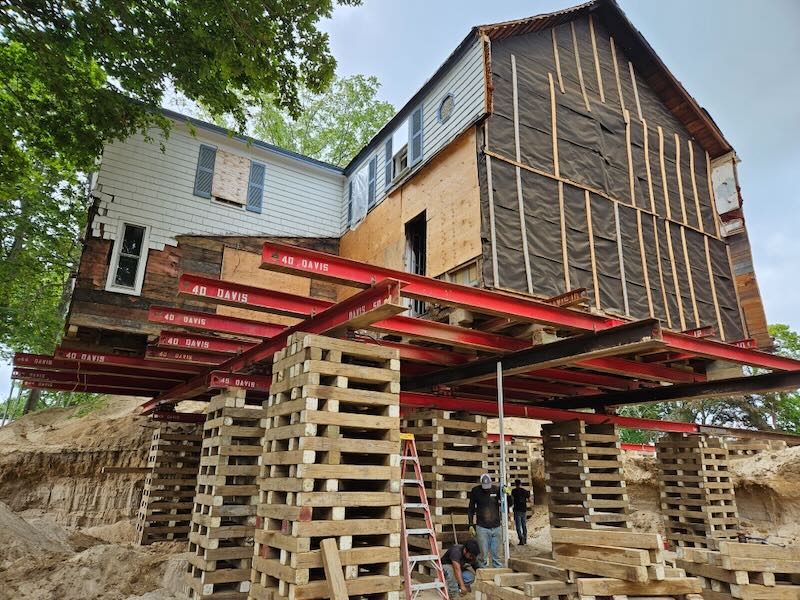
Before reconstruction began, Fenton chose to move the house farther back from Sound Avenue. Contractor Dave Harris of Harris Construction Inc. said the structure had to be stabilized, damaged interior sections demolished and a new foundation poured before rebuilding could begin.
“It was intricate,” Harris said. “It was slow and tedious.”
He said rotted beams and exterior walls were replaced one at a time. The siding, roof and 20 windows were removed before the house was reframed and the windows rehung. Of the home’s five chimneys, only one was lost in the fire, he said, and the demolition filled 20 dumpsters.
Harris said the work also revealed construction methods rarely seen today, including horsehair insulation. Fenton’s engineer and architect, Greg Llewellyn, said the restoration has included bringing back original features such as Yankee gutters and reusing stones from the old house in the new foundation.
“I love this house,” Llewellyn said. “We’re making it structurally sound and in another 200 years, someone else will be modernizing it.”
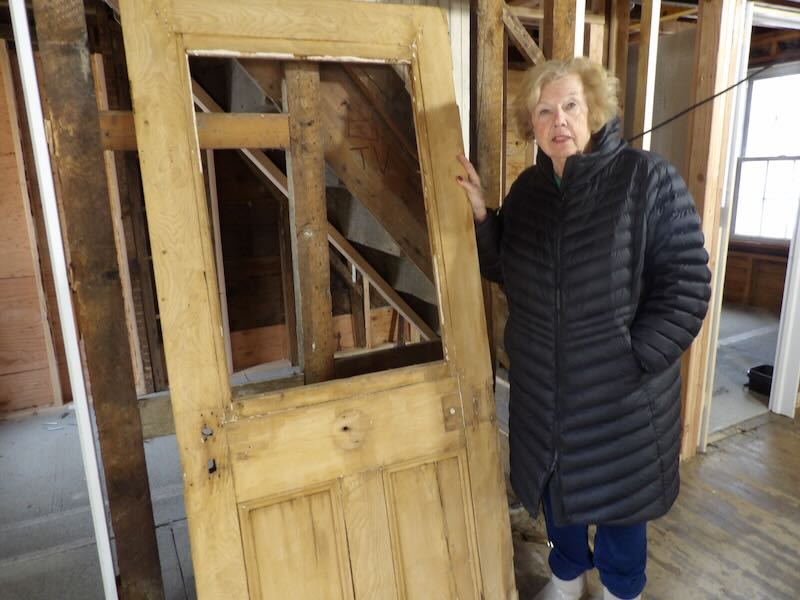
Fenton said one of the most meaningful pieces saved from the fire was the original front door, which is being stripped and restored by a company in New Jersey. Also preserved were the swing door between the kitchen and dining room, the front and back staircases, and curved windows made with what Llewellyn described as “wavy glass.”
The house’s long history is part of what makes the restoration significant, according to local historian Richard Wines, chair of the Town of Riverhead Landmark Preservation Commission.
“It was the kind of house everyone built at that time, the early 1800s,” Wines said. “It was a starter house.”
Wines said the house was originally built farther north, near Long Swamp, and was likely moved closer to Sound Avenue in the 1830s as the road became more important. In 1856, he said, John Luce sold the house to Nicoll Downs, whose family later expanded it. The house remained in the Downs family for 125 years before the Fentons bought it in 1977.
In an email, Wines said the commission’s goal is not to return the house to its earliest form, but to preserve as much of its pre-fire appearance as possible, especially defining exterior features such as rooflines, trim, windows and wood shingles.
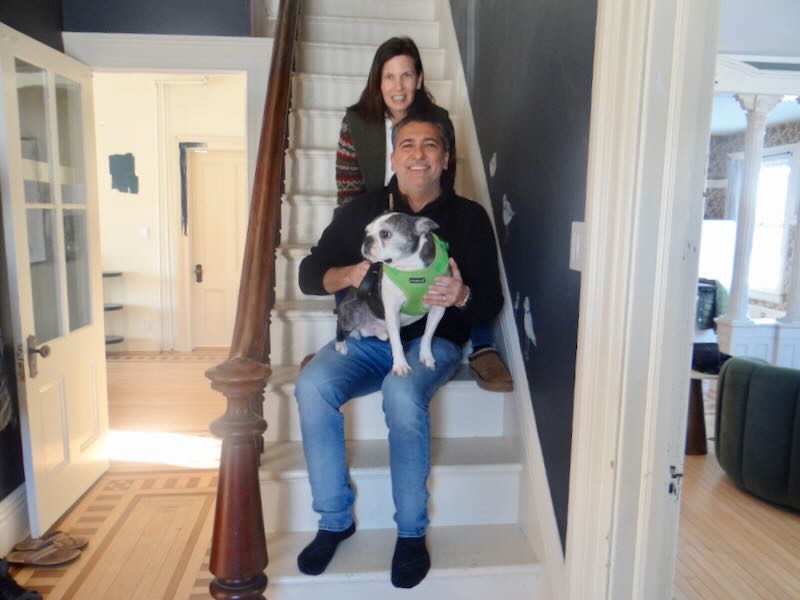
Less than four miles away, the Caseys are undertaking a similar preservation effort at their Laurel home.
The couple, who own a film production company in Manhattan, bought the house at 1982 Main Road in September 2025.
“When you see new farmhouses out here — the white ones with the black trim — they’re so cookie cutter,” Patrick Casey said. “That’s what makes me want to save this house.”
The house, distinguished by a two-story turret, was built in stages beginning in 1850 by members of the Skidmore family, according to Wines. In 1910, he said, the Penny family substantially rebuilt it, changing the roofline, adding the turret and more than doubling its size.
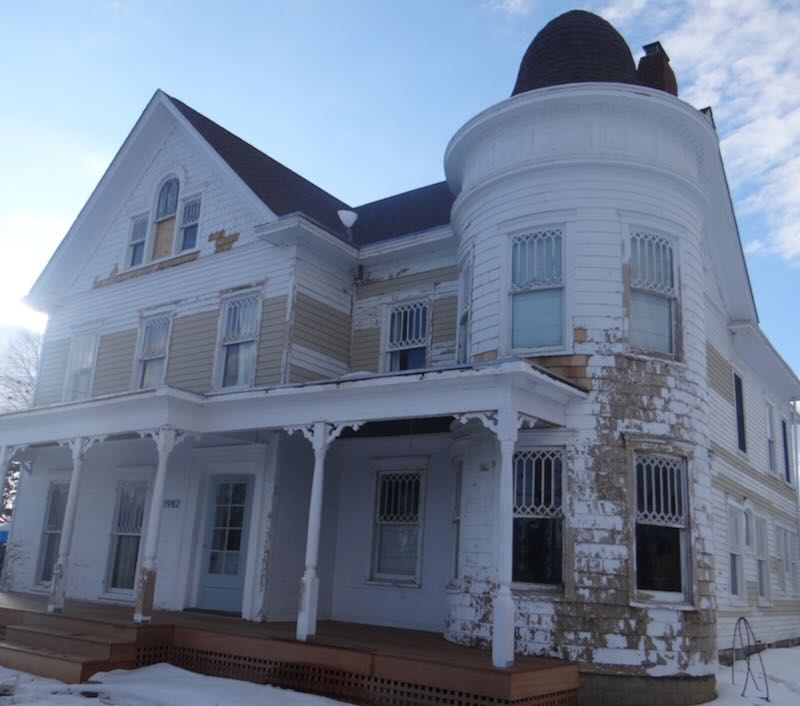
Inside, the original staircase remains the centerpiece. Outside, the Caseys rebuilt the front porch, replacing rotted wood and matching the original architectural details with the help of a custom woodworker. They also restored the flat roofs and replaced about half of the cedar shingles and siding.
Their focus now is on the interior.
“We are trying to keep the original details of the house without losing the charm,” Casey said.
He said all of the windows are original and that the pulleys have been replaced. The house’s Yankee gutters also had to be rebuilt to protect the structure.
In the east and west living rooms, carved floors with walnut inlay borders have been preserved, along with ornate iron radiators and other original woodwork. Carrie Casey said the radiators are both effective and part of the home’s appeal.
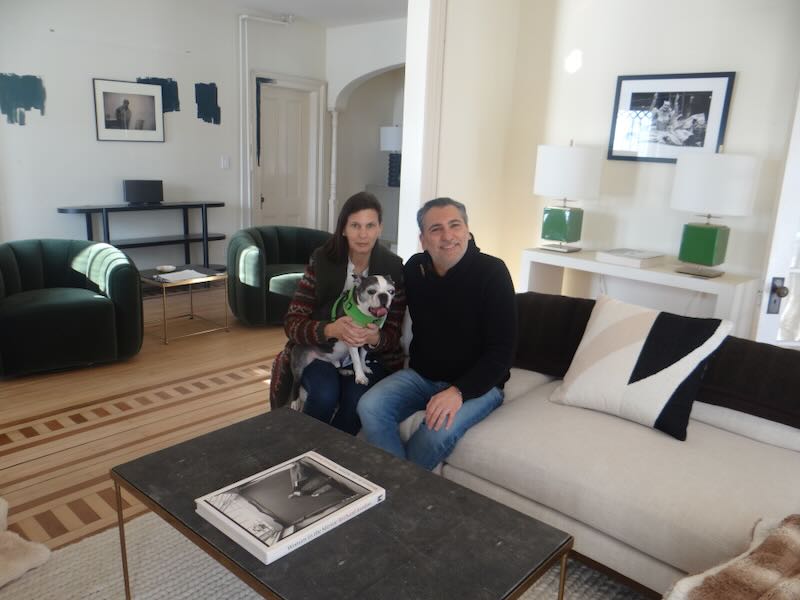
“We were worried that they weren’t going to keep the house warm, but at only 63 degrees, it’s toasty,” she said. “They really work so well and they’re charming.”
The couple declined to say how much they have spent on the renovation so far, but public records show they paid $965,000 for the property.
“It’s an old house and things pop up that you don’t expect,” Carrie Casey said. “It’s always more time and money than you anticipate.”
A few months ago, Robert Boutcher — the great-grandson of the man who built part of the house — stopped by and asked to see the home where he grew up.
“They were very welcoming and gave me a tour,” Boutcher said. “They’re good people with a lot of respect for the heritage of the house and the preservation process.”
Wines said both projects are important not just to the owners, but to the character of the North Fork.
“These two families are totally saving these homes,” he said. “These homes have a lot more character than the homes we’re building today, and they’re significant to the historic fabric of the community.”
The survival of local journalism depends on your support.
We are a small family-owned operation. You rely on us to stay informed, and we depend on you to make our work possible. Just a few dollars can help us continue to bring this important service to our community.
Support RiverheadLOCAL today.
