
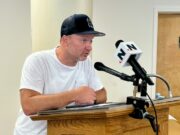









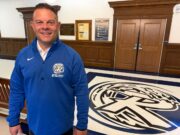





Bill Zalakar, former president of the Long Island Farm Bureau and a longtime figure in the region’s agriculture industry, has been appointed the advocacy group’s new administrative director.
“My passion has been with agriculture,” Zalakar said during an interview at the farm bureau’s office in Calverton Wednesday. “I’m going to take the opportunity and just do this and really try to give back to all the agriculture community for all the years that everybody has really helped me out.”
The New York Farm Bureau is a coalition of members who advocate and lobby for the farming industry. The Long Island Chapter represents farmers in Nassau, Suffolk and New York City. In addition to serving as president of the Long Island Farm Bureau, Zalakar has held positions with both the state and national farm bureaus.
“My focus is engaging, interacting, getting out there with the members, making a commitment every day to at least go see one or two…. Seeing what they’re doing, hearing their problems and trying to help them that way,” he said. “And then also being able to have the voice for them when it comes to situations where our political and legislative people need the information and want to know what’s going on.”
Zalakar grew up near Pittsburgh, Pennsylvania. While his parents never owned a farm, he filled the family’s property with gardens, growing vegetables and, eventually, selling them to local markets, he said. That helped him pay his way through college, he said.
“I always knew that I was going to pursue a career in agriculture.” Zalakar said. He attended Penn State University and graduated with a degree in horticultural business, which he quickly “fell in love” with, he said.
After college, the local economy near his home was struggling and his family suggested he move out of the area, he said. He relocated to Long Island, where he built a career in the greenhouse industry. Spent most of his career — 28 years — at Kurt Weiss Greenhouses in Center Moriches, one of the largest greenhouse companies in the United States as general manager and, most recently, director of facilities.
About 10 years ago, a friend encouraged Zalakar to get involved with the Long Island Farm Bureau and he joined its board of directors.
“I can remember the first board meetings, coming here and sitting and listening to all the different happenings that were going on in the agricultural community. And I said to myself, ‘Geez, how am I ever going to grasp all this?’ I mean, so many different things. It was overwhelming.”
But Zalakar took to the organization quickly, he said. People in the agricultural industry are very supportive of each other, he said. He worked his way up to the post of president, which he held for the maximum number of terms from 2019-2022.
“It was great. I enjoyed it. I have a true passion for working with people,” Zalakar said. “Being so many people gave to me, it was an opportunity for myself to give back to so many people.”
After finishing his term as president, he took his advocacy work to the next level. He became chairperson of promotion and education for the New York State Farm Bureau, and became involved with the American Farm Bureau Federation, where he served on both the promotion and education, and water and environment committees.
In those roles, Zalakar focused on educating the public on issues facing the farming industry in New York and nationally, he said.
“A great deal of Farm Bureau is [about] public policy advocacy — with legislators and on the political side,” Zalakar said. “There’s been a big change since COVID, and a real aggressive reach out to the public, to help educate the public about agriculture, where their food comes from.“
“Especially now with the whole change in the federal administration, you hear so much talk about healthy food, where your food comes from,” Zalakar added. “Even during COVID, [President Trump] had reached out to myself when I was president here — and a group of us — asking and talking about agriculture as a national security concern. When you think about it, so many people take their food for granted.”
The administrative director position opened earlier this year when longtime farm bureau employee Rob Carpenter retired. Zalakar, 64, left his job at Kurt Weiss Greenhouses and jumped on the opportunity to take the position. He started last month.
The Long Island Farm Bureau represents not only Nassau and Suffolk counties, but also New York City. While farming activity — particularly the dairy industry — has grown significantly upstate, the Long Island Farm Bureau’s region still remains the state’s leader in horticultural and specialty crop economic activity, Zalakar said.
Zalakar said his top priority is engaging with local farmers, who he said are typically more reserved and quiet people.
“There’s a lot of controversy going on out there, especially in the agricultural industry. But if you have one side always preaching and telling their story, and you’re not hearing the story from the agricultural community, then it really gets skewed,” Zalakar said.
With more than half of the state legislature within the Long Island Farm Bureau’s district, he said it is critically important to make sure the regions’ farmers are heard. “That’s such a controlling group of people that make up the laws and the things that happen.”
“So if we don’t speak up and help educate them and be at the table, where are we going to go?”
Riverhead Town, in particular, remains the hub of Long Island’s agricultural community, Zalakar said. “It’s important that the Town Board, the legislators, remember that and see that so much of Riverhead’s history is built on agriculture,” he said. “And it’s important that we keep that heritage and that history here, and we really have to work together.”
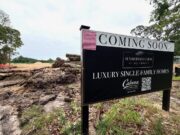
“I know there’s the issue of development, and as time progresses and things change…we have to be able to work together to keep that traditional history of agriculture without ruining it,” he said.
Zalakar’s experience has also prepared him to engage with state and federal agencies on key policy issues, he said. Immigrant labor, which many farms in the country rely on, remains a challenge, he said.
“Immigration has always been a big concern for the agriculture industry. With [the] farm bureau, even in DC, we’ve met constantly at the White House and have discussed policies,” he said. There needs to be some type of workforce for the agricultural industry, and it gets harder and harder to find people that will want to do this kind of work.”
Visa programs, he said, need to be updated so that farms have reliable access to labor.
“The bottom line is, if we want food, we need to address the problem of where we’re going to get a labor force and have the help,” Zalakar said. “And it’s better to do it together so that it’s managed and managed properly, so that things are not done the wrong way.”
Zalakar said he is also looking forward to expanding the Long Island Farm Bureau’s educational programs and working on initiatives such as Suffolk County’s Working Waterfront Program, which seeks to preserve access to preserve commercial fishing and aquaculture operations — much like farmland preservation efforts have done for agriculture.
The survival of local journalism depends on your support.
We are a small family-owned operation. You rely on us to stay informed, and we depend on you to make our work possible. Just a few dollars can help us continue to bring this important service to our community.
Support RiverheadLOCAL today.
