









Author’s Note: For National Coming Out Day Oct. 11 and LGBTQ+ History Month, I wanted to shed light on a local figure I learned about this year, whose example may prove insightful given our divisive times.
Back in March, I was browsing the obituaries of AIDS victims in the Bay Area Reporter Obituary Archives, searching for names lost to time. I had found one of the three I was after, but when I couldn’t find the other two with the usual search tools, I started looking through the entries one by one.
Then, on one entry, I stopped cold.
—Riverhead, Long Island? This paper is from San Francisco. What’s that doing there?
Then I registered the name: Doug Warner.
I had run Riverhead Cross Country with several Warners in the mid-2000s. The face I saw was a dead ringer for at least two of them.

Doug Warner was born on May 19, 1952. Growing up, he was precocious, the kind of kid that could—and did!—memorize an encyclopedia. In 1970, he graduated first in his class. His valedictorian speech, given in sandals, all but indicted America, sounding less 1970 and more 2020. “I am somewhat amazed that there has not been a Black revolution before now,” he told the audience, “It must be realized by everyone in this country that throughout history America has been a racist society.”
I’m told the crowd booed him.
But what they may not have known, what perhaps gave Warner’s words an urgency that outstripped his time, was that racial violence had torn apart his own family. Three years prior, on Aug. 8, 1967, Doug’s father shot and killed both Doug’s grandfather and a Black woman with whom the grandfather was having an affair. Doug’s father spent the next several years in Sing Sing. For a closeted teenager with the Vietnam draft hanging over him, the weight must have been unbearable. It seems instead to have strengthened the resolve and compassion he became known for.
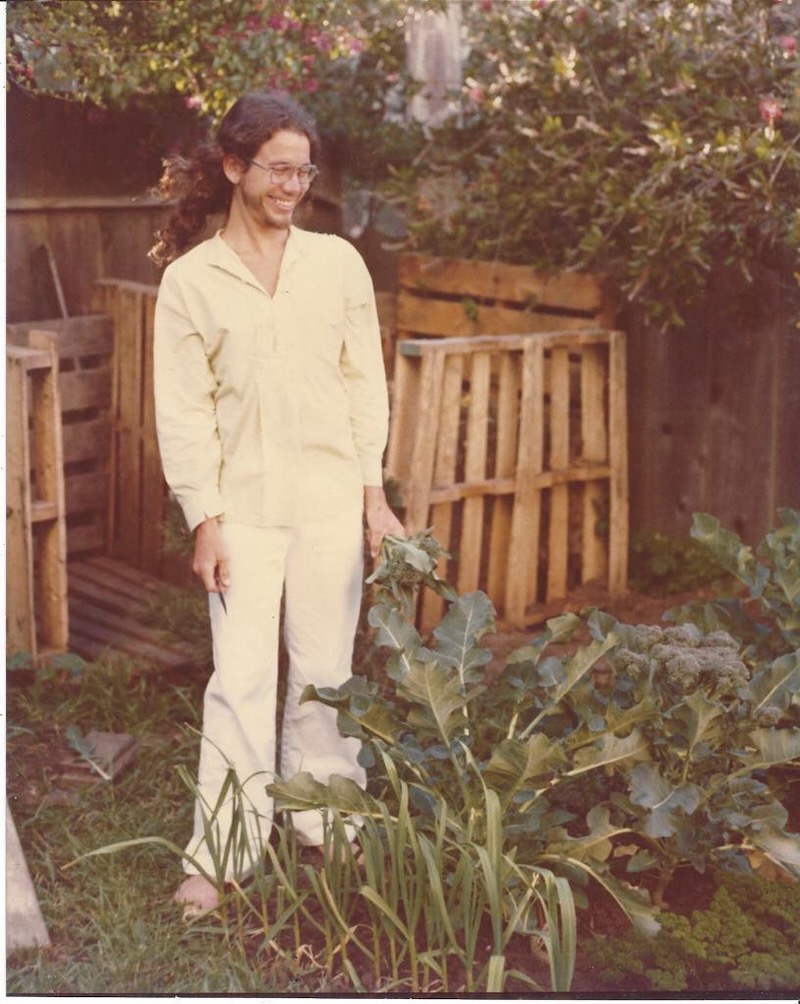
He attended Yale but dropped out once the draft ended. After briefly joining a commune, he moved to San Francisco in 1976. By then, veterans were returning from Vietnam, with many ending up homeless and further traumatized. He became the Development Director for Swords to Plowshares, a nonprofit supporting veterans that continues to this day.
In 1978, he began volunteering for the ACLU of Northern California (ACLU-NC) as “a counselor on the Complaint Desk”. By 1982, he earned his law degree from UC Berkeley and was admitted to the California Bar. Soon after, he became chair of the Gay Rights Chapter for the ACLU-NC, the first such chapter in the nation.
During this time, 30 years before marriage equality, Warner was making the case that gay rights were a civil liberties issue. “[Gays] are too narrowly focused,” he said in a 1985 interview, “and do not realize that there’s a connection between gay rights and other civil liberties issues such as free speech, due process, and separation of church and state.” This was the core algebra behind Warner’s work: that what the government could do to gays, it could also do to anybody else, and vice versa.
A colleague, Tom Reilly, wrote in an ACLU-NC Bulletin that “Doug was a scrappy fighter, unyielding in his demand for equal protection of the laws.” Historian and close friend Marcia Gallo recalls him with candor in the epilogue to her book on lesbian rights, Different Daughters. “Sometimes [in debating the day’s issues] he made me want to weep with frustration,” she writes, “then laugh ecstatically, and I suspect he would not have mellowed with age.”
Doug loved to garden, turning his apartment’s rooftop in the Castro into a garden “with tubs so full of phlox and jasmine and alyssum that you almost forgot it was all two stories up.” He was thrilled to be an uncle, beloved for his “boogumsmoudge kisses and rambunctious play”. Whenever the chance presented itself, he would romp around on the floor with his nieces and nephews.
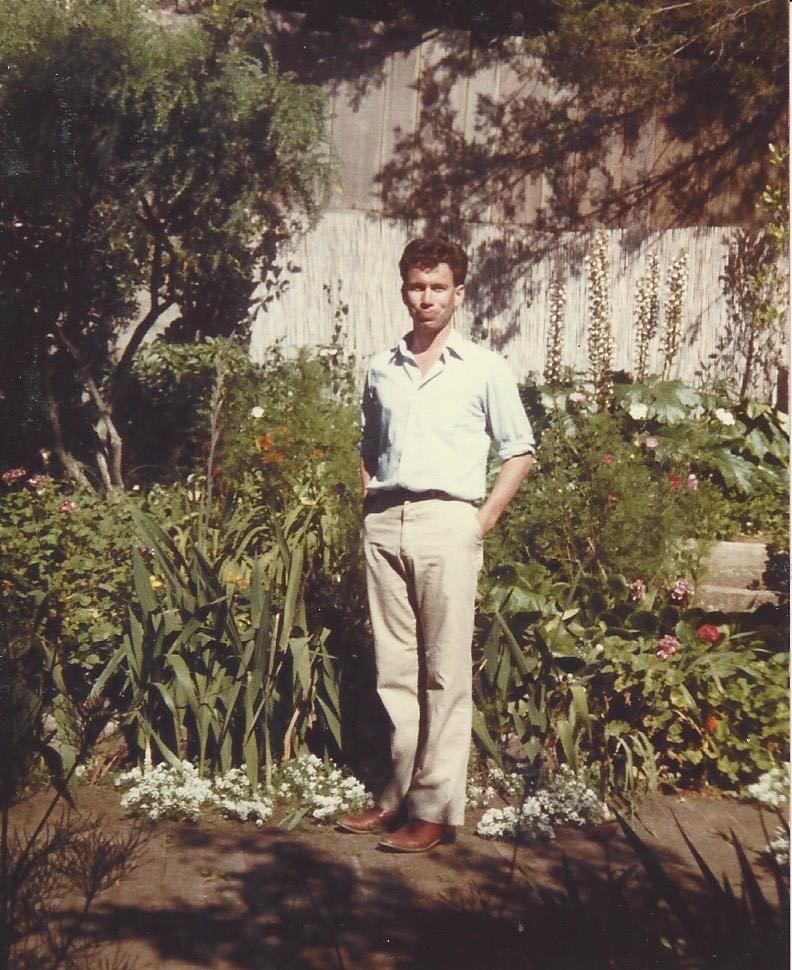
Like so many gay men during those years, Doug faced the AIDS epidemic with the same tenacity he brought to everything else. He spent the latter half of the eighties, in the words of Rev. Dr. Donna Schaper, “battling hospitals and insurance companies to provide medication and care for people with AIDS.”
But soon the epidemic came for him, too.
By 1989, Doug was HIV-positive with symptoms—a purplish bruise had formed on his thin legs: Kaposi’s sarcoma. By year’s end, his living room had become a “makeshift hospice”. Friends took turns feeding and bathing him, coordinating care among his many loved ones. Two days before his death, Schaper recalled that Doug became “insistent on getting the tape on his answering machine just right, even though he could no longer really talk.” He remained determined to the end.
Friends held Doug’s hand during his final hours in San Francisco General Hospital’s Ward 5B, waiting for his mother Shirley to arrive from Riverhead. She got there just in time.
Doug Warner died on Valentine’s Day morning, 1990. He was 37. He died before same-sex marriage was legal, before gays could serve openly in the military, even before state sodomy laws were ruled unconstitutional.
At his memorial service in San Francisco, a Vietnam veteran stood up and approached the podium with what Schaper later described as a swagger. “When I met Doug eight years ago,” he began, “I called him a queer. Just a crazy queer.” Then he broke down. Through tears, he talked about the men Doug had helped get benefits, medical care, counseling; how Doug bailed one veteran out of jail in the middle of the night and took him into his own home during a schizophrenic break. “I am so ashamed,” the veteran sobbed, “of calling Doug a queer.”
That Warner could withstand, let alone win over, someone at first opposed to him — through charm, ingenuity, compassion, and pure stubbornness — was no surprise: it was his nature. Even during that high school graduation speech, Warner had called on his class to dedicate themselves to “opening communication and bringing understanding between the various factions of society—between black and white, rich and poor, right and left, young and old.” He would spend his life living those ideals.
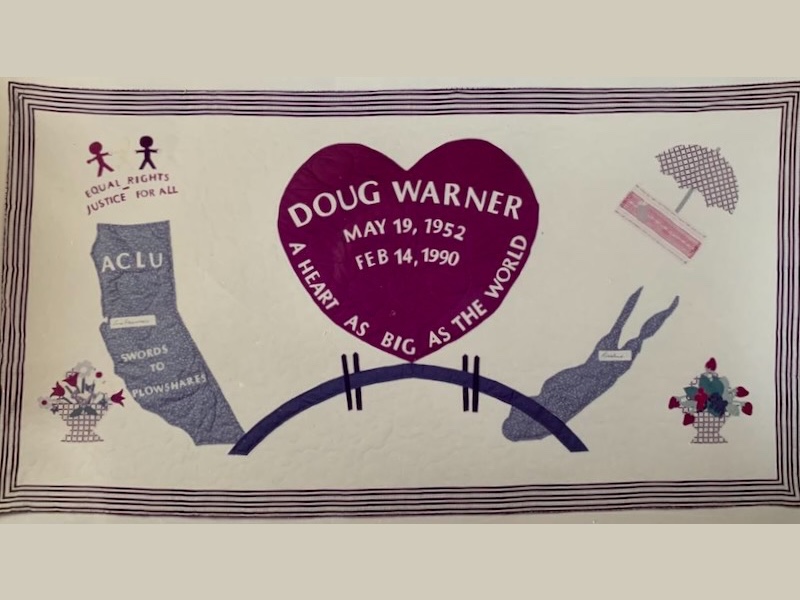
Growing up gay in Riverhead, I never heard of him. After his passing, people tried to keep his memory alive: The First Congregational Church in Riverhead rallied to make his quilt panel for the NAMES Project. The ACLU-NC posthumously gave Warner its highest award — his mother accepting on his behalf — and donated books to the Riverhead Public Library in his memory. But time unravels all things, and by the time I was coming of age, his name had slipped away. It would take me nearly as many years as Doug Warner had been alive to learn about him.
Some of my earliest memories are of riding in the car past Westhampton after the Sunrise Fire of 1995, seeing acres of trees burnt to char. Looking back, that’s how it felt to grow up here as a gay child of the ’90s: we were little sprigs poking through the ashes, wondering if there was anyone like us for miles, with hardly any pines left standing to point the way up.
It would have been a comfort to have known about him. When I had my first crush on a boy, all alone and in denial, I would have known I was not the first to feel those feelings. When my friends and I drove home from Greenport the night of June 24, 2011, shouting “Marriage Equality!” out the car window and into the electric hum of orange streetlights and summer heat, I would have known he was with us. When I marched in New York City Pride in 2015, among the thrilled, cheering crowds, I would have known we were all his progeny. My past is now tinged with a bittersweet gratitude: knowing that, by simply being me — proudly gay and loving life — I was fulfilling a promise that Doug Warner made to the world.
I had supposed his grave would be in San Francisco, but I learned it was in Riverhead Cemetery. It was right down the street from me, and had been there my entire life. Here I was, having set out looking for names on the far side of the country, only to find one right next door.
Standing over his grave, on the brown grass that brisk early spring morning, I choked up. Where were the flowers for the gardener? I then thought of how most of Doug’s generation were gone now: he had not grown old, but his loved ones who survived had. Many were now in their 70s and 80s. Once they were gone, would his name, like the names I had searched for, be lost too?
I reached out to the Warner family and, with their blessings — plus a few trips to local flower shops with Doug’s sister, Marie — got to work.
The flowerbed is set in a triangle—that symbol of gay defiance. Beach rocks from Long Island Sound form the border. Eventually, the rocks toward the top will be replaced with rocks from San Francisco Bay. They will mirror his journey from one shore to another, from the two places where his ashes were scattered.
Sweet alyssums grow behind his headstone, with purple leadwort and white coreopsis in front. Rosemary for remembrance and black-eyed Susans grace the corners. Lavender lines both sides, for the community he loved.
There is a pink carnation too, a flower associated with mothers. After I planted it in April, its buds started dropping off, and I feared it would die. But on Mother’s Day — on the dot — its first bud bloomed. It bloomed in pink and magenta, and it was more beautiful than I could have dared hope.
Now all the flowers bloom together on that gentle hill in Riverhead Cemetery, honoring all that he, like any good gardener, cultivated in the world long ago.
It will be winter soon, and the autumn geese, exchanging calls with their flocks, will have taken flight from Merritts Pond, the air having grown muted and low before the snowfall. When spring comes again and the clouds start to rise into a deeper blue, go and tend your own garden — whatever that may be. And if the winter has made you weary for want of light, then know there is a garden here waiting for you.
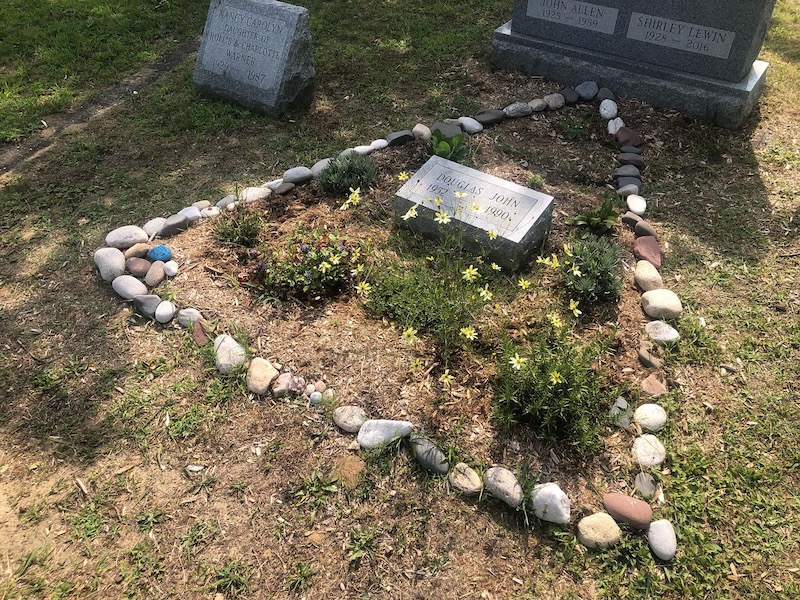
The memorial garden in July 2025. Photo courtesy of John Fallot.
The survival of local journalism depends on your support.
We are a small family-owned operation. You rely on us to stay informed, and we depend on you to make our work possible. Just a few dollars can help us continue to bring this important service to our community.
Support RiverheadLOCAL today.
