













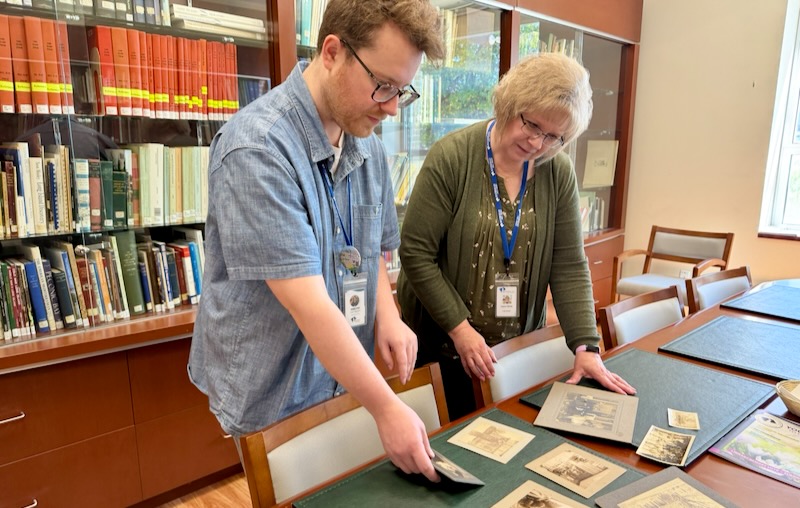
Riverhead Free Library reference librarian Michael Ryan and librarian Joann White, who is the library's program coordinator, in the local history room at the library reviewing historical photos. RiverheadLOCAL/Denise Civiletti

A forgotten baseball stadium that once drew thousands of fans — and one of the greatest pitchers in baseball history — has become the spark for a new community-driven effort to preserve Riverhead’s overlooked stories.

Riverhead Free Library librarians Joann White and Michael Ryan say the idea for the library’s new “Riverhead Remembers” local history project grew out of their astonishment after learning that Satchel Paige once pitched at a long-vanished Riverhead venue called Wivchar Stadium, later known as Riverhead Stadium.

Neither librarian had ever heard of the stadium.

Then they discovered many longtime Riverhead residents had not heard of it either.

“We started asking our patrons, we put stuff out on social media, and we got no response,” White said. “A lot of blank stares, a lot of people going, ‘I have no idea.’”

That realization led to a larger question: What else has Riverhead forgotten?
Now the library is asking residents to help answer it — by bringing in photographs, documents, personal correspondence and stories tied to life in Riverhead through the decades. The library will digitize all materials and return originals to their owners, while building a growing archive of community history.

“We really want to know their story,” White said. “A picture is great, but we need to learn a little bit about the story in the background.”

The effort is centered partly around the mystery of Wivchar Stadium itself — a short-lived sports venue that operated from roughly 1949 to 1951 near what is now the Pulaski Street sports complex and the Riverhead Central School District offices on Osborn Avenue.

Despite hosting professional-style events and drawing crowds reportedly exceeding 6,000 people, almost no photographic evidence of the stadium has surfaced.

“We still haven’t found that elusive picture,” Ryan said.

Research by Suffolk County Community College librarian and history professor Fabio Montella helped resurrect the story of the stadium and its brief but remarkable place in local sports history. Montella, who specializes in Negro Leagues and Long Island baseball history, discovered that Hall of Fame pitcher Satchel Paige appeared there in a barnstorming game on July 21, 1950.

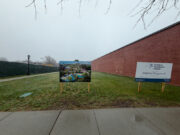
That game inspired the Suffolk Sports Hall of Fame to install a historical marker at the site in 2022.
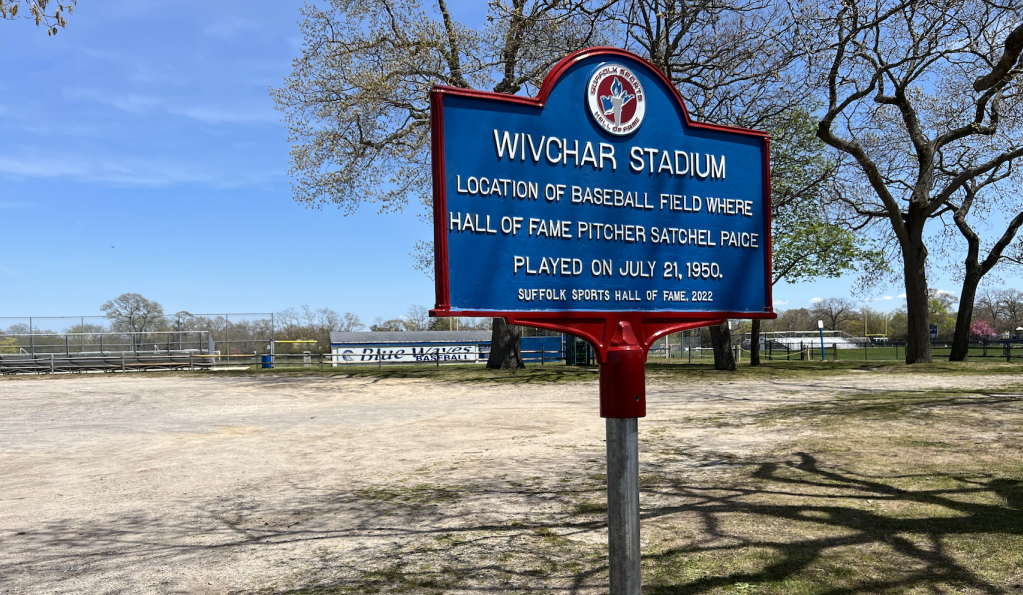
Historic marker at the approximate site of Wivchar Stadium on Osborn Avenue. Source: Suffolk Sports Hall of Fame.

Montella said his research uncovered a surprisingly ambitious sports venue built by local entrepreneur and builder Tony Wivchar.

“When you hear the word stadium, you automatically think Yankee Stadium or Wrigley Field,” Montella said in an interview. “This wasn’t that, but it had everything a stadium would have.”

According to Montella, the stadium featured dugouts, locker rooms, showers, concession stands, a public-address system, bleachers and advanced lighting that reportedly made it one of the best-equipped venues on Long Island at the time.

“It was the first venue in Suffolk County to have that arch-light system,” he said.

The venue hosted not only baseball games but football, rodeos, wrestling and women’s softball.

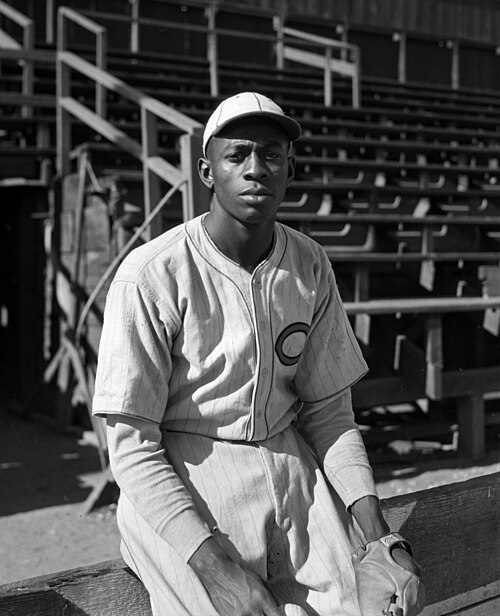
Satchel Paige was 44 years old when he pitched at Riverhead (Wivchar) Stadium in July 1950. He would later pitch in the major leagues, pitching his last game in 1965, at age 59. He is pictured here c. 1933, at age 27. Source: Wikipedia

To promote the stadium, Wivchar created the Riverhead Falcons, a local all-star baseball team that played exhibition games against traveling clubs, including Negro League teams such as the Black Yankees and Philadelphia Stars.
On the night Satchel Paige pitched in Riverhead, the crowd reportedly reached 6,155 spectators. The Philadelphia Stars defeated the Falcons 10-5. Paige pitched three scoreless innings, striking out five batters.

Future Baseball Hall of Famer Carl Yastrzemski was there that night too — as a 10-year-old batboy for the Falcons while his father played in the game.

Yet today, many Riverhead residents have never heard of the stadium.

Montella believes part of the reason is its short lifespan.

“Riverhead Stadium was only around for two years,” he said. “It was really bright, and then just kind of died out.”

He said poor financial planning likely doomed the operation, despite strong attendance and marquee attractions.

Over time, the physical remnants disappeared too. Montella said the lights and bleachers were later sold and moved to Riverhead Raceway.

What frustrates researchers most is the absence of photographs.

“There’s got to be a photo,” Montella said. “I haven’t lost hope.”

A forgotten baseball stadium that once drew thousands of fans — and one of the greatest pitchers in baseball history — has become the spark for a new community-driven effort to preserve Riverhead’s overlooked stories.

Riverhead Free Library librarians Joann White and Michael Ryan say the idea for the library’s new “Riverhead Remembers” local history project grew out of their astonishment after learning that Satchel Paige once pitched at a now-vanished Riverhead venue called Wivchar Stadium, later known as Riverhead Stadium.

Neither librarian had ever heard of the stadium.

Then they discovered many longtime Riverhead residents had not heard of it either.

“We started asking our patrons, we put stuff out on social media, and we got no response,” White said. “A lot of blank stares, a lot of people going, ‘I have no idea.’”

That realization led to a larger question: What else has Riverhead forgotten?

Now the library is asking residents to help answer it — by bringing in photographs, documents and personal stories tied to life in Riverhead through the decades. The library will digitize materials and return originals to their owners, while building a growing archive of community history.

“We really want to know their story,” White said. “A picture is great, but we need to learn a little bit about the story in the background.”

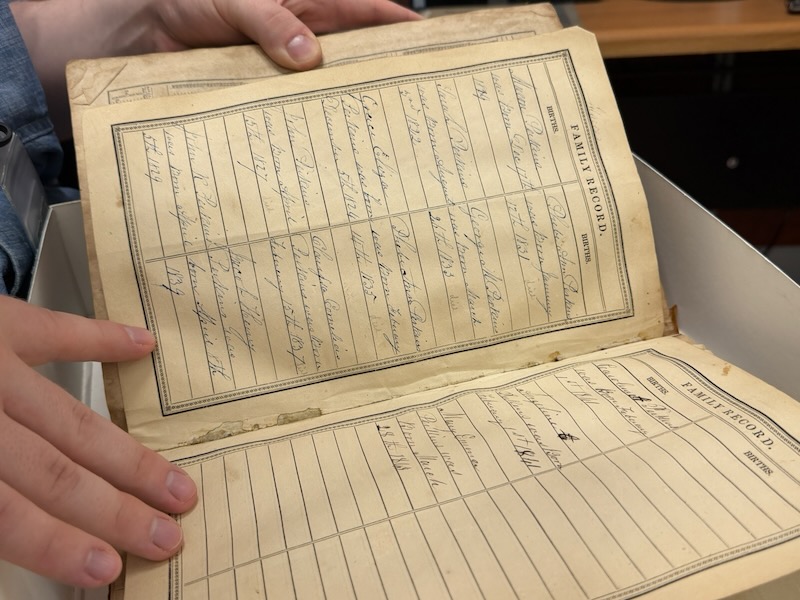
Births and deaths are recorded in the nearly 200-year-old Perkins Family Bible, which was donated to Riverhead Fire Library by the Estate of Timothy M. Griffing. RiverheadLOCAL/Denise Civiletti

The effort is centered partly around the mystery of Wivchar Stadium itself — a short-lived sports venue that operated from roughly 1949 to 1951 near what is now the Pulaski Street sports complex and the Riverhead Central School District offices on Osborne Avenue.

Despite hosting professional-style events and drawing crowds reportedly exceeding 6,000 people, almost no photographic evidence of the stadium has surfaced.

“We still haven’t found that elusive picture,” Ryan said.

Research by Suffolk County Community College librarian and history professor Fabio Montella helped resurrect the story of the stadium and its brief but remarkable place in local sports history. Montella, who specializes in Negro Leagues and Long Island baseball history, discovered that Hall of Fame pitcher Satchel Paige appeared there in a barnstorming game on July 21, 1950.

The game led the Suffolk County Sports Hall of Fame to install a historical marker at the site in 2022.

Montella said his research uncovered a surprisingly ambitious sports venue built by local entrepreneur Tony Wivchar.

“When you hear the word stadium, you automatically think Yankee Stadium or Wrigley Field,” Montella said in an interview. “This wasn’t that, but it had everything a stadium would have.”

According to Montella, the stadium featured dugouts, locker rooms, showers, concession stands, a public-address system, bleachers and advanced lighting that reportedly made it one of the best-equipped venues on Long Island at the time.

“It was the first venue in Suffolk County to have that arch-light system,” he said.

The venue hosted not only baseball games but football, rodeos, wrestling and women’s softball.

To promote the stadium, Wivchar created the Riverhead Falcons, a local all-star baseball team that played exhibition games against traveling clubs, including Negro League teams such as the Black Yankees and Philadelphia Stars.

On the night Satchel Paige pitched in Riverhead, the crowd reportedly reached 6,155 spectators. The Philadelphia Stars defeated the Falcons 10-5. Paige pitched three scoreless innings, striking out five batters.

Future Baseball Hall of Famer Carl Yastrzemski was there that night too — as a 10-year-old batboy for the Falcons while his father played in the game.

Yet today, many Riverhead residents have never heard of the stadium.

Montella believes part of the reason is its short lifespan.

“Riverhead Stadium was only around for two years,” he said. “It was really bright, and then just kind of died out.”

He said poor financial planning likely doomed the operation, despite strong attendance and marquee attractions.

Over time, the physical remnants disappeared too. Montella said the lights and bleachers were later sold and moved to Riverhead Raceway.

What frustrates researchers most is the absence of photographs.

“There’s got to be a photo,” Montella said. “I haven’t lost hope.”

That search — and the broader realization that many local stories risk being lost altogether — became the inspiration for Riverhead Remembers.

Ryan said the library wants to help preserve the “human side” of Riverhead history.

The project is collecting family photographs, letters, memorabilia and oral histories from residents across generations. Library staff hope eventually to build a searchable digital archive accessible to the public.

The librarians say they are especially interested in stories that often go undocumented — including African American history, immigrant experiences and everyday community life.

“History wasn’t just the Civil War and World War II,” Ryan said during a discussion about overlooked local stories.

The library hopes Riverhead residents can help stop that from happening.

Montella will present “Wivchar: Riverhead’s Little-Known Stadium” at Riverhead Free Library on June 25, from 6 to 7 p.m..

Montella’s search — and the broader realization that many local stories risk being lost altogether — became the inspiration for Riverhead Remembers.

Ryan said the library wants to help preserve the “human side” of Riverhead history.

The project is collecting family photographs, letters, memorabilia and oral histories from residents across generations. Library staff hope eventually to build a searchable digital archive accessible to the public.

The librarians say they are especially interested in stories that often go undocumented — including African American history, immigrant experiences and everyday community life.

“History wasn’t just the Civil War and World War II,” Ryan said during a discussion about overlooked local stories.

The library hopes Riverhead residents can help stop that from happening.

For more information or to submit something for the Riverhead Remembers project, email RiverheadRemembers@riverheadlibrary.org.

The survival of local journalism depends on your support.
We are a small family-owned operation. You rely on us to stay informed, and we depend on you to make our work possible. Just a few dollars can help us continue to bring this important service to our community.
Support RiverheadLOCAL today.