













One by one, they stood up to reflect on the lives memorialized on the expansive front lawn of the First Baptist Church of Riverhead — people who, in the words of Pastor Charles Coverdale, “died not by accident or disease but by the people sworn to protect them.”
Members of the congregation stood up and remembered them. A 12-year-old child. Two teenaged boys. Five young adults in their 20s. Two men in their 40s. Each is memorialized on a large wooden canvas painted with a headstone bearing their name, their date of birth and date of death. Presiding over the installation is a sign that declares boldly, “WE SHOULD NOT FORGET.” See prior story.
Ahmaud Arbery, 25, Sandra Bland, 28, Rayshard Brooks, 27, Michael Brown, 18, George Floyd, 46, Eric Garner, 43, Freddie Gray, 25, Trayvon Martin, 17, Tamir Rice, 12 and Breonna Taylor, 26.

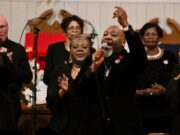
“These brothers and these sisters of ours had no idea that they would have to die as examples of injustice in America’s society. They had no idea that they would die to bring about change in our country,” Coverdale told an audience gathered in the darkness outside his church Wednesday night.
The pastor said the “graveyard scene” at the Northville Turnpike church is “an artistic presentation for public reflection.”
“It is my hope that this presentation causes you to see something you haven’t seen before,” Coverdale said.
Members of the congregation followed the pastor to the podium to share their reflections on the 10 lives memorialized there— details about who they were and how they lived, life details that were either never recounted in media reports that focused on their deaths or that were lost in the controversies that followed.

The evening was a stark and moving reminder that at the center of every tragedy that makes the news, there is a person — a person with a family, a person with dreams and aspirations, fears and inhibitions.
Most of the 10 speakers who shared their reflections on the lives memorialized revealed some of the details about each of them: “a peacemaker”… “a twin”… “he had a smile that would light up a room”… “aspirations of becoming a nurse”… “she put hot sauce on everything, especially eggs”… “he was silly”… “loved dancing with his children” … “he wanted to be a pilot”… “two days away from starting college”…
They spoke from the heart, many expressing how they personally related to victims of police violence memorialized in the church’s exhibit.
As Kim Stephens explained, “Before she was a hashtag or headline, before protests around the country chanted her name, before she became a face of the movement ‘say her name,’ Breonna Taylor was a young woman with dreams.”
Tijuana Fulford, founder and director of the Butterfly Effect Project, spoke about the life of Sandra Bland, a 28-year-old woman found dead in a jail cell three days after being arrested during a traffic stop.
“I am 37 years old. I am a Black lady and I’m raising and rearing up many many Black ladies,” Fulford said. “And I hope, I hope and I pray that when you see us, you are not afraid — that you give us a chance … to complete our… choices, our goals, our dreams, complete our lives. And we don’t stand before you leaving nothing but a legacy of question marks.”
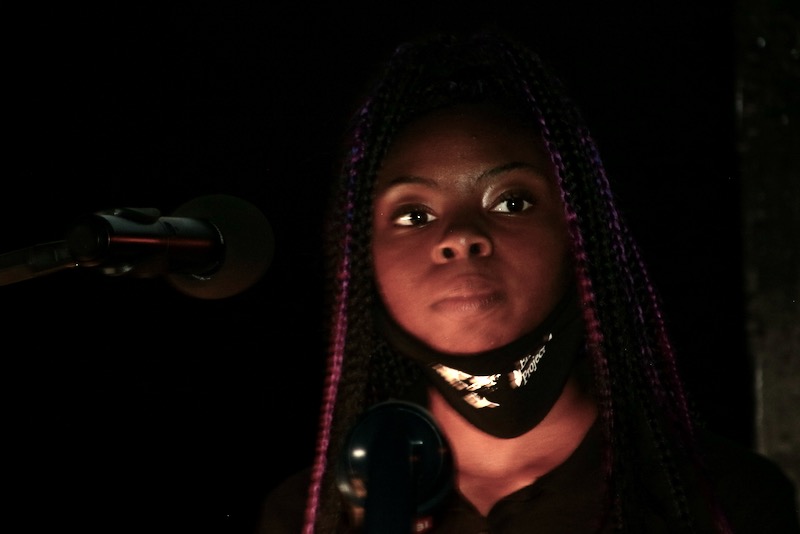
Azharia Allen spoke in the voice of Tamir Rice, a 12-year-old boy with a toy gun playing in a Cleveland park, shot and killed by a young cop responding to a call about a male with a “pistol” in the park.
“I will never get the chance to fulfill my dreams of becoming the world’s best basketball player. I will never get the chance to go to prom or have my first girlfriend. I will never get the chance to graduate or marry my dream girl. And most of all, I will not have the chance to grow old all because someone’s seen my skin as a weapon. Someone was so afraid of me that they shot me not once, but twice in the torso, leaving my family and everyone else to suffer. Why did the cops see me as a threat and not as a young boy playing? When did the park become so dangerous?”

Rick Brown spoke about Michael Brown Jr., age 18, who had just graduated from high school and was set to start technical college with plans of becoming a heating and air conditioning technician, when he was shot and killed by police in Ferguson, Missouri.
“He was born suspect,” Brown said. “Every name we’ve heard tonight — every one — they’ve all had one thing in common: they were born suspect.

Vanessa Williams spoke about Trayvon Martin, shot and killed by a community watch group captain in a gated community in Florida in February 2012. He was visiting, with his father, the home of his father’s fiancee and had walked to a local convenience store. The community watch member saw the the 17-year-old boy wearing a hoodie and deemed him “suspicious.” He called 911 and then chased him. Within 25 minutes, Trayvon was dead of a gunshot wound.
“Could you imagine what 17-year-old Trayvon Martin may have been thinking as a 28-year-old man pursued him — chased him? Fear?Helplessness? Disbelief?” she asked. “My question to you is what is the value of a young black man’s life?”

Deacon James Branch, who spoke about George Floyd, who died in police custody in Minneapolis on May 25, restrained in a prone position on the pavement with an officer kneeling on his neck for nearly nine minutes.
“How is it that a cop can have a badge and a gun and a Black man unarmed can be considered the aggressor?” Branch asked. “After 400 years, it seems so little has changed. They just keep finding different ways to kill us and get away with it. It has to stop. I know they say things get worse before they get better. But we as black people have seen enough of worse, it’s time for better,” Branch said.
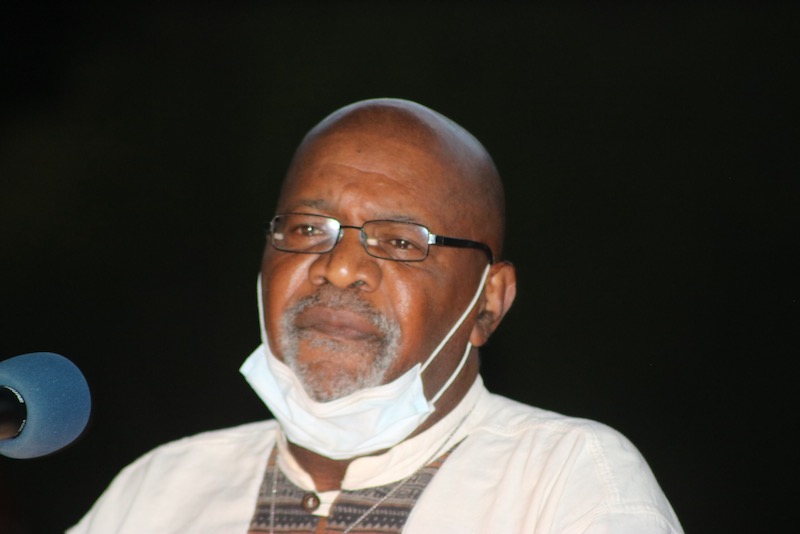
Deacon Robert “Bubbie” Brown asked the audience to think back over their own lives since the age of 25 — the age of Freddie Gray when he died in police custody in Baltimore on April 12, 2015. “The things that you have accomplished, the things you have done to enhance other people’s lives… since you were 25 years old,” Brown said. “No telling what God could have done in this young man’s life… because he takes ordinary people and do extraordinary things.”
Mentioning the names of the members of First Baptist Church’s congregation who are the same age, Brown asked, “I think what would happen to this congregation — what would happen to this town — if something like this happened to our young men?” This And just because this happened in Baltimore, this happens in the United States of America. This is not the only case. And my prayer is that we don’t have to go through this anymore.”
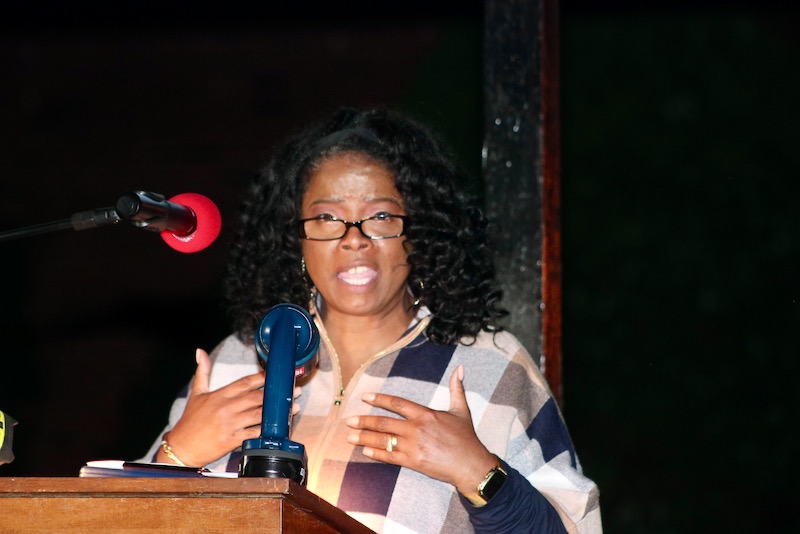
Assistant Pastor Cynthia Liggon implored those in attendance to take a stand.
“You don’t need a great deal of courage to stand on your philosophical principles to say no. I challenge you to get up, stand up, step up and speak out,” Liggon said.
“My faith teaches me that all I need is a mustard seed amount of faith to say no. Because all it takes is a mustard seed of faith to move mountains. What does your faith tell you? What does your life philosophy tell you?” she asked.
“Because if this is OK anywhere, then it’s OK everywhere. Which means, at any point, at any time, anyone can become a part of a segment of society, that another part of a segment of society can decide at any moment to demonize you as having no value, and that your life is not worth living,” Liggon said.

“Discrimination, racism, bias in all of its varied forms must be denounced. Period. With any institution… from the White House to our local municipalities, our educational system, from the institutions of higher learning to our preschools, in every branch of law enforcement, from the military, to the small town local police department, when these institutions do not reflect and serve the constituency and represent it in a fair and impartial way, when they don’t look like all of us, then we all need to say no,” she said, urging people to withhold support from officials who don’t advocate for these principles.
“You can begin saying no, in this election season, to every candidate that does not have a proven record of practicing inclusion, equality and justice for all,” Liggon said.
“That’s your call to action. Just say no. Just say no. Don’t say no today — and then get in the voting booth and say yes.”
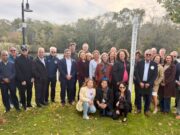
The event Wednesday evening drew about 45 people.
“I thought the whole thing was very moving,” said Riverhead Councilwoman Catherine Kent, who attended the service. “The display is a beautiful tribute and everyone spoke so eloquently,” she said.
“I’m very pleased that they put this together in our community. We do have to pay attention and listen to one another — with all the division that’s going on in our country,” Kent said. “We need to work together if we’re going to make things better and it starts by listening.”
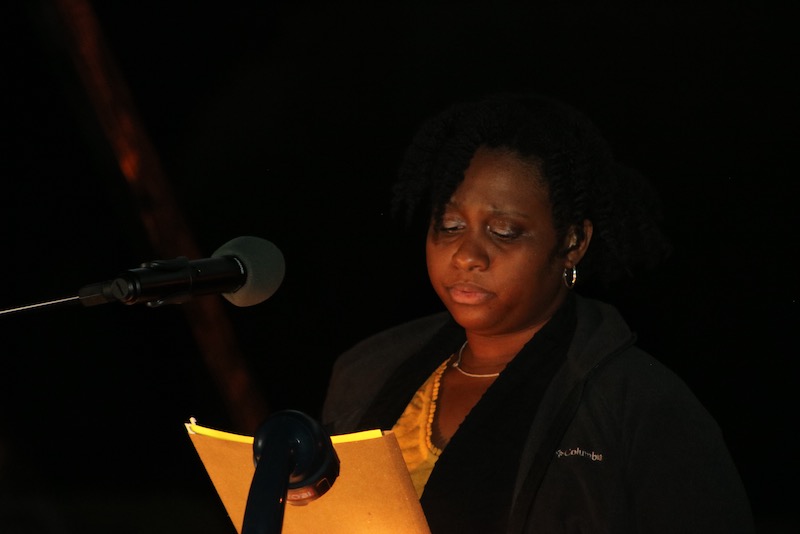


RiverheadLOCAL photos by Denise Civiletti
The survival of local journalism depends on your support.
We are a small family-owned operation. You rely on us to stay informed, and we depend on you to make our work possible. Just a few dollars can help us continue to bring this important service to our community.
Support RiverheadLOCAL today.
