























“Run. Hide. Fight.“
Those are the three things active shooter response expert Donald Longo told a crowd of more than 50 people to consider if they were ever caught in an active shooting incident during a seminar hosted at the Suffolk Theater on Tuesday evening.
“Run, hide, fight” is the law enforcement-endorsed response tactic for an active shooter situation. Longo said everybody needs to be prepared for active shooter incidents, as they can happen in any public place, including a business, a school or a theater.
“If you can get out of the building, if you can get away from the shooter, it makes absolutely no sense to stay. So if you can safely escape the kill zone, if you can safely escape the building when the shooter is already inside, then you do so,” Longo said.
“If you can’t because the shooter is between you and the only exit, or you can’t because maybe you have an injury or whatever reason, then you have to hide,” Longo said. “And you have to know the best places to hide. You don’t want to hide someplace where the shooter is going to find you.”
“The last part of that is fight and defend, and please understand that is only a last resort,” Longo said. “When we talk about that part of it, that means that you’re someplace… and somebody stands up with a gun starts firing, what do you do if you are that close to him?… It is to engage the shooter.”
“And it sounds drastic, and it sounds like it is impossible and it is not. It has happened over and over and over again. But it’s an absolute last resort,” Longo said.
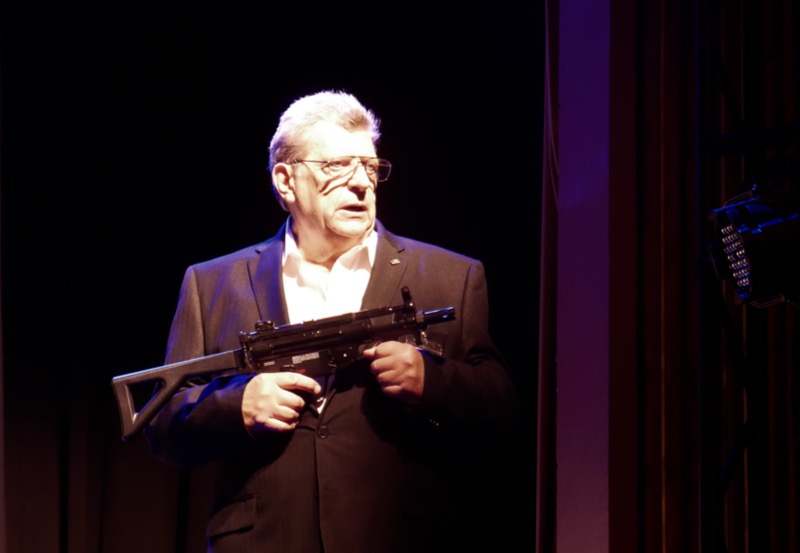
Longo, a retired Suffolk County Police sergeant, reviewed what to do and what not to do during an active shooter incident using examples from cases across the country and documents created to combat mass shootings produced by law enforcement agencies.
Longo said shooters prepare to commit mass murders by training in military and law enforcement techniques.
It is also necessary for everybody, who may be potential victims, to prepare to be confronted with an active shooter. Longo said “when these things happen, you literally have seconds to respond” and have to be fast.
Even when law enforcement responds “perfectly” to an active shooter, it will still take them many minutes to respond. Most shootings only go on for four to six minutes, “if you’re involved, it’s going to seem like an hour.”
“Time is your enemy,” Longo said.
Don’t try to look around for where the gunshot came from, just hit the deck if you hear a shot, Longo said. “Once you’re down there, look what’s going on. Where is the shooter? How can I get out of here?”
When running or trying to escape from an active shooter, leave everything behind and try to help others escape if possible. Focus on getting yourself out of the situation and use tactical movements, like running in a zig-zag motion to make yourself harder to hit. Cover your rear if you are in a group and warn others not to go towards a shooter. Get to a safe place and call 911.
In a situation where you can’t get away from the line of sight of the shooter, hide and remain quiet where the shooter can’t see you, Longo said. If you don’t have the ability to move due to being shot and have no other options, slow down your breathing and play dead, Longo said.
Sometimes getting to safety means hiding in a room, Longo said. Lock the door if possible and barricade it, shut off all the lights and do not make any noise to alert the shooter to your presence. Do not stand directly in front of the door — since a gunman could potentially shoot through the door — and be ready to defend against the shooter with anything you have if they break in.
“If you get into a room and you can lock that door from the inside and close that door, chances are you’ll be OK,” Longo said. “They will only shoot through the door if they know you are in there. They never try shooting the lock off, that’s television stuff.”
If you need to fight, use anything you have as a weapon, Longo said. Go for the gun, aim for weak points like their eyes, neck and knees. “Be aggressive, be committed, don’t stop,” Longo said. If you need to, kill the shooter in self defense. “You are well within your rights to use deadly force against them,” Longo said.
Oftentimes, the shooter will have to reload their weapon. That moment gives you an opportunity to wrestle the weapon. “I’m not telling you to do it to be a hero. I’m telling you to do it to save yourself,” Longo said.
People who commit mass shootings “look like anybody” but share certain behavioral patterns like mood swings, absenteeism, substance abuse, hate and paranoia that can tip people surrounding them off to their future behavior, or “leakage,” Longo said.
Longo said it is a requirement that every business have emergency plans to respond to shooting incidents; so know the plan. You have to make it hard for the shooter to succeed, or “harden the target,” by making it harder for the shooter to gain access to a building, Longo said. Rehearse emergency drills, train and know where your business’s safe room is.
Use situational awareness to identify a potentially dangerous situation or suspicious person, Longo said. Make a plan to escape a shooter. “When you walk into a place, take steps to just look around and plan on what you’re going to do if something happens,” Longo said.
“Decide to survive. I can’t tell you how important that is,” Longo said. “It’s not psycho babble, it’s not mumbo jumbo. If you think you’re going to die in that situation, chances are you are just gonna. You have to believe that you will survive and you have to be willing to do whatever it takes to survive. Run. Hide. Defend.”
The survival of local journalism depends on your support.
We are a small family-owned operation. You rely on us to stay informed, and we depend on you to make our work possible. Just a few dollars can help us continue to bring this important service to our community.
Support RiverheadLOCAL today.
