
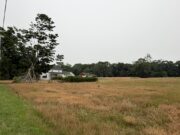























Denise Civiletti: Let’s start with CAT. You advocate canceling the contract with CAT. If the deal is canceled, what’s your plan for the [EPCAL] site? What should the town do?
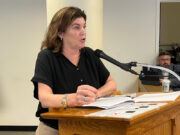
Angela De Vito: I think that the first thing was to go back to the DEC, secure our scenic wild river act permit and from there go for the subdivision. I would go for the 50 plots — the original subdivision for 50 plots.
And as that is going on, at the same time, putting out a request for proposals for people who want to come and lease land from us. I think that the best interest, both short term and long term for Riverhead with regard to that land and development is for us to retain the land, and lease it long term with the options after the term of the lease are up that people can purchase it.
But as to coordinate with the comprehensive plan, which hopefully will be addressing some of the issues of what type of industrial development and commercial development do we want in the Town of Riverhead — and coordinating that out in EPCAL. I would also like us to explore the potential of a public-private partnership for a public utility on part of the lands that’s the town’s — very similar to the public utility, like the village of Greenport has. That could be used as an incentive in terms of producing our own energy for businesses that are coming here. That would be the incentive rather than them going to the IDA for the tax breaks.
Denise Civiletti: When you’re talking about land leases, you’re talking about 50 individual lots?
Angela De Vito: Yes. And if people wish to at that time, if the Town Board is of a mind that we can sell some of those immediately, for monies that we need, because looking at our current budget, you know, we can’t keep raising people’s taxes here and overhead, 4 to 5%, every single year, before there’s a tax revolt. That may also be a consideration — a mix of retaining, and also leasing and some sales.
Denise Civiletti: [At EPCAL] there’s the planned development district, and that allows just about everything under the sun as long as it promotes economic development. There’s only a few uses that are allowed by special permit only. So that means they could practically build anything. Anybody that we sell or otherwise conveyed an interest in the land to — what do you think of that? Do you think it needs to be changed? Because they could also build the things that you and the people on your say they’re opposed to, which are these logistics and distribution centers and things like that.
Angela De Vito: I go to where the comprehensive plan is. That would allow for what appears to be the development that would be allowed in that area and we need to address the code there. The comp plan can address the entire town of Riverhead, which encloses the PD zone. They may not do it. And if they don’t address it, then yes, we have to address it through code changes.
I think there needs to be code changes, I recently read — the Industrial Development Agency of the Town of Brookhaven commissioned a report on the very issue of logistics and distribution centers, and the summary of it is that they, in the Town of Brookhaven, with the proposal that they have for several million. With the overlay of the 10 million for all of Suffolk County at this point that either exist or are in the pipeline, should be cautioned. Because they’re not sure that we’re going to be able to have these centers, they are not, it’s very poor for Brookhaven, have those centers, fully functional, they’re looking at potential vacancies. Now, if they’re looking at overall fitting into 10 million square feet for all of Suffolk County, we’re looking at in the town of Riverhead close to 15 million square feet, which would make us the largest distribution center —
Denise Civiletti: Is that including the ones outside the fence, 15 million outside of the fence [at EPCAL]?
Angela De Vito: The total that we’re proposing, we would be the largest logistical distribution centers in the world. There wouldn’t be anybody bigger than us. And plus, what’s going on in Suffolk County, we would be adding to that burden. And I’m not sure that —
Denise Civiletti: When you say 15 million square feet, you’re talking about the total potential, for the total zoning?
Angela De Vito: The total potential that, right now, the zoning allows for. We don’t have on the books, we have some projects in the works which are fewer [than 15 million square feet] on the table. But the thing is that with that potential there, I’m not sure that we have the infrastructure for it. And whether we have flights coming in, leave aside the air cargo, the air part of it, but just the roadways, I mean, [Route] 25A and [Route] 25 are two-lane roads. And I don’t see the state of New York widening roads or providing for another entryway to the LIE.
So I think we need to have real caution in the type of warehouses — like right now there are two proposals for outside [of the EPCAL fence]. In the Jan Burman side for two smaller [warehouses] one of them, I believe, is 76,000 square feet. And another one is 63,000 square feet. But they are operations that are going to be manufacturing and storing the materials right here. It’s a different type of warehouse.
Alek Lewis: Do you think that these regional distribution centers should be prohibited by the zoning?
Angela De Vito: Yes.
Alek Lewis: So then what uses would you like to see?
Angela De Vito: I would like to see a public-private partnership for utility. I would like to see something such as a convention center, because having been a member of large associations, there are very few places on the northeast that can accommodate, for example, the American Public Health Association, if 10,000 people come into it. Those sorts of things. I think we need to relook at the potential for a NASCAR-like racetrack there, which would take a part of the property. And also, this is sort of just my thought, but I think we need to put together people to say, okay, what are uses that would benefit the town?
One of the things we always talk about, Alek, is that we want to provide jobs for people here now, as well as future generations. Well, what are we doing to bring in? What are the thoughts we have to bring in jobs that will so people can afford to live in the Town of Riverhead, and not the sort of things where we’re creating more busboy and maid jobs within the town that week? And $15-an-hour jobs are not good paying jobs, no one can live on 600 bucks a week in the town of Riverhead.
Alek Lewis: What should happen to the runways?
Angela De Vito: I think the town should retain their runways. I am, to tell you the truth, not sure on how in terms of maintaining them what that would entail and whether or not we should allow any type of flights — although right now all of the people in the Jan Burman side have access to the taxi area as well as the shorter runway for whatever purposes they had in terms of bringing in executives and that sort of thing. It’s an easement but it’s one it’s an exclusive easement that they have to be able to have access to. That would be something then, in the future, we need to sit down and talk about what we’re going to do with this.
But it’s the runway use that they have there. So it’s just something that I think we need to sit down with those businesses and say, ‘okay, if the runways remain open and are usable, okay, and you have that, what are you going to use them for?’ And then we need to go back to the people that are going to be there. And we also need to when someone comes to town hall with a proposal, let’s say they want to buy plot 50, [ask] ‘do you have any anticipation of runway use?’ We need to ask them. At this point, I would just say that we retain them as part of the property. And if they never get used, I don’t see what the harm is to the town.
Denise Civiletti: You don’t agree with selling the runways?
Angela De Vito: No. I think once we sell them, individuals who will be buying them will go to the FAA. And once the FAA gets involved with their monies, as a town, we will have no control whatsoever [of] what happens out there. That’s my big fear. We will become another East Hampton. Once the money’s come in, they dictate what happens.
Alek Lewis: One of the biggest things in each one of these studies, is that what makes EPCAL one of the most valuable pieces of land is the runway.
Angela De Vito: We’re selling it for 40 million bucks. How valuable is the land? I mean, seriously, they may say that that is the uniqueness of it. That has been the uniqueness since Mario Cuomo was governor. I mean, he wanted to have it commercially opened up for those purposes there.
It is a unique aspect of the land, but it’s not one that necessarily has to come into fruition for how the land gets used, how it is developed. We haven’t had proposals that have come into the town that have been exclusively based on the fact that they knew that they would have runway use with the exception of the Ghermezians. I mean, all the great proposals we had for the, whatever it was — the horse farms, the equestrian bar, that ski mountain, all the rest of this stuff. Although I can tell you I’ve seen films of this indoor ski mountain that they did in Abu Dhabi and it’s spectacular. But anyway, there was no money for it here.
That was the other thing is that we had people come in with proposals that they’re not funded for. And we have to be more careful with that.
Denise Civiletti: Do you think there’s too much industrial zoning in Calverton? And if so, would you support reducing the amount of industrial zoning in Calverton? And if so, how should the land that’s currently zoned industrial be zoned instead?
Angela De Vito: I think that the result of the 2003 comprehensive plan and subsequent zoning when we created the big APZ [Agriculture Protection Zoning], that was a balance between those people who were calling for preservation and maintenance of agriculture here with the need to develop a commercial base, which they looked for [in] industrial zoning. At that time, they looked in the area that appeared to be most amenable to this was the Calverton/western part of Wading River area.
I think that at this point, once again, going to what are we doing subsequent to a new comprehensive plan? A reduction in the areas for zoning. For right now, it’s open for any type of industry. The areas, if we reduce the zoning, I would say we could go for lighter industry, light industrial, smaller parcels of what can be developed there. I mean, that’s just speculation on my part, I would have to see it and talk to people.
Alek Lewis: The most important issue of your campaign has been canceling the deal with Calverton Aviation Technology. If the deal closes before you enter office as supervisor, what can be done to protect the town from the harm you believe CAT’s proposed developments would cause?
Angela De Vito: Honestly, I don’t think at that point, there’s anything that we can do. If they go through with that, I really don’t think — I do not believe that the Ghermezians will be kind to Riverhead. In the sense of being fair in their deals, and I don’t think that there’s anything that the town has in their pockets that they can do to protect themselves, from whatever plans it is, that the Ghermezians have for that land. Whether they turn around and flip it and sell it and do whatever they want to do with it.
I don’t think there are any protections. I know we hear that we can put covenants over here, and do this over here, but I don’t think that’s true. I think people in Riverhead are being gaslighted, with the hope that they want to go through with this, and they’re going to be able to protect us from whatever the Ghermezians have in mind. I don’t think the Ghermezians have given up their dream of having air cargo ports there. They said it in support of Tim Hubbard. That’s what Justin Ghermezian said. We’ve heard from Mr. Hubbard that people don’t want this. So we’re not going to do this. I don’t think as a group of people and as business people, international business people, they’re backing off that fast. I just don’t believe it.
Denise Civiletti: The issue of exempting development proposals that are in some form in the pipeline from moratoriums created by local law, and just in general, from local law, like we’re doing this comp plan update, we’re gonna come up with new zoning, presumably, that’s going to affect the rights of existing property owners. And the board so far has been averse to really affecting the rights of existing property owners. They’ve been paying taxes all these years, they have an application pending, they’ve been thinking about filing an application — we’ve heard all these different things. What’s your position on that? Would you support exemptions from the code that gets adopted to implement the comp plan?
Angela De Vito: No, I would not. I think that that has been what has harmed Riverhead, in terms of development, if I look at my own community, and I look at what they’ve done with the residential codes, RB-40s, the A-40s are ADs and all of the exemptions that they give, we have wound up with a mishmash within our communities of people who have built homes where they needed an acre of land, and they built it on less than a quarter of an acre. Because they purchased the property. They had it in their possession for a number of years. So the new zoning codes which went into effect in 2004, 2006, don’t apply to them in 2018. This concept that you buy a piece of land, and when you buy it, you know what the zoning code, zone use district that it’s in, and you sit and wait, and then you decide that you need to be exempted, or you need from the [Zoning Board of Appeals] variances in order to use it. You’ve speculated, you’re a land speculator, that’s what I believe in. It’s both for residential as well as commercial. So I would not support any exemptions there — people being exempt for it. The reason why we update our codes is because that is what is best for our town and it’s what is best for our future. So if we go around and every other piece of property is an exemption. I mean, there have been people who have been adversely affected in Riverhead, over the years, by the change of the codes. I have one family that they finally have sold a piece of property, but from 1980 Going forward, there were four zoning district changes for them, and they lost out on the ability to put what they wanted on their land, because of the zone changes. They were told no, they couldn’t do it.
Denise Civiletti: Are you in favor of preserving the town’s remaining farmland from development, protecting from development in one way or another? It’s about 7,000 acres of farmland. And what’s the best way to do that in your judgment?
Angela De Vito: I am in support of the preservation of the farmlands that we have remaining that are outside of preservation. I think utilizing the combination of methods, that farmland can be preserved, that land can be preserved, whether it be going into looking at conservation easements, looking at buying up development rights, TDRs. Just offering them and buying their development rights for preservation. Period. Going to the county, [to] continue to work with the county as a partner in this and also with the state. I think there’s a number of mechanisms that we can put together. I also think that, and this may sound a bit naive, but I think that having been part of the fight to develop the Community Preservation Fund, it was something for the Peconic region. Because of Home Rule, and the fact that we’re organized in towns — now Suffolk County administers the monies. If you buy a piece of property and you pay your fees into the Community Preservation Fund, it doesn’t go to the Town of Riverhead, it goes to Suffolk County, and then they distribute it back to us. We have several towns who are sitting on millions and millions of dollars. I think it’s time that we truly push, to say to them — because they have preserved every parcel of farmland and open space that they can, okay. We have not, we’re the largest, largest agricultural town on the whole East End. I think it’s time for us to push for them and push with our legislators for the fact that those monies that they’re sitting on, they’re just banking, be used to help in the preservation effort.
I think that as well as a combination of utilizing the mechanisms available to us to maximize preservation, that’s what we have to do. I’m not sure we will be successful with preserving the remaining 7,000 acres. My concern is that Mr. Soloviev is coming in with Soloview Group, and is buying up lots and lots of farmland. I think right now on the North Fork, he has about 1,500 acres, and what he intends for the lands that he’s buying up, I’m not sure. But I would do everything I could to ensure that we preserve as much as we can.
Denise Civiletti: You mentioned the TDR program. As you know, it has not been very successful. In your estimation, what’s the reason for its insufficiency? And how do you fix them?
Angela De Vito: I don’t really know why we have not managed our TDR program, why it has not been successful, why simple things such as how many TDRs exist, so that if I was a developer coming into town [that] was interested, where do I go to find them out? Where do I go to find the information? I have looked at the TDR plan proposal that the TDR committee has come up with. I have some reservations about going and changing some of the sending and receiving zones.
Denise Civiletti: Can you summarize what they’ve come up with? What the TDR committee is saying?
Angela De Vito: They’re looking at opening up some of the sending zones in the RB-40s and RA-40s. Also, going originally — we were looking at receiving zones south of the North Road. And now we’re looking at some of them on the north of the North Road. What we have is the RA 80 area. That’s my understanding at this particular point, and it’s been a while since I read it, but the piece that seems to be missing, once again, is the management of it. I don’t see that in the TDR plan.
Denise Civiletti: Do you support the county’s sewer septic proposal that would impose a 1.8% sales tax increase to fund advanced septic systems for people and sewer district extensions and improvements?
Angela De Vito: I’m not aware — I don’t have enough information about that to answer.
Denise Civiletti: You’ve made your opinion of the Riverhead IDA pretty clear, and you have a unique position being a former member of it. You say you support abolishing it. How do you go about that? How does that happen?
Angela De Vito: I think that would go through the Office of the State Comptroller, to file for an application. It has to be done by law, because it was organized by law in 1980. For us, it’s a state law. Well, from 1969, the state law was passed for that. But for us in 1980, we organized down here, and it’s looking how the charter, I have never seen the charter for the IDA. I have asked for it. I asked for it when I was on the board, no one seemed to have a copy of it. I’ve never been able to get a copy of it, to see what it looks like, what it would take. But I would imagine it is a legislative issue. One of the ways in which it might not abolish the IDA, but it would certainly reduce their appeal, is if the school district rather than asking for them to issue differing benefits, takes them to court and says we want to be removed from your list of beneficiaries.
Denise Civiletti: So there’s the argument that the other side makes that: If we abolish the Riverhead IDA, we’re gonna lose local control. We want to have control over who’s on the board, make sure that they have Riverhead’s best interests at heart. And therefore, we don’t want to abolish the IDA because then those decisions would be left to the county IDA, which comprises people who have potentially nothing to do with Riverhead. What’s your response to that?
Angela De Vito: I think that if any IDA does its job correctly, the benefit to the area that’s being affected will be for the residents there. I don’t buy the argument that Riverhead has to have everything, do everything on its own, because we haven’t demonstrated that we do it well enough. Over the years, we haven’t demonstrated that the IDA has really been a benefit to the residents of Riverhead, the Riverhead Town IDA, the fear mongering that Suffolk County is going to come in and harm us — I’d like those people who say that to show me where Suffolk County IDA has harmed any of our eastern towns that do not have IDAs.
Denise Civiletti: But they also don’t have the kind of zoning that we have, that allows the projects that people are reacting the most strongly to.
Angela De Vito: Well, they don’t have the amount of land and they don’t have EPCAL. That’s true. But still, in all, I don’t believe that the Suffolk County IDA would be harmful to Riverhead.
Who’s in the best interest? Quite frankly, the people who get appointed to our town IDA, including myself. I was appointed because Phil Cardinale wanted me on there, so he appointed me. You now sit with people who have been appointed by subsequent administrations. I got removed because I got in the face of a Republican town supervisor over the fact that he wanted to use our monies to pay for rent for some town offices, and as treasurer — I was treasurer at that time — said, ‘excuse me,’ I said that on radio, ‘you have no access to our monies, hands off.’ I got told they couldn’t reappoint me.
Do we really have people on that board who sit and know Riverhead? I don’t think so. I really don’t think we do. I don’t think there ever has been anybody there. If you look at the projects, initial projects that we did, we supported a cardiologist, the blood center, we supported. This is for the good and benefit of Riverhead, and what jobs have been created, other than during construction?
Denise Civiletti: In your experience, what kind of verification and monitoring is the IDA doing of the job benefits that are promised?
Angela De Vito: In my experience, when I was on the board, we were not doing that. Every project that is induced and comes to closing with the IDA, there is an annual reporting that they have to do. The only thing that I’m aware of that the IDA does is that if the reporting is not filed with them, they fine you, they collect money from you. If you say that you will to create five jobs every year —
Denise Civiletti: Have you seen evidence of sufficient monitoring?
Angela De Vito: No.
Denise Civiletti: Have you seen any evidence of any lack of monitoring?
Angela De Vito: No, not anything in particular, I have tried to look at their agreements. I go online, and the agreements that they have are not posted, so you really can’t see what are the expectations for people, what are they supposed to do, [the companies] that have received the benefits? So therefore trying to figure out have they complied? Are they in compliance? There are no reports filed. Occasionally, I have looked at the state’s reports that the Office of State Comptroller puts out. But those are all aggregate data. They have never audited our IDA. They’ve audited others around the state of New York and have found deficiencies, but never ours, because we’re so small.
I mean I think that it’s time, right now, Riverhead has the zoning and the land that exists for development that doesn’t exist in other parts of Suffolk County, and perhaps other parts of Long Island. IDAs were created in response to having depressed economic areas. They were initially put in upstate New York because we had the whole Carpet Belt go south, from Albany, to Syracuse, and we had the whole Rust Belt in Buffalo going along the whole Lake Erie area, it was because they were so devastated. There were no jobs, other than public sector, for so many years that they created these public benefit corporations.
There doesn’t appear to be any public benefit for us right now. I have never seen a cost benefit analysis coming out of the IDA that really is a cost benefit analysis that addresses the needs of Riverhead.
Alek Lewis: You’re running a Republican, Andrew Leven. We know that your whole ticket is opposed to the EPCAL sale, but it seems that Andrew has different views on many other things. What local policies do you agree on besides the EPCAL deal? And how can voters be confident that if they vote for your whole ticket, they’ll be getting effective leadership?
Angela De Vito: I think that voters can be confident that they will get effective leadership because of the approach that all of us take to governance. Not necessarily any particular issue, but more of the fact that, in looking at this as the issue that comes up, issue ‘X,’ how do we approach it? Bringing in people who are going to be affected by it on both sides, whether it’s a commercial development or residential issue, bringing them in, listening to them, coming up with policy decisions that are hard to make, oftentimes, that we need to make, but that based on what has been the participation is for the good and benefit of the town. That approach is an approach that I don’t believe we have right now.
We don’t see that. We would have seen if, if that was the approach, eight months ago, we would have been working on a moratorium for warehouses, it would have been done in that manner. Rather than having people come to town hall, having to wait for their time to be at the podium. Having people demonstrate outside holding press conferences, people in their communities, holding, posting signs in that the way of governing needs to be where you have a systematic, consistent approach to problem solving. And that’s what our team can provide.
I know Andrew has focused on that part of just EPCAL there. But actually, if you think about it for people voting, the area that’s affected, represents one third of all registered voters in the Town of Riverhead. It’s a huge voting base. So if you want to win, you focus on what you can do there. I know that there are other issues that need to be addressed. But as I said, I think what we will bring to Town Hall is a consistent way of approaching problems.
Alek Lewis: Do you think that there’s an affordable housing crisis in Riverhead? And what should the town’s role be in making living here in the town affordable?
Angela De Vito: The question always becomes: how do we define affordable housing? Because of our census zone, my understanding is that we are what Suffolk County uses income-wise for affordable housing levels, we don’t earn that. I mean, we are several thousand dollars, if not more, behind that. I think that as we go forward, in Riverhead, we need to look at the principles of smart growth. And that needs to be a basis of what we do with regard to housing. Everybody wants a place to live, where you live affects a lot of your life.
Alek Lewis: Can you just explain the ‘smart growth’ thing? Because this is not just something you’ve tossed out, but the Republicans and even the current supervisor, Yvette Aguiar has talked about ‘smart growth.’ What, in substance, does that mean?
Angela De Vito: It’s a uniform way of creating communities, where people of all income levels can live, work and be safe. That’s the nutshell of smart growth. So you’re creating communities. So how do you create these communities? How do you create multiple opportunities, choices, for housing within a community that meets all income levels? That’s part of smart growth. Mixed use areas, for example. Having housing that also has part of retail stores within it. A community where you look at — what do you need to have a community? What do people need in a community? We are right now developing downtown Riverhead like crazy, we got mega apartment buildings going up —
Denise Civiletti: You don’t think that’s smart growth?
Angela De Vito: No. It’s not at all. Because where’s for the community? Where can you shop? Where can you get medical services? Where can you recreate? We are not doing that. We’re talking about bringing in, for example, the proposals for two more hotels downtown. We’re appealing to bringing people in but not building communities. Smart growth has several other principles within it that have been defined years ago by the EPA, there’s 10 basic principles. But the biggest ones are your land use, how you use your land to create opportunities for communities to grow, where people of all incomes can live. That’s essentially how I look at smart growth.
Alek Lewis: So where do you do that in the town?
Angela De Vito: You have to look at the town overall, and where you have opportunities to create those communities. That’s what you need to do. If we look at downtown, we have the DC-1 [zoning district] and we have a DC-2, three, four, five. What do you want to do with those areas there? Are big apartment buildings a solution? I mean, I don’t know who lives in those apartment buildings at this point. I don’t know how they can afford them. But what is their community? What do they have down there? Can they afford to eat downtown? There’s no place for them to shop downtown, they’ll have to leave and go up to [Route] 58. For medical services, we have prohibited, in the DC-1 area, being able to have even an urgent care, a small office. There needs to be public safety. How do you create public safety down there? So looking at those areas, again, it needs to be what is it that we want with creating housing. We also have to make a decision: Are we going to continue to have our population growth down at 40,000, and not any higher, as we did in 2003, as we proposed for that? We are now at 37,000, probably more, because not everybody was counted in the census. We’re very close to it. I think we missed the boat, for example, for creating housing opportunities with people who can create accessory apartments.
Denise Civiletti: Tapping into that thought: one of the questions that we have here goes right into that, and that is: Would you support the town adopting the one half percent transfer tax to fund housing initiatives?
Angela De Vito: Absolutely.
Denise Civiletti: Which we had the opportunity to do — I think we may still be able to do it this year. I don’t know the answer to that, honestly. But the town decided not to pursue that. Do you support doing that?
Angela De Vito: Yes.
Denise Civiletti: Because that would provide revenue for some of the things like maybe assistance for accessory apartments.
Alek Lewis: What would you use that for?
Angela De Vito: Now, that money I think should be used to assist people who want to put in accessory apartments. To have people who already may have the ability to do that, to help them upgrade what they have within their homes. I don’t know if we could use, for example: If I put an accessory apartment into my home, and what I did was I made it available as a low income workforce housing rental, where I’m not asking for a one bedroom accessory apartment, I’m not asking for $3000 a month, I’m asking for $1000. Because I’m keeping costs low with my accessory apartment, I get and I have to maintain and still live in my home, I get a tax incentive. We incentivize that way and we perhaps can use some of those monies for that.
But I definitely think that it’s part of the solution. It’s not the end all and be all of the solution. I’d like to see us use — I know we get with our community block grants monies that go for repairs on homes, not the senior program, where if I want someone to clean my gutters. It’s the home improvement one. We recently — we have a waiting list of 200 people on that. And yet we transferred $65,000 to pay for something else out of that fund. To me, it’s a misuse. But I think that this has the potential to be a part of that.
We also need to, when we talk about housing — yes, I understand that [in] Riverhead, we have an issue. But I think we also need to begin developing our approaches as regional approaches, and reaching out to other towns, and talking to them about the fact that we have always been the receiving zone. For all the things. You want shopping? We do it. You want housing? We do it. Everybody else doesn’t do it. It’s time that as a region, we sit down and talk about: ‘How are we going to meet the needs for housing and transportation within our region?’ Because we do act as a region. The kind of being so parochial, I think, harms us. I know we have to stay within, as you know, that expression, ‘stay in your lane.’ But if we develop an overall approach and policy for let’s say housing, we can deal with it as we want and Riverhead, its implementation, how it actually shakes out for implementation, and it may be different from Southold, Shelter Island, East Hampton and Southampton.
But of course, if we’re still the only ones doing that’s not good. That’s why I think, if you have a regional approach, there would be agreement that we all are partners in this.
Denise Civiletti: I want to move on to a couple of budget questions. Then, if we have time, we can double back. So, as supervisor, you’d be responsible for preparing a tentative budget. What would your budget priorities be, as supervisor? And how would you meet those goals, given the financial pressures created by the town’s growth and demand for services as well as inflation?
Angela De Vito: My priorities for the budget would be to limit, first of all, limit the growth of our budget. Looking at how well do we use the monies that we take in as a town to support our general operating budget. How well do we use that? What can we do differently? With the same money, the resources that we have? I understand that there are pressures for, as we develop, for example, for the extension of sanitation services, the pickups there, water services, those sorts of things. To look for sources outside of the general operating fund that perhaps can support those services.
Denise Civiletti: What do you think isn’t being correctly allocated in the budget?
Angela De Vito: One of the things that I think we need to cut back on is: We spend a what I consider a fair amount of money on buying back people’s sick leave and vacation days. People who just stock them up. I mean, we have hundreds of thousands of dollars in this year’s budget for those purposes. We need to stop that practice. We need to do things like — I worked for a major state agency, the SUNY system. Yes, I could stockpile vacation and sick leave days, but when I left service, I only got paid for 50 days.
Denise Civiletti: Obviously, you’d have to renegotiate those contracts.
Angela De Vito: Yes.
Denise Civiletti: Have the unions issued endorsements? I heard the [Police Benevolent Association] did.
Angela De Vito: Yes. Not me, they didn’t endorse me.
Denise Civiletti: I heard that, too. What about the [Civil Service Employees Association]?
Angela De Vito: CSEA, I contacted the president and asked if I could just sit with her, or whoever else she wanted from her executive board, and talk about what they see as their issues and how the current budget impacts on that. They just finished negotiating. I’m not sure how far forward that contract goes, because I believe they were without a contract for several years. So I know that was retroactive. Going forward, I’m not sure about that. I got no response from them whatsoever.
Denise Civiletti: But you don’t know anything about if they’ve made endorsements? I haven’t asked them that.
Angela De Vito: I was told that they do not make endorsements. They’re not going to do that. They are not allowed at a local level to do that. That’s what I was told.
Denise Civiletti: What will the budget preparation and Town Board review process look like under Supervisor DeVito?
Angela De Vito: I think that the budget preparation would — I would ask departments, initially, to prepare their budget proposals. Then I would hold in public, as part of public meetings, their presentation to the board of their budget proposal before it even got to the point where I put it together. And then we go to the board for that.
But there will be an opportunity for that early on, because I would like to ask them to let the public know about their experience with their budget this last year, how they’ve managed it. Get to the point where, at the end of September, I believe it is, the town supervisor must file a budget with the town clerk, who then presents it to the other Town Board members. I think at that point, once again, if we have the tentative budget, we need to have department heads come in and discuss their expenses. I think we need to have the town fiscal officer explain some of the categories so that the public, in looking at this budget, will understand it, and things are very clear to them.
Right now, if anyone goes online, unless you have experience in public sector budgets, it’s hard to really go through and figure out where there may be excesses or there may not be excesses or things are not being addressed, like the need for all of the overtime. Then explaining how this comes about, so people understand what goes into budget planning.
Denise Civiletti: Do you think that the Town Board has the information that it needs?
Angela De Vito: No, and I don’t think that they ever asked for it, either. I think they should be asking for — the fact that you’re asking for a half a million dollars in overtime. I’m just throwing that out. I’m not saying it’s in this budget. You’re asking for that– why? What comes up that makes it necessary to have this amount of overtime? Are we using our resources efficiently? Is that going on? And I think that needs to be part of the budget hearings. And I don’t think that it should be simply that the budget comes in, end of September, town clerk sends it to the Town Board, and then somewhere between the beginning of October and Nov. 1, they vote on it. They have one public hearing. They may discuss part of it at work session, but when they want to add things, the only things I have ever heard with our town budget is things that they want to add. Not asking: ‘Okay, why do you need — why do you have so much buyout of time? How come so much is being accrued in your department? You have someone who is always accruing vacation and sick leave time to buy it back. There’s something wrong with what we’re doing. You need to become more efficient with what you do.
I just think there needs to be an open process. And there needs to be as many opportunities as possible for the public to weigh in and ask questions. And also for the Town Board. They should be full participants in the budget that they are voting on or not. I don’t like the option of, I really don’t, but obviously I can’t change state law, but the thing is that I don’t like the option of: You may really not like this budget, but you’re not going to vote on it, so you just let it get adopted the way it is. Because you can’t figure out, and you haven’t spent the time to figure out, how to make it a budget, that should be the one for the town.
Denise Civiletti: You were a member of the Riverhead Board of Education; your role on the Board of Education is different from the role you’d have on the Town Board. But you have that experience. You resigned from the board in 2011, in the middle of your term, without providing an explanation for the public. Can you explain that decision? How can you assure voters that you won’t do that again, that you won’t resign abruptly and leave if you’re elected supervisor?
Angela De Vito: In February of 2011, my mother died. And I thought I was prepared for it. I was in the second year of my second term on the board of education. Around the beginning of April, I realized that I was tremendously depressed. I was not ready for this. I also knew that as a member of the board of education, I wasn’t doing my job. I went to meetings. I sat there. Occasionally I said something. But I wasn’t reading the materials that were coming my way. I felt that the school district needed someone there who’s going to be there full time. I could have stayed for my third year of my second term, never gone to a meeting, never cast a vote, and no one would have said anything. No one would have ever said anything because we had school board members who didn’t show up for meeting after meeting and nothing was ever said. I decided that, in the best interest of the school district and the oath I had taken, I needed to step aside. I needed to take care of myself, and that’s what I did. Now, in 2013 when I ran for office, I had my opponent, Sean Walter asked me a very similar question. Saying that if we had a blizzard, was I going to not attend to it? It was deeply insulting for me.
Denise Civiletti: What’s the blizzard?
Angela De Vito: Well, the blizzard? The blizzard question was, you know, can the people of Riverhead depend on me to be there if there’s a blizzard? Or am I going to back out and not be there for them? That was very offensive to me, sort of equating my mother’s death with a snow blizzard. But the people of Riverhead can be assured that I will be there. I have never backed down since, there has never been anything I’ve been involved with that I have quit since that time, that I have resigned from. And I have a work ethic that I think few can compete with. And they can be assured I will be there. I don’t have another mother or father that could die.
Denise Civiletti: Thank you for providing a candid answer to that question. I don’t know if that’s been raised. I haven’t heard that yet.
Angela De Vito: I’m waiting for it to be raised. It’s been raised. It’s not raised publicly, but it’s been raised. There is that going around, the fact that I have also run too often for public office.
Denise Civiletti: That’s because it’s such fun. It’s a good time.
Angela De Vito: [Tears up]
Denise Civiletti: I’m sorry.
Angela De Vito: No, no, no. The public needs to know. They have a perfect right to know. It’s just — it was a hard decision to make. Because I had worked as a school board member for five years. And when I tell you I gave 20 to 40 hours a week to that job, I did.
Denise Civiletti: I’m sure. When my mother was sick and dying — it was only a few months before she died — when she got an illness it was a short duration. But I mean, I cried. I pulled out of the parking lot, in Mattituck, my office. I cried all the way home. If anybody had seen me on the road, they would have thought: “What the hell is wrong with her?”
Angela De Vito: My mother had been ill for a very long time. I had watched her slowly deteriorate. I had spent two years, every day, after work with her. Six days a week feeding her, bathing her, putting her to bed. I thought I was ready. Me, who comes from a medical background, saw a lot of death in my time. A lot of horrible, horrible deaths. I figured, out of all the siblings, I should be the one to handle this. I just didn’t. It was like I had unfinished business. I think the people of Riverhead, the school district, got Willy Hsiang. He did a great job. He always does. I was fine with that. I just — I didn’t believe I could do a half-assed job. That’s just not my nature. I either do it all, or I don’t do it at all.
Denise Civiletti: Another question that I think is worth asking. But how would you lead the board if you, as a Democrat, are in a minority? We saw what Catherine [Kent] went through — and she certainly wasn’t a supervisor. But, how do you do your job if you’re a minority of one or two?
Angela De Vito: I think that I would have to be as public as possible, in the sense of — a lot of what both Laura [Jens-Smith] and Catherine [Kent] put up with never was in the public arena. My style is to say: ‘didn’t you say this to me?’ And hopefully to chain a majority board into behaving on behalf of the people and asking the questions as they introduce their favorite resolutions or their favorite sons and daughters to do things: How does this benefit the people of Riverhead, all the residents? Because you take, and I believe very strongly in this, you take an oath of office as a town official to represent everybody. And this concept of my constituents is very political. It is very party-centric. It is not for the benefit of Riverhead. It’s just something I always persist at. In essence, it’s kind of an in-their-face attitude, always being vocal and open about those things. I certainly wouldn’t speak publicly about personnel issues. Also, trying to move them into tightening up some of the things about how we choose people for committees, those sorts of things. It’s, again, just putting it into the public arena at all times, letting the public know that this is what you’ve elected.
Denise Civiletti: Let’s start with CAT. You advocate canceling the contract with CAT. If the deal is canceled, what’s your plan for the [EPCAL] site? What should the town do?
Angela De Vito: I think that the first thing was to go back to the DEC, secure our scenic wild river act permit and from there go for the subdivision. I would go for the 50 plots — the original subdivision for 50 plots.
And as that is going on, at the same time, putting out a request for proposals for people who want to come and lease land from us. I think that the best interest, both short term and long term for Riverhead with regard to that land and development is for us to retain the land, and lease it long term with the options after the term of the lease are up that people can purchase it.
But as to coordinate with the comprehensive plan, which hopefully will be addressing some of the issues of what type of industrial development and commercial development do we want in the Town of Riverhead — and coordinating that out in EPCAL. I would also like us to explore the potential of a public-private partnership for a public utility on part of the lands that’s the town’s — very similar to the public utility, like the village of Greenport has. That could be used as an incentive in terms of producing our own energy for businesses that are coming here. That would be the incentive rather than them going to the IDA for the tax breaks.
Denise Civiletti: When you’re talking about land leases, you’re talking about 50 individual lots?
Angela De Vito: Yes. And if people wish to at that time, if the Town Board is of a mind that we can sell some of those immediately, for monies that we need, because looking at our current budget, you know, we can’t keep raising people’s taxes here and overhead, 4 to 5%, every single year, before there’s a tax revolt. That may also be a consideration — a mix of retaining, and also leasing and some sales.
Denise Civiletti: [At EPCAL] there’s the planned development district, and that allows just about everything under the sun as long as it promotes economic development. There’s only a few uses that are allowed by special permit only. So that means they could practically build anything. Anybody that we sell or otherwise conveyed an interest in the land to — what do you think of that? Do you think it needs to be changed? Because they could also build the things that you and the people on your say they’re opposed to, which are these logistics and distribution centers and things like that.
Angela De Vito: I go to where the comprehensive plan is. That would allow for what appears to be the development that would be allowed in that area and we need to address the code there. The comp plan can address the entire town of Riverhead, which encloses the PD zone. They may not do it. And if they don’t address it, then yes, we have to address it through code changes.
I think there needs to be code changes, I recently read — the Industrial Development Agency of the Town of Brookhaven commissioned a report on the very issue of logistics and distribution centers, and the summary of it is that they, in the Town of Brookhaven, with the proposal that they have for several million. With the overlay of the 10 million for all of Suffolk County at this point that either exist or are in the pipeline, should be cautioned. Because they’re not sure that we’re going to be able to have these centers, they are not, it’s very poor for Brookhaven, have those centers, fully functional, they’re looking at potential vacancies. Now, if they’re looking at overall fitting into 10 million square feet for all of Suffolk County, we’re looking at in the town of Riverhead close to 15 million square feet, which would make us the largest distribution center —
Denise Civiletti: Is that including the ones outside the fence, 15 million outside of the fence [at EPCAL]?
Angela De Vito: The total that we’re proposing, we would be the largest logistical distribution centers in the world. There wouldn’t be anybody bigger than us. And plus, what’s going on in Suffolk County, we would be adding to that burden. And I’m not sure that —
Denise Civiletti: When you say 15 million square feet, you’re talking about the total potential, for the total zoning?
Angela De Vito: The total potential that, right now, the zoning allows for. We don’t have on the books, we have some projects in the works which are fewer [than 15 million square feet] on the table. But the thing is that with that potential there, I’m not sure that we have the infrastructure for it. And whether we have flights coming in, leave aside the air cargo, the air part of it, but just the roadways, I mean, [Route] 25A and [Route] 25 are two-lane roads. And I don’t see the state of New York widening roads or providing for another entryway to the LIE.
So I think we need to have real caution in the type of warehouses — like right now there are two proposals for outside [of the EPCAL fence]. In the Jan Burman side for two smaller [warehouses] one of them, I believe, is 76,000 square feet. And another one is 63,000 square feet. But they are operations that are going to be manufacturing and storing the materials right here. It’s a different type of warehouse.
Alek Lewis: Do you think that these regional distribution centers should be prohibited by the zoning?
Angela De Vito: Yes.
Alek Lewis: So then what uses would you like to see?
Angela De Vito: I would like to see a public-private partnership for utility. I would like to see something such as a convention center, because having been a member of large associations, there are very few places on the northeast that can accommodate, for example, the American Public Health Association, if 10,000 people come into it. Those sorts of things. I think we need to relook at the potential for a NASCAR-like racetrack there, which would take a part of the property. And also, this is sort of just my thought, but I think we need to put together people to say, okay, what are uses that would benefit the town?
One of the things we always talk about, Alek, is that we want to provide jobs for people here now, as well as future generations. Well, what are we doing to bring in? What are the thoughts we have to bring in jobs that will so people can afford to live in the Town of Riverhead, and not the sort of things where we’re creating more busboy and maid jobs within the town that week? And $15-an-hour jobs are not good paying jobs, no one can live on 600 bucks a week in the town of Riverhead.
Alek Lewis: What should happen to the runways?
Angela De Vito: I think the town should retain their runways. I am, to tell you the truth, not sure on how in terms of maintaining them what that would entail and whether or not we should allow any type of flights — although right now all of the people in the Jan Burman side have access to the taxi area as well as the shorter runway for whatever purposes they had in terms of bringing in executives and that sort of thing. It’s an easement but it’s one it’s an exclusive easement that they have to be able to have access to. That would be something then, in the future, we need to sit down and talk about what we’re going to do with this.
But it’s the runway use that they have there. So it’s just something that I think we need to sit down with those businesses and say, ‘okay, if the runways remain open and are usable, okay, and you have that, what are you going to use them for?’ And then we need to go back to the people that are going to be there. And we also need to when someone comes to town hall with a proposal, let’s say they want to buy plot 50, [ask] ‘do you have any anticipation of runway use?’ We need to ask them. At this point, I would just say that we retain them as part of the property. And if they never get used, I don’t see what the harm is to the town.
Denise Civiletti: You don’t agree with selling the runways?
Angela De Vito: No. I think once we sell them, individuals who will be buying them will go to the FAA. And once the FAA gets involved with their monies, as a town, we will have no control whatsoever [of] what happens out there. That’s my big fear. We will become another East Hampton. Once the money’s come in, they dictate what happens.
Alek Lewis: One of the biggest things in each one of these studies, is that what makes EPCAL one of the most valuable pieces of land is the runway.
Angela De Vito: We’re selling it for 40 million bucks. How valuable is the land? I mean, seriously, they may say that that is the uniqueness of it. That has been the uniqueness since Mario Cuomo was governor. I mean, he wanted to have it commercially opened up for those purposes there.
It is a unique aspect of the land, but it’s not one that necessarily has to come into fruition for how the land gets used, how it is developed. We haven’t had proposals that have come into the town that have been exclusively based on the fact that they knew that they would have runway use with the exception of the Ghermezians. I mean, all the great proposals we had for the, whatever it was — the horse farms, the equestrian bar, that ski mountain, all the rest of this stuff. Although I can tell you I’ve seen films of this indoor ski mountain that they did in Abu Dhabi and it’s spectacular. But anyway, there was no money for it here.
That was the other thing is that we had people come in with proposals that they’re not funded for. And we have to be more careful with that.
Denise Civiletti: Do you think there’s too much industrial zoning in Calverton? And if so, would you support reducing the amount of industrial zoning in Calverton? And if so, how should the land that’s currently zoned industrial be zoned instead?
Angela De Vito: I think that the result of the 2003 comprehensive plan and subsequent zoning when we created the big APZ [Agriculture Protection Zoning], that was a balance between those people who were calling for preservation and maintenance of agriculture here with the need to develop a commercial base, which they looked for [in] industrial zoning. At that time, they looked in the area that appeared to be most amenable to this was the Calverton/western part of Wading River area.
I think that at this point, once again, going to what are we doing subsequent to a new comprehensive plan? A reduction in the areas for zoning. For right now, it’s open for any type of industry. The areas, if we reduce the zoning, I would say we could go for lighter industry, light industrial, smaller parcels of what can be developed there. I mean, that’s just speculation on my part, I would have to see it and talk to people.
Alek Lewis: The most important issue of your campaign has been canceling the deal with Calverton Aviation Technology. If the deal closes before you enter office as supervisor, what can be done to protect the town from the harm you believe CAT’s proposed developments would cause?
Angela De Vito: Honestly, I don’t think at that point, there’s anything that we can do. If they go through with that, I really don’t think — I do not believe that the Ghermezians will be kind to Riverhead. In the sense of being fair in their deals, and I don’t think that there’s anything that the town has in their pockets that they can do to protect themselves, from whatever plans it is, that the Ghermezians have for that land. Whether they turn around and flip it and sell it and do whatever they want to do with it.
I don’t think there are any protections. I know we hear that we can put covenants over here, and do this over here, but I don’t think that’s true. I think people in Riverhead are being gaslighted, with the hope that they want to go through with this, and they’re going to be able to protect us from whatever the Ghermezians have in mind. I don’t think the Ghermezians have given up their dream of having air cargo ports there. They said it in support of Tim Hubbard. That’s what Justin Ghermezian said. We’ve heard from Mr. Hubbard that people don’t want this. So we’re not going to do this. I don’t think as a group of people and as business people, international business people, they’re backing off that fast. I just don’t believe it.
Denise Civiletti: The issue of exempting development proposals that are in some form in the pipeline from moratoriums created by local law, and just in general, from local law, like we’re doing this comp plan update, we’re gonna come up with new zoning, presumably, that’s going to affect the rights of existing property owners. And the board so far has been averse to really affecting the rights of existing property owners. They’ve been paying taxes all these years, they have an application pending, they’ve been thinking about filing an application — we’ve heard all these different things. What’s your position on that? Would you support exemptions from the code that gets adopted to implement the comp plan?
Angela De Vito: No, I would not. I think that that has been what has harmed Riverhead, in terms of development, if I look at my own community, and I look at what they’ve done with the residential codes, RB-40s, the A-40s are ADs and all of the exemptions that they give, we have wound up with a mishmash within our communities of people who have built homes where they needed an acre of land, and they built it on less than a quarter of an acre. Because they purchased the property. They had it in their possession for a number of years. So the new zoning codes which went into effect in 2004, 2006, don’t apply to them in 2018. This concept that you buy a piece of land, and when you buy it, you know what the zoning code, zone use district that it’s in, and you sit and wait, and then you decide that you need to be exempted, or you need from the [Zoning Board of Appeals] variances in order to use it. You’ve speculated, you’re a land speculator, that’s what I believe in. It’s both for residential as well as commercial. So I would not support any exemptions there — people being exempt for it. The reason why we update our codes is because that is what is best for our town and it’s what is best for our future. So if we go around and every other piece of property is an exemption. I mean, there have been people who have been adversely affected in Riverhead, over the years, by the change of the codes. I have one family that they finally have sold a piece of property, but from 1980 Going forward, there were four zoning district changes for them, and they lost out on the ability to put what they wanted on their land, because of the zone changes. They were told no, they couldn’t do it.
Denise Civiletti: Are you in favor of preserving the town’s remaining farmland from development, protecting from development in one way or another? It’s about 7,000 acres of farmland. And what’s the best way to do that in your judgment?
Angela De Vito: I am in support of the preservation of the farmlands that we have remaining that are outside of preservation. I think utilizing the combination of methods, that farmland can be preserved, that land can be preserved, whether it be going into looking at conservation easements, looking at buying up development rights, TDRs. Just offering them and buying their development rights for preservation. Period. Going to the county, [to] continue to work with the county as a partner in this and also with the state. I think there’s a number of mechanisms that we can put together. I also think that, and this may sound a bit naive, but I think that having been part of the fight to develop the Community Preservation Fund, it was something for the Peconic region. Because of Home Rule, and the fact that we’re organized in towns — now Suffolk County administers the monies. If you buy a piece of property and you pay your fees into the Community Preservation Fund, it doesn’t go to the Town of Riverhead, it goes to Suffolk County, and then they distribute it back to us. We have several towns who are sitting on millions and millions of dollars. I think it’s time that we truly push, to say to them — because they have preserved every parcel of farmland and open space that they can, okay. We have not, we’re the largest, largest agricultural town on the whole East End. I think it’s time for us to push for them and push with our legislators for the fact that those monies that they’re sitting on, they’re just banking, be used to help in the preservation effort.
I think that as well as a combination of utilizing the mechanisms available to us to maximize preservation, that’s what we have to do. I’m not sure we will be successful with preserving the remaining 7,000 acres. My concern is that Mr. Soloviev is coming in with Soloview Group, and is buying up lots and lots of farmland. I think right now on the North Fork, he has about 1,500 acres, and what he intends for the lands that he’s buying up, I’m not sure. But I would do everything I could to ensure that we preserve as much as we can.
Denise Civiletti: You mentioned the TDR program. As you know, it has not been very successful. In your estimation, what’s the reason for its insufficiency? And how do you fix them?
Angela De Vito: I don’t really know why we have not managed our TDR program, why it has not been successful, why simple things such as how many TDRs exist, so that if I was a developer coming into town [that] was interested, where do I go to find them out? Where do I go to find the information? I have looked at the TDR plan proposal that the TDR committee has come up with. I have some reservations about going and changing some of the sending and receiving zones.
Denise Civiletti: Can you summarize what they’ve come up with? What the TDR committee is saying?
Angela De Vito: They’re looking at opening up some of the sending zones in the RB-40s and RA-40s. Also, going originally — we were looking at receiving zones south of the North Road. And now we’re looking at some of them on the north of the North Road. What we have is the RA 80 area. That’s my understanding at this particular point, and it’s been a while since I read it, but the piece that seems to be missing, once again, is the management of it. I don’t see that in the TDR plan.
Denise Civiletti: Do you support the county’s sewer septic proposal that would impose a 1.8% sales tax increase to fund advanced septic systems for people and sewer district extensions and improvements?
Angela De Vito: I’m not aware — I don’t have enough information about that to answer.
Denise Civiletti: You’ve made your opinion of the Riverhead IDA pretty clear, and you have a unique position being a former member of it. You say you support abolishing it. How do you go about that? How does that happen?
Angela De Vito: I think that would go through the Office of the State Comptroller, to file for an application. It has to be done by law, because it was organized by law in 1980. For us, it’s a state law. Well, from 1969, the state law was passed for that. But for us in 1980, we organized down here, and it’s looking how the charter, I have never seen the charter for the IDA. I have asked for it. I asked for it when I was on the board, no one seemed to have a copy of it. I’ve never been able to get a copy of it, to see what it looks like, what it would take. But I would imagine it is a legislative issue. One of the ways in which it might not abolish the IDA, but it would certainly reduce their appeal, is if the school district rather than asking for them to issue differing benefits, takes them to court and says we want to be removed from your list of beneficiaries.
Denise Civiletti: So there’s the argument that the other side makes that: If we abolish the Riverhead IDA, we’re gonna lose local control. We want to have control over who’s on the board, make sure that they have Riverhead’s best interests at heart. And therefore, we don’t want to abolish the IDA because then those decisions would be left to the county IDA, which comprises people who have potentially nothing to do with Riverhead. What’s your response to that?
Angela De Vito: I think that if any IDA does its job correctly, the benefit to the area that’s being affected will be for the residents there. I don’t buy the argument that Riverhead has to have everything, do everything on its own, because we haven’t demonstrated that we do it well enough. Over the years, we haven’t demonstrated that the IDA has really been a benefit to the residents of Riverhead, the Riverhead Town IDA, the fear mongering that Suffolk County is going to come in and harm us — I’d like those people who say that to show me where Suffolk County IDA has harmed any of our eastern towns that do not have IDAs.
Denise Civiletti: But they also don’t have the kind of zoning that we have, that allows the projects that people are reacting the most strongly to.
Angela De Vito: Well, they don’t have the amount of land and they don’t have EPCAL. That’s true. But still, in all, I don’t believe that the Suffolk County IDA would be harmful to Riverhead.
Who’s in the best interest? Quite frankly, the people who get appointed to our town IDA, including myself. I was appointed because Phil Cardinale wanted me on there, so he appointed me. You now sit with people who have been appointed by subsequent administrations. I got removed because I got in the face of a Republican town supervisor over the fact that he wanted to use our monies to pay for rent for some town offices, and as treasurer — I was treasurer at that time — said, ‘excuse me,’ I said that on radio, ‘you have no access to our monies, hands off.’ I got told they couldn’t reappoint me.
Do we really have people on that board who sit and know Riverhead? I don’t think so. I really don’t think we do. I don’t think there ever has been anybody there. If you look at the projects, initial projects that we did, we supported a cardiologist, the blood center, we supported. This is for the good and benefit of Riverhead, and what jobs have been created, other than during construction?
Denise Civiletti: In your experience, what kind of verification and monitoring is the IDA doing of the job benefits that are promised?
Angela De Vito: In my experience, when I was on the board, we were not doing that. Every project that is induced and comes to closing with the IDA, there is an annual reporting that they have to do. The only thing that I’m aware of that the IDA does is that if the reporting is not filed with them, they fine you, they collect money from you. If you say that you will to create five jobs every year —
Denise Civiletti: Have you seen evidence of sufficient monitoring?
Angela De Vito: No.
Denise Civiletti: Have you seen any evidence of any lack of monitoring?
Angela De Vito: No, not anything in particular, I have tried to look at their agreements. I go online, and the agreements that they have are not posted, so you really can’t see what are the expectations for people, what are they supposed to do, [the companies] that have received the benefits? So therefore trying to figure out have they complied? Are they in compliance? There are no reports filed. Occasionally, I have looked at the state’s reports that the Office of State Comptroller puts out. But those are all aggregate data. They have never audited our IDA. They’ve audited others around the state of New York and have found deficiencies, but never ours, because we’re so small.
I mean I think that it’s time, right now, Riverhead has the zoning and the land that exists for development that doesn’t exist in other parts of Suffolk County, and perhaps other parts of Long Island. IDAs were created in response to having depressed economic areas. They were initially put in upstate New York because we had the whole Carpet Belt go south, from Albany, to Syracuse, and we had the whole Rust Belt in Buffalo going along the whole Lake Erie area, it was because they were so devastated. There were no jobs, other than public sector, for so many years that they created these public benefit corporations.
There doesn’t appear to be any public benefit for us right now. I have never seen a cost benefit analysis coming out of the IDA that really is a cost benefit analysis that addresses the needs of Riverhead.
Alek Lewis: You’re running a Republican, Andrew Leven. We know that your whole ticket is opposed to the EPCAL sale, but it seems that Andrew has different views on many other things. What local policies do you agree on besides the EPCAL deal? And how can voters be confident that if they vote for your whole ticket, they’ll be getting effective leadership?
Angela De Vito: I think that voters can be confident that they will get effective leadership because of the approach that all of us take to governance. Not necessarily any particular issue, but more of the fact that, in looking at this as the issue that comes up, issue ‘X,’ how do we approach it? Bringing in people who are going to be affected by it on both sides, whether it’s a commercial development or residential issue, bringing them in, listening to them, coming up with policy decisions that are hard to make, oftentimes, that we need to make, but that based on what has been the participation is for the good and benefit of the town. That approach is an approach that I don’t believe we have right now.
We don’t see that. We would have seen if, if that was the approach, eight months ago, we would have been working on a moratorium for warehouses, it would have been done in that manner. Rather than having people come to town hall, having to wait for their time to be at the podium. Having people demonstrate outside holding press conferences, people in their communities, holding, posting signs in that the way of governing needs to be where you have a systematic, consistent approach to problem solving. And that’s what our team can provide.
I know Andrew has focused on that part of just EPCAL there. But actually, if you think about it for people voting, the area that’s affected, represents one third of all registered voters in the Town of Riverhead. It’s a huge voting base. So if you want to win, you focus on what you can do there. I know that there are other issues that need to be addressed. But as I said, I think what we will bring to Town Hall is a consistent way of approaching problems.
Alek Lewis: Do you think that there’s an affordable housing crisis in Riverhead? And what should the town’s role be in making living here in the town affordable?
Angela De Vito: The question always becomes: how do we define affordable housing? Because of our census zone, my understanding is that we are what Suffolk County uses income-wise for affordable housing levels, we don’t earn that. I mean, we are several thousand dollars, if not more, behind that. I think that as we go forward, in Riverhead, we need to look at the principles of smart growth. And that needs to be a basis of what we do with regard to housing. Everybody wants a place to live, where you live affects a lot of your life.
Alek Lewis: Can you just explain the ‘smart growth’ thing? Because this is not just something you’ve tossed out, but the Republicans and even the current supervisor, Yvette Aguiar has talked about ‘smart growth.’ What, in substance, does that mean?
Angela De Vito: It’s a uniform way of creating communities, where people of all income levels can live, work and be safe. That’s the nutshell of smart growth. So you’re creating communities. So how do you create these communities? How do you create multiple opportunities, choices, for housing within a community that meets all income levels? That’s part of smart growth. Mixed use areas, for example. Having housing that also has part of retail stores within it. A community where you look at — what do you need to have a community? What do people need in a community? We are right now developing downtown Riverhead like crazy, we got mega apartment buildings going up —
Denise Civiletti: You don’t think that’s smart growth?
Angela De Vito: No. It’s not at all. Because where’s for the community? Where can you shop? Where can you get medical services? Where can you recreate? We are not doing that. We’re talking about bringing in, for example, the proposals for two more hotels downtown. We’re appealing to bringing people in but not building communities. Smart growth has several other principles within it that have been defined years ago by the EPA, there’s 10 basic principles. But the biggest ones are your land use, how you use your land to create opportunities for communities to grow, where people of all incomes can live. That’s essentially how I look at smart growth.
Alek Lewis: So where do you do that in the town?
Angela De Vito: You have to look at the town overall, and where you have opportunities to create those communities. That’s what you need to do. If we look at downtown, we have the DC-1 [zoning district] and we have a DC-2, three, four, five. What do you want to do with those areas there? Are big apartment buildings a solution? I mean, I don’t know who lives in those apartment buildings at this point. I don’t know how they can afford them. But what is their community? What do they have down there? Can they afford to eat downtown? There’s no place for them to shop downtown, they’ll have to leave and go up to [Route] 58. For medical services, we have prohibited, in the DC-1 area, being able to have even an urgent care, a small office. There needs to be public safety. How do you create public safety down there? So looking at those areas, again, it needs to be what is it that we want with creating housing. We also have to make a decision: Are we going to continue to have our population growth down at 40,000, and not any higher, as we did in 2003, as we proposed for that? We are now at 37,000, probably more, because not everybody was counted in the census. We’re very close to it. I think we missed the boat, for example, for creating housing opportunities with people who can create accessory apartments.
Denise Civiletti: Tapping into that thought: one of the questions that we have here goes right into that, and that is: Would you support the town adopting the one half percent transfer tax to fund housing initiatives?
Angela De Vito: Absolutely.
Denise Civiletti: Which we had the opportunity to do — I think we may still be able to do it this year. I don’t know the answer to that, honestly. But the town decided not to pursue that. Do you support doing that?
Angela De Vito: Yes.
Denise Civiletti: Because that would provide revenue for some of the things like maybe assistance for accessory apartments.
Alek Lewis: What would you use that for?
Angela De Vito: Now, that money I think should be used to assist people who want to put in accessory apartments. To have people who already may have the ability to do that, to help them upgrade what they have within their homes. I don’t know if we could use, for example: If I put an accessory apartment into my home, and what I did was I made it available as a low income workforce housing rental, where I’m not asking for a one bedroom accessory apartment, I’m not asking for $3000 a month, I’m asking for $1000. Because I’m keeping costs low with my accessory apartment, I get and I have to maintain and still live in my home, I get a tax incentive. We incentivize that way and we perhaps can use some of those monies for that.
But I definitely think that it’s part of the solution. It’s not the end all and be all of the solution. I’d like to see us use — I know we get with our community block grants monies that go for repairs on homes, not the senior program, where if I want someone to clean my gutters. It’s the home improvement one. We recently — we have a waiting list of 200 people on that. And yet we transferred $65,000 to pay for something else out of that fund. To me, it’s a misuse. But I think that this has the potential to be a part of that.
We also need to, when we talk about housing — yes, I understand that [in] Riverhead, we have an issue. But I think we also need to begin developing our approaches as regional approaches, and reaching out to other towns, and talking to them about the fact that we have always been the receiving zone. For all the things. You want shopping? We do it. You want housing? We do it. Everybody else doesn’t do it. It’s time that as a region, we sit down and talk about: ‘How are we going to meet the needs for housing and transportation within our region?’ Because we do act as a region. The kind of being so parochial, I think, harms us. I know we have to stay within, as you know, that expression, ‘stay in your lane.’ But if we develop an overall approach and policy for let’s say housing, we can deal with it as we want and Riverhead, its implementation, how it actually shakes out for implementation, and it may be different from Southold, Shelter Island, East Hampton and Southampton.
But of course, if we’re still the only ones doing that’s not good. That’s why I think, if you have a regional approach, there would be agreement that we all are partners in this.
Denise Civiletti: I want to move on to a couple of budget questions. Then, if we have time, we can double back. So, as supervisor, you’d be responsible for preparing a tentative budget. What would your budget priorities be, as supervisor? And how would you meet those goals, given the financial pressures created by the town’s growth and demand for services as well as inflation?
Angela De Vito: My priorities for the budget would be to limit, first of all, limit the growth of our budget. Looking at how well do we use the monies that we take in as a town to support our general operating budget. How well do we use that? What can we do differently? With the same money, the resources that we have? I understand that there are pressures for, as we develop, for example, for the extension of sanitation services, the pickups there, water services, those sorts of things. To look for sources outside of the general operating fund that perhaps can support those services.
Denise Civiletti: What do you think isn’t being correctly allocated in the budget?
Angela De Vito: One of the things that I think we need to cut back on is: We spend a what I consider a fair amount of money on buying back people’s sick leave and vacation days. People who just stock them up. I mean, we have hundreds of thousands of dollars in this year’s budget for those purposes. We need to stop that practice. We need to do things like — I worked for a major state agency, the SUNY system. Yes, I could stockpile vacation and sick leave days, but when I left service, I only got paid for 50 days.
Denise Civiletti: Obviously, you’d have to renegotiate those contracts.
Angela De Vito: Yes.
Denise Civiletti: Have the unions issued endorsements? I heard the [Police Benevolent Association] did.
Angela De Vito: Yes. Not me, they didn’t endorse me.
Denise Civiletti: I heard that, too. What about the [Civil Service Employees Association]?
Angela De Vito: CSEA, I contacted the president and asked if I could just sit with her, or whoever else she wanted from her executive board, and talk about what they see as their issues and how the current budget impacts on that. They just finished negotiating. I’m not sure how far forward that contract goes, because I believe they were without a contract for several years. So I know that was retroactive. Going forward, I’m not sure about that. I got no response from them whatsoever.
Denise Civiletti: But you don’t know anything about if they’ve made endorsements? I haven’t asked them that.
Angela De Vito: I was told that they do not make endorsements. They’re not going to do that. They are not allowed at a local level to do that. That’s what I was told.
Denise Civiletti: What will the budget preparation and Town Board review process look like under Supervisor DeVito?
Angela De Vito: I think that the budget preparation would — I would ask departments, initially, to prepare their budget proposals. Then I would hold in public, as part of public meetings, their presentation to the board of their budget proposal before it even got to the point where I put it together. And then we go to the board for that.
But there will be an opportunity for that early on, because I would like to ask them to let the public know about their experience with their budget this last year, how they’ve managed it. Get to the point where, at the end of September, I believe it is, the town supervisor must file a budget with the town clerk, who then presents it to the other Town Board members. I think at that point, once again, if we have the tentative budget, we need to have department heads come in and discuss their expenses. I think we need to have the town fiscal officer explain some of the categories so that the public, in looking at this budget, will understand it, and things are very clear to them.
Right now, if anyone goes online, unless you have experience in public sector budgets, it’s hard to really go through and figure out where there may be excesses or there may not be excesses or things are not being addressed, like the need for all of the overtime. Then explaining how this comes about, so people understand what goes into budget planning.
Denise Civiletti: Do you think that the Town Board has the information that it needs?
Angela De Vito: No, and I don’t think that they ever asked for it, either. I think they should be asking for — the fact that you’re asking for a half a million dollars in overtime. I’m just throwing that out. I’m not saying it’s in this budget. You’re asking for that– why? What comes up that makes it necessary to have this amount of overtime? Are we using our resources efficiently? Is that going on? And I think that needs to be part of the budget hearings. And I don’t think that it should be simply that the budget comes in, end of September, town clerk sends it to the Town Board, and then somewhere between the beginning of October and Nov. 1, they vote on it. They have one public hearing. They may discuss part of it at work session, but when they want to add things, the only things I have ever heard with our town budget is things that they want to add. Not asking: ‘Okay, why do you need — why do you have so much buyout of time? How come so much is being accrued in your department? You have someone who is always accruing vacation and sick leave time to buy it back. There’s something wrong with what we’re doing. You need to become more efficient with what you do.
I just think there needs to be an open process. And there needs to be as many opportunities as possible for the public to weigh in and ask questions. And also for the Town Board. They should be full participants in the budget that they are voting on or not. I don’t like the option of, I really don’t, but obviously I can’t change state law, but the thing is that I don’t like the option of: You may really not like this budget, but you’re not going to vote on it, so you just let it get adopted the way it is. Because you can’t figure out, and you haven’t spent the time to figure out, how to make it a budget, that should be the one for the town.
Denise Civiletti: You were a member of the Riverhead Board of Education; your role on the Board of Education is different from the role you’d have on the Town Board. But you have that experience. You resigned from the board in 2011, in the middle of your term, without providing an explanation for the public. Can you explain that decision? How can you assure voters that you won’t do that again, that you won’t resign abruptly and leave if you’re elected supervisor?
Angela De Vito: In February of 2011, my mother died. And I thought I was prepared for it. I was in the second year of my second term on the board of education. Around the beginning of April, I realized that I was tremendously depressed. I was not ready for this. I also knew that as a member of the board of education, I wasn’t doing my job. I went to meetings. I sat there. Occasionally I said something. But I wasn’t reading the materials that were coming my way. I felt that the school district needed someone there who’s going to be there full time. I could have stayed for my third year of my second term, never gone to a meeting, never cast a vote, and no one would have said anything. No one would have ever said anything because we had school board members who didn’t show up for meeting after meeting and nothing was ever said. I decided that, in the best interest of the school district and the oath I had taken, I needed to step aside. I needed to take care of myself, and that’s what I did. Now, in 2013 when I ran for office, I had my opponent, Sean Walter asked me a very similar question. Saying that if we had a blizzard, was I going to not attend to it? It was deeply insulting for me.
Denise Civiletti: What’s the blizzard?
Angela De Vito: Well, the blizzard? The blizzard question was, you know, can the people of Riverhead depend on me to be there if there’s a blizzard? Or am I going to back out and not be there for them? That was very offensive to me, sort of equating my mother’s death with a snow blizzard. But the people of Riverhead can be assured that I will be there. I have never backed down since, there has never been anything I’ve been involved with that I have quit since that time, that I have resigned from. And I have a work ethic that I think few can compete with. And they can be assured I will be there. I don’t have another mother or father that could die.
Denise Civiletti: Thank you for providing a candid answer to that question. I don’t know if that’s been raised. I haven’t heard that yet.
Angela De Vito: I’m waiting for it to be raised. It’s been raised. It’s not raised publicly, but it’s been raised. There is that going around, the fact that I have also run too often for public office.
Denise Civiletti: That’s because it’s such fun. It’s a good time.
Angela De Vito: [Tears up]
Denise Civiletti: I’m sorry.
Angela De Vito: No, no, no. The public needs to know. They have a perfect right to know. It’s just — it was a hard decision to make. Because I had worked as a school board member for five years. And when I tell you I gave 20 to 40 hours a week to that job, I did.
Denise Civiletti: I’m sure. When my mother was sick and dying — it was only a few months before she died — when she got an illness it was a short duration. But I mean, I cried. I pulled out of the parking lot, in Mattituck, my office. I cried all the way home. If anybody had seen me on the road, they would have thought: “What the hell is wrong with her?”
Angela De Vito: My mother had been ill for a very long time. I had watched her slowly deteriorate. I had spent two years, every day, after work with her. Six days a week feeding her, bathing her, putting her to bed. I thought I was ready. Me, who comes from a medical background, saw a lot of death in my time. A lot of horrible, horrible deaths. I figured, out of all the siblings, I should be the one to handle this. I just didn’t. It was like I had unfinished business. I think the people of Riverhead, the school district, got Willy Hsiang. He did a great job. He always does. I was fine with that. I just — I didn’t believe I could do a half-assed job. That’s just not my nature. I either do it all, or I don’t do it at all.
Denise Civiletti: Another question that I think is worth asking. But how would you lead the board if you, as a Democrat, are in a minority? We saw what Catherine [Kent] went through — and she certainly wasn’t a supervisor. But, how do you do your job if you’re a minority of one or two?
Angela De Vito: I think that I would have to be as public as possible, in the sense of — a lot of what both Laura [Jens-Smith] and Catherine [Kent] put up with never was in the public arena. My style is to say: ‘didn’t you say this to me?’ And hopefully to chain a majority board into behaving on behalf of the people and asking the questions as they introduce their favorite resolutions or their favorite sons and daughters to do things: How does this benefit the people of Riverhead, all the residents? Because you take, and I believe very strongly in this, you take an oath of office as a town official to represent everybody. And this concept of my constituents is very political. It is very party-centric. It is not for the benefit of Riverhead. It’s just something I always persist at. In essence, it’s kind of an in-their-face attitude, always being vocal and open about those things. I certainly wouldn’t speak publicly about personnel issues. Also, trying to move them into tightening up some of the things about how we choose people for committees, those sorts of things. It’s, again, just putting it into the public arena at all times, letting the public know that this is what you’ve elected.
The survival of local journalism depends on your support.
We are a small family-owned operation. You rely on us to stay informed, and we depend on you to make our work possible. Just a few dollars can help us continue to bring this important service to our community.
Support RiverheadLOCAL today.
