












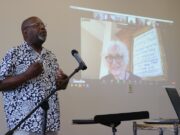













Tim Hubbard is the Republican & Conservative candidate for town supervisor. He is at the end of his second four-year term as a member of the Riverhead Town Board. The verbatim transcript below, made from an audio recording of the Oct. 9 interview, has been lightly edited for clarity (deleting repeated words etc.)
Denise Civiletti: This is an on-the-record interview, Mr. Hubbard. If you don’t want to answer a question on the record, say so, and decline to answer. We will report that, though.
Tim Hubbard: Understood.
Denise Civiletti: So if the IDA sends the CAT application back to the town board, finding that CAT does not have the financial wherewithal to develop the site, would you vote to cancel the sale to CAT, as provided in the March 2022 agreement between the town and CAT?
Tim Hubbard: As fast as I can.
Denise Civiletti: If the deal is canceled, what’s your plan for the site?
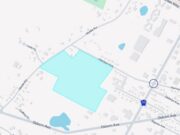
Tim Hubbard: The first thing I want to do is I want to go out and have the property reevaluated by the real estate agent, because it was years ago now. We know things have changed in terms of needs of factories or warehouses or whatever the needs are. So, I want to have that property reevaluated for a value. If this is a dead deal, which I pray it is, I also want to then introduce zoning to change what’s currently there, now, by allowing the Town Board to allow certain things by special permit. I want to put directly into the zoning that there will never be a commercial airport there, there will never be a jetport there, there will never be a cargo port there. That way it bolsters up our strength. Because who knows? Down the road by special permit, a whole new Town Board can come in and say, hey Well, then we would, again, after talking to real estate, we would decide, do we want to go back to the 52 acre [50-lot] subdivision? Do we want to land-lease land out individually? And these are things we’re going to have to discuss with them and find out what’s going to be the best for that property and the best for the people in the county and Riverhead.
Alek Lewis: You mentioned not having an airport? I know that there were some visions of what the runway would be used for, but in terms of the runways, what do you see their future being?
Tim Hubbard: Only what the current use is allowed up there right now the historical use as per the 2000 and — I’m not gonna say the day because it’s not positive in my head. But, back when they did the one study and it came out it should only be used for historical uses. Similar to manufacturing of aircraft to test, like say if you build planes there that you could test planes, like Grumman used to do, they could test the planes on the runway, take them off, land them and do things like that. If you built helicopter motors or helicopter parts, you could test them out on the runway. But in terms of any kind of commercial use of the runway or cargo use or jetport, absolutely not. Just historical uses.
Alek Lewis: I know you had said you support seeing executives fly into EPCAL using the runways?
Tim Hubbard: Yes. If you flip say Riverhead Building [Supply], Edgar Goodale let’s say he owns a jet — he doesn’t, or I don’t think he does, if he needed to have an executive fly in for the company– that’s what the use is right now. So it wouldn’t be any use any different in my mind than what is happening right at the current moment.
Alek Lewis: That’s not a historical use.
Tim Hubbard: That’s not a historical use but that is a use that has been allowed.
Denise Civiletti: What about this? You probably know that Luminati Aerospace, which now is owned by the estate of Daniel Preston.
Tim Hubbard: Correct.
Denise Civiletti: They have entered into not one, but two contracts to sell that property at 400 David Court, and one of those contracts is to a helicopter company that does charter flights and commuter [flights] back and forth. And they’re looking to, they say in their court filings, headquarter their operations there. That’s not that kind of use.
Tim Hubbard: That’s not that kind of use. And that kind of use wouldn’t be allowed unless by special permit of the Town Board, and the Town Board, and the Town Board in its current form completely opposes that. Every one of us.
Denise Civiletti: Right now, they could allow what Wings Air [the charter helicopter company] wants to do by special permit, but they all oppose it.
Tim Hubbard: Correct. But I want more than that. I want it stronger than that. Because like I said, the Town Board could come in down the road and change that completely, or allow something by special permit. I want to take that use away altogether– through zoning.
Alek Lewis: A Republican Town Board, and I know that you voted against the contract with Calverton Aviation & Technology, but a Republican Town Board got the town into the current EPCAL deal. It’s failed to get the subdivision [of the EPCAL property] needed to finish the sale. And now all this controversy with the CAT plans come into play. Why should voters trust the Republican Party and a Republican administration to resolve the Calverton Aviation & Technology matter and the whole EPCAL deal in general?
Tim Hubbard: I’m not going to speak for an entire party of people. I’m going to speak for myself. If they follow what I did and why I did it, they will have the answer to that question. And it’s quite simple: I voted against the contract. I did not think we should sell the runways, I did not think we should include the 1,000 acres of undevelopable land in that deal. And that was thrown in, and that turned me right away. I was dead set against that contract, right from the beginning when that got put in. That was it, they lost me with that. I had housing removed from that contract because Sean [Walter] wanted to allow housing in that contract. I fought with him over that, and we got that removed. So the only type of housing that could be there would be like a dormitory type housing for a scientist that’s working on the property, but no residential type housing whatsoever. So I got that out. But then, when he threw in the 1,000 acres and a majority of the [Town] Board agreed to it, plus the runways, I – absolutely not. To me, it wasn’t a good deal.
Alek Lewis: You yourself and your fellow Town Board members have said that there were never air cargo uses planned for the development by CAT at EPCAL. Do you believe that the application that the town jointly filed with CAT did not set forth plans for air cargo at the site? We’re talking about September —
Tim Hubbard: Back in September, when they announced their plan for a cargo airport. That was never in discussion. And once that came out – this has been played in the press a lot, that I didn’t know about that. I didn’t know about it until that meeting. Obviously, once that meeting happened, I knew about it. And that changed my whole mindset for anything that was going to happen up there with Triple Five and CAT. That was never a discussion. That was never anything they indicated to us in the [Qualified and Eligible] that they wanted to do. By far, not even close. So absolutely not, that turned me completely against their whole deal at that point in time.
Denise Civiletti: It was, though, part of their application, the application to the IDA.
Tim Hubbard: Yes, it was yeah, it was. Absolutely. Doesn’t mean I favored it, because I didn’t.
Alek Lewis: You voted for it, though.
Tim Hubbard: I voted for it to go to the IDA. Yes. I couldn’t vote to change what was in that application. That’s what they were presenting to the IDA, not what Tim Hubbard or the Town of Riverhead was presenting. That’s how I see that, that’s my answer to that.
Alek Lewis: If the deal with CAT and Triple Five continues to closing, you said you’d require covenants on the property that restrict the aviation use of the property, not allowing air cargo ports, that sort of thing. Is that still something you are looking to do?
Tim Hubbard: That is absolutely still something. We have sent them covenants. They have not responded back yet. And it’s now been a couple months that they’ve had them. So, this is just one more red flag in the line of what they say they’re going to do and what they’re actually going to do and what they’re not going to do. So, to me, this deal can’t end soon enough.
Alek Lewis: Do you think that the town has the authority to impose those covenants?
Tim Hubbard: Yes. We do. We absolutely do. They would have to sign it. They would have to agree to it, they would have to agree to the covenant. If they didn’t, could we make them? No. I mean, could we try to play hardball? Sure we could. But, fingers crossed, it’s never going to come to that.
Denise Civiletti: Do you think the IDA is not going to find them– I don’t want to use the words “qualified and eligible” because —
Tim Hubbard: It’s not what it is. I agree with you. But, it’s an easy way that people understand [what it is].
Denise Civiletti: Do you think that they’re not going to find them [having] the financial wherewithal to do this?
Tim Hubbard: I think it’s going to be between the financial wherewithal coupled with a plan of what they want to present to do with the property. Because it’s all been so sketchy, and so all over the place.
Denise Civiletti: But now, the way that this has evolved, the financial wherewithal question is now part one. If they make that finding, they basically get the property, you get the money. If you’re going to separate those two things, the IDA has to say ‘no, we don’t think they have the financial wherewithal to do this’ in order for it to get kicked back to you for potential [termination]. So do you think that there– let me put it another way. Maybe you don’t have this knowledge? Because you’re not kept informed of this. I would understand that. But, it was a bone of contention that CAT never submitted certified financial statements to the town during the qualified and eligible [process].
Tim Hubbard: Right.
Denise Civiletti: Have they done that with the IDA? Do you know for a fact that they submitted that?
Tim Hubbard: I don’t know. I have no idea whether they did or didn’t.
Denise Civiletti: The answer I got from Peter Curry was we’ve submitted enough for them to make a decision, which I think tells me something right there.
Tim Hubbard: Yeah, that he thinks they did, and maybe the IDA —
Denise Civiletti: He didn’t say it’s fully submitted. I asked him that question directly, and that was the answer I got. We were looking at campaign contributions and the latest reports. I’ll let Alek ask this because he was going through them.
Alek Lewis: Your political campaign received $1,000 from a lobbying firm Praxis Public Relations.
Tim Hubbard: From who?
Alek Lewis: Praxis Public Relations. Your campaign received $1,000 from them. According to state filings, the firm is a registered lobbyist for CAT, G2D [Group], and Heatherwood.
Tim Hubbard: That money will be returned, then. I did not know that. I stated publicly that I would not take any money from CAT, Triple Five, or anybody else.
Alek Lewis: My question is: have you had any meetings, business or social, with the firm Praxis Public Relations?
Denise Civiletti: That’s apparently owned by Paul Tonna.
Tim Hubbard: Oh, Paul Tonna? I know Paul Tonna.
Denise Civiletti: Have you talked to him about CAT at all?
Tim Hubbard: Yes. I have talked to him about CAT.
Denise Civiletti: What was his objective?
Tim Hubbard: He’s looking for the same thing. I imagine at some point in time, he would work for them if they came to fruition, but I don’t think it’s coming to fruition. So I don’t think it’s even really going to be an issue.
Alek Lewis: They registered as a lobbyist for CAT in 2019-2020, and 2021-22. Now, they registered again for 23-24.
Denise Civiletti: Was he advocating for their application when he came to see you? Did he tell you he was a lobbyist for them?
Tim Hubbard: No, he didn’t say it was a lobbyist for them. He said he may, he’s trying to decide whether he was going to work for them, and he wanted to know if I thought they were legit and aboveboard, and I wanted to know from him: do you think they’re above and legit? And that’s kind of where our conversations ended.
Denise Civiletti: Do you happen to remember if this was before 2019? Like during the qualified and eligible process?
Tim Hubbard: It was way after. It was this year, it was 2023.
Denise Civiletti: Then he was not being truthful? He had already signed a contract with them.
Tim Hubbard: I don’t know. I have no knowledge that he signed a contract with them.
Alek Lewis: Your campaign committee and the Riverhead Republican Committee has taken a lot of money from development interests, including those with applications in front of the Town Board, the Planning Board. How can you assure voters that those contributions don’t influence your decisions as Town Supervisor?
Tim Hubbard: Very simple: I can’t be bought. I’ve never been able to be bought. 32 years as a police officer, I’ve been an honest police officer, I’ve been an honest person my entire life. Give me money from wherever they want to give me money from, at the end of the day, I have to vote for what I think is right for the Town of Riverhead. Very simple. Nobody can buy me. Nobody, not even my wife. And she tries.
It’s the nature of the beast of campaign finance. G2D isn’t building anything in Greenport, so they’re not looking to donate to anybody out in Greenport. Obviously, their interest is here. So they’re going to donate to candidates here. I don’t know if the other side received any money from them. I don’t check into that stuff. But that’s just how it goes. I know the other side has asked for money from them. I do know that. And I do know that at least a couple of entities have told them flat out no. But that’s their business, not mine.
Denise Civiletti: You’re in the middle of doing the comp plan update. Everybody has been talking about industrial development. It’s a big topic, especially in Calverton, where most of the industrially zoned land is. Everybody on the ticket says they are opposed to mega warehouses and massive logistics centers. Do you think that those types of structures are appropriate in the Enterprise Park itself?
Tim Hubbard: Inside the fence, I would say more so than outside the fence. But having said that, you still have to look at the size of structure that you’re talking about. Our definition in town code for warehouses needs to be changed, and it’s going to be changed with the comprehensive plan. 2003, when they came up with the last comp plan, a warehouse was what we all think was a warehouse, single story large, wide open building, where you stored stuff. That has changed so much in 2023, and our code has not changed with that. So we need to make sure that we change the code with the comprehensive plan.
And also make sure that everything that goes along with that, because I don’t remember the number is, like 157, or there’s different codes for definitions of warehouses. But none of them deal with these large logistics centers, and they’re entirely different. So we need to put something on our code that deals specifically [with large logistics centers].
Denise Civiletti: Like in the traffic manual, how they classify the different types of traffic.
Tim Hubbard: Yes, the traffic study. Everything’s catching up to technology, or trying to catch up to technology.
Denise Civiletti: If it makes you feel any better, we’re not alone. There’s plenty of municipalities, counties —
Tim Hubbard: I get that, but it doesn’t mean that we got to let the floodgates down and let all this stuff come in.
Alek Lewis: You’ve talked about maybe not allowing logistics centers in the town.
Tim Hubbard: Correct. The only way you could sell me on a logistics center is if it backed right up to the [Long Island] Expressway, and the entrance and exit were right to the expressway. This way there’s no inside Town of Riverhead infrastructure damage that could happen, and the truck traffic–
Denise Civiletti: Like if NorthPoint gets that entrance that they were looking for.
Tim Hubbard: They were looking to get one from the New York State [Department of Transportation], because their property adjuncts them right next to the two hotels right there, and if they had that, they could come right out and go right on to the expressway.
Denise Civiletti: Last I heard, the DOT had not replied to them.
Tim Hubbard: That’s my understanding too. I’ve not heard any movement on that. Their other option is, because they do back up to the expressway, is to go directly to the expressway with it. It’s even harder to do, from what I understand. But, you know what? If that’s your project and that’s what you’re looking to do, then the onus is on you to make that happen. It’s not on me, and it’s not on the town because we don’t want your trucks on our infrastructure.
Denise Civiletti: Because that would be tractor-trailers bringing their goods there, and smaller trucks —
Tim Hubbard: Coming, and picking up, and going. It would be pretty much nonstop.
Denise Civiletti: Do you think that there’s too much industrial zoning in Calverton?
Tim Hubbard: Yes. I think the ‘03 plan allowed that, and I think that’s one of the reasons I’m asking for the moratorium, because we hoped to be much further along with the comprehensive plan. Calverton was – and again, I keep going back to 2003– but things were different in 2003. I understand why they did what they did, and not having the foresight that you need with today’s world. But having said that, there was a lot of industrial property that was zoned industrial in the Calverton area.
Denise Civiletti: Do you favor reducing some of that?
Tim Hubbard: I would favor reducing some of that. Absolutely. Absolutely.
Denise Civiletti: If the Town Board adopts the comp plan, and presumably, it will, and then has to implement it, in the code, you know that there’s going to be some pressure, because we’ve seen it already, on the part of landowners, developers, would-be developers, saying that it shouldn’t apply to them. They should be grandfathered, because they’re already under review. You support that?
Tim Hubbard: I support exactly what the moratorium is, and the moratorium states that, if you have had a positive findings statement administered or given out, then you’re — you would be covered. If you haven’t, then you wouldn’t be.
Denise Civiletti: You would favor putting something like that in the code?
Tim Hubbard: I think that was the fairest way of doing it. Yes. And the only one I believe that affects is HK Ventures. The reason I say that is they’ve been at the longest of any of these warehouse projects, I believe, that are out there, and they are further along than any of the other projects.
Denise Civiletti: It’s gonna depend on how quick the code gets adopted.
Alek Lewis: You have this six-month moratorium, right? It’s going to probably take longer than that to adopt new code. Would you support extending your moratorium? And do you have support with your fellow candidates to do that?
Tim Hubbard: My candidates that are running now do support the moratorium, and I do believe, in my conversations with them, they would support extending that moratorium. So that’s how I have to look at this right now. If I can get six months right now, that will get me beyond January 1. The other side, I believe, is in favor of doing it too. So either way, there’s going to be a change on the board. And maybe, with a new mindset on the board, we would have a majority to continue it if it needs to be [continued]. Because I agree with you– six months, it should be longer. And I tried. Trust me.
Alek Lewis: You put your moratorium proposal as an accomplishment for yourself, but you failed initially to get [Town] Board members on your side. How can the public trust that, if you’re elected, that you’ll be able to effectively lead the board?
Tim Hubbard: Well, if you’re going to base my leadership skills on whether or not I can convince four other people to vote a certain way on one project, that’s an extremely limited scope to judge me by for leadership skills. I would prefer my leadership skills are looked at through all of my accomplishments that I’ve made, including my past eight years on the board. I have also been able to get the majority now to come to the moratorium. So that is a sign of good leadership.
Denise Civiletti: Even Yvette [Aguiar]?
Tim Hubbard: I don’t know about that.
Alek Lewis: For a public hearing.
Tim Hubbard: Yes for a public hearing.
Denise Civiletti: There’s a lot to be said about the budget.
Tim Hubbard: Always is. There’s a lot that goes into that budget.
Denise Civiletti: As Supervisor, you’d be responsible for preparing a tentative budget. What would your budget priority be as supervisor? How would you meet those goals given the financial pressures being created by the town’s growth, as well as external factors like inflation?
Tim Hubbard: That’s a hypothetical question because you’re asking me to say how I would do something in the future, and I would have to have the information in the future such as the current rates of health insurance, current rates of our insurance being self insured with the town, these are all variables that from budget to budget change.
So I would certainly work to keep the budget as lean as I can keep it. But I will say this: in some of the lean budgets we’ve had in the past years with other leadership, I think we’ve kicked the can down the road on some things. Now, that’s coming back to hurt us now. And we’re seeing that from simple things like infrastructure, with the water department. We have made improvements. I mean, we’re up to I think 100 people on the police force right now with the last five that we’re going to hire puts us up to 100. That’s the highest it’s ever been. That’s important, because the town is growing. As you know, we have more and more people and we have more and more services that are needed.
That’s one small part of the budget, but in terms of doing a budget and how it’s done is what [Financial Administrator] Bill Rothaar does, when he submits things to you for the budget, he’ll go back eight years back, because the budget is based on fact, and on estimates. It has to be because there’s no other way. You can’t guess what’s going to be in the future. So, he goes back eight years, he used to do five years, he now goes back eight years, and gets a roundabout average, a conservative, very conservative average, and then looks to put that into the current budget like he has just now with what’s been presented to us. Then he gets the levies from the assessor’s office, where they give him any new construction that has been CO’d in the course of the past year, or from March [taxable status date is March 1] So then that’s put into the formula. And then, all the needs of all the department heads are put in and everything else. And then you look at this number and say, oh my God, I wouldn’t make it past day one of my inauguration if I was lucky enough to get elected if I put up a budget this big. So now you have to trim down. And you have to be careful where you trim. And I think sometimes in past budgets going back the past six years, or eight years since I’ve been on the board, it was always nice to say hey, we didn’t pierce the tax cap. That’s great. People love to hear that. That’s good, if you can do it.
But this year alone, the health insurance rates and the town insurance rates, put us up to piercing the budget. Without adding one other iota to that budget. And we need more cars for code enforcement. We need more cars for the fire marshals, we’ve got people sharing cars, we need more cars with the police, and some of the vehicles we have on the road have seen their time. We can’t keep operating that way.
Denise Civiletti: We were also asking: what are your budget priorities?
Tim Hubbard: Well, my priorities always have to be the infrastructure of the working of the town. And that’s between each department head and what their mandatory needs are, not their wants, but their needs. We have right now we’re struggling with $300,000 for a new payloader for engineering that has crapped out, it’s done. It’s been fixed the last time it can be fixed. So we’re trying to figure out where we can get the $300,000 to be able to do this because they have to have it. They can borrow one from the highway department. But they both need one. So you know, in an emergency situation where we’re at now, because we’re down one payloader, they have to share. And they have to play nice in the sandbox. And they’ve been doing very good with that, as is. But it’s not always the proper way to run a town. And I’m not saying we have to go out and raise budgets drastically, but we have to make sure we take care of the important stuff first. And the important stuff is to operate the town on a day to day [basis] as a business. And sometimes budgets get a little carried away and they’re like: ‘well, you know if I had this, if I had that software,’ the software you brought up at the one – the meeting. It’s only $30,000. And you have to hire somebody. Yeah, it’s $30,000, and now it’s $130,000, because you got to hire somebody to do just that, with benefits and everything else. So, you have to look and you have to prioritize the needs of what are absolutely necessary to get the job done. That, to me, is taking that fine-tooth comb through the budget.
Denise Civiletti: So, what would the budget prep process and budget review process with the Town Board look like under Supervisor Hubbard?
Tim Hubbard: It will be a little bit different, because currently, and I pushed for this since I’ve been in office, but the Supervisor has not allowed it. You, as the supervisor, and Bill Rothar, and your financial person, who at this point in time is Debi Burkowski, will sit down with the department heads, and also the liaison from the Board for each department. I’ve asked as liaison to be able to sit in on these meetings, so I know what my guys are asking for, the people that I’m liaison to, my departments, I know what they’re asking for. Now we get this tentative budget presented to us.
Denise Civiletti: Wait, you were not allowed, as liaison, to sit in on those meetings?
Tim Hubbard: No. It was frowned upon. It was frowned upon.
Denise Civiletti: The Town Board used to have the meetings with the department heads in public, even, at one point in time.
Tim Hubbard: I would not be against that. There are some things, obviously, you can’t discuss publicly, when it comes to the budget, but there are other things that can be discussed.
Denise Civiletti: Individual pay and stuff like that, but should we have five employees or four?
Tim Hubbard: Correct. The process is even, really, I feel, it’s been closed off, as a board member, it’s been closed off to me by not being able to go in, as a liaison, to departments.
Denise Civiletti: You would change that?
Tim Hubbard: I would definitely change that. Absolutely change that.
Alek Lewis: You’ve made your position on the Riverhead IDA pretty clear, that you support the institution to promote economic development in the town.
Tim Hubbard: Yes.
Alek Lewis: Some of your opponents would like to try to dissolve the IDA.
Tim Hubbard: I would not do that. I don’t support them.
Alek Lewis: You don’t support doing that. But, besides transparency, would you like to see the IDA’s activities change at all, in any way? And what businesses should the IDA be attracting to the Town of Riverhead?
Tim Hubbard: The businesses the IDA should attract are businesses that we don’t have, and businesses that are going to provide a working salary that people can afford to live on. We don’t need the IDA [to], and they don’t, grant benefits to banks and gas stations. We have tons of that. But the type of —
Denise Civiletti: Warehouses?
Tim Hubbard: Warehouses to some degree, yes. Like the logistics center as an example. Again, I’m not in favor of logistics centers unless they are right against the expressway, they come and go from the expressway. But, a logistics center presents a whole different scenario than just a warehouse. And again, we go back to the definition through the traffic study. But it’s meaningful, because there are two completely definite – there’s actually probably even more than two definitions for warehouses. And we have to look at that. We have to say: ‘is this going to benefit us?’ Is this going to give us a job?
I’m not knocking Tanger because a lot of people work at Tanger, and it’s been great. My kids have worked there in high school and it’s great starter jobs, but you’re not going to make a living unless you’re the absolute manager of that store at Tanger, and just working in retail. So the whole point of it is to get back something that’s going to provide jobs, not just minimum wage jobs, jobs where people can afford to stay. Where my grandchildren, where my children can afford to stay here and not have to leave and go somewhere.
I want jobs that are going to pay a salary because God knows it’s expensive to live on Long Island. And the grass always seems greener down South and in many other states but they have their issues also, you know. You can go down south and pay a lot less in school taxes or pay no school taxes in some places, but the education your child is getting is minimal.
It’s the bare bones. So there’s a give and take with everything. The price of a Chevrolet is the same in Mississippi as it is in New York. The price of that T-bone steak is the same in Riverhead as it is in Arkansas or Florida. But things that are different – our taxes, our utilities. Yes, they can be cheaper, but you get what you pay for it too. You have to keep that in mind.
Alek Lewis: Would you like to see the Riverhead IDA’s activity change at all?
Tim Hubbard: Well, the one thing and I said I favor this is with the legislation going through the state about having the school to be able to pull out of [IDA tax exemptions]. So they’re not part of it, the school would get their fair share of taxes right from day one, and if the town wants to stick with the IDA, and grant certain abatements on the town budget, then fine, but the school should have the option to pull out, to do that. I also would tell you, and I firmly do believe this when the school district came out and said they’ve lost like, I think it was $15 million over the past nine years – they didn’t lose that, they never had that. Okay, if there was no infrastructure improvement, if there was no developments that came in, they’d still be getting that same chunk, little chunk, little piece of money on a piece of undeveloped land. So they’re getting more than they ever would have gotten if it stayed undeveloped.
Denise Civiletti: But that assumes it’s never developed. If it is developed, and they get no abatement, then they get full taxes.
Tim Hubbard: Yes they do, yes they do. But this is where the IDA has to bring in businesses that are needed that can provide the jobs to high-paying jobs, not just any application that comes forward. I mean, if you ask me, I know they’ve turned down many applications. I also understand how —
Denise Civiletti: How do you know that?
Tim Hubbard: Talking to [Riverhead IDA Executive Director] Tracy Stark[-James].
Denise Civiletti: Do you know how many? Do you know which ones they were?
Tim Hubbard: Off the top of my head, no. I’ve had conversations with her [Stark-James]. They don’t take everything that comes in. I’ve had conversations with [Riverhead IDA Treasurer] Lee Mendelson. They don’t take everything that comes before them. The problem with the IDA is the way it’s set up, and how the IDA survives, is by taking money from projects that they grant. So it’s an ugly look for the way that it works. But I’m not going to be able to change that as Town Supervisor, and as much as New York State is going to have to change the way that they operate
Denise Civiletti: Unless the town allocates funds towards the operation of the IDA.
Tim Hubbard: Unless we financially support it, which we did with the $50,000, back a couple of years ago.
Denise Civiletti: That’s an option, then it’d be less dependent on allocation revenues.
Tim Hubbard: But if you think about that for one second, if the town were to do it, you’re still taking it out of the pocket of the taxpayer. It’s still coming from the same well. So it’s just a matter of who’s going to do it and who’s not going to do it. I’ll tell you a perfect example of this, and this is off the IDA a little bit, but I met last week with the school officials– with Colin Palmer and Dr. Tornatore, [and they] said ‘hey, we would like to see two school resource officers put back in, one in high school, one in the middle school,’ and we met with him about that. And the contract in the past was school paid for half town paid for half. When we met with Colin Palmer and Dr. T, Colin indicated that the school doesn’t have any money to pay for it, and the town should have to pay for it. I disagree with that. I think it should be a split. It’s not even a split because what we as the town are going to have to do is: we provide them with two police officers in the school. We have to hire two more police officers to replace those police officers on the street. So we’re paying 50% of what’s going into the school, and we’re paying for two other cops to come in and replace those two cops. So I think that’s a more than fair split. He didn’t seem to think so. But he was going to take it back to his board, and that’s where the meeting was left. So I haven’t heard anything since then.
Alek Lewis: Do you think there’s an affordable housing crisis in Riverhead? And what should the town’s role be in making living here in Riverhead affordable?
Tim Hubbard: Is there a crisis? No. Is there a need? Yes. Two completely different words. Crisis means an epidemic of people who can’t afford to live anywhere, and we don’t have that. Do we have a need for affordable housing? Yes, we do. We’ve done a strong– of the five East End towns, Riverhead has done a very good job providing affordable housing. Now when you say ‘affordable,’ what is affordable? Because if you start using the formulas that they use for the County of Suffolk, and for Long Island, and break that down and break that down out here, into salaries of what people are making, it’s not really affordable. I mean, let’s get real, if you have to pay $3,000 a month for an apartment, that’s a huge hit. That’s a huge hit.
I don’t mean to point just to you [Alek], but when I’m saying you, we’re talking about the younger generation, you get out of college, you probably have college loans, you don’t come out of college– and this is one thing I will fault your generation for, they do like to come out and start at the top. That’s a misnomer, that I don’t know where they think ‘I got my degree now, I’m not going to start out down here, I want to be up here.’ Well, the people that are up here started out down here, and they all have to work their way through. That’s how the process goes. I say this to my own kids, too, because they’re like, I wouldn’t take that job and only pays blah, blah, blah, and I’m like, ‘what do you think that job should pay?’ And now look at the job you’re going for. How can that company afford to pay you up here, when they’ve got this whole scale of employees, it just doesn’t work easily that way. So everybody has to buy their fair share.
College is so expensive, it’s difficult. I know, with my five kids, I absolutely know there’s student loans, I couldn’t put all five of my kids through school on a cop’s salary, and I made a good living as a police officer. But I couldn’t pay full tuition for them. So there had to be student loans involved. They’re still, to this day, paying off student loans, and they will probably for quite a few more years to come.
It’s unfortunate, but getting back to the affordable housing. Can we do more? Yes, we can do more. Part of what we’re looking to do is first-time home ownership. [Community Development Director] Dawn [Thomas] is pushing real hard at this. We’re trying to do it, we get all these things that come into planning pre-submission, or all the developers come in and say, ‘hey, I want to build this, I want to build these apartments, I want to build that,’ and we’re like, ‘we want you to build stuff that’s for sale.’ Because we want people to be able to afford to go out and put a small downpayment on, say, a townhouse or a condo, get their feet out into the market, get a mortgage and get some equity built for themselves. So that’s where we’re pushing hard to get some of these developers– and it’s working, because some of them are saying, ‘I can’t make good money doing that. I make better money by doing rentals. But I’ll give you– out of 20 units, I’ll make five of them that are available for sale. How’s that?’ That’s a start for us. That’s a good start for us, because we want to see that continue.
Alek Lewis: What has the town done to incentivize that through its zoning since you’ve been on the board? What does that look like in a Hubbard administration?
Tim Hubbard: I’m not sure zoning would even address that. It does to some degree, you got to allow townhouses and condos. Yes, and we have zoning that allows that already. We may have to look at it and see if we can make it more, maybe down Second Street way and coming closer to town where, again, people are still around, they’re gonna flourish the town. They’re gonna help the town become vibrant and flourish, but if they’re paying those higher rents, which are affordable housing at say Riverview Lofts, $2,400, $2,200, $2,600-a-month, everything’s going to the rent, and they’ve got nothing to show for it at the end of the month. Whereas first time ownership, like Patchogue did very successfully on the south side of Montauk Highway, first time home ownership– plus they take care of it better. When you’re renting a place, you may not want to upkeep it as much as when you own it, and your own equity, your own sweat equity, is into this house. You’re going to take care of the place. To me, it’s a win-win.
Denise Civiletti: You may know the answer to this, but I’m just not familiar. I know that with these rental units, there are a host of different tax incentives that are provided by the state, that Dave Gallo knows about. Is there anything comparable to that for homes to be sold, or townhouses? Is there any kind of state tax incentive?
Tim Hubbard: Well, there is. I know Dawn [Thomas] is working on something through the county for first time home ownership, where there is a percentage or there is some monies that are available for each person to use towards down payments. But I’m sure there’s also a list of things that you must qualify for.
Denise Civiletti: Theoretically, the state tax incentives help these developers build affordable units through these different taxes that they get. They get income and other tax breaks at the state level, and I don’t know that there’s anything like that available for home ownership. There could well be, I just don’t know it. That would be something I’d be interested in finding out.
Tim Hubbard: I agree. 100%.
Alek Lewis: Would you be in favor of the town adopting the .5% real estate transfer tax?
Tim Hubbard: I want to look at that again, because we turned it down last year. I want to look at that again, because the way that was explained and discussed to us– I’ve heard different variations of it since then, and I want to review that again, because my thoughts and ideas on that might have changed. But, I want to see. Without it in front of me and reading it and seeing exactly what all the fine print is, I don’t want to say yea or nay, but I would consider it.
Alek Lewis: If that were done, and you get that money, what would you want to see that money go to?
Tim Hubbard: Well, that would go to assistance, to help people buy their first home, condo, townhouse, whatever it may be. Yes, absolutely. To me, that’s what it’s for.
Alek Lewis: Something that, along with the community housing fund, towns are going through is making housing departments for their towns. Is that something that the town would be interested in? Making something to assist home buyers?
Tim Hubbard: I would certainly look into it. I wouldn’t be against it. I would just have to know more particulars about it before I would want to move forward with it. On the surface, it sounds like a great idea, but so do a lot of things. Let’s get to the fine print.
Denise Civiletti: Question about the pattern book. Would you vote for a code to implement the pattern book?
Tim Hubbard: Yes. But it hasn’t been put up yet.
Denise Civiletti: That’s now tied into the master plan update?
Tim Hubbard: Yes. Correct. I was leery of that, when that first came out with that first pattern book. I referred to it as an expensive coloring book. The more I got into it, the more I saw how it worked, I admitted, right at one of the — at the dais — that I was completely wrong. I’m glad we went that route, I’m glad the other board members decided to go that route.
Denise Civiletti: It was a novel concept to me. I also thought it had a bit of a stupid name. Pattern book? It’s like making dresses.
Tim Hubbard: I agree, but I think the work that [Urban Design Associates CEO] Barry Long has done has assisted us in everything that’s going on in the town. Just $675,000 — that’s a lot of money. No, that was 675, it was 175. The comp plan was 675.
Denise Civiletti: Would you commit to codifying the recommendations of the comp plan, if it’s adopted by the Town Board?
Tim Hubbard: Yes. Yes. If it’s adopted by the Town Board, absolutely I would.
Denise Civiletti: Do you see yourself supporting what comes out of the planning process, as in the comp plan to vote to adopt it?
Tim Hubbard: Yes.
Denise Civiletti: The vote to adopt it? You have a good view of what’s going on, you’re the liaison.
Tim Hubbard: We have a good view, I like the direction we’re going, and I’m very happy with BFJ. We got off on the wrong foot with the others, but there was more to it than just the other company, AKRF. There was more to it than just them. I think there was some slacking on our side, too. So, hopefully, we’ve alleviated that at this current time. But time will tell.
Denise Civiletti: County Executive Belone’s administration, his proposal for the sewer-septic tax. Do you support that?
Tim Hubbard: I support that, and I’ll tell you a couple of reasons. First and foremost, environmentally, I support it. Because there’s too many wetland areas where septic tanks are just leaching right into the groundwater and right into our estuaries. So I do support that. I do realize how big an endeavor that is, for that to happen, and that it probably will never happen in my lifetime completely, but environmentally, number one.
Denise Civiletti: Which won’t happen in your lifetime?
Tim Hubbard: Having it completed. Have the sewer lines all completed, where everybody on Long Island is hooked up to sewer. I know that’s not what they’re talking about per se with the tax, but I do support the tax because what it’s going to provide is safe for the environment, it’s also good for jobs. Our unions will be able to put many people to work on this job with the tax and money that’s collected to be able to complete some sewer lines and to do what they’re looking to do.
Denise Civiletti: That’s one of the reasons why this got held up in the County Legislature, because West End legislators believe that there was not enough money coming to sewer projects, which benefit mostly western Suffolk. They also made the case that those are the projects that are going to provide good-paying union jobs, whereas these advanced septic– these companies that are basically small companies, they’re not providing that kind of workforce. So, I think those were the two big things that held it up.
Tim Hubbard: I’m also not convinced that these advanced septic systems that they’re putting in are the best that they can be at this point in time. I think that was rushed. Because, when they first presented them to us a few years back, I remember a couple of companies coming in, doing presentations to us as a board, and one said ‘we’re 96% efficient, we’re 82% efficient, but we’re better than the 96% one, because this, that and the other thing,’ and now you see someone coming in, and I actually signed up with the county to be a guinea pig for that and have one put in in my yard, and they called me and said ‘you’re a detective with the police department, and if we put this in your yard, we’re gonna have people coming to your yard all the time to monitor it and check it. Are you okay with that as a police officer? Because we’re leery about putting it in a police officer’s yard.’ I’m like ‘that’s kind of odd,’ I have no problem with this, this is part of being the guinea pig, you have to follow through and make sure it’s going to work. I said ‘that doesn’t bother me in the least,’ and that was the reason they gave me for not being one of the finalists. I was like, ‘okay, whatever.’
But I was interested in it, because I live on Hubbard Avenue, and I’m not all that far from Indian Island and water, and I can remember putting a well in with my dad, and we were only 18 feet from water — actually, 12 feet from the basement, 18 from ground level up top. I’m thinking: ‘that’s not very far.’ I mean, I’ve got a cesspool, a three-ring cesspool in my front yard, with a septic tank first, and then the three-ring cesspool, and I’m thinking all the time: it’s in the ground, it doesn’t just stay right there, it infiltrates out and spreads and this can’t be good, being that close to water. So, those are concerns of mine, and this new system, I’m hoping there’s going to be even better systems that come down.
They’re not cheap, I know there’s grant money available to help people put them in, but there’s maintenance to them yearly. Whereas my cesspool that I put it, I got probably 28-29 years out of before I had to have it pumped for the first time. But these things, there’s like a $475 fee at least every year for them to come and, I don’t know what they do exactly, but I know there’s a fee, a maintenance fee. And you have to use them. They were saying seasonal houses are having problems with them, over on the south side. This sounds ridiculous, but they were paying people to go in and just flush toilets every once and a while to keep them moist. Paying them to poop in their toilets – I’m not kidding you. I was told somebody was paid money to do that.
Look how much this has evolved in decades since they first started talking about this look at this look at the battery energy storage systems, the anaerobic digesters, all this stuff we never heard of before, that all of a sudden is cropping up in our face.
Denise Civiletti: Did we miss anything? We’ve been talking for like 55 minutes, almost an hour.
Tim Hubbard: This is how interviews should be done, just for the record I — this debate stuff where somebody says something and you can’t go back at what they say. To me, there’s not a lot to get out of that… This is how it should be.
The survival of local journalism depends on your support.
We are a small family-owned operation. You rely on us to stay informed, and we depend on you to make our work possible. Just a few dollars can help us continue to bring this important service to our community.
Support RiverheadLOCAL today.
