




















“To this day I don’t know what my draft number was,” Ronnie Smith of Riverhead says. He didn’t wait for it to be called.
Smith and his buddy Johnny Crump signed up just before graduating from Riverhead High School in 1967, after a military recruitment day in the high school gym. All the branches of the military were there. They were both 17 years old.
“We knew when we graduated there wouldn’t be many openings for us to get a decent job or some time of training in Riverhead,” he said. They thought the military could offer them that opportunity.
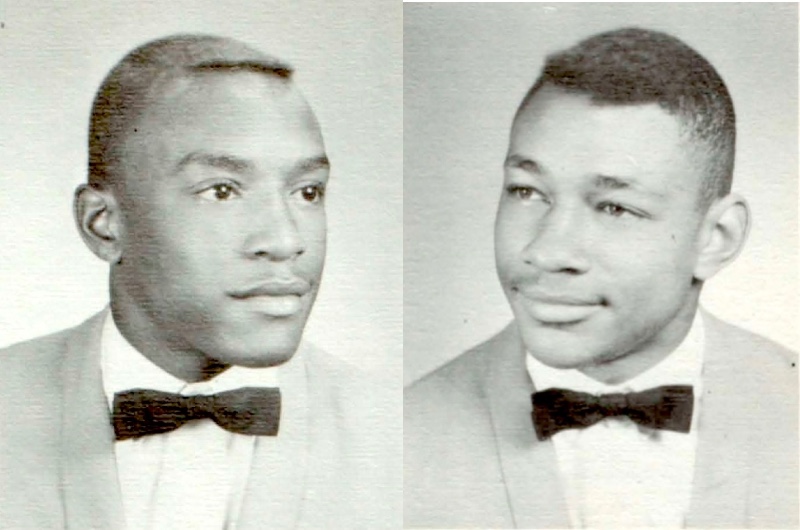
“Both of our fathers had been in the Army so we decided to go that way,” Smith recalled. His father was a World War II vet who served as a mechanic/ truck driver. “That’s what they allowed soldiers of color to do. Even though you were trained to fight, you weren’t allowed to,” he said.
Smith and Crump signed up on the 120-day delayed enlistment program and didn’t have to report until Sept. 11, 1967.
“We were supposed to be on the buddy plan and attend heavy equipment school but the army didn’t honor any of that,” Smith said. “Once they got us to say our ‘Ido,’ we found out that like anything else, dealing with the government, make sure you get anything you’re promised in writing,” he said.
Smith was named a squad leader and then a platoon leader in basic training, which he and Crump had at Fort Gordon, Georgia. Right after that he was shipped off to advanced training. That’s when he found out he wasn’t going to heavy equipment school as promised. He was headed to administration school.
“I scored higher in administration than I did in technical,” he explained. “Administration is the clerical end of what the Army does.” After going through that, he was told he was scheduled to go to ranger school. “But the Army really pissed me off,” he said. He told them no, he didn’t want to go to ranger school.
“That’s when they shipped me out,” Smith said.
After a brief leave to see his family, he reported to Travis Air Force base in California on March 1,1968. Within a few days he was on a flight to Hawaii, the first leg of his journey to Vietnam, and 22 ½ hours later he landed at Long Bin airport in Vietnam. He would be there “11 months, 23 days and 7 hours.”
“When they opened the doors of the jet in Nam, the heat just hit you in the face,” Smith recalled. “And the smell.” The smell — which he can still conjure — was from burning human wastes, he said. It was a practice that would cause bronchial problems for soldiers in later life, he said. It was just one of several things that caused many health problems for soldiers who spent time in Vietnam. Some of the problems didn’t manifest for months, even years.
“I never let my guard down the whole 11 months, 23 days and 7 hours,” Smith said. “Even to this day I always have to know where I’m at and what’s around me. I don’t like being in the middle of crowds. Even when we go out
I’m always watching. I don’t like to sit with my back to the door. I like being able to see everybody and what they’re about. It’s a trait that I picked up there,” he said.
He’s carried other “traits” with him in the nearly 60 years since his deployment. Things trigger reactions ingrained in him as a matter of survival.
“I see things you might not notice when I’m driving. I learned that driving convoys. When I’m walking — in Nam, walking meant trying to stay away from mines and trip wires. Today when I’m out with friends and family, I survey the ground area. I watch the trees and things like that.” He paused to consider other manifestations of those “11 months, 23 days and 7 hours.”
“Certain smells never leave you,” he said. Certain sounds – When I’m outside and the birds stop chirping or the crickets go quiet, I know that there’s something in the area. Nine times out of 10, I’m correct,” he said.
“I don’t go to concerts or too many outings. For a long time, you see packages or you see kids with something in their hands and you have to tell yourself to relax, you’re not in a situation where you have to be on guard 24/7,” he said.
Smith, 76, is still working to shake off those feelings. His sons and their friends “have helped me come back to the land of the living,” he said.
“I don’t think people realize…Most of us were 18 or 19 to 20. Those are the years when you’re supposed to be having a good time. I had my 19th birthday in Nam,” Smith said.
“I just never really thought about — You know, you’re sitting in history class one moment reading about the wars…” He lists them all. “And now you’ve got your ass right in the middle of something that you never really thought about being in and, you know, you tell yourself 8, 9 or 10 months ago, you were just worrying about trying to get the family car to go on a date.”
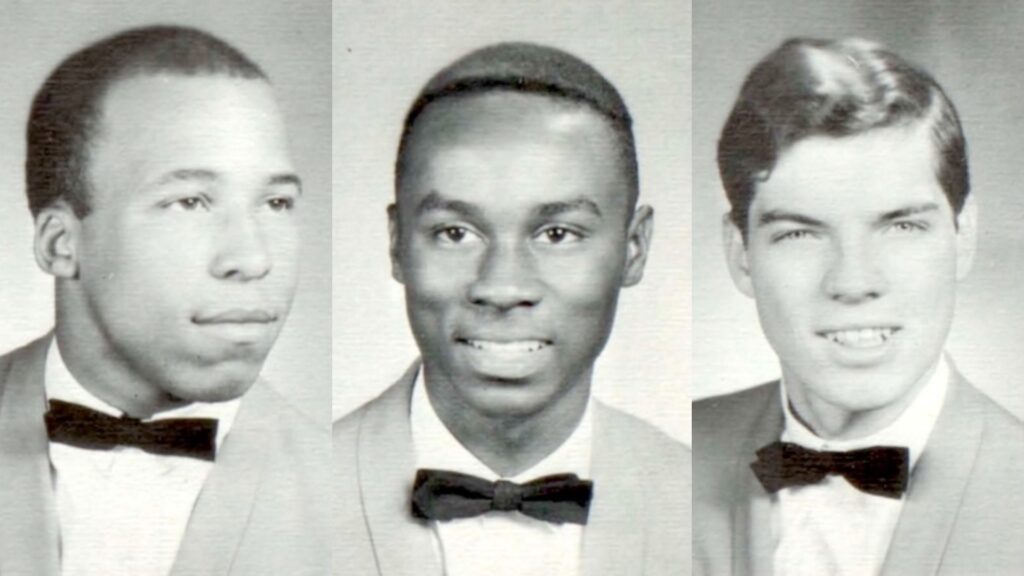
He said he realizes he’s one of the lucky ones. Three guys he graduated with in the Riverhead High School Class of 1967 never came home. “Frank Tinsley was the first one of our group. He was killed in our sixth month there, and the following January, that’s when Garfield [Langhorn] was killed, and after that, Jimmy Walters.”
He grows silent. “I thank God,” he says. “I don’t talk about anybody’s religion or whatever. I just know there’s a higher power out there. I am a very fortunate person.”
Smith has post-traumatic stress disorder from his “11 months, 23 days and 7 hours.” He’s had lingering physical ailments related to his time in Vietnam. He He ticks them off: An overactive thyroid that required radiation treatment because of Agent Orange. An essential tremor that looks like Parkinson’s but doesn’t affect his brain. Bronchial conditions from the burning of human waste. Polyps throughout his body, most benign others required treatment.
Smith initially thought he came away unscathed, but as time passed he realized that wasn’t so.
“I see a psychologist once or twice a month now because I have thought about ending my life,” he said quietly. “And if it wasn’t for the strong family support I have, we wouldn’t be talking right now,” he said.
“If it wasn’t for the guys in Iraq and Afghanistan we wouldn’t be getting anything [from the federal government] because nobody wanted to acknowledge we existed,” Smith said.
“This country talks a good game, but it’s bullshit,” he said. “They don’t honor the veterans like they should. The government waits for you to all die off
Then they put the next group on hold. They want to crucify you if you don’t want to serve or go. But then if you do…” Smith’s voice trails off and he doesn’t finish the thought.
“The recruiter said we could get into any school we qualified for.
Schooling, healthcare, a loan for a home…” Those were the benefits the recruits were promised, Smith said. “I got out with an honorable discharge. I had my medals for my service. But when I went to apply for a home loan I was told that I didn’t qualify because I hadn’t worked long enough to establish that I had a job.”
Without the promised training as a heavy equipment operator, he couldn’t get the kind of job he’d hoped for — the one path where he saw opportunities for a young Black man without a college degree.
Though the civil rights movement brought big changes to many parts of the country, and despite Riverhead schools being integrated long ago at that point, neighborhoods were still segregated and opportunities were not equal for Black and white residents — in housing, employment or access to financial resources.
There was still a lot of racial prejudice in hiring, veteran or not.
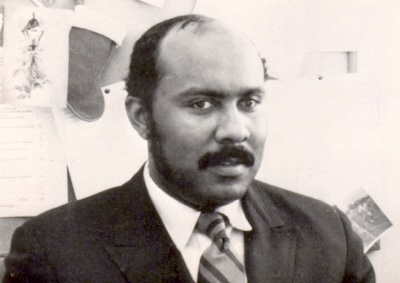
He got lucky, he said, meeting Antonio DeGrasse, then the only Black administrator in the Riverhead Central School District. DeGrasse got on the phone and got him an interview with the director of the computing department at the State University at Stony Brook, Smith said.
“I filled two quotas: veteran and Black.”
They hired him on the spot, he said. He worked at the university for 44 years. “When I retired I was assistant manager for data at the university hospital.”
Race played a large role shaping his experience in the Army as well as in civilian life both before and after the service.
For one thing, he was stationed in Georgia for basic training and after he returned from Indochina. Smith said he thought about re-enlisting, but didn’t want to spend his time in the South.
“It was easier being in Nam than in Georgia,” he said. “In Nam I had a weapon to defend myself. Down South I didn’t.”
Smith said he lucked out with the noncommissioned officers he had in the Army. His sergeant sent him to school for data processing, which helped him after his discharge, as it turned out.
He was made squad leader and then platoon leader. “When our squad was assigned to mop the floors and I gave the order, a white soldier told me ‘My people don’t take orders from your people.’ Then I showed him what my people could do. I stuffed him in a foot locker and gave him an ass-whupping.”
Another time, in Vietnam, “a reb” — a “rebel,” a guy from down South —was “upset when promotions came down and his name wasn’t on the list but a group of brothers were,” Smith said. “The guy was trying to throw his weight around. He got a butt stroke [with a rifle] to the chest and chin,” he said. “I was the one that gave him the butt stroke… I’ve always had a bad temper but I learned how to control it at a young age.”
His interactions with white soldiers weren’t all like that, though.
He was assigned to be the driver and body guard for a warrant officer. “My job was to make sure, when he had to go outside of the gate or to some meeting, to make sure he got back safely,” Smith said.
“He was a man from Alabama but he was a good man. I was his driver and he even made it possible for me to come back home a week earlier than I should have because he didn’t want to leave me in country after he left,” Smith recalled.
“He did not see color. All he saw was another soldier.I enjoyed protecting him and working for him. A lot of the other soldiers of color felt the same way about him. His name was Mr. Parker.”
In Vietnam, he “learned that blood is red and when you’re in a do-or-die situation, it doesn’t matter the skin tone, it just matters that you and that other guy are trying to survive,” Smith said.
“I also learned that sometimes I could be just as bigoted as some of the guys from the south. You know, you’re raised …I wasn’t raised to hate, but sometimes you can develop a mistrust of people because of the way they want to treat you,” Smith said.
He was discharged in 1970.
“Coming back here to Riverhead, I wanted to make sure that people knew that this was my home town too. And I deserved everything that anyone else had — Black or white or red or yellow, male or female… I worked hard. My parents worked hard. My grandparents worked hard. We were a military family since WW I. We had people that served in all branches of the service.”
Being in the military reinforced what his parents and grandparents tried to teach him, Smith said. “You don’t judge people by their looks.You judge them by the character they exhibit.”
But it didn’t always work that way. He bristles at the thought that the generation that fought World War II was “the greatest generation.”
He called the book by that title “bullshit.”
“They weren’t the greatest generation,” Smith said. “We fought and fought as hard as anyone did.
“That generation came back and picked up where they left off with their bigotry and racism, the lynchings and bombings and burnings and the chauvinistic attitude. Even though everybody proved that women can lead and exist in a combat situation, they still wanted to propagate that ol’ boy system.”
That system was alive and well in his home town.
“For a long time I didn’t know the games that were played in this town. I thought there were Black neighborhoods because that’s where they wanted to live. I didn’t know about red-lining,” he said.
“I didn’t learn until I went out to get my own home. It’s crushing when you know you’ve done everything you had to do by the book. You work hard. You fought for your country and then you find out you can’t live in a neighborhood because of the hue of your skin,” he said. “You’re less than. My parents and grandparents didn’t bring me up to be less than.”
His feelings about the war changed after he got to Vietnam. “After the first month, I knew we didn’t belong there. We were just fighting a holding action. We weren’t really fighting to win,” he said.
“I think it’s a big factor with a lot of Vietnam vets. Not that we’re war mongers or kill-crazy. It’s just you’re put in one area for a period of time. And you clear that area. Then you are put someplace else and then the Viet Cong come right back in. They have like an underground city. And all these idiots in Washington are fighting over how big the table should be or how round it should be,” he said, referring to the peace talks. Meanwhile, the casualties mount.
“I hold no animosity to people who protested — even like Jane Fonda,” Smith said, referring to the actress who became an outspoken antiwar activist and drew hostility for traveling to North Vietnam — and the derisive nickname, “Hanoi Jane.”
“A lot of guys don’t understand how I feel about Jane Fonda,” he said.
“But it turned out that a lot of the people that didn’t go and people protesting — it turned out they were right,” Smith said.
“The majority of those guys who went to Canada or someplace else, they really believed what they believed in. They didn’t believe in the war.”
Smith said he was shocked to see disabled vets and other veterans marching against the war — shocked to learn he wasn’t the only vet who felt the way he did.
“When I got out of the Army, sometimes I wouldn’t stand for the national anthem, because it didn’t relate to me as an American,” he said.
“But having those feelings I wouldn’t allow you to burn a flag in front of me, either. The flag has nothing to do with the war. To me that is a symbol, even though we don’t always live up to it, it’s still a symbol of what we believe in, what we stand for. And come what may, at the end of a battle, that is what any soldier, Marine, airman, seaman — that’s what you look for,” he said, referring to the Stars and Stripes.
His feelings about the war didn’t change how he felt about fulfilling his duty to serve, either.
“I am proud to have been in Nam. I can say I fought for my country and did what I had to do,” Smith said.
“I’m a 76-year-old GI and it’s part of who I am. I am proud to be a Black American just as I am proud to be an American,” Smith said.
“If I had to do it all over again, I wouldn’t hesitate.”
This story is part of RiverheadLOCAL’s coverage of local residents and their connections to the Vietnam War, which ended 50 years ago on April 30. You can read more stories in the series here.

Editor’s note: This article was amended May 4 to correct an error in the original version published May 2, regarding Mr. Smith’s treatment for depression. He sees a psychologist once or twice a month, not once or twice a week as previously reported.
The survival of local journalism depends on your support.
We are a small family-owned operation. You rely on us to stay informed, and we depend on you to make our work possible. Just a few dollars can help us continue to bring this important service to our community.
Support RiverheadLOCAL today.
