















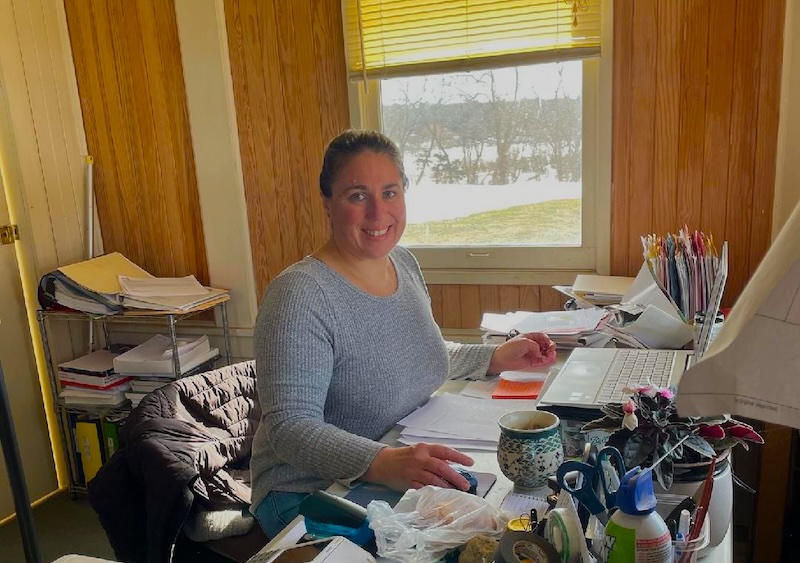
For the first time in a decade, a woman is at the helm of the Long Island Farm Bureau.
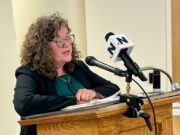
Laurie McBride of Mattituck became the L.I. Farm Bureau’s 25th president in October, and just the second woman to ever hold the position. Prior to being elected president, McBride, 44, served on the farm bureau’s board of directors for six years and was vice president for one year.
McBride grew up in a farm family in Riverhead. Her family farmed vegetables. She spent 11 years at Cornell Cooperative Extension and she worked the last 10 years managing the retail business at Wickham’s Fruit Farm in Cutchogue. McBride also dabbled in her own cut flower farming business for a while.
Her vision for the L.I. Farm Bureau is to “get members back involved, get our name out there and be a voice for agriculture,” she said. McBride said her goal is to encourage farmers to participate in local ag advisory committees and attend town board meetings when there’s legislation affecting agriculture on the agenda. Town regulations and codes change, he said. For example, it’s “difficult to get approvals to put up eight-foot-high deer fencing to protect crops,” she said. “That’s why we have to be more involved to make sure we know when the codes are changing.”
McBride said there is a new generation of farmers on the East End and they need support. “We have a very dense area of farms and we’re one of the most diverse areas of agriculture in New York State in terms of what’s being produced.” That includes Long Island’s greenhouse industry, nurseries, specialty crops, dairy, cattle, poultry and winery production.
According to a 2024 U.S Department of Agriculture report, Suffolk County leads the state in nursery, greenhouse sales, sod and aquaculture with $239 million in sales. Long Island’s aquaculture business was the number one in the state accounting for approximately $9.2 million.
Nevertheless, farming on Long Island is a tough business, with high property taxes and labor costs; both are on the increase.
“Unfortunately, we can’t do much about that,” McBride said. “Labor costs are up because of the rising minimum wage and there is no lower rate for agricultural work. And property taxes. If you are in an ag district, you have special protections but with rising land values, taxes go up,” she said.
“Getting into the business if you’re not a family of farmers is difficult and you want to purchase land. We have individuals from Manhattan who pursued a career there and then decided to give it up and go into farming but finding land that suits their needs and finding enough land in one place is an issue. A lot of them want to farm organically,” McBride said.
Because land on the East End is expensive, McBride believes land transfers can help. This approach, she said, is a growing trend as it reduces the cost as the development rights are sold at the time of the purchase by coordinating with the town, county and/or Peconic Land Trust.
“So, the farmers are preserving the piece of land and buying it at a reduced value. At least it gives them a foot in the industry with the hope of purchasing a larger tract. It’s a way to keep farming viable and we’re not creating any new farmland out here,” McBride said.
In early February, with 40 appointments over just two days, she and fellow farmers lobbied Albany lawmakers in an effort to address the difficulties LIFM members face in making a living. “We tried to suggest alternatives to some of the legislation they’re proposing that would affect the farming community,” McBride said.
Currently lawmakers are debating the Extended Producer Responsibility Act to encourage farmers to recycle.
“The problem is our farmers would have to take back any box or container that we sell produce in, but it’s ambiguous right now who is responsible for paying to recycle that material,” McBride said. “A lot of boxes and containers cannot be reused because of food contamination safety. We’re at a disadvantage because we’re not able to use the container multiple times,” she said.
Another bill under consideration in Albany, the Temp Act, would put more restrictions on outdoor work on a farm when the temperature is above 80 degrees or below 60.
“Certain activities on a farm, for example pruning fruit trees when they’re dormant, has to happen when it’s under 60 degrees,” McBride said. “We’re concerned this could be burdensome to get the job done.”
The LIFB also appealed to Albany lawmakers to fund their cooperating agencies, such as Cornell Cooperative Extension and Cornell University, whose programs support farmers and agriculture on Long Island.
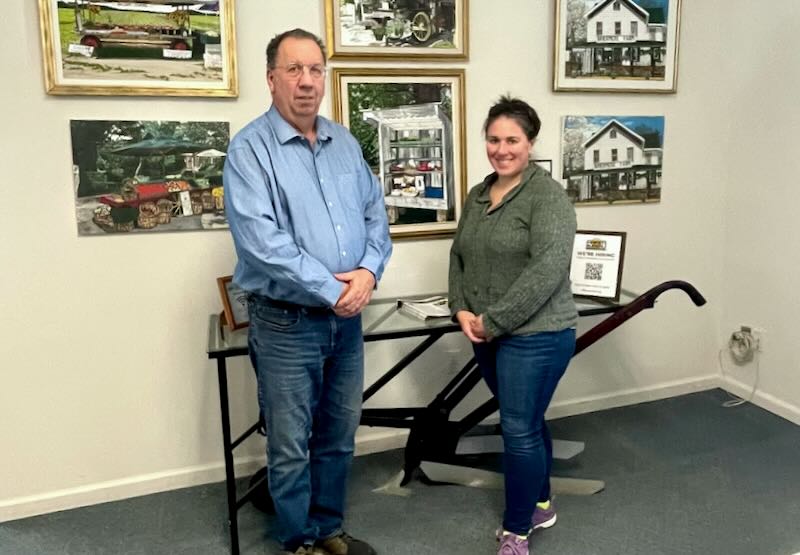
“Bill is great with ag advocacy and explaining agriculture in a way people can understand it,” McBride said of LIFB Director Bill Zalakar, who was appointed to the post last year. “We feel we need our own person out there to advocate at the local level with our five East End towns.”
McBride is also concentrating on promoting the island’s aquaculture industry.
“While in Albany, we focused on promoting some agricultural market funding for our oyster farmers. We’re hoping funding for aquaculture infrastructure… will be continued. It would help farmers upgrade and buy better equipment,” she said. Long Island’s oyster industry has grown dramatically with many farms selling their freshly harvested shellfish at roadside farms now.
Another priority for McBride is the preservation and sustainability of working waterfronts, which encompass the aquaculture industry and marinas, and are now eligible to be protected from development under a new Suffolk County land preservation program. “We have to coordinate our efforts with those hoping to preserve these properties with people who are looking for a piece of land. The bureau can kind of help people connect the dots with what they are trying to do,” she said.
The survival of local journalism depends on your support.
We are a small family-owned operation. You rely on us to stay informed, and we depend on you to make our work possible. Just a few dollars can help us continue to bring this important service to our community.
Support RiverheadLOCAL today.
