





















Sunshine Week ended Saturday. The annual nationwide observance is meant to highlight the importance of open government and freedom of information in a democracy.
It is a useful reminder. But open government is not a one-week observance. It is a year-round obligation.
Each year during Sunshine Week, groups including the New York Coalition for Open Government head to Albany to press for reforms to strengthen New York’s transparency laws. This year, advocates again pushed measures including a constitutional right to public information, stronger attorney’s-fees provisions in FOIL cases, mandatory training for local officials on open-government laws and permanent hybrid access for public meetings. Their efforts underscore an uncomfortable truth: We already have laws meant to protect the public’s right to know, but too often those laws are weakly enforced, easily evaded or treated as optional.
As Axel Ebermann of the New York Coalition for Open Government put it: Why is the burden of enforcing transparency laws placed entirely on the residents of New York?
That is exactly the question. New York’s open government laws need strengthening, and violations should come with consequences.
Open government is not a favor public officials do for residents. It is the minimum the public is owed: public business conducted in public, agendas and supporting documents posted in time for people to review them before decisions are made, meaningful minutes and accessible records, timely responses to Freedom of Information Law requests, and officials who understand that transparency is part of the job, not an annoyance to be managed.
Over the years, there have been some improvements locally. Local governments and school districts are more aware than they once were of their obligations under the Open Meetings Law, particularly when it comes to posting documents that are going to be discussed or acted on at public meetings — a requirement of state law since 2012, but one often ignored.
That is progress.
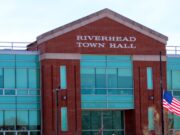
But much improvement is still needed. And in some important respects, Riverhead has gone backward.
One glaring example is the disappearance of meaningful Town Board minutes.
Since the 1970s, Riverhead Town prepared verbatim minutes of Town Board meetings, excluding work sessions. That practice ended in 2024. The explanation was that videos of meetings are posted online, as though that is an adequate substitute.
It is not.
A video archive may be useful, but it is not the same thing as written minutes. Videos are not indexed by agenda item. They are not searchable by topic. They do not allow a resident trying to follow a particular issue to quickly find the relevant discussion, public hearing comments or questions from board members. They are no substitute for a usable written public record.
Town officials pointed out that verbatim minutes are not required by law, and that is correct. They are not mandatory, and a meaningful summary is sufficient to meet the government’s minimum legal obligation. Nevertheless, after public criticism, the town clerk said verbatim minutes would continue to be published. They never were.
What the public gets now is not really minutes at all, but largely a computer-generated tally of votes, posted under a link labeled “minutes.” The summaries included in that document are scant at best. They fail to identify speakers during public meetings or meaningfully summarize what they said. As a result, there is often no meaningful written record of what was said at public hearings, what questions board members asked, or what explanations were given before votes were taken.
That matters. A public record should not require residents to watch hours of video and make their own transcript in order to know what happened.
The Town Board no longer even votes to approve minutes of the prior meeting. That, too, seems telling. It suggests a tacit acknowledgment that what is being posted are not really minutes in any meaningful sense.
Beyond transparency, Town Board meeting minutes help create the historical record of our town, now in its 235th year. Failing to produce meaningful minutes does a great disservice to preserving that history. Meeting minutes are a valuable research tool for anyone seeking to understand Riverhead’s past — how and why policies and codes developed, and how members of the community responded to them. They provide real-time insight into local history and are invaluable for that reason alone.
Transparency is not performative. It is not satisfied by posting a video online and calling it a day. It is not satisfied by a vote tally mislabeled as minutes. It is not satisfied by public meetings where the public can watch the outcome but not the deliberation. It is not satisfied by scattering public records so widely and inconsistently that only the most persistent resident can piece together the history of a project or policy decision.
All of this has consequences for the public. Residents cannot meaningfully participate in government if they cannot easily find the records that explain what their government is doing. They cannot hold officials accountable if there is no reliable written record of what was said, promised, asked or opposed. They cannot make informed judgments about taxes, development, schools and quality-of-life issues if the basic record is incomplete, inaccessible or misleading.
The public’s right to know means more than being able to watch a meeting after the fact, provided one has the time and patience to search through hours of video. It means being given a fair, usable and truthful record of what government is doing, why it is doing it, and how decisions are being made.
That is what open government looks like. That is what democracy requires. And that is what Riverhead residents have every right to expect.
The survival of local journalism depends on your support.
We are a small family-owned operation. You rely on us to stay informed, and we depend on you to make our work possible. Just a few dollars can help us continue to bring this important service to our community.
Support RiverheadLOCAL today.
