

























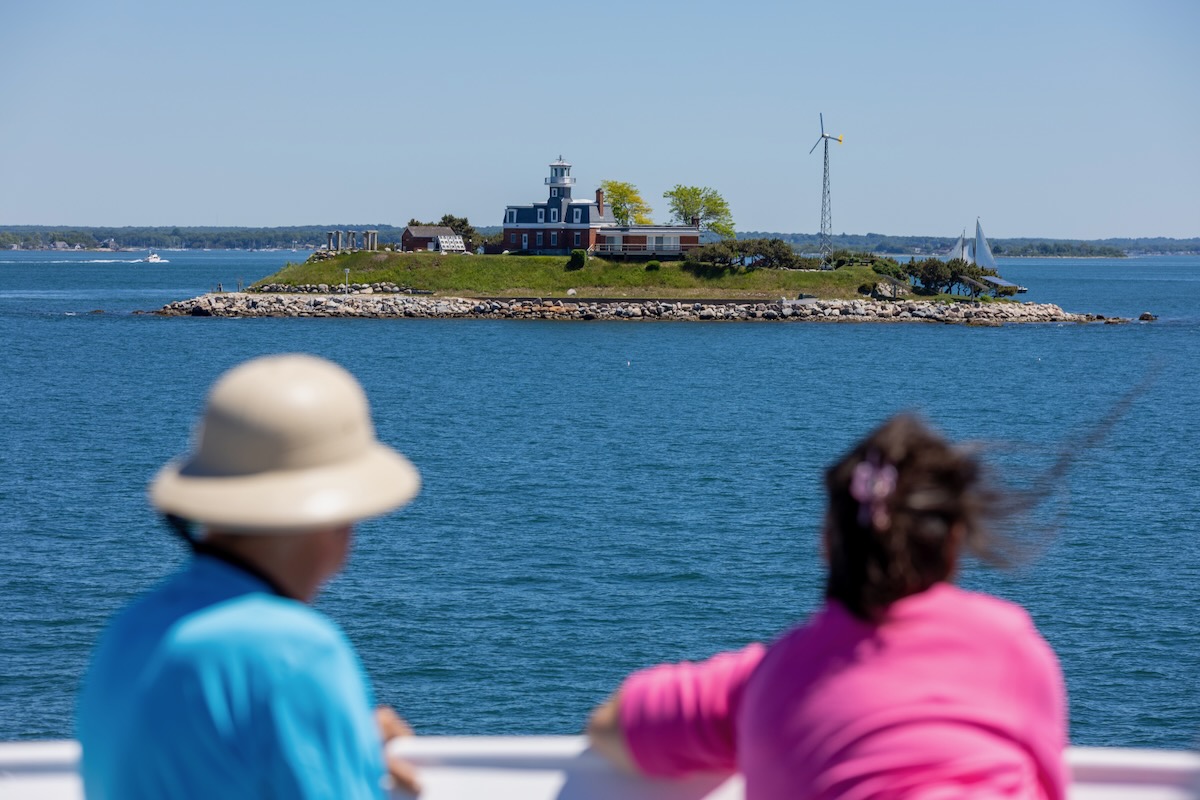
From the deck of the Sea Jet, the lighthouses appear one by one: small white towers, iron “sparkplug” lights, stone sentinels on reefs and islands, each marking a hazard that generations of mariners learned to respect.
For passengers aboard Cross Sound Ferry Services’ Long Island Lights cruise, the two-hour trip from Orient Point is a summer outing, a chance to watch the shoreline slip by from an open deck or air-conditioned cabin. But in the year of America’s semiquincentennial, the same route also offers a trip through early American history.
The waters between the North Fork, Plum Island, Fishers Island and New London are part of the country’s founding story. They were working waters, wartime waters and commercial waters, navigated by ships carrying goods, soldiers, fishermen and whalers and ferry passengers.
Cross Sound Ferry has been running its lighthouse cruises for about 10 years, according to a company spokesperson. This season’s Long Island Lights cruises run primarily Fridays, Saturdays and Sundays from Orient Point, with sailings at either 10:30 a.m. or 2 p.m., depending on the day, through October.
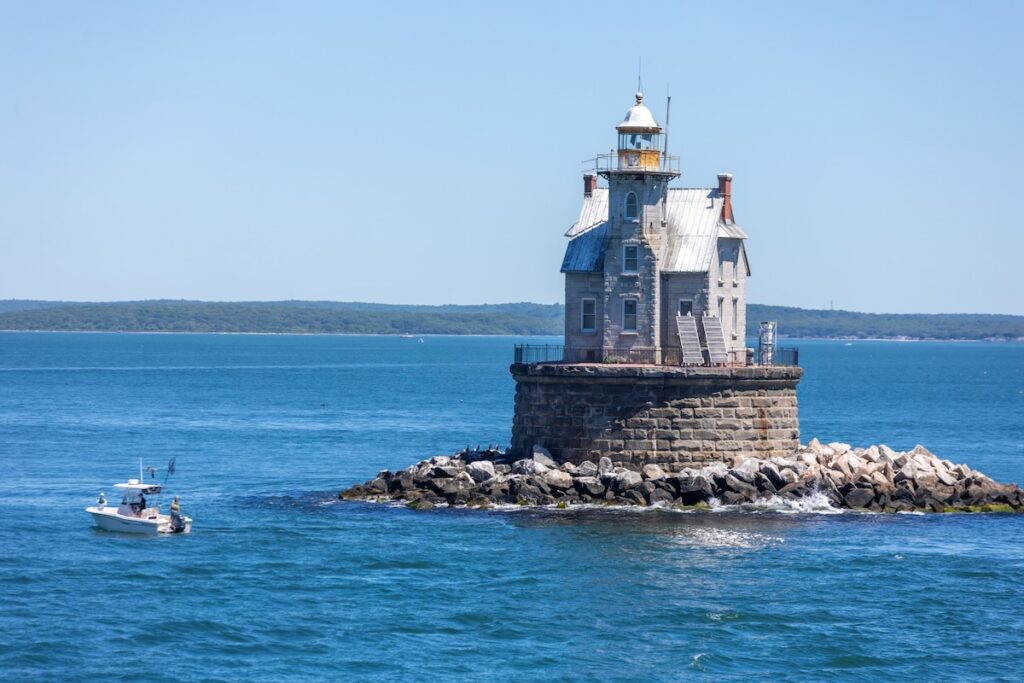
The route takes passengers past a cluster of lighthouses and historically significant sites in Gardiners Bay, Plum Gut, Long Island Sound, Fishers Island Sound and New London Harbor. The lighthouses include Orient Point Light, Little Gull Light, Race Rock Light, Avery Point Light, New London Harbor Light, New London Ledge Light, North Dumpling Light and the ruins of Fort Tyler at Gardiners Point.
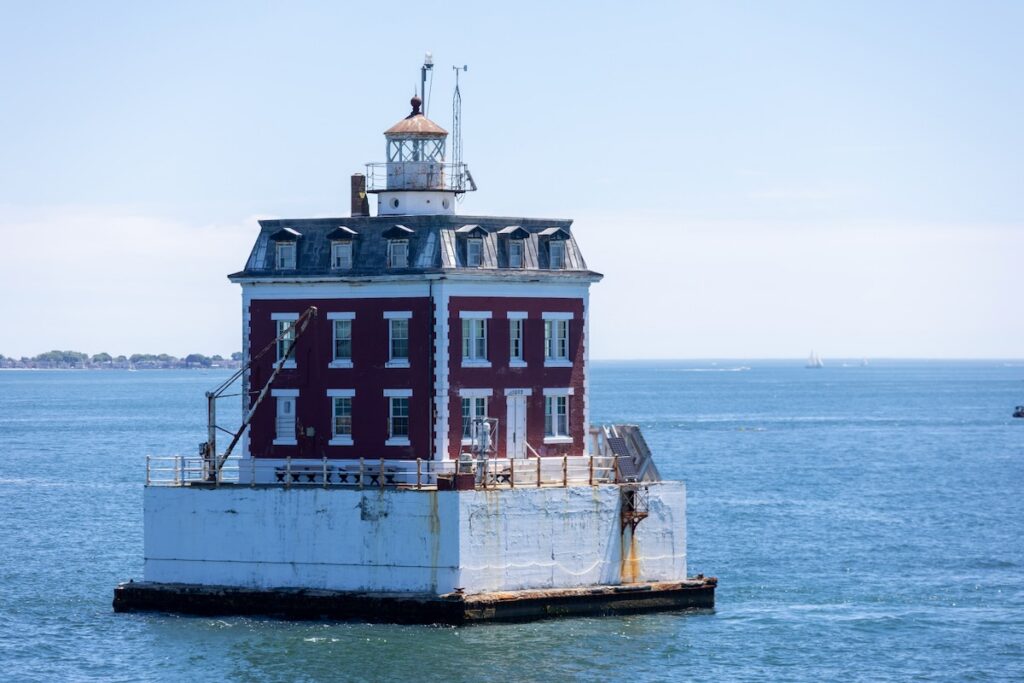
The cruise is narrated, and the history comes into view gradually. A lighthouse that might look picturesque from a distance becomes, on closer approach, a reminder of how difficult it once was to move safely along the coast. Before electronic navigation, GPS or even modern charts, a light on shore could mean the difference between finding the harbor and striking a reef.
That practical purpose made lighthouses some of the earliest and most important public works in the new United States. Lighthouses were not ornamental. They were infrastructure.
During the colonial era, the individual colonies established and maintained navigational aids. After the United States was founded, the new federal government moved quickly to assume responsibility for lighthouses, beacons, buoys and public piers. The Lighthouse Act of 1789, one of the first acts of the First Congress, placed these important navigational aids under federal authority. One of the strongest examples on the local route is New London Harbor Light, the oldest lighthouse in Connecticut and one of the most historically significant on Long Island Sound.
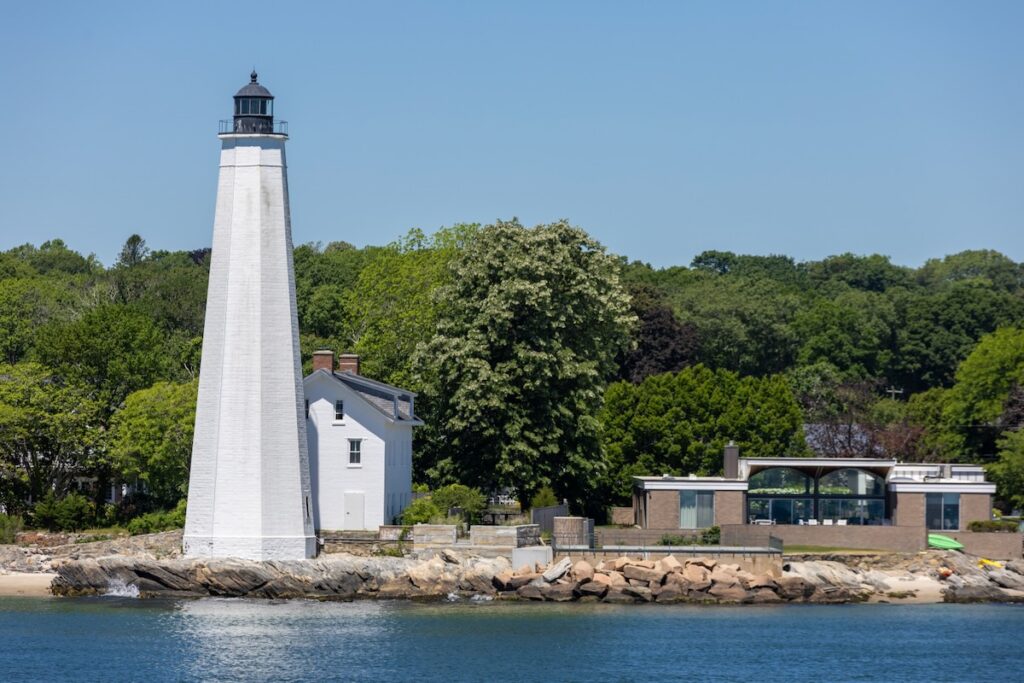
The original New London Harbor Light was established in 1760 or 1761, before the American Revolution, on the west side of the entrance to New London Harbor. At the time, New London was a vital deepwater port at the mouth of the Thames River. The harbor’s location made it valuable for trade, and later for whaling, but it also required a dependable guide for ships entering and leaving the river.
During the Revolutionary War, New London’s harbor took on military significance. Connecticut authorized privateers to attack British shipping, and New London became one of the ports tied to that activity. The harbor light helped guide American vessels back toward shelter with captured supplies and cargo.
The British recognized New London’s importance. On Sept. 6, 1781, British forces under Benedict Arnold attacked New London and Groton, burning much of New London and attacking Fort Griswold across the Thames River. The raid came just weeks before the British surrender at Yorktown.
President George Washington personally approved a 1791 contract to supply the New London light with oil, wick, candles and soap. By 1800, the original tower was in poor condition, and Congress appropriated funds to rebuild it. The current octagonal brownstone tower was completed in 1801.
The North Fork side of the cruise has its own Revolutionary-era connection. In August 1775, troops under Gen. David Wooster crossed from the area of Oyster Ponds, now Orient, to Plum Island in an action aimed at livestock and supplies sought by British forces. The episode has been described by historians as one of the earliest amphibious operations involving American forces during the Revolution.
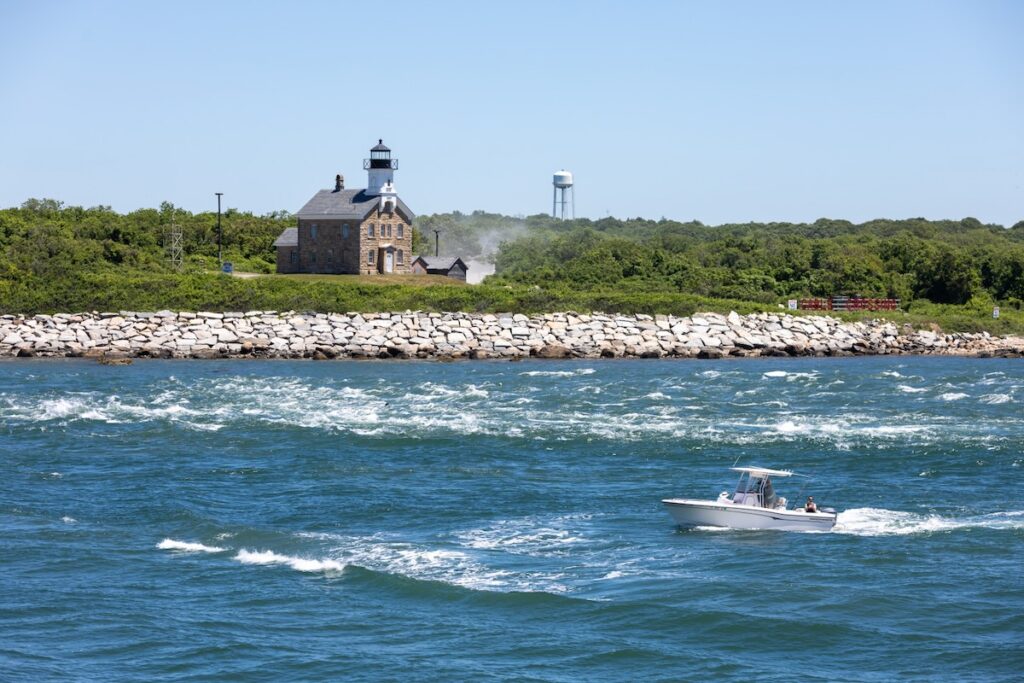
The cruise passes near Plum Gut, the narrow passage between Orient Point and Plum Island, where strong tides and shifting conditions have long made navigation challenging. Orient Point Light, nicknamed the “Coffee Pot,” was built later, in 1899, to help mark that passage. Its squat cast-iron form stands in contrast to older shore-based towers, showing how lighthouse design changed as engineers began placing lights directly in dangerous waters.
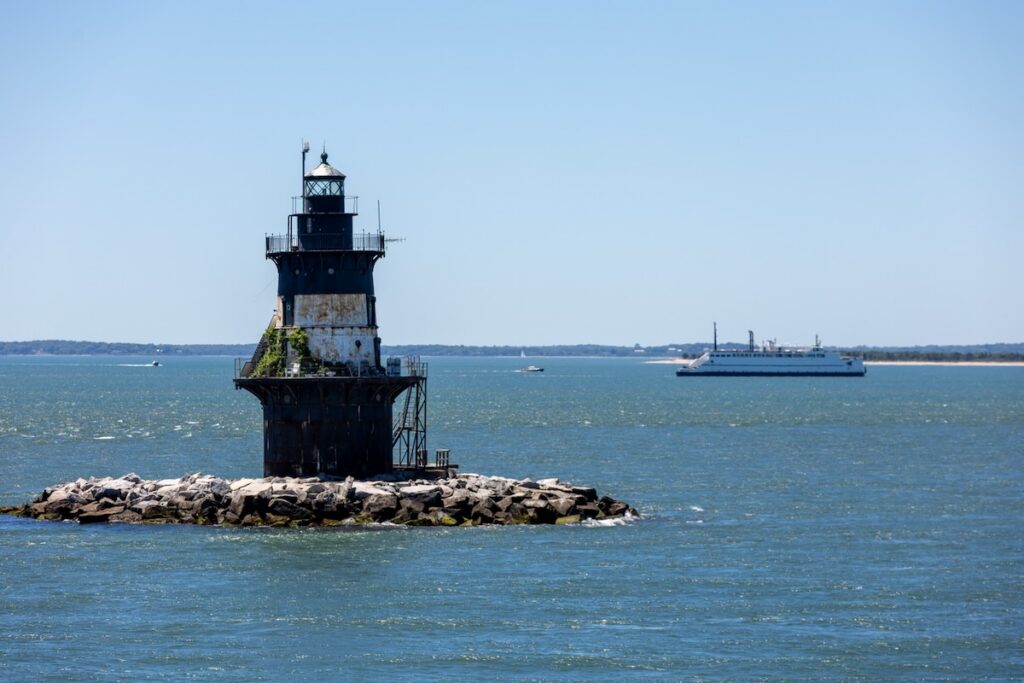
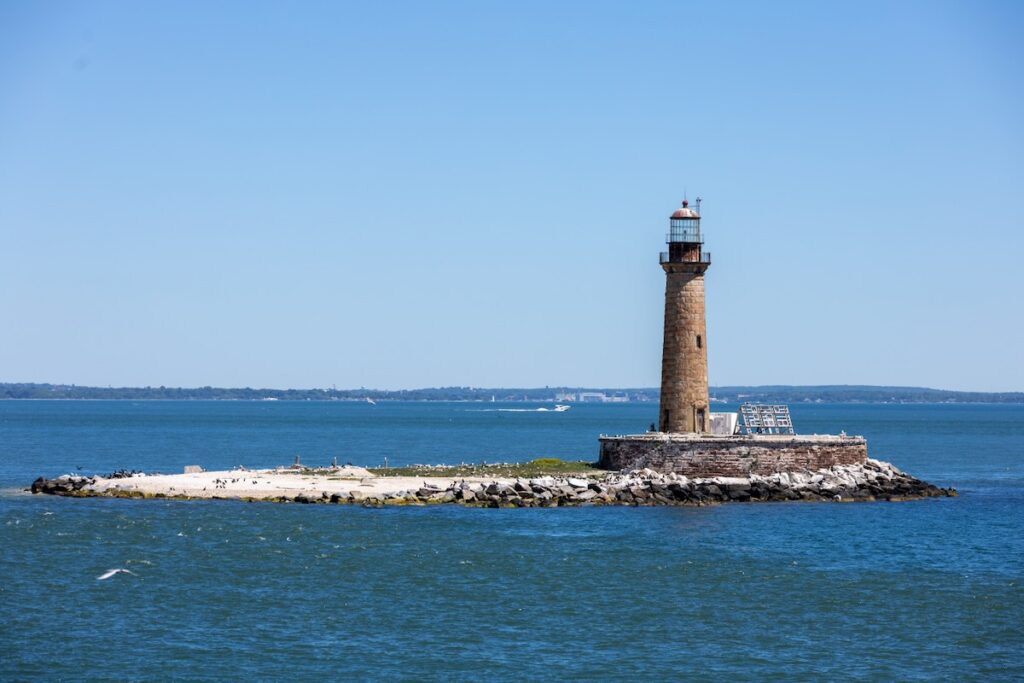
Nearby, Little Gull Light and Race Rock Light tell another part of the story: the 19th-century effort to tame some of the most hazardous waters at the eastern entrance to Long Island Sound.
Race Rock, in particular, was an engineering challenge. The reef had a long history of wrecks before the lighthouse was completed in 1879. Building there required massive stonework in rough water, turning a dangerous ledge into a fixed point of warning. Little Gull Light, first established in the early 19th century, also marked a dangerous approach used by vessels moving between the Sound and the open Atlantic.
Together, these lighthouses show how the region’s maritime history did not end with the Revolution. The same waters that mattered to colonial trade and wartime strategy continued to demand federal investment, engineering skill and human labor for generations.
The ruins of Fort Tyler, visible near Gardiners Point, add another layer. Built during the coastal defense era around the turn of the 20th century, the fort was intended to help protect the eastern approach to Long Island Sound. Its remains, battered by water and time, are a reminder that military planners kept returning to these waters because geography kept making them important.
For Cross Sound Ferry, the appeal is also experiential. The Sea Jet, a high-speed catamaran, offers indoor seating, outdoor viewing space, refreshments and a narrated tour. Passengers can move between the cabin and the deck, watching the lighthouses come into view from the same water routes they were built to serve.
As the nation marks 250 years since independence, local lighthouses offer a way to see early American history from the shoreline outward. The story is not only about battles and declarations, but also about the practical work of becoming a country: lighting harbors, marking reefs, protecting commerce and guiding people safely home.
On Long Island Sound, some of those lights are still doing what they were built to do.
The survival of local journalism depends on your support.
We are a small family-owned operation. You rely on us to stay informed, and we depend on you to make our work possible. Just a few dollars can help us continue to bring this important service to our community.
Support RiverheadLOCAL today.
