
























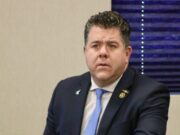

Rep. Tim Bishop sat down to breakfast with members of the Long Island Farm Bureau and their guests yesterday at the organization’s Calverton offices.
The informal breakfast forum is an annual spring event for the farm bureau, a chance for members of the agricultural advocacy group to express concerns and ask the congressman questions about federal issues of interest. It’s also an opportunity for Bishop — now a 10-year incumbent — to report back to constituents and rally their support for his positions on pending legislative and policy issues.
The Southampton native spent nearly two hours in conversation with farmers and growers, discussing a now-familiar list of issues important to East End farmers. As has been the case in past years, the discussion was dominated again by immigration issues and the agricultural workforce. Farmers rely on a workforce believed to be overwhelmingly made up of undocumented immigrants.
Bishop said supporting the Ag Jobs bill is for him a “no-brainer” but because it provides a path to legalization of undocumented workers, it is tagged with the label “amnesty” and becomes a very emotionally charged subject.
In reality, Bishop said, there are only two other alternatives to providing a path for legalization in addressing the issue of undocumented workers.
One is mass deportation, which the congressman said is infeasible considering the estimated number of people that would need to be moved — a number experts put at more than 12 million.
“We couldn’t even evacuate New Orleans, and the people there wanted to go,” Bishop said. “This option is logistically impossible.”
The other alternative is attrition, he said, calling it “the Alabama approach,” which seeks to make undocumented workers so uncomfortable, they leave the country voluntarily. That approach, if it will work at all, will likely result in attrition rates of about 10 percent per year, he said. “So in 20 years, we’ll still be discussing this.”
It also doesn’t address the need for the labor pool provided by a population that may be largely undocumented, a need that is very critical on the East End. Nationally, 75 percent of agricultural workers are estimated to be undocumented, though there are no local statistics on this, Farm Bureau executive director Joseph Gergela said.
“We’ve got a $300 million industry at stake and no assurance about our workforce,” Gergela said, adding that farmers on Long Island “have been warned we are going to be getting audited this year.”
The Obama administration has made changes to the agricultural worker visa program that have made it unworkable, the farmers told Bishop. Some speculate the regulatory changes were intended to inspire support in the agricultural industry for more comprehensive immigration reform. The congressman said he couldn’t explain why regulators made the changes, but said the current administration in general has toughened up immigration policies and enforcement, citing a 50 percent increase in border patrol, installation of fencing and stepped up enforcement.
“We have two choices with reality,” Bishop said. “We can either embrace it or try to change it.”
States like Alabama, where policies are not grounded in reality, are having a hard time bringing their crops to market now, he said.
“Things that look good on a bumper sticker don’t usually make good public policy,” Bishop said.
Besides immigration, discussion touched on several other issues important to East End agriculture, including: estate taxes, appointment of a local representative to the federal Mid-Atlantic Fisheries Commission, the Clean Water Act and regulation of pesticide use and the impacts of rising energy costs on farm production.
The survival of local journalism depends on your support.
We are a small family-owned operation. You rely on us to stay informed, and we depend on you to make our work possible. Just a few dollars can help us continue to bring this important service to our community.
Support RiverheadLOCAL today.
