

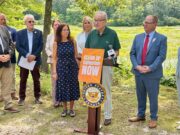










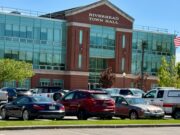



In February 2020, a little more than a month after Supervisor Yvette Aguiar entered office, the town and the Long Island Science Center held a joint press conference announcing the development of a new museum at the former Swezey’s Department Store building on the south side of East Main Street, and a town square on the riverfront to its south.
At the event, flanked by regional political figures including County Executive Steve Bellone, then-State Senator Ken LaValle and then-Assembly Member Anthony Palumbo, the new supervisor made an enthusiastic pitch for the importance of the partnership of the museum and the town for helping to revitalize downtown Riverhead.
“A heart transplant for Riverhead is on the horizon,” Aguiar said.
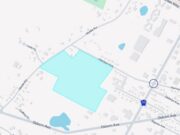
Nearly four years later, the situation is much more complicated. The science center purchased the property in April 2020. Both the town square and the museum’s designs have undergone significant changes — and have received public funding. The science center has not moved into the Swezey’s building or filed an application to renovate the space. The town square officials hope to establish — currently a grassy area to the east of the science center’s building — is waiting on an agreement with a master developer who plans to develop the east side of the square with a mixed-use hotel building.
And Aguiar, once a public supporter of the science center, has turned hostile to it.
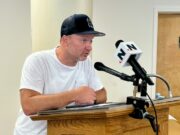
In an interview this week, Aguiar accused the science center’s president, Laurence Oxman, of being uncooperative with the town and delaying the property’s development; of attempting to increase the value of the property by seeking to have the town give the organization property adjacent to the science center’s site; and of trying to sell the building “behind the scenes” for more than $5 million since last year — taking advantage, she said, of a boost in real estate value due to its proximity to the as-yet undeveloped town square.
Oxman denied the supervisor’s claims in an interview. “That’s just not true,” he said. And we were very transparent on everything.”
Aguiar also said an appraisal authorized by the Town Board on Nov. 9 for an undisclosed property officials declined to identify — due to potential litigation, the town attorney said — was an appraisal of the science center site. She also confirmed the town was exploring the possibility of acquiring the property through an eminent domain procedure, an action brought in court to obtain title to real estate without the agreement of the property owner. The municipality is required to pay fair market value for a property, which is established by an appraisal.
“The town spent endless hours — I stress endless hours — working with him,” Aguiar said. “He wants more property for the town to give him more and more property. So his property becomes more valuable. And he refuses to work with us. Many people have approached him — even the master developer has approached him to try to work with him…”

Aguiar’s remarks came in an interview seeking comment about the science center listing the 111 East Main Street site for sale.
Oxman said the science center decided to list the property in April after it did not receive a share of the Riverhead’s $10 million Downtown Revitalization Initiative grant award. The DRI local planning committee recommended the science center receive a $1 million grant.
The science center purchased the building for $1.45 million. In April, it listed the property for $3.2 million, Oxman said; it is currently listed for $2,575,000.
Oxman said the idea was that the property would be sold to a developer that could invest in renovating the building, on the condition that part of the building would be leased back to the science center for its museum.
“This was not our idea. This was at the urging of the town repeatedly saying this to us,” Oxman said. “So we went out to see if that was possible. And the only way of doing that was basically soliciting an offer with the idea that we would lease back a portion. That’s not an unusual thing to happen in real estate,” he said.
Oxman, a real estate broker, discloses in the listing that appears on LoopNet.com that he is acting as a member of the board of directors of the science center, a tax-exempt 501(c)(3) nonprofit, and is waiving a commission in the event of the property’s sale. Oxman is president of the organization’s five-member board, all of whom serve without compensation.
He said he solicited some developers “familiar with Riverhead,” but declined to comment further on the identity of the developers. He said at no point was the property listed for $5 million.
Aguiar would not name who Oxman allegedly offered the property to for $5 million. The price Aguiar alleged Oxman was attempting to sell the property for changed throughout the interview.
But Oxman said the science center’s plans have changed since the county executive announced earlier this month that the organization would receive a $1 million award for the museum. The money, which was the same amount the DRI local planning committee recommended the project receive, will “go a long way to renovating the building,” Oxman said.
“I think whether we have it listed for sale or not, we’re going to move ahead with plans on renovating the building,” Oxman said. “So if a developer comes along and makes us a really attractive offer with a leaseback, I think we would consider it. However, the whole thing becomes very complicated with regard to grants and whether we own the building,” he said. Most of the grants the nonprofit has received require the organization to own the building, he said.
This is not the first time Aguiar has been critical of the science center project. At a local planning committee meeting in July 2022, Aguiar accused the science center of not submitting a business plan and other information to the state despite the committee recommending the group for a piece of Riverhead’s $10 million DRI award. A planner working for the state said at that meeting that the science had submitted the requested information, including that the organization would fund the museum development with federally backed loans.
Plans publicly discussed during the DRI process show that the museum would have space for a gift shop, makerspaces, exhibits and a planetarium, as well as space for a restaurant along East Main Street.
“We fundraised for the entire project…We don’t have the timeline for the whole project, but we are in a position to start phase one at this point,” L.I. Science Center Executive Director Cailin Kaller said. Phase one includes renovating the building to get the museum open, she said. Kaller said previously that the science center has now received roughly $4.5 million in grants for the project.
Aguiar said the state chose not to fund the LISC project because they “didn’t have faith in their ability to produce or show any concrete desire to build a museum.” She said she received this opinion from state officials during the DRI public hearing process.
“But we’re going to move on without them. It’d be nice to have it, but the money has been allocated and they weren’t part of the DRI,” Aguiar said. “And if they sell the building, they sell it. We’re not surprised.”
The DRI local planning committee was required by the state to develop a list of funding recommendations totaling $12 million to $15 million. The committee ended up recommending just over $13.4 million.
Oxman and Kaller said the science center intends to move ahead with plans to develop the building into the museum, but that the science center must work with the town to coordinate the development.
And that’s exactly what the town wants to do, according to Community Development Director Dawn Thomas, who is leading the development of the town square.
“They’re a great project. Everybody agrees it’s a great project,” Thomas said. “Let’s put it on the town square. So that’s what we’re trying to do.”
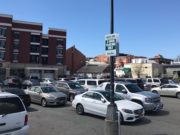
One problem moving forward, Oxman said, is the reality that the town square is not yet developed, which makes it difficult to construct an entrance on the square. Initially, the town square was envisioned on the parking lot south of the science center’s East Main Street building. That was the way it was presented during the February 2020 press conference.
But soon after, in August 2020, Riverhead Town announced it would purchase three vacant buildings on the south side of East Main Street — immediately to the east of the building the science center had purchased. The town proceeded to demolish the two buildings east of the science center’s building, to make way for the future town square.
During that time, the town square design shifted, with the town envisioning commercial shops lining the interior of the square. The science center amended its design to help fit the town’s vision, moving the entrance of the museum to the building’s east facade, facing the town square.
“What we were told is that the concept was to draw people down from Main Street into the town square, which was great for us because we thought it would be an excellent way to make the flow into the museum,” Kaller said.
The plan requires the town square be built at the same level as East Main Street — a design aspect included to help mitigate the impacts of flooding in the area. However, the demolition of the two buildings to make way for the town square and the subsequent transformation of the property to grass and a singular walkway was not built at the same level as East Main Street.
The town decided to work with a master developer to develop the town square and redevelop the remaining town-owned building on the east side of the town square. Town officials say the town is in the process of finalizing an agreement with J. Petrocelli Development Associates, the company designated town square master developer by the Town Board in April 2022.
But the situation has made the science center’s plans contingent on the town square’s development timeline.
The organization doesn’t want to have to redo the Main Street storefront to create an entrance there, only to have to rip it out and create a new entrance on the town square side of the building, Oxman said.
The science center wants to work with the town and the master developer to figure out a way to build the museum entrance on the town square from the start, Oxman said. The full build-out of the town square isn’t required to make that happen, he said. “I’m sure an architect and an engineer could figure that out very easily.”
Thomas said the town is waiting to finalize its agreement with the state for the town square grant money— the town received $3.24 million for the town square. It is also working to finalize its agreement with Petrocelli. Once those agreements are finalized, the town can start developing the square. Thomas said she expects an agreement with Petrocelli to be finalized early next year.
“We really have been waiting for some type of definitive answer from the town as to where we have access — either now or even in the future,” Oxman said. “But I think that what we need to do is to have a clear line of communication between us and the town so that we can put our heads together and make the most wonderful attraction for the downtown. That’s our goal.”
The survival of local journalism depends on your support.
We are a small family-owned operation. You rely on us to stay informed, and we depend on you to make our work possible. Just a few dollars can help us continue to bring this important service to our community.
Support RiverheadLOCAL today.
