

























The removal of agritourism resort uses from the comp plan update was a welcome turn of events for residents opposed to the concept.
We commend Supervisor Tim Hubbard for forging what seemed like a reluctant majority willing to take this recommendation out of the plan adopted at the board’s Sept. 4 meeting.
The addition of that recommendation late in the process of the comprehensive plan update, with no meaningful analysis of its cumulative impacts on the environment, traffic volume on local roads — Sound Avenue in particular — was, at best, wrongheaded.
We were about to publish an editorial urging residents not to be lulled into complacency on this issue, because we believed there was a very good chance the Sound-front resorts code — and the resort Alfred Weissman Real Estate was already planning on land just east of the Willow Ponds condos in Riverhead — would be resurrected.
Then we got an emailed letter from the CEO of Alfred Weissman Real Estate indicating that our gut instinct was correct. The developer is indeed continuing to pursue this project.
The “agri-tourism resort” use was removed from the recommendations of the comp plan update, but the code can still be proposed and adopted. In fact, the path to that adoption has already been prepared.
The recommendation for the resort use may have been removed from the comp plan update, but the resort use remained in the Final Generic Environmental Impact Statement — the document that is supposed to analyze the impacts of the plan’s recommendations — which was adopted by the Town Board on Aug. 6.
The adopted Final Generic Environmental Impact Statement, which incorporates the Draft GEIS and responds to comments on the draft, says this of agritourism resorts:
“This recommendation was also made in the Town’s 2003 Comprehensive Plan.”
That is simply inaccurate. It is an extrapolation — and a tortured one, at that — of the very general references to “agro-tourism” in the 2003 comprehensive plan.
Let’s set the record straight.
A word search of the final 2003 comp plan (PDF) shows that “agro-tourism,” as it was called in the ’03 plan, is mentioned only in Chapter 7 of that plan, titled “Economic Development Element.” (We also searched for “agrotourism,” “agri-tourism” and “agritourism” just to be sure. No results.)
“Agro-tourism” is mentioned eight times in Chapter 7 of the 2003 comp plan.
See Chapter 7, “Economic Development Element,” below.
This chapter discusses the types of agritourism that we’ve all become very familiar with in the past 21 years: visitors to wineries, families picking strawberries and apples, taking kids on hayrides and running through corn mazes, visiting local farms in search of the perfect pumpkin, corn stalk or Christmas tree. Or shoppers visiting farm stands for pies, jams and one-of-a-kind artisan items.
It even defines agritourism: “any agricultural activity that attracts tourists who are interested in seeing, learning about, or participating in that activity, or who want to purchase fresh farm products.”
It mentions a future potential for “farm experience” vacations or farm-based bed-and-breakfasts.
It says the town should encourage vineyards and wineries to develop facilities, amenities and attractions that cater to tourists, which include wine tasting, tours, gift shops, banquet facilities of limited size. It envisions wine-trains and private bus and limo excursions to bring tourists to wineries.
“Town zoning policies should be flexible enough to allow agro-tourism uses on active farms,” it says. “At the same time, performance standards can be used to limit undue impacts on nearby residential areas.”
The town should encourage farmers to explore agro-tourism as means of supplementing farm income, the plan says.
It’s clearly a stretch, and a long stretch at that, to go from the kinds of agritourism activities detailed in the 2003 plan to resorts in a residentially zoned district all along the north shore of Riverhead.
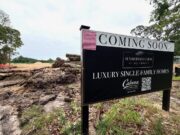
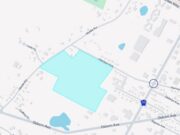
It’s a long stretch, too, from the bed-and-breakfasts mentioned in the plan to the 100-room hotel and spa, with a five-star restaurant, being pitched by Alfred Weissman Real Estate for residentially zoned land on the bluff, adjacent to 70 acres of already-preserved farmland that’s going to provide the resort visitors with that agritourism experience.
In an apparent nod to the definition of agritourism we find in the 2003 plan, town officials have said the “agri-tourism resort” would bring tourists interested in seeing, learning about, or participating in agriculture. Council Member Ken Rothwell even wanted to call the resort use an “inn and education center,” according to an email obtained through a Freedom of Information Law request.
It’s interesting, though, that the proposed “Agri-tourism Inn & Resort” code presented to the public after two-plus years of behind-the-scenes drafting in collaboration with the developer’s attorney and consultants, would redefine agritourism as: “A form of commercial enterprise that links agricultural production to attract visitors and foster the goal and balance the need to preserve farmland, farming practices, hostric farm structures, and rural character of the community with tourism and our local economy.”
From “agricultural activity that attracts tourists” in the 2003 plan to “a form of commercial enterprise that links agricultural production… with tourism and our local economy” in the proposed code.
Do you see the disconnect here?
The Draft GEIS for the comp plan update — which, again, became the Final GEIS upon its adoption on Aug. 6 — says this about “Agritourism Resort”:
“Given the high demand for hotel space in the North Fork and the Town’s aim to support tourism, the proposal suggests permitting agritourism resorts in suitable locations. These resorts combine agricultural experiences with recreational activities and accommodations, catering to diverse preferences. By incorporating design, development, and environmental standards, the Town aims to balance agritourism support with land conservation objectives. Leveraging demand for these facilities, provisions would require substantial land preservation and TDR credit redemption, ensuring responsible development. Individual project evaluations would ensure site-specific considerations, mitigating potential adverse impacts on surrounding areas and preserving the agricultural character of the community.”
Then it concludes: “This recommendation was also made in the Town’s 2003 Comprehensive Plan.”
Seems like an awful lot of words to justify a conclusion that’s unjustifiable based on what’s printed in black and white in the 2003 comp plan.
But, hey, now there’s a rationale, laid out in the “analysis” of the 2024 comp plan update, that planners, developers, lawyers and elected officials can use as a platform for the verbal gymnastics they’re gearing up for to try to convince the public — and maybe a court — that the agritourism inn & resort code can be adopted without further environmental review.
And we believe that’s what Riverhead residents can expect to hear before long.
The survival of local journalism depends on your support.
We are a small family-owned operation. You rely on us to stay informed, and we depend on you to make our work possible. Just a few dollars can help us continue to bring this important service to our community.
Support RiverheadLOCAL today.
