


















Christopher Adkins, 43, led an enthusiastic tour of the home for people with developmental disabilities he resides in, leaving no door unopened – coat closets, pantry, refrigerator; he was thanked for his thoroughness and told the tour was a good one.
“I know,” he shot back confidently, marching toward the next room.
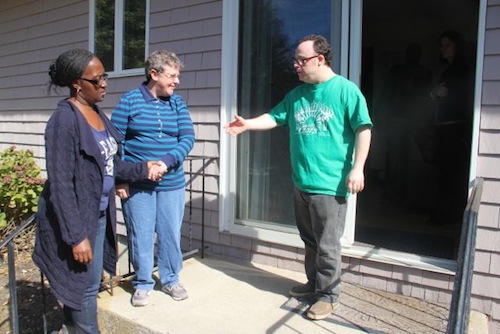 Adkins has lived at the house on Patti Lane in Riverhead since 2000. From the outside, the only sign it is something other than a single-family home is a few extra cars in the driveway. The property is immaculate. It is one of 30 run by Aid to the Developmentally Disabled, an organization based in Riverhead that serves people living with mental health and physical disabilities ranging from mild to severe.
Adkins, originally from Mount Sinai, wants to move from the supervised home he lives in to a supported residence he would share with his longtime girlfriend, who currently lives in a similar home in the area. A supported home would allow the couple more independence while providing any needed assistance.
“That’s one of his goals,” said house manager Tamara Pinkney. She said residents are encouraged to have things they work toward. Life in an ADD house is about more than subsistance.
“I always wanted to make sure that everyone felt like they belonged,” said Pinkney, who has a nephew with a disability. She said she is sensitive to the reactions the disabled get when they are out in public.
“They’re not different. They can go out and get jobs just like anyone else,” she said.
Donald Rieb is executive director of ADD. He said his organization’s goal is to prevent the “storm of isolation, rejection and discrimination” that used to exist for the disabled population.
“Prior to agencies like ADD, the vast majority of people with disabilities were institutionalized, but the state decided that wasn’t the best for them,” Rieb said.
 The state closed places like the infamous Willowbrook State School in Staten Island, which was closed in 1987 after the public learned of conditions and abuses there. With their shuttering, though, care deferred to families or no one at all. The void gave rise to smaller supervised facilities where residents’ individual needs can be met.
Rieb said Riverhead has proven to be a good place to have them.
“The measure of a community is how they accept the most fragile, and Riverhead has been wonderful,” he said.
Bill Andes is a Riverhead attorney and past president of ADD who sits on its board of directors. His sister, Joan, was born with severe mental and physical handicaps. When it was determined that his father could no longer care for her, Andes and his siblings found a home run by a local group similar to ADD.
The challenge is placing such a vulnerable person in a home where they will be comfortable with other residents, and will receive a level of care the family can trust.
“It’s very emotional. We’re all very protective of her and it’s hard. It’s something that we thought about our whole lives,” he said. “It’s sort of the culmination of a lot of long-lasting fears. You want to make sure there’s a happy ending to all that.”
Andes said he and his siblings visit Joan’s home, where they’ve seen her strike up friendships with other residents. He’s grateful such places exist.
“You need ’em. Where else is there to go?” he said.
Lester Coles has been a direct support professional with ADD for 10 years. He said a sense of humor and patience are required to work with the range of disabilities he does. He said the work goes beyond supervision and basic care. One resident had no family to visit for Christmas, so he brought them to his house.
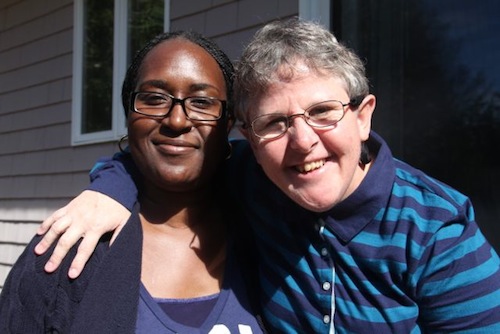 “We try to be their family,” he said.
Tory Haines, 50, is another resident of the Patti Lane house. She gets shy around people she doesn’t know, but warms up as she talks about herself, her family and their dogs. She notices when people stare at her when she’s in public.
“It’s embarrassing,” she said. “I was very upset. I didn’t know what to do.”
At the house, she helps decide what other ADD houses to visit and what to do for outings, like bowling and baseball games. She’s also given the opportunity to work at ADD’s farm, where a host of animals and plantings provide myriad tasks and experiences. It’s a good deal, but not entirely satisfactory.
“I want a paycheck,” she said.

The not-for-profit organization, founded in 1980 by family members concerned about the physical and emotional decline of patients compelled to live in crowded institutions, relied on Medicaid, SSI and government contracts for more than 90 percent of its revenues in 2012, according to its annual report.
The organization supplements its income with fundraisers and this year, board member Elizabeth Hanlon has organized a new — and unusual — fundraising even for ADD. On Sunday, Oct. 27 a helicopter will drop 1,000 numbered golf balls on the course at the Baiting Hollow Country Club. The ball closest to the hole will win $4,000. Enter the game by purchasing golf balls at $25 apiece. Watch the balls drop at a cocktail party at the country club from 5 to 7 p.m. ($50 per person includes open bar & hors d’oeuvres.) Click here to visit the ADD website for more information and to purchase a golf ball.
The survival of local journalism depends on your support.
We are a small family-owned operation. You rely on us to stay informed, and we depend on you to make our work possible. Just a few dollars can help us continue to bring this important service to our community.
Support RiverheadLOCAL today.
