
















When K.J. Micciche thinks about Dorothy P. Flint 4-H Camp, she thinks first about the child she was there: a girl from Queens, away from home and from the social pressures of everyday life, learning how to swim in Long Island Sound, searching the rocky beach for blue sea glass and discovering who she was for herself.
She began going to the camp in the mid-1980s, when she was 6 or 7. Within a few years, she was spending the whole summer there. Later, she worked there. Now an author and executive director of Literacy Nassau, Micciche, 48, has sent her own daughters to the camp on Sound Avenue in Baiting Hollow.
This summer, with Nassau County under contract to sell the nearly 145-acre property where the camp operates, the place feels especially fragile to her.
The future of the 101-year-old camp is tied to a $10 million preservation deal that would transfer the Nassau County-owned property to Peconic Land Trust and, if funding comes together, preserve one of the largest remaining undeveloped tracts on Riverhead’s Long Island Sound shoreline while keeping the camp in operation.
“I know this is going to mark a big, big change for this place,” Micciche said.
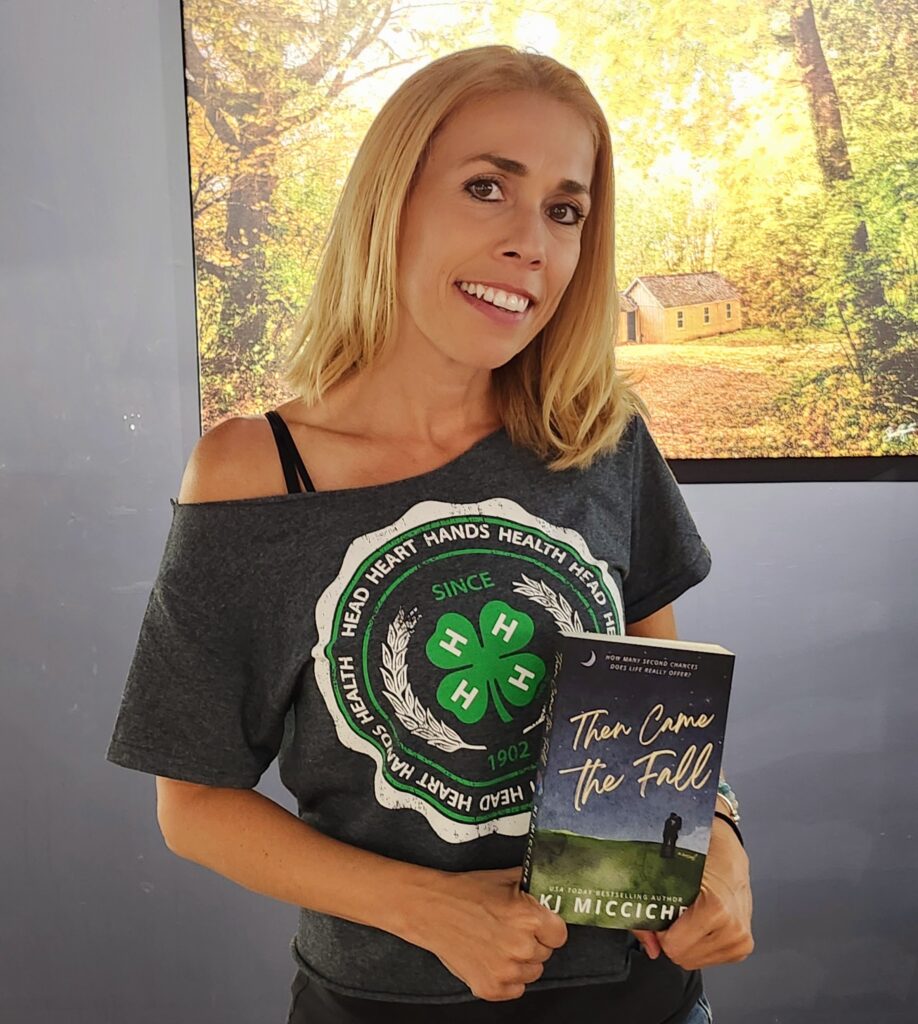
The camp means so much to her, Micciche uses a fictionalized version of the camp as the setting for her new romance novel, “Then Came the Fall,” which was published last month. She describes the book as “a love letter to the camp.”
For generations of campers, the camp’s meaning is measured in memories of experiences and the life lessons learned there: a childhood refuge, a training ground, a place of friendships, marriages, family traditions and annual reunions.
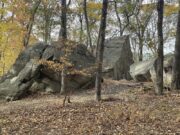
For Riverhead, the Dorothy P. Flint 4-H Camp property is farmland, woodland, bluff and beachfront, stretching from Sound Avenue to Long Island Sound. It is both a natural resource and an extremely valuable piece of beachfront property.
The pending sale has brought both meanings of the property into sharper focus.
Nassau County owns the 145-acre property, which Cornell Cooperative Extension of Nassau County has operated for more than a century as a 4-H camp. Peconic Land Trust is in contract with Nassau County to buy the site for $10 million. The preservation plan discussed publicly would have Suffolk County preserve a portion of the farmland, with the Town of Riverhead acquiring a roughly 36-acre portion as open space and the remaining acreage continuing to include the camp hub.
The contract of sale calls for the 4-H camp to continue operating after closing unless CCE Nassau becomes defunct or no longer wants to run it, according to Nassau County documents. The proposed lease would allow CCE Nassau to lease the property from Peconic Land Trust for $10 per year, with an initial three-year term and automatic one-year renewals.

Julie Wesnofske of Peconic Land Trust said in an Aug. 17 email that “one of the primary objectives of this project is, and always has been, to give CCE-NC a permanent home on the property to continue to run the 4-H Camp and engage in year-round programming for both youth and adults.”
The lease, Wesnofske said, is “merely a place holder” to give the land trust enough time to transfer ownership of some portion of the property to CCE Nassau, a step that will likely require subdivision. The only uncertainty, she said, is raising enough public and private funding to complete the transaction.
Peconic Land Trust says the camp’s continuation is a central purpose of the deal. The remaining questions are whether the trust can assemble the public and private funding needed to close, how the land would be subdivided, whether Riverhead Town will participate and whether CCE Nassau can sustain the camp operation over time.
As a county extension association, CCE Nassau is governed by its local board of directors and led by Executive Director Sunday F. Coward. County extension associations are established by state law, but they are not county departments controlled by county government.
Nassau County’s 2026 budget does not identify a separate allocation for operation of Dorothy P. Flint 4-H Camp. It allocates $200,000 to CCE Nassau through Parks, Recreation and Museums, plus $29,613 through the Office for the Aging, both as contractual services.
Coward did not respond to a request for an interview for this story.
“A lot of us are kind of nervous as to what the future holds,” said Melissa Golfo, 43, of Oceanside, who started attending the camp from Valley Stream in the early 1990s and later became a counselor.
Golfo described the camp as an inclusive place, one where children who might not have felt they belonged elsewhere found a community. Campers did chores, wrote letters home, waited for care packages, went to the beach, sang at Council Fire and formed friendships that lasted decades.
“No matter what went on during the school year, you knew you belonged when you were there,” Golfo said.
That sense of belonging came up again and again in interviews with former campers and staff.
Micciche, 48, said the camp gave her confidence, leadership skills and peace she did not find in her everyday life. It was the one place where, even as a teen,could be herself without dressing up or hiding.
“I loved that it was the only place in my life growing up where I could be the most authentic and true version of myself,” she said.
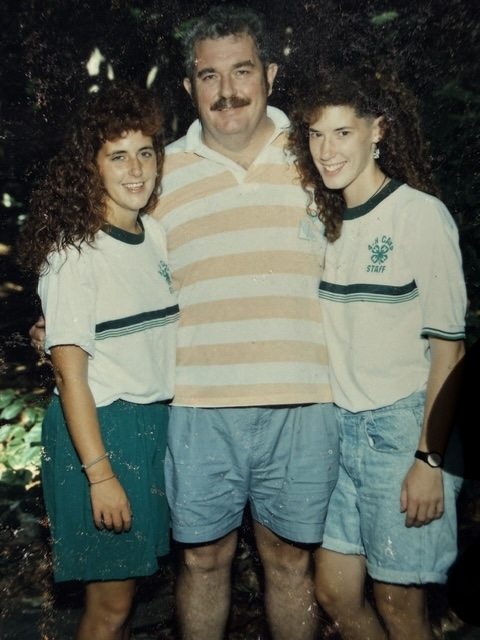
Kelly Padavan, 55, of Seaford, had an even deeper connection. Her father, Don O’Callaghan, began working at the camp as a college intern in 1964, later becoming director and then manager of the camp operation. Padavan and her siblings grew up there in the summers. She first went to camp as an infant; her brother was there at two weeks old; her sister was born at Central Suffolk Hospital in Riverhead after a hurried drive from camp.
The family packed up each June and returned to their home in Nassau around Labor Day, just in time for school.
“I don’t know any summers back in Nassau County,” Padavan said.
As a child, she attended camp. As a teenager, she became a counselor. She later worked as a unit leader and waterfront director. Years later, she returned with her own children, continuing the pattern that many alumni describe: campers becoming counselors, counselors becoming parents, parents sending children back to the same fields, cabins and shoreline where they had grown up.
Padavan said camp influenced her career as a physical education teacher and shaped her understanding of teaching. She pointed to two 4-H ideas that ran through the camp’s culture: “learn by doing” and “making the best better.”
Camp was not merely recreation, she said. It was a place where children learned by making beds, doing dishes, taking care of their things, helping younger campers, teaching skills and trying again when something did not come out perfectly the first time.
“You become that teacher to the younger campers,” she said.
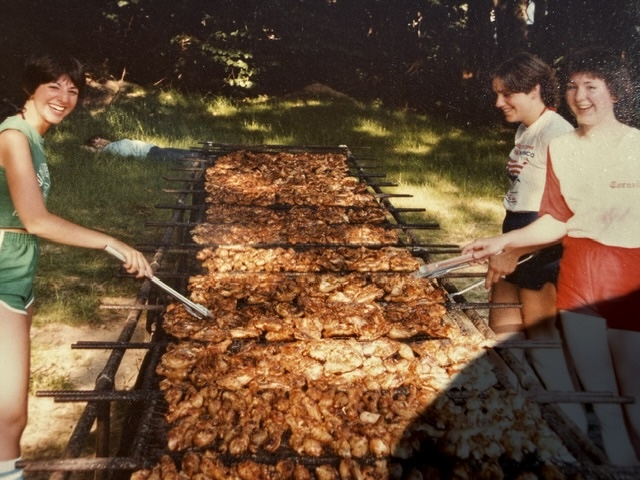
For Rob Castora, 46, of Levittown, who first came to the camp through family camping at age 4 and later worked on the maintenance crew, the camp taught confidence in a practical way. It was a place where children and teenagers were asked to try things they did not already know how to do.
“One of the mantras is to learn by doing,” he said. “You would approach a lot of different situations not knowing how to navigate.”
Castora said he learned leadership skills there that he still uses in his work as a product manager. More than that, he said, he learned how quickly relationships form when children are away from screens and living together in a close community.
“A day sort of feels like a week, and a week feels like a month,” he said.
He worries that losing the camp would mean losing one of the few places left where children can break from constant digital pressure and simply exist outdoors with one another.
“4-H turns out good people,” Castora said. “They put good people into the world. They put good leaders into the world.”
Suffolk County Legislator Greg Doroski, of Mattituck, agrees. Doroski, 45, attended sleep-away camp there one summer when he was 8 years old. Being away from home and away from TV screens and video games enhanced the experience, he said. He remembers campfires, songs, swimming in Long Island Sound, sleeping in cabins and making new friends, and described it as a special place.
As a Suffolk legislator, Doroski is an advocate for the preservation of the property and the continued operation of a children’s camp there.
The camp’s official history dates to 1924, when Dorothy Powell Flint, then a 4-H Farm and Home Economist on the Nassau staff, started what the camp’s centennial history describes as the first 4-H camp in New York State. She borrowed tents and equipment from Farmingdale Agricultural School, cots and other supplies from the Red Cross and pots and pans from a school lunchroom in Bethpage. That first summer, 52 girls camped at Long Pond in Wading River.
The camp moved more than once before settling in Baiting Hollow. In 1939, after organized camping was no longer permitted at Wildwood State Park, Flint’s mother, Margaret Powell, bought the Cavendish Farm in Riverhead and leased it to the Nassau Farm and Home Association so the 4-H camping program could continue, according to the camp history.
Flint retired in 1970 after 47 years with Nassau County 4-H and died later that summer after a battle with cancer. Nassau County then renamed the camp in her memory.
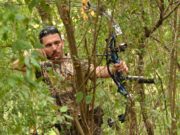
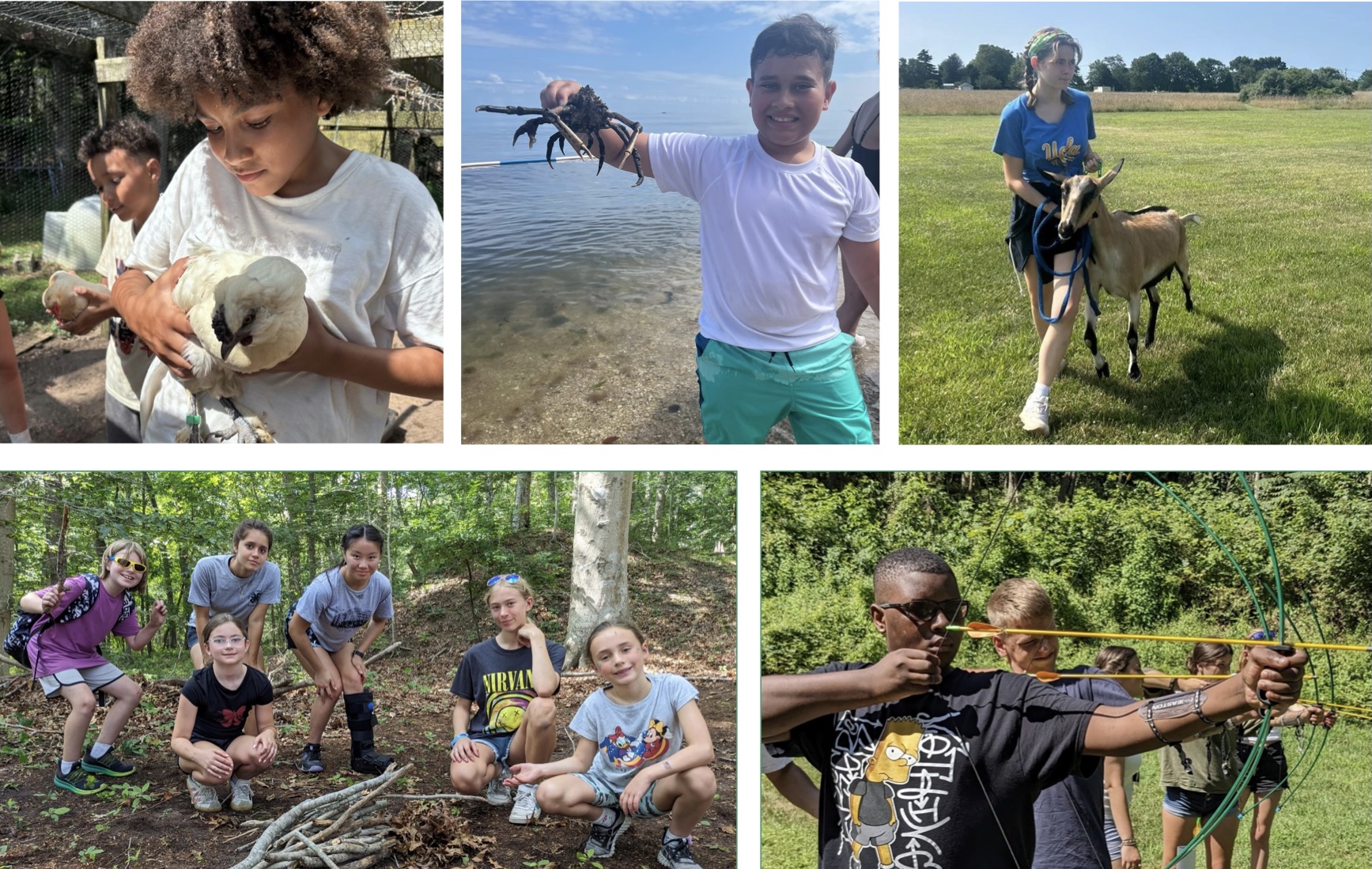
Today, CCE Nassau describes the camp as the oldest 4-H camp in New York State, with co-ed overnight, day camp and family camping programs on 145 acres along Long Island Sound. Its programs include a working farm, waterfront activities, ropes courses, environmental science, outdoor living skills, archery, arts, marine biology and leadership development.
Camp alumni spoke less about program offerings than about rituals.
They remembered Council Fire, the weekly gathering around a bonfire where songs were sung and awards were given. They remembered candle lighting, the end-of-summer ceremony where children carried small flames into the dark. They remembered beach Sundays, cabin nights, special days, chores, honor cabins and the feeling of being away from ordinary time.
They also remembered the landscape: the farm, the beach, the bluff, the cabins, the tennis courts where campers could lie down and look up at the sky.
That landscape has changed over time. The camp once operated separate boys’ and girls’ sides, with separate beaches. Former campers said the east side, once the girls’ side, has not been used for overnight cabins in years, and some structures there have aged beyond useful life. The active camp operation is now concentrated largely on the west side.
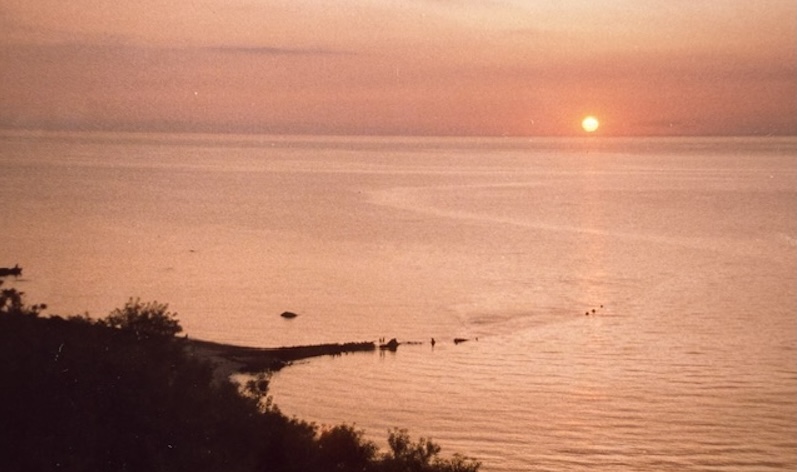
That distinction matters because Riverhead Town has been asked to consider participating in the preservation by acquiring about 36 acres for open space on the east side of the site. The acquisition would potentially extend the town’s existing Sound Avenue Nature Preserve north to Long Island Sound.
Town officials have raised questions about costs, liability, bluff access and the expense of removing deteriorated structures. They have also discussed the potential for tax revenue if the Soundfront property becomes privately owned and developed.
For alumni, the possibility that part of the land could become public open space is not necessarily a loss, if it helps preserve the camp’s core and prevents development.
Castora said it is hard to think about losing portions of land where alumni grew up. But if part of the property becomes open space and the camp survives, he said, “there’s probably no better second option, in my opinion, than giving it to the people.”
What would be harder to accept, he said, would be the disappearance of the institution itself.
“Killing any institution that’s made it 100 years,” he said, “I just think would be a travesty.”
Micciche’s novel imagines a fictional camp at a moment of similar change. She said she chose romance in part because the genre promises a happy ending. Even if the real camp changes, she said, the ending it gave its campers has already been written into them.
“The happy ending lives on in all of us who got to go there,” she said.
The survival of local journalism depends on your support.
We are a small family-owned operation. You rely on us to stay informed, and we depend on you to make our work possible. Just a few dollars can help us continue to bring this important service to our community.
Support RiverheadLOCAL today.
