























Riverhead knows what accountable public safety looks like. We saw a very clear example of it just this month.
When an erratic driver threatened to turn a crowded street fair into a disaster, Riverhead Police responded. They stopped the danger. They did it without turning a frightening encounter into a fatal one. And afterward, the public knew something had happened, because local policing leaves a record.
Riverhead Police issued a press release after the incident, describing what happened. And at last week’s Town Board meeting, where the two patrol officers and a traffic control officer were honored for the quick actions that averted potential tragedy, Lt. Jonathan Devereaux provided the public with even more details. See: Officers honored for fast actions to avert tragedy at Riverhead street fair (Aug. 19, 2026)
On Aug. 16, when the incident took place, there was a police response. There were identifiable officers. There was a department responsible for what occurred. There was a chief answerable to the public and a town government answerable to the voters.
That is what accountable law enforcement looks like.
It is also why the Riverhead Town Board’s refusal to even meet with OLA of Eastern Long Island about its proposed Public Safety and Accountability legislation is as troubling as it is perplexing.
The proposal has been caricatured as something it is not. Some town officials have responded as though the issue is whether they support immigration enforcement or whether they support police. But that misses the point entirely.
This is not a proposal to abolish law enforcement. It is not a proposal to obstruct federal officers. It is not a proposal to prevent police from doing their jobs.
At its core, it is about public safety, transparency and documentation.
Those should not be radical concepts.
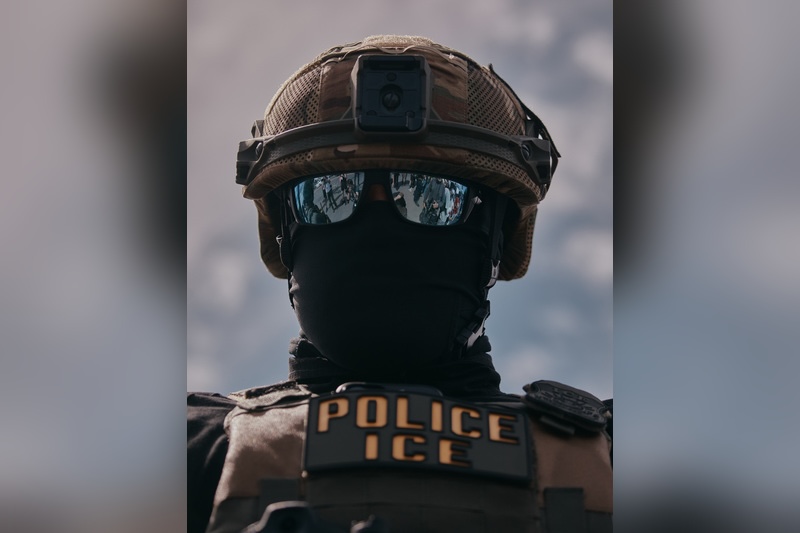
Federal immigration enforcement has already come to Riverhead in ways that should concern anyone who cares about order on our streets. Masked agents have tackled men in public. Vehicles have been left behind. Families, witnesses and neighbors have been left to sort through the aftermath. Yet according to Riverhead’s police chief, federal agents do not notify local police before coming into the community to conduct operations.
In one case, Riverhead’s police chief wrote to the Department of Homeland Security asking whether the agency had been involved in an arrest in Riverhead that day, noting that reporters were asking about it. He also asked for a media contact to provide to reporters seeking information.
DHS responded with an email address for press inquiries. It did not answer the chief’s question. It did not even acknowledge it.
That correspondence, obtained through a resident’s FOIL request for communications with DHS about ICE activity in Riverhead, says a great deal about the problem. If the local police chief cannot get a straight answer about whether federal agents made an arrest in his own jurisdiction, what exactly is the public supposed to rely on?
Nor, apparently, is there any routine local record afterward showing who was arrested, whether anyone was injured, whether local police were called to respond, whether traffic or public safety was affected, or whether vehicles were abandoned on public streets.
Review the local police blotter and it is as if the agents were never here.
That is not acceptable.
If a person is tackled on a Riverhead street by armed, masked federal agents, Riverhead should have a record of it. If a federal operation creates a disturbance, leaves a vehicle behind, affects traffic, frightens bystanders or requires a local response, Riverhead should have a record of it. If someone is injured during an enforcement action here, Riverhead should have a record of it.
Documentation is not obstruction. Accountability is not anti-police. Wanting to know what happens on public streets is one of the most basic responsibilities of local government.
Last week’s Polish Town Fair incident showed why this matters.
Local police faced a volatile situation involving a driver who, by all accounts, could have caused terrible harm. They acted quickly and with restraint. No one had to wonder who was in charge. No one had to rely on rumor. No one had to guess whether the incident would disappear into silence.
Now imagine a similarly chaotic encounter involving masked federal agents who did not notify local police, were not accountable to local officials and left no local record behind. Would Riverhead residents have any assurance the situation would be handled with the same restraint? If it were not, who here would even know what happened?
That is the question the Town Board should be willing to discuss.
Instead, the board has treated OLA’s proposal as though merely talking about accountability is some kind of political betrayal. In today’s political climate, it is hard to escape the conclusion that supporting any limit, record-keeping requirement or local policy involving ICE is considered unacceptable in Republican politics. Even asking questions about federal immigration enforcement can be treated as insufficiently loyal to the Trump administration’s mass-deportation agenda.
But Riverhead officials were not elected to serve a national political narrative. They were elected to serve Riverhead.
That includes every resident who lives here, works here, drives here, shops here, attends school here, worships here or walks down our streets. Public safety does not depend on immigration status. Neither does the town’s obligation to know what is happening within its borders.
The Town Board does not have to adopt OLA’s proposal exactly as written. It does not even have to agree with every provision. But refusing to meet, refusing to read the proposal seriously, refusing to engage with the facts and reducing the whole issue to political slogans is a failure of leadership.
If Riverhead trusts law enforcement, it should also trust documentation.
If Riverhead supports public safety, it should want to know when armed federal agents are operating on local streets.
And if Riverhead’s elected officials believe they are doing the right thing, they should not be afraid to put it on the record.
The survival of local journalism depends on your support.
We are a small family-owned operation. You rely on us to stay informed, and we depend on you to make our work possible. Just a few dollars can help us continue to bring this important service to our community.
Support RiverheadLOCAL today.
