






















Town officials are apparently negotiating an agreement with a private consulting firm to assess the viability of developing Veterans Memorial Park in Calverton as a regional sports facility.
Discussion of negotiations with Sports Facilities Advisory LLC was an item on the town board’s agenda for an executive — closed door — session held yesterday after the board’s regular public work session.
Sports Facility Advisory, based in Clearwater, Florida is “a strategic planning company for sports and recreational facilities,” Riverhead Community Development Agency administrator Dawn Thomas told the town board during an open meeting on Oct. 11, as the board discussed entering into a $25,000 agreement with the firm to provide the town with a feasibility study for a sports facility at the Calverton park.
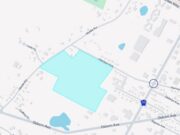
The 90-acre Veterans Memorial Park, which opened in 2013, was carved out of the 2,900-acre former Grumman site by the town and dedicated as parkland. The town has developed about 60 acres with ballfields, a dog park and and parking facilities. opened in 2013. But the remaining 30 acres remain undeveloped.
Officials at a town board work session in February discussed developing an indoor sports facility on the remaining land that could possibly be accomplished by entering into a partnership with a private entity. The town board at that time agreed to issue a request for proposals for such a facility, but no RFP was ever issued.
In October, the board considered a resolution authorizing Sports Facilities Advisory to conduct a feasibility study for a regional sports facility at the site — an idea endorsed by the recreation advisory committee, the superintendent of parks and recreation and the administrator of the Riverhead Community Development Agency, which holds title to the land.
Sports Facilities Advisory had submitted “a proposal for a feasibility study to examine the potential of developing Veterans Memorial Park at EPCAL,” according to the resolution.
After discussion at the Oct. 11 work session, the board decided to pull the resolution to give members the opportunity to review and further discuss the firm’s proposal, which was not distributed at the work session.
Supervisor Laura Jens-Smith expressed concern about spending $25,000 on a feasibility study when the town is not in a position to move forward with the development itself, a multi-million dollar project. The town has other costly capital projects on its agenda, she noted.
It is not clear that the cost of developing a facility would be shouldered by the town in whole or in part. Responses to an RFP could include proposals that would have a private developer assume that burden.
Thomas urged the board to look at the sports facility as an economic development initiative that could draw people to the area and benefit businesses and hotels.
Since the town did not budget for the cost of the feasibility study, Thomas said she would look around for possible grant funding to cover the $25,000 fee.
Councilwoman Jodi Giglio said the proposal had two parts. The $25,000 fee would only cover the feasibility study, she said. The next step, if the firm’s assessment concludes that a facility would be economically feasible at the site, would be a request for proposals. Sports Facilities Advisory’s fee to draw up a request for proposals would be 3 percent of the estimated cost of the facility, she said. That could be hundreds of thousands of dollars “we’d have to come up with up front,” Giglio said.
The board held no further public discussions of the firm’s proposal.
At its Nov. 20 meeting, the board unanimously approved a resolution authorizing a highly unusal “nondisclosure agreement” with an unnamed entity, with which the board “may wish to engage in discussions and negotiations concerning a possible business relationship.”
After the meeting, board members declined to disclose the identity of the entity, citing its requirements for an NDA.
The nondisclosure agreement would be signed by the supervisor, members of the town board, the CDA administrator and CDA staff, according to the Nov. 20 resolution.
Robert Freeman, executive director of the New York State Committee on Open Government, said a town board cannot by agreement change the provisions of state law. A purported nondisclosure agreement would not not alter the town board’s obligation to discuss topics in open meetings that the state Open Meetings Law requires to be discussed in open meetings, he said. Nor does such an agreement allow the town to withhold from the public documents that the state Freedom of Information Law requires be available for public inspection, he said.
The survival of local journalism depends on your support.
We are a small family-owned operation. You rely on us to stay informed, and we depend on you to make our work possible. Just a few dollars can help us continue to bring this important service to our community.
Support RiverheadLOCAL today.
