

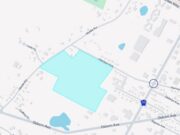























An affordable housing development that has been in the works for more than a decade is finally moving forward, but requires changes to an overlay zoning district adopted in 2016 to gain town approvals .
Family Community Life Center, a nonprofit organization affiliated with the First Baptist Church of Riverhead, presented revised plans to develop income-restricted housing and a community center on 12.5 acres owned by the church on Northville Turnpike.
The project proposal has changed significantly since it was last publicly discussed by the leaders of the nonprofit and town officials in 2018. The number of rental apartments proposed has been reduced from 132 units to 80 units. Twenty of the apartments will be reserved for people with developmental disabilities. Five three-bedroom condos have also been added to the project, in addition to the 80 rentals, and will be sold for an affordable price, according to the proposal.
In addition, the income restriction on the rental housing has been changed from “workforce” to “low-income,” terms defined by the federal Department of Housing and Urban Development (HUD) according to area median income levels.
The community benefit zoning overlay district adopted by the Town Board in 2016 at the request of First Baptist Church allows for “workforce” housing — defined by HUD as housing for people making between 80% and 120% of the area median income — but not low-income housing — which is defined by HUD as housing for people making between 50% and 80% of the area median income.
The median household income in Riverhead, estimated by the recent census estimates at $80,595, is slightly more than half of the Nassau-Suffolk family median income of $156,300. HUD’s Nassau-Suffolk median income numbers are used to calculate the income limits for subsidized housing on Long Island. Using HUD’s area median income number for 2023, the low-income limits would be an annual income of $53,900 (50%) to $71,400 (80%) for a one-person household.

Representatives from the Family Community Life Center, including its president, Shirley Coverdale, and directors Charles Coverdale and Cynthia Liggon were before the Town Board on June 15 to discuss the project. Joining them was David Gallo, the president of Georgica Green Ventures (GGV), the developer of Riverview Lofts and the organization’s development partner on the project.
“We have young people and retirees both who cannot afford to live here who are moving off island,” Shirley Coverdale told the board. “And if we cannot stave off that population, we have something that is completely unsustainable. When this was presented to [the] Long Island Regional Planning Council, they agreed with us wholeheartedly and designated our project as one of regional significance.”
The construction of housing designated as “low income” makes the development eligible for specific federal tax credits and other affordable housing programs. First Baptist Church and GGV agreed to construct low-income housing in a master development agreement they signed in October 2020. The master development agreement was among the documents filed by GGV and the church in State Supreme Court in a proceeding seeking court authorization to sell church land and partner with the developer, Gallo said during the work session.
But because the Community Benefits overlay district provides only for the construction of “workforce” housing, the zoning would have to be changed to allow “low-income” housing.
Other zoning changes needed to accommodate the proposed development
That is one of the changes being discussed between the town and the developer, Community Development Director Dawn Thomas acknowledged in an interview.
The specific zoning changes being sought were not discussed by the Town Board during the June 15 work session, though documents presented to the Town Board did indicate income limits of between 50% and 80% of the area median income. Shirley Coverdale said in an interview this week that the 50%-80% number was a mistake and the range will be from 50% to 100%.
The proposal is also more dense than the overlay district zoning would allow without the purchase of farmland preservation credits. The current proposal includes 85 dwelling units (48 one-bedroom and 32 two-bedroom rental apartments, plus five three-bedroom condominium units.) The overlay district would allow a maximum of 14 dwelling units on the site, calculated as one dwelling unit per 40,000 square feet. As per the code, the developer can purchase and redeem farmland preservation credits to allow for increased density, which allows for an additional 10 dwelling units per 40,000 square feet per preservation credit redeemed.
A code change to allow for higher density, reducing the number of preservation credits required to be purchased, has also been discussed, Thomas said.
The current underlying zoning of the site is Residence A-40, which allows, as of right, one single-family dwelling unit per 40,000 square feet, or by Town Board special permit, one dwelling unit per 20,000 square feet with the transfer of development rights.
The Community Benefits overlay district can be imposed by the Town Board within any zoning district on any site that meets the “eligible properties” criteria spelled out in the overlay district. The criteria require a minimum lot size of 10 acres, a minimum road frontage of 800 linear feet on a state or county arterial highway, and service by the Riverhead Water District and the Riverhead Sewer District, or close enough to existing district boundaries to allow connection to the district.
Thomas said the town is also looking at removing the requirement that the project connect to the sewer district, since the developer intends to create its own on-site sewer system.
Other changes to the zoning are also being considered, Thomas said, including the town requiring certain architectural design standards and building materials.
The overlay zoning allows one-family dwelling units only with a professional office. The plans submitted to the Town Board June 15 do not indicate the proposed five three-bedroom homes to be offered for sale as affordable housing would include professional offices.
The document submitted to the Town Board at the work session by GGV contained several misstatements concerning the requirements of the overlay zone and whether the proposed plans meet those requirements. The document was posted with the calendar meeting notice on the town’s website.
For example, the document states, in a section titled “Zoning Analysis for Community Benefit Zoning Use District (CBD)” that the eligible properties criteria includes “proximity to Riverhead Water District and Riverhead Sewer District or use of an on-site sewage treatment plant with Suffolk County DOH approval,” and then states that the proposal complies with that zoning criteria. However, the eligible properties provision of the overlay zone does not mention “use of an on-site sewage treatment plant” at all.
It also states the proposal complies with zoning for homeownership units, though the overlay district requires professional offices for single-family home ownership units.
The document also lists “sewage treatment plant” as an accessory use allowed by the overlay zone and states that the proposal for construction of an on-site sewage treatment plant complies with the zoning. But “sewage treatment plant” is not listed among allowed accessory uses. A wastewater pump station, a facility that pumps wastewater into the Riverhead Sewer District system and aids in its transmission to the district’s treatment facility off Riverside Drive, is listed as an allowed accessory use. A pump station does not treat sewage.
It also states that the proposal complies with the code’s requirement for the provision of “workforce” housing, when the proposal is for the construction of “low-income” housing.
Shirley Coverdale referred specific questions about zoning to Gallo, who did not return a call seeking comment. Connie Lassandro, a housing consultant working for GGV, declined to comment due to the zoning details not being final.
“I feel pretty good about where we are,” Gallo told the Town Board during the work session. “And having worked a lot in Riverhead and knowing Riverhead, I feel like probably, out of all the towns we work in… the best. I feel very strongly about the project that we’re bringing forward. I think that there’s a great vision and a lot of good work that will come out of the completion of the project.”
Town Board members gave the project a warm reception during the work session, signaling their intent to work to fulfill the developers’ requests.
“I just want to say that I was here in 2016 supporting the program then and I still support it today, for sure,” Council Member Tim Hubbard said.
Board members also applauded the inclusion of the ownership opportunities added to the proposal, a change from the original plans, which only included rental units.
Shirley Coverdale said that changes to the project — including the reduction of units from 132 to 80 — came about after conversations with the town. The project’s delay has been caused primarily by the COVID-19 pandemic, she said.
GGV and First Baptist Church also had to obtain approvals from the New York State attorney general as well as the State Supreme Court order to allow the church to sell its land and partner with the developer, Gallo said.
Developer will seek tax exemptions from the Riverhead IDA
The development will not be tax-exempt due to ownership by a nonprofit entity, Gallo said, but the developer will pursue property and other tax exemptions from the Riverhead Industrial Development Agency. Concern over possible lack of tax revenue due to nonprofit ownership was a reason given by board members who voted against the overlay district in 2016.
Town Board members asked whether applications from current Riverhead residents could be given priority for new apartments.
Applicants will be chosen by lottery, Gallo said. “We can’t particularly control who applies to the lottery. But we have managed to really flood the local community with applications and making sure that the marketing is targeted,” he said.
Town officials do not expect major impact on school district
They also voiced concerns about the project’s impact on the Riverhead Central School District, which Council Member Frank Beyrodt referred to as the “800-pound gorilla.”
Riverhead school district officials during public hearings for large residential developments have asked town governing bodies to consider the school district being at-capacity. District officials have been especially concerned about the property tax exemptions given to projects by the Riverhead Industrial Development Agency, which district officials say suppress the district’s tax base growth.
In defense of criticism from the community about the impact of the developments to the school district, town officials have argued that many of the children moving into new residential developments and apartment complexes in Riverhead are already attending the Riverhead Central School District, a claim that could not immediately be verified. One-bedroom apartment units, town officials say, do not often include families with school-age children, they say.
Town officials continued that line of reasoning during the work session discussion.
“That’s where flooding the community with the applications would help because chances are, you’re getting people from within the community; they’re already in school,” Hubbard said. “So we’re not we’re not putting more kids in the school district, we’re just relocating them to a chance to better themselves and their family.”
School Superintendent Augustine Tornatore did not return a call seeking comment about the project.
The community center building proposed would total 10,000 square feet and include a gym and other multi-use space. The center would provide services like workforce and career development; youth and senior citizen programs; affordable childcare; and seminars and programs in partnership with other community organizations.
The community center will continue the work the church is doing throughout Riverhead and the surrounding area as a space for organizations, Pastor Charles Coverdale said. The community center will be open to all, not just those living within the development.
“The ideals of the church was that we were a missional project. We changed the outlook of our members, their hearts changed, their spirits changed, and they raised money to pay for all this additional land out of their pockets to make it available for our community to use,” Charles Coverdale said. “And I think we ought to keep that in mind. Because when I look around for 41 years, I haven’t seen many of that kind of thing happen. But that is what we’re about. And that’s what we wanted to see happen here and we want to do it for the benefit of our community.”
The church’s quest to create a community center has been a long process that started when the Family Community Life Center organization was formed in 1988. Since its formation, the organization has become a nonprofit and has raised money through an annual gala.
If the Town Board changes the zoning, GGV would then apply to the Town Board for the overlay district designation and a special permit to construct the proposed development. The developer would then need site plan approval from the Riverhead Planning Board.
“It’s in their court,” Shirley Coverdale said, referring to the Town Board, “to vote on those revisions so that we can move forward.”
The survival of local journalism depends on your support.
We are a small family-owned operation. You rely on us to stay informed, and we depend on you to make our work possible. Just a few dollars can help us continue to bring this important service to our community.
Support RiverheadLOCAL today.
