

























Somewhere inside the Suffolk Supreme Court in Riverhead, a judge has a pounding headache. And it’s not about to go away anytime soon.
The pain comes in the form of particularly gnarly litigation involving the Town of Riverhead, the State Department of Environmental Conservation and a Calverton sand mine.
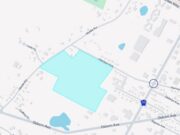
A Southampton-based limited liability company that owns a 20-acre mined site on the corner of Osborn and Youngs avenues, adjacent to the capped and closed town landfill, is looking to modify its existing DEC mining permit by digging deeper within the existing footprint of the mine.
CMA Mine LLC is seeking permission from the State DEC to dig to a depth of 100 feet — which is 89 feet below the groundwater table. It proposes constructing a 8 ½ acre lake on the site.
MORE COVERAGE: Calverton sand mine operator wants to expand mine downward — to 89 ft. below groundwater
CMA, a company owned by Steven Mezynieski of Southampton, has owned the site on Osborn and Youngs avenues since 2017. The site was already an active mine when CMA bought it. Mining operations there date back to 1938.
The Town of Riverhead banned sand mining in 1998, which changed the legal status of the mine in question — then operated by Suffolk Cement— to a prior nonconforming use. The sand and gravel mining operation was allowed to continue pursuant to an existing DEC permit. Whether it would be allowed to expand the prior nonconforming use remained a matter of dispute, as we’ll see in a minute.
CMA filed the application to modify its state permit in February 2019. The DEC, over the town’s objection, declared itself “lead agency” for purposes of review under the State Environmental Quality Review Act. When the DEC then issued a “determination of non-significance” (also known as a “neg dec”), finding that mining into the groundwater on the site would not have a significant negative environmental impact, the town in 2021 sued to annul the DEC’s decision, naming both the DEC and CMA Mine as defendants.
MORE COVERAGE: Riverhead hauls DEC into court over Calverton mine expansion
That litigation remains pending, with the parties arguing motions and cross-motions to dismiss each other’s cases. (More on that below.)
Last February, the State Court of Appeals — New York’s highest appellate court — rendered a decision in an unrelated sand-mining case (Town of Southampton v. NY State Department of Environmental Conservation and Sand Land Corporation et al, known as the Sand Land case) that potentially determines the outcome of Riverhead’s 2021 lawsuit.
The Court of Appeals ruled that a 1991 amendment to the State Environmental Conservation Law, bars the DEC from processing all applications for mining permits in Suffolk and Nassau Counties where local zoning codes prohibit mining uses in the area proposed to be mined. The DEC was obligated to ask the town whether a proposed mine was a permitted use and, if the town said it was not, the DEC was barred from processing the mining permit application.
The high court further ruled that the 1991 amendment to the Environmental Conservation Law also applies to applications to expand existing mines — rejecting the DEC’s position that the amendment did not apply to mines issued permits before the law was amended.
After the Court of Appeals decision, the State DEC asked the Town of Riverhead whether the proposed mining activities were within the scope of the CMA mine’s pre-existing, nonconforming use. The town said no. And DEC ceased processing CMA’s application.
End of story? Not by a long shot.
CMA argues that the DEC’s interpretation of the Court of Appeals’ Sand Land decision is “flawed” and the agency’s decision to stop processing CMA’s application “lacks merit.”
Riverhead Town argues that the Sand Land decision requires the court to reject CMA’s motion to dismiss.
Then in October, CMA mine filed a separate action in State Supreme Court, Suffolk County against the DEC and the town. In it, CMA asks the court to “declare null and void” the DEC’s decision last July that it could not process CMA’s permit modification application after the Court of Appeals’ Sand Land decision and also asks the court to direct DEC to process the application and issue the permit.
In December, the DEC filed its answer in opposition to the petition and Riverhead Town filed a motion to dismiss, arguing that the case is not “ripe” for review because CMA did not “exhaust its administrative remedies.”
CMA filed a reply to the town’s motion to dismiss and on Dec. 21, the town filed a reply to CMA’s reply.
The day before the town filed its reply to CMA’s reply to the town’s motion to dismiss CMA’s October 2023 petition, the state, the town and CMA mine all filed letters with the court in the 2021 lawsuit brought by the town seeking to annul the DEC’s determination of nonsignificance.
The DEC in its letter told the court it considers the town’s first cause of action — that DEC processed CMA’s modification application in violation of the 1991 amendment to the State Environmental Conservation Law — moot in light of the Court of Appeals’ Sand Land decision last February. The DEC said it stopped processing CMA’s application after Riverhead Town informed the agency that the proposed mining activities are not within the scope of a prior nonconforming use.
CMA in its letter reiterated that DEC’s interpretation of Sand Land is flawed” and the agency’s DEC’s decision to cease processing CMA’s application “lacks merit.”
CMA argues it “sufficiently established in the 2023 matter [the separate case brought by CMA in October] that it has a vested right to mine the land below the water table as a prior non-conforming use. Therefore, CMA should process and grant CMA’s modification application.”
In its letter, the town says it agrees with DEC about the Sand Land decision and says the decision is “determinative of both [the 2021 lawsuit brought by the town and the 2023 lawsuit brought by CMA] proceedings.”
On Jan. 11, all three parties in the 2021 lawsuit entered into a handwritten stipulation in court in which CMA withdrew its motion to dismiss, and the DEC withdrew its motion to dismiss. They all agreed that the 2021 and 2023 cases would be consolidated. Further, the stipulation provides that the Town of Riverhead would file an amended petition on or before Feb. 23 and that CMA and the DEC both anticipate renewing their motions to dismiss.
The head-spinning consolidated lawsuit will continue before State Supreme Court Justice Linda Kevins, the judge on the 2021 lawsuit initiated by the Town of Riverhead. It seems unlikely there will be a final resolution of this matter for a long time to come.
Riverhead is represented by Volz and Vigliotta, the Nesconset law firm that represented Southampton Town in the Sand Land litigation.
CMA Mine is represented by Bond, Shoeneck & King, of Albany.
The Department of Environmental Conservation is represented by the State Attorney General’s Office (Assistant Attorney General Jennifer Simon.)
The survival of local journalism depends on your support.
We are a small family-owned operation. You rely on us to stay informed, and we depend on you to make our work possible. Just a few dollars can help us continue to bring this important service to our community.
Support RiverheadLOCAL today.
