

























The Town of Riverhead and the Riverhead Industrial Development Agency have asked the Suffolk County Supreme Court to dismiss Calverton Aviation & Technology’s lawsuit.
In papers filed with the court late Friday afternoon, the defendants seek dismissal of CAT’s complaint in its entirety, arguing that the documents in the case and applicable law leave no questions of fact to be determined by a trial court, and that CAT’s complaint fails to state a cause of action, so the lawsuit should be dismissed outright.
Defendants in a lawsuit have the opportunity to respond to a complaint with a motion to dismiss it, rather than answering it. State law authorizes a trial court to grant dismissal upon such a motion for a number of reasons, among them “documentary evidence” establishes a defense to the claims and the complaint “fails to state a cause of action.”
CAT’s complaint, filed on Jan. 8, accuses the town of violating its November 2018 contract of sale with the company, and seeks a judgment directing the town to honor the contract. CAT’s complaint makes several other claims against the town, including accusations of fraud and unlawful interference with a third-party contract.
CAT also accuses the Riverhead IDA of violating state law when it adopted a resolution denying the joint application by CAT and the town for financial assistance to develop the property, without first holding a public hearing.
The Town Board relied on the IDA’s decision to declare the CAT contract null and void the following day.
MORE COVERAGE: It’s official: Riverhead Town cancels contract to sell EPCAL land to Triple Five affiliate, CAT
The town argues in its motion to dismiss that New York State law governing civil actions requires the trial court to dismiss the causes of actions asserted by CAT in its complaint because “documentary evidence” in the case fully defends the town against nearly all of CAT’s claims. The documentary evidence the town points to includes contracts, contract amendments, town and Riverhead IDA resolutions, the application to the IDA for financial assistance, documents submitted by CAT in support of the application and more.
The town argues that the remaining claims in CAT’s complaint, even if true, fail to state any cause of action against the town, and so must be dismissed by the court without trial. Included among those claims are CAT’s cause of action for “specific performance” of its contract with the town — its request for a judgment directing the town to convey the property to CAT.
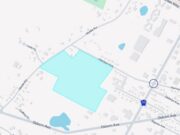
The town is also asking the court to cancel the notice of pendency (a notice of pending claim) filed by CAT in January against the 2,400 acres still owned by the town at EPCAL, including the 1,644-acre tract of vacant industrial land that was the subject of the CAT’s November 2018 $40 million contract with the town.
The notice, called a notice of pendency, lets prospective buyers, tenants, lenders and title insurance companies know that a lawsuit affecting title to the land is pending. The notice of pendency makes it very difficult, if not impossible, for the town to convey or lease the land for future development. Unless canceled by the court or by agreement of the parties, a notice of pendency is effective for three years from the date it is filed, and may be extended by the court for another three years, while the lawsuit affecting title is pending.
CAT’s alleged failure to state a cause of action for performance of the contract requires the “mandatory cancellation” of the notice of pendency, the town argues.
The defendants’ Notice of Motion has a “return date” — the date on which defendants intend to appear in court on the motion — of May 22. CAT must serve the defendants with answering papers no later than seven days before the return date. Those dates may be changed to later dates either by court order or stipulation of the parties.
If the court finds that dismissal of one or more of the causes of action in CAT’s complaint is not justified, the defendant(s) have 10 days after the entry of the court’s order to file their answer to the surviving causes of action.
The court’s order in the motion to dismiss may be appealed by either or both parties. An appeal would stop all proceedings in the trial court.
The survival of local journalism depends on your support.
We are a small family-owned operation. You rely on us to stay informed, and we depend on you to make our work possible. Just a few dollars can help us continue to bring this important service to our community.
Support RiverheadLOCAL today.
