






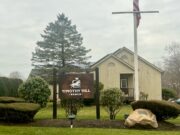
















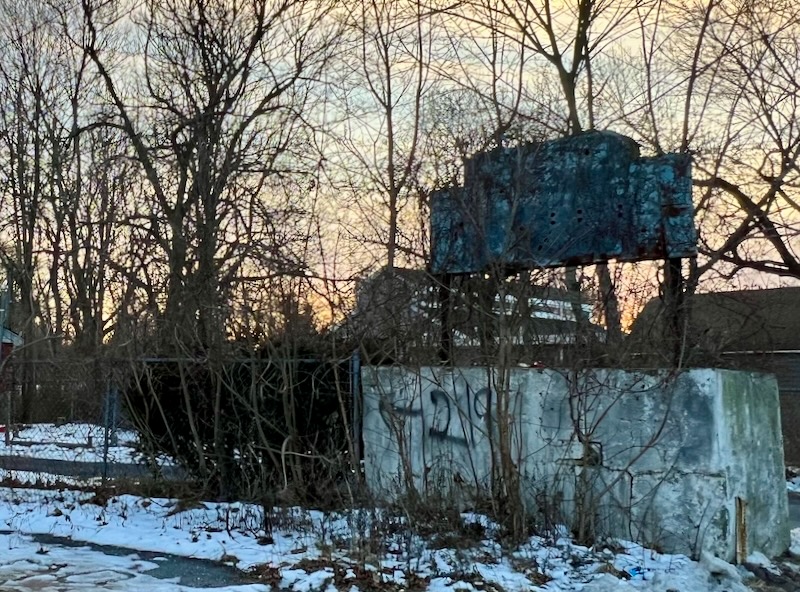
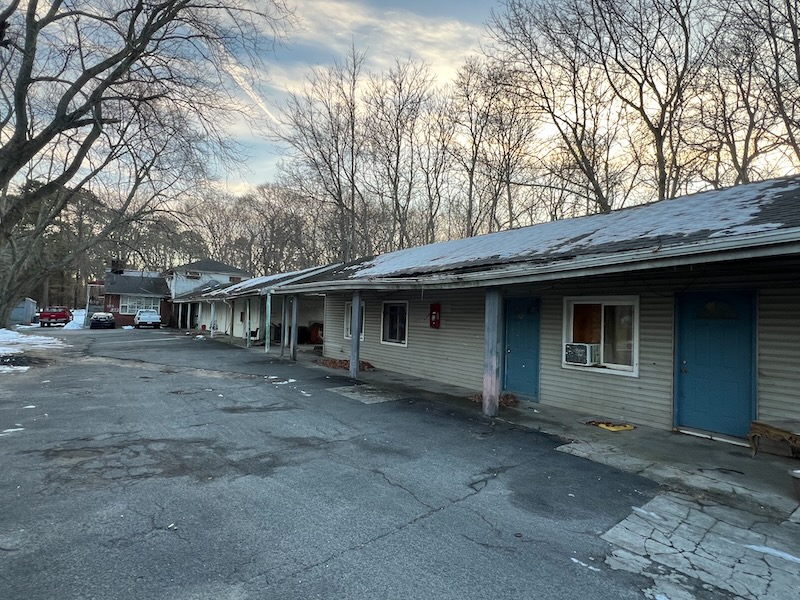
A rusty metal sign, its lettering removed, stands atop a crumbling concrete base on the south side of Flanders Road in Riverside, obscured by overgrown vines and saplings. A driveway between the sign and a condemned building to its north leads to a low-slung building with a sagging roof, a former motel converted into apartments.
The sign’s blank face beckons the curious passerby to wonder what businesses occupied the dilapidated property in a bygone era.
In the not-too-distant past, the site was part of a thriving Black business district in Riverside, now lost to time.
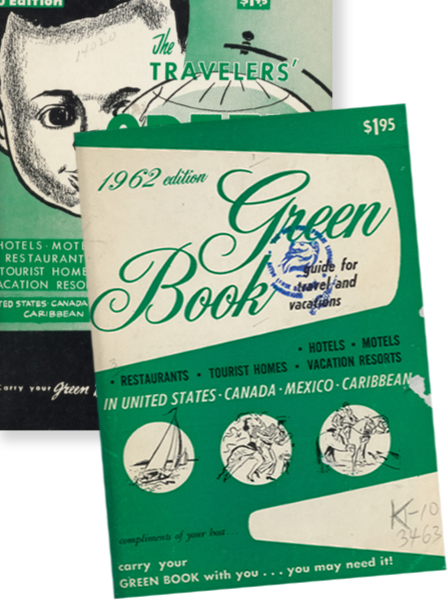
In the 1960s, the 10-room Peter’s Motel was listed in the Green Book, for decades the premier guide for Black people traveling across the United States, as a safe haven for travelers to the East End.
Started by Harlem postman Victor Green in 1936 as the The Negro Motorists’ Green Book, and later published as The Negro Travelers’ Green Book, the travel guide contained a list of Black-owned businesses and white-owned businesses that did not discriminate against Black customers — among them taxi services, gas stations, restaurants, barber shops, motels, night clubs and theaters.
It was created in a time when the African American middle class was growing and automobile travel exploded, enabling travel around a country where discrimination and Jim Crow laws threatened to upend a road trip.
“The White traveler has had no difficulty in getting accommodations, but with the Negro it has been different,” a forward to the 1956 issue of the Green Book said. “He, before the advent of a Negro travel guide, had to depend on word of mouth, and many times accommodations were not available.”
“Now things are different,” the foreword continues. ”The Negro traveler can depend on the ‘GREEN BOOK’ for all the information he wants, and has a wide selection to choose from. Hence this guide has made traveling more popular, without encountering embarrassing situations.”
Peter’s Motel appeared in seven issues of the Green Book from 1959 to 1966, according to a list of sites compiled through the University of Virginia by a group of architectural historians.
According to a map of Green Book businesses in New York published by those researchers, Peter’s Motel was the only business listed in the book east of Medford, although there were several other businesses on the East End which advertised in the vacation section at the end of the guide.
And the man the motel was named after lives right down the street.
‘I was the little kid running around’
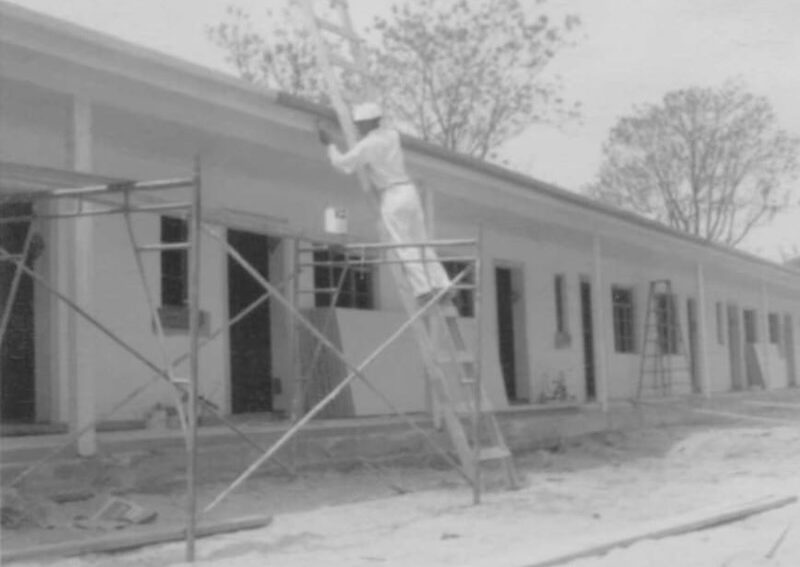
David Peter Fitzgerald’s family owned Peter’s Motel. It opened in 1957, a few years after Fitzgerald was born, by his parents, David Jones Fitzgerald and Lillian Fitzgerald.
The Fitzgerald family was among a group of Black entrepreneurs in Riverside. Fitzgerald’s parents grew up in the small town of Chatham, Virginia, but didn’t meet until they both moved to the Riverhead area.
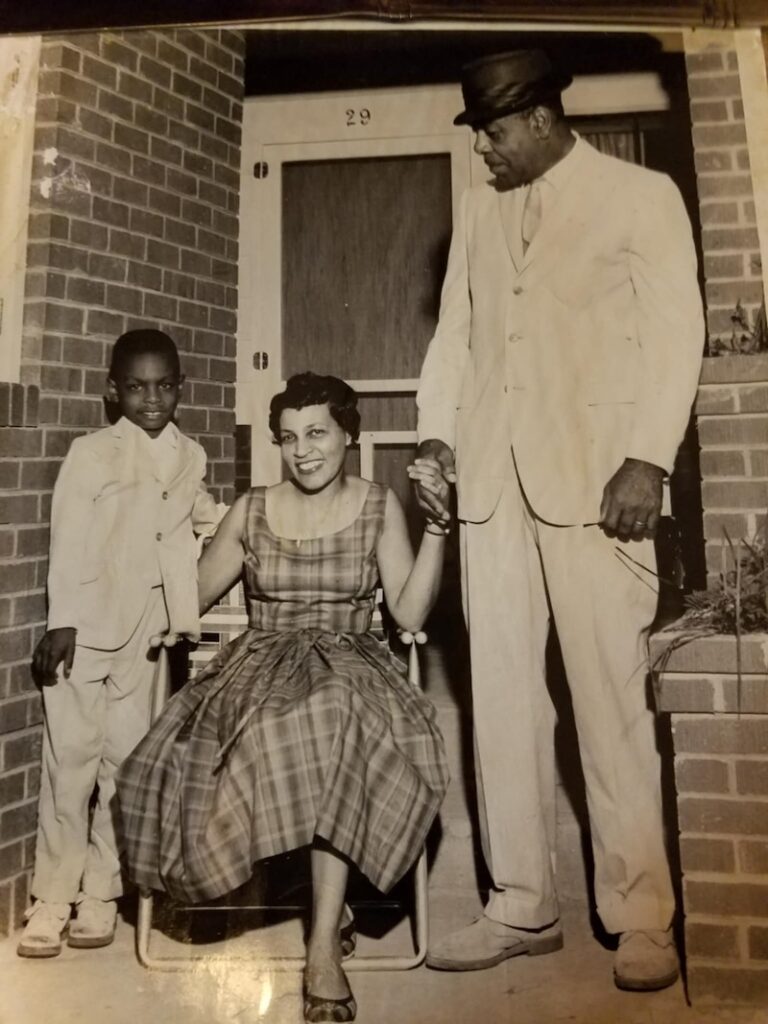
“My father had a-sixth grade education, but my mother was very educated, so she was the brains and he was the brawn — and he knew how to wheel and deal,” Fitzgerald said.
In 1949 Fitzgerald’s father built the Riverside Bar, a restaurant also known as Dave’s Diner, that is now a condemned building. Peter’s Motel was built in 1957; Fitzgerald said it was the first Black-owned motel on Long Island.
“I was the little kid running around,” Fitzgerald, now 70, said. “Then when I got older, I was the maintenance man and everything.”
Most of the motel’s guests were Black, Fitzgerald recalls. Some were traveling for vacations further east, to places like Azurest and other Black beach-front communities in Sag Harbor. “You had to come through Flanders Road to get to the Hamptons,” Fitzgerald said. “So he built the motel to get tourists and stuff.”
Other guests were patrons at the bar — including Black migrant workers from the south who were employed on East End farms. “If they got out of that migrant work and got regular jobs, sometimes they stayed in the motel until they got on their feet, until they got a home or something like that,” Fitzgerald said.
Fitzgerald’s family stayed in the one room apartment above the bar until 1964, when they built and moved into a house attached to the motel.
“There were so many characters” at the motel, Fitzgerald said.
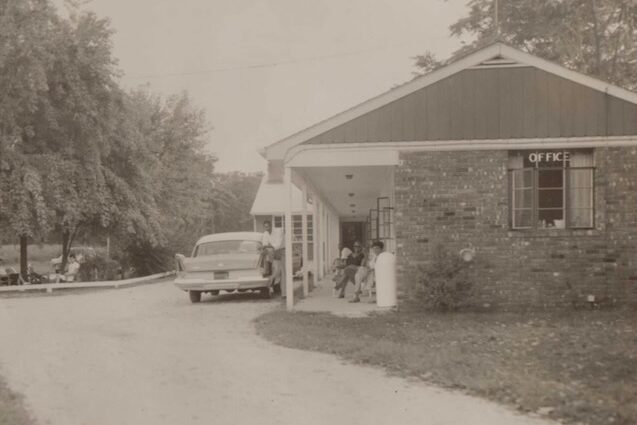
Those characters included a few long-term residents at Peter’s Motel, Fitzgerald said. One of them was John Price, a chef at a diner in Patchogue. Fitzgerald remembers that Price used to get a new car every year — Pontiac Firebirds or Bonnevilles — and would take Fitzgerald and his best friend for a ride. As soon as they were out of view of the motel, Price would let Fitzgerald drive.
“I’m driving at 13, 14 years old. And we’d go all over Westhampton, everywhere — we’re just motoring. Then we’d get back and switch over and pull back in the yard,” Fitzgerald said. “And we kept doing this. We thought we were getting away with it. And then one day, when we did that, my father walked up to the car and said, ‘John, when you guys get arrested, I’m not coming to get you.’ So that kind of put a kibosh on that.”
The employees of the bar would also stay at the motel, Fitzgerald said. “A lot of them lived there for long stretches of time.” He remembers some of those employees would be people his father would bring up from trips down south to work for the summer.
“Sometimes it was a hot sheet motel,” Fitzgerald said. He explained: “A lot of people hang out in the bar and then get together with somebody and come over to the motel, stay the night, and then they’re gone in the morning.”
One of the bartenders who stayed at the motel was a woman who was “very popular,” Fitzgerald said. “I’ve heard of guys — one guy coming in the front door, one guy climbing out the back window.”
There were many Black-owned businesses in Riverside at that time, Fitzgerald said. There were bars, restaurants, a candy store, cleaners, a barber shop and more. “We had everything here except a supermarket.”
“It was a thriving Black neighborhood,” he said.
Lifelong Riverside resident Robert “Bubbie” Brown, 84, remembers that time. One of the hottest places on Flanders Road was the Blue Bird Inn — just a few hundred feet west of the Peter’s Motel property — owned by Fitzgerald’s uncle.
“That was the place for Black folks to go to,” Brown said. There were bands at the Blue Bird every weekend — and it was a famous spot. He said Blacks from the south stationed at the Westhampton Beach Air Force base heard about the Blue Bird before coming to Long Island. It also had a reputation of being rowdy — there were many fights there, Brown said. Still, it had the best pork chop sandwiches around. A fire gutted the Blue Bird Inn in 1953.
Fitzgerald opened a new restaurant and bar, Hy-Way 24, on Flanders Road in 1973. Hy-Way 24’s opening, just west of the motel, prompted the closing of the Riverside Bar, located in the building in front of the motel. Fitzgerald rented the building on the motel site to a variety of businesses. Peter’s Motel would also eventually close, with Fitzgerald converting its rooms into apartments and renting them out around the late 80s or early 90s, Fitzgerald said.
In 2003, Fitzgerald sold the property with the former bar and motel.
“I almost wish I wouldn’t have sold it, but at the time, I had a lot of things going on,” he said. “The property was getting very old, so it was going to at some point need a lot of capital to fix it up. And sometimes I think I should have bit the bullet and took loans out or whatever and did it — because it made money.”
The condition of the property now depresses him. “I can barely look,” he said.
Forgotten history
Peter’s Motel was probably in the Green Book because of Lillian Fitzgerald, her son said. She handled advertising for the family businesses. ”She was big on stuff like that,” Fitzgerald said. In addition to being in the Green Book, an advertisement for Peter’s Motel was placed in Ebony, anAfrican American-oriented magazine, Fitzgerald said.
“I don’t know how my mother found out about it,” Fitzgerald said, ”but I’m thinking a lot of people didn’t think about [the Green Book], didn’t hear about it.”
And Fitzgerald didn’t know himself about Peter’s Motel’s inclusion in the Green Book until a cousin, Derek Smith, who had been reading an old Green Book, told him after he had already sold the property. Fitzgerald was surprised.
The Green Book was first published in 1936. Initially limited to listings in New York City, the demand for the guide was so high that it became a national publication the next year. Each book invites its readers to send information about new establishments for future publications of the Green Book and feedback on those businesses already listed in it.
“Our leaders and educators look forward to the day when as a racial group, we will enjoy the rights and privileges guaranteed to us, but as of now withheld in certain areas of these United States,” Novera Dashiell, at the time the assistant editor of the Green Book, wrote in an editorial in the 20th anniversary issue. “With this in mind, the idea was conceived by Victor H. Green, publisher-owner of the unique Negro Motorist Green Book about 1932. The idea crystallized when, not only himself but several friends and acquaintances complained of the difficulties encountered oftentimes painful embarrassments suffered which ruined a vacation or business trip.”
The Green Book was sold at churches, the Negro Urban League and Esso Standard Oil gas stations — a prominent sponsor of the Green Book. “Carry your Green Book with you… you may need it!” the motto on the front cover advises.
Long Island was a place where racism reared its head. It has a history of housing discrimination and segregation — the effects of which persist today. Hate groups like the Ku Klux Klan were so mainstream in the 20th century on Long Island that the organization held massive rallies and had its own local basketball team.
“Back then, they had the Klan,” Fitzgerald said. “But believe me, they never came up here. Flanders Road was an area that you didn’t mess around with.” Everyone had each other’s back, he said.
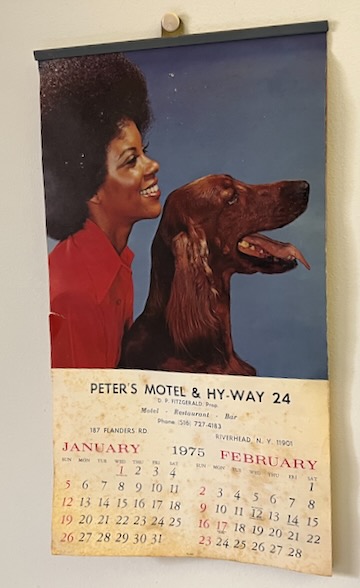
There is no marker for Peter’s Motel. There is no historic district in Riverside or heritage study. The only historic landmark in Riverside is a Black institution: the Goodwill African Methodist Episcopal Zion Church.
“In my experience, the vast majority of [Green Book sites] are like Peter’s Motel,” said Cindy Falk, a professor of historic preservation at SUNY Oneonta who contributed to the Green Book site research project at the University of Virginia. “They exist in people’s memory. They exist on the pages of this somewhat ephemeral book, but they aren’t formally recognized,”
Falk said roughly 80% of Green Book sites outside of New York City have been demolished. “A lot of the businesses were lost during urban renewal projects of the 1960s, 1970s, even the 1980s, that just destroyed African American neighborhoods in major cities,” she said.
“That said, there are a good number, or at least a small number, that we’ve been able to document that were demolished more recently — often still with a sense of progress,” Falk said, “Like this is an outdated, antiquated, uncared for property, and we’re going to make way for something bigger, better, newer — all of those things.“
It may be that the Peter’s Motel property suffers the same fate. It is within an revitalization district created to spur new development in the blighted Riverside hamlet, with the vision of transforming it and surrounding properties with mixed-use apartment buildings and a new business district.
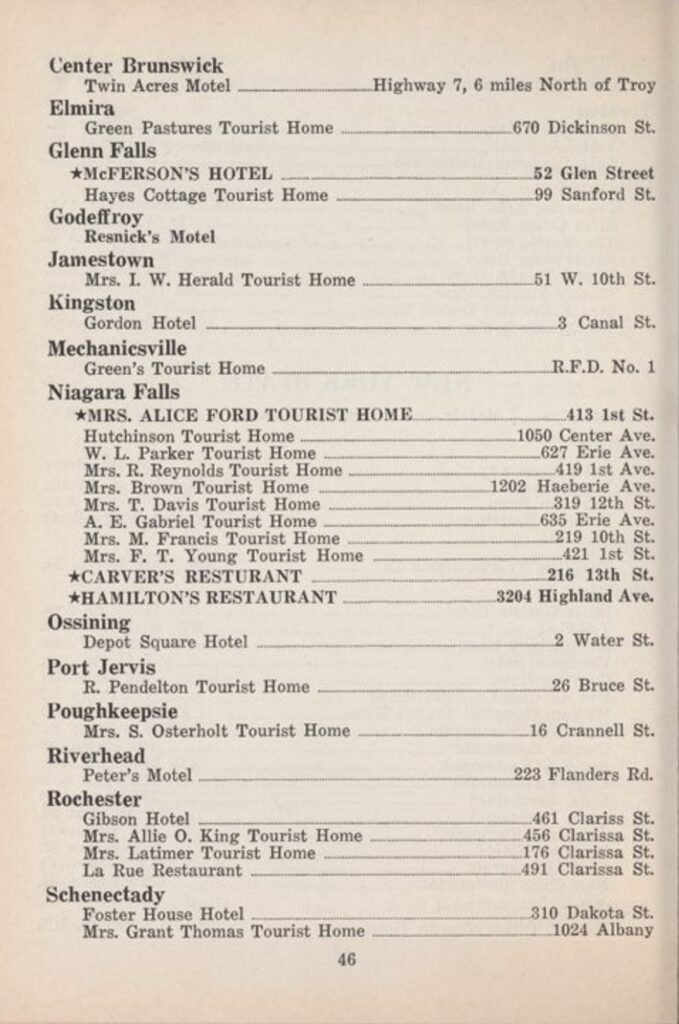
Falk noted that there is a movement to recognize former Green Book businesses as historic sites; she said the City of Buffalo has been a model in recognizing and celebrating the history of Green Book sites through local nonprofit organizations. It’s a model that she hopes can become standard practice in the state and across the country.
But right now, there are no plans to designate another historic landmark in Riverside, Southampton Town Historian Julie Greene said.
“It’s sad, really. It’s sad because it’s like the whole thing’s gonna disappear,” Fitzgerald said of his family’s business history. He wished his family had pushed for historic recognition when they owned the property. “Nobody’s gonna know when I’m gone. I mean, my kids know something about it, but I mean, that’s it.”
Issues of the Green Book were digitized into the collection of the New York Public Library in 2015, immortalizing Peter’s Motel — if only as just a name — for years to come.
As for that little part of history?
“I’m proud of it,” Fitzgerald said.
The survival of local journalism depends on your support.
We are a small family-owned operation. You rely on us to stay informed, and we depend on you to make our work possible. Just a few dollars can help us continue to bring this important service to our community.
Support RiverheadLOCAL today.
