








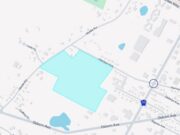











The owner of Patriot Recycling is moving forward with plans for agricultural uses and composting at the 45-acre Youngs Avenue site he purchased last year.
According to Riverhead Town Attorney Erik Howard, the town is awaiting a detailed plan for agricultural production on the property, which was formerly part of the Warner Nursery tree farm.
Although Howard told a resident during the July 1 Town Board meeting that the town had revoked the site’s use permit, he clarified in a July 3 interview that the town has not formally revoked the permit. Instead, a June 27 letter from Senior Planner Greg Bergman directed Patriot Recycling to immediately cease bringing materials to the site “in the absence of agricultural production.” Howard said the letter was “functionally the same” as a permit revocation.
The property lies within the Agricultural Protection Zone, where composting is not a permitted principal use. However, the town code allows for small-scale composting—less than 3,000 cubic yards per year—if it is “customarily incidental” to agricultural production, Howard said.
The site has not been farmed since Patriot’s owner, Joe DeFigueroa, bought it in 2023. Soon after the purchase, Patriot began transporting grass clippings and other yard waste from its Oceanside solid waste facility to the site for composting.
Last August, the town issued a stop-work order citing the dumping of garbage and other solid waste. DeFigueroa subsequently applied for and received a use permit in April, which canceled the August 2024 stop-work order. However, continued dumping without active farming led to further complaints from neighbors about odors and truck traffic, and the town issued another stop-work order on June 24, prohibiting additional material deliveries.
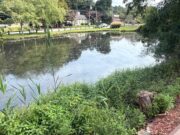
DeFigueroa has hired Rich Sipala of Longwood Farms in Middle Island to farm the land, according to his attorney, Steven Losquadro. Sipala confirmed in an interview last month will operate the farm and said he expects to begin work there in August. The site remains overgrown with tall grasses, though trees and shrubs planted by Warner Nursery are still in place. Sipala said his first step will be mowing the fields.
Under town code, up to 3,000 cubic yards of compost materials may be stored on active farmland without special approval. The Town Board may grant a further exemption to allow between 3,000 and 10,000 cubic yards. All mulch produced at the site must be used on site.
“Based on the amount of material that’s there now, I think that has to be used before they can start bringing in even more,” Howard said.

The New York State Department of Environmental Conservation (DEC) is also reviewing the facility’s operations. Under state regulations, composting facilities must register with DEC if they accept more than 3,000 cubic yards of yard trimmings annually. Those taking in more than 10,000 cubic yards require a permit. Facilities under the 3,000-cubic-yard threshold are exempt from registration.
The DEC adopted revised rules in 2021 to impose stricter safeguards for non-exempt composting sites to protect surface and groundwater. The rules change followed studies, including one done by the Suffolk County health department, demonstrating that vegetative organic waste composting facilities can have negative impacts on groundwater. The new rules include possible requirements for groundwater monitoring wells, especially for facilities located in designated protection areas.
The Youngs Avenue site is within Hydrogeologic Zone III, a Special Groundwater Protection Area that recharges the deepest drinking water aquifer.
Howard acknowledged that town planners are concerned about the composting operation’s potential impact on groundwater. “If and when we contemplate what continued activity on the site looks like,” he said, “we’ll incorporate some kind of soil testing or testing of material in furtherance of whatever kind of stipulated agreement we come up with.”
Riverhead Town purchased the development rights to the property in 1998, preserving it for agricultural use.
Former Planning Board chair and Town Board member Barbara Blass said the town should have more closely scrutinized the sale of protected farmland to the owner of a Nassau County solid waste business.
“The purchase should have raised several red flags,” Blass said. “The lack of real attention to detail left the door open for this property to be used as a waste dump mimicking farm operations. When are we going to stop letting others dump on Riverhead—figuratively and, in this case, literally?”
The survival of local journalism depends on your support.
We are a small family-owned operation. You rely on us to stay informed, and we depend on you to make our work possible. Just a few dollars can help us continue to bring this important service to our community.
Support RiverheadLOCAL today.
