





















In late June, Governor Kathy Hochul vowed to build New York’s first new nuclear power station in nearly four decades, advancing one of the most aggressive plans by any state to revitalize the United States’ stagnant atomic energy industry.
Standing before the state’s largest generating station, the hydroelectric Niagara Power Project, Hochul announced that she was directing the New York Power Authority, or NYPA, to study where and how to build a plant that would add one gigawatt of atomic energy — enough to power 1 million homes — to the state’s grid by 2040.
New manufacturing, data centers, and electrification are set to cause a surge in New York’s electricity demand right as the closure of the Indian Point nuclear plant and older fossil fuel plants bring once-dependable generation offline. Progress on new renewables remains slow. If the state doesn’t “radically increase” its supply of electricity over the next 15 years, Hochul said, “we will see rolling blackouts.”
“Some people say you can’t clean the grid and grow it at the same time. Sounds like defeatism to me,” she said. “This is New York. That’s not how we think. We don’t back down from the hard problems. We solve them and we build bigger and bolder than anyone could have imagined.”
The announcement kicked off a process that will test whether New York is still capable of building megaprojects — like the giant Niagara hydroelectric station, which NYPA built in just three years in the 1950s.
Before New York can start work on its next nuclear plant, NYPA will need to decide what type of reactor technology to pursue and select a site. Then, the agency will have to select contractors, broker a deal likely worth billions of dollars that the governor may need to win from the legislature during budget negotiations, and potentially bring in a private partner to co-finance the project.
The proposal to use NYPA highlights the challenges of building energy megaprojects that take a decade or more to complete. As the nation’s second-largest public utility, after the federally owned Tennessee Valley Authority, NYPA can finance and manage massive projects like nuclear plants without being constrained by short-term profit pressures.

Historically, utilities controlled the entire electricity supply chain, from generation to distribution to customer billing. But in the 1990s, states like New York liberalized their markets, breaking up monopolies and allowing independent power producers to compete. This shift favored cheaper, quicker-to-build sources such as gas plants and solar farms, making it virtually impossible for costly, long-term projects like nuclear plants and hydroelectric dams to compete.
“These kinds of investments are going to be really hard to get done in these liberalized markets,” said Lindsay Anderson, a grid expert and the chair of Cornell University’s biological and environmental engineering department. “You need somebody to back them… NYPA is better positioned than anyone else.
In its heyday, NYPA regularly transformed New York’s landscape and energy system with behemoth dams and nuclear plants capable of powering millions of homes. Few energy forecasters expect a revival of large-scale hydroelectric projects in the U.S., given the ecological destruction wrought by dams and the concern over how climate change is shifting water patterns. Nuclear energy has followed a similar trajectory, with all three reactors at the Indian Point Energy Center — once New York City’s largest source of power — permanently closing by 2021.
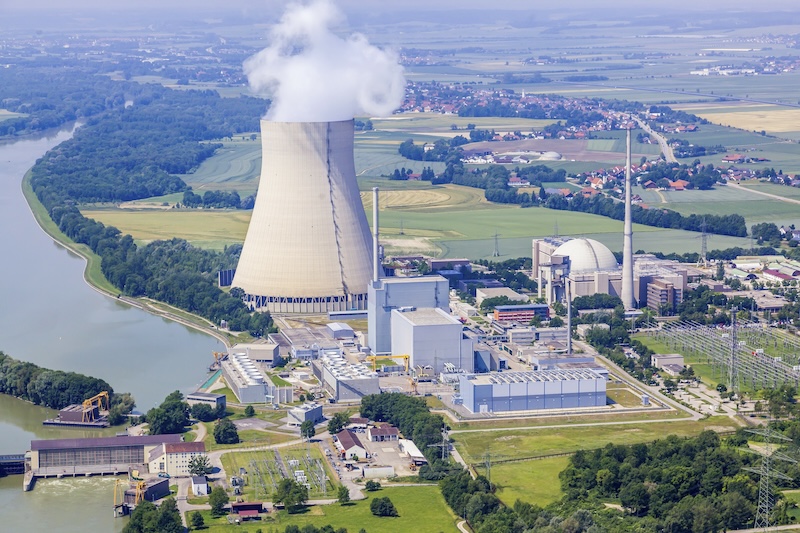
Nuclear comeback to meet surging demand?
But nuclear power is now on the cusp of a major comeback as policymakers scramble to meet surging electricity demand.
In New York City, the issue has received comparatively little attention. During the Democratic mayoral primary, the only candidates who focused on nuclear power were the two moderates: long-shot investor Whitney Tilson, who vowed to fight to reopen Indian Point and former Governor Andrew Cuomo, who defended his decision to shutter the facility. The winner, Zohran Mamdani — who fought to shut down oil- and gas-burning peaker plants as a state lawmaker from Astoria, Queens — has stayed mum on nuclear power, which is controversial within the Democratic Socialists of America. His campaign did not respond to multiple emails requesting comment.
But NY Renews, the progressive pro-renewables group with which Mamdani campaigned last year, came out against “the expansion or further investment in nuclear energy production in New York State due to its legacy of negative impacts on Indigenous communities, women, and children; concerns over the handling of radioactive materials throughout their lifecycle; and the exorbitant costs associated with this form of energy,” executive director Stephan Edel said in a statement.
Wind and solar come with their own drawbacks, including the amount of land required to build enough turbines and panels to equal the output of a single fossil fuel or nuclear plant. Because the energy sources are dependent on weather conditions, wind and solar projects are typically built extra large. In rural parts of the state, that has meant converting farmland or felling forests to make way for electricity generation.
“Nuclear provides far more energy than any of those renewable technologies, and takes a tiny fraction of the land those other other technologies require,” said Gary Abraham, an environmental lawyer who has represented upstate communities fighting against wind and solar development. “Nuclear will sit nice and comfortably in a shopping-mall sized section of land.”
That may be why Hochul’s press release announcing the MYPA order included a statement from Farm Bureau, an industry group, endorsing the project as “a longer-term solution than wind or solar power.”
Albany’s embrace of atomic energy has been tightening for months. Earlier this year, Hochul put out a master plan to promote nuclear development and took the lead on a 10-state initiative to work together on creating new financing options for building reactors.
At the national level, the Biden administration enacted a series of bills and federal programs meant to keep the nation’s remaining fleet of 94 reactors online and support construction of new units in the U.S. In May, President Donald Trump signed four executive orders meant to overhaul nuclear regulations and direct the federal government to speed up approvals of new projects.
While the sweeping reconciliation bill Congress passed this month slashes federal support for renewables such as wind and solar, Trump’s landmark legislation preserves many of the incentives for nuclear power.

For much of the past decade, the U.S. nuclear industry has focused on developing small modular reactors (SMRs) — smaller, cheaper, and quicker-to-build versions of traditional reactors. The hope has been that bulk orders will reduce costs, like mass production did for solar panels and batteries. There are some notable projects that New York could follow.
Ontario’s state-owned utility is building what could be the first SMR in North America and the Tennessee Valley Authority is preparing to build the continent’s second plant using that same technology, a 300-megawatt reactor. Bill Gates, Google, and Amazon, meanwhile, are racing ahead on pilot projects to construct the first of a new generation of SMRs that use coolants other than water, allowing them to reach hotter temperatures.
Yet so far, only one SMR exists globally — a floating unit in Russia. China is building another, but both nations are mostly opting for larger, traditional designs similar to the two reactors recently completed at Georgia’s Alvin W. Vogtle Generating Station. Although Vogtle faced lengthy delays and staggering cost overruns, the second reactor was completed faster and cheaper, thanks to the settled design, established supply chain, and experienced workforce.
Momentum has grown to build more of the same reactors elsewhere in the country.
Constellation, the nation’s largest nuclear utility, initially applied to build an SMR at New York’s Nine Mile Point plant in Oswego, but is now lobbying for state support to build a larger Vogtle-style plant instead, according to a source with knowledge of the utility’s plans, who was not authorized to speak publicly.
Despite the “biblical problems” the Vogtle project faced, “the ultimate price of the project was less … than the cost of the offshore wind that was just approved by the New York commission,” Constellation ceo Joseph Dominguez noted last month.
Can NY bridge the upstate-downstate divide with transmission lines?
For any new nuclear project to funnel electrons to the parts of the state where they’re most badly needed, New York will need more transmission lines. In one of her first major energy moves as governor, Hochul pressured the Public Service Commission to approve the Champlain Hudson Power Express, a 1,250-megawatt high-voltage transmission line running down the Hudson River to plug New York City into Quebec’s green hydroelectric grid.
Construction crews for the project — the only large-scale addition of clean power for the five boroughs set to come online this decade — are working through the summer in Rockland County, with plans to complete the project next year. But other transmission lines to carry power southward from upstate have struggled to get final approvals.
“If there’s more nuclear or any other development upstate, we still don’t have the transmission to get that to New York City,” said Dan Zarrilli, the former chief climate adviser to the mayor under the Bloomberg and de Blasio administrations. “We’re going to continue to recreate this upstate-downstate divide if we can’t figure out the transmission component of this.”
In a statement, NYPA acknowledged the transmission issue but said “adding clean, baseload nuclear power” was a priority to phase out fossil fuels and protect against volatile energy costs.
The challenges with building transmission lines are yet another example of energy infrastructure that has proven difficult to construct in the three decades since the state restructured its electricity system. It’s still unclear whether nypa will go it alone and build a nuclear plant itself or provide funding to serve as a backstop in a deal with a private company. Either way, Anderson said the agency will need more funding from the state.
“There’s going to have to be some budget allocated to this,” she said. “It’s going to be expensive, not just because nuclear is expensive but because we haven’t built nuclear in so long.”
Since NYPA isn’t beholden to shareholders, the utility could structure a deal that takes on the risk of any cost overruns but brings in a partner such as Constellation to make upfront investments in the construction costs.
Such a public-private deal could also include a large-scale electricity buyer.
Nuclear as a ‘renewable’ energy source?
In her speech, Hochul pitched the project as a way to supply clean energy to Micron, the semiconductor company building the state’s flagship microchip factory in Onondaga County. In theory, Micron could help finance construction of a reactor through a power-purchase agreement that pays money upfront or promises to spend a certain amount of money on electricity, giving the developer a contract that could be used to line up a loan.
The state seems open to new ideas on atomic energy. In her speech, Hochul referred to nuclear power as “renewable,” a term typically reserved for wind, solar, hydroelectric, and geothermal power. Nuclear power advocates use the term to describe the potential of running reactors on recycled waste rather than newly mined uranium.
While France and Russia recycle nuclear waste, the U.S. abandoned commercial recycling in the 1970s. New York’s West Valley Demonstration Project, which operated from 1963 to 1972, processed hundreds of tons of spent nuclear fuel but left a legacy of toxic pollution.
Carl Perez, the chief executive of the nuclear services company Exodys Energy, saw the governor’s speech as a sign of the state’s bullishness. He would know. The state’s $300 million venture fund, aims to recycle nuclear waste into new fuel.
“New York State is really positioning itself as a visionary, whether it’s using NYPA or the venture capital arm to make some really interesting plays,” Perez said.
Yet nuclear power still elicits deep skepticism from others in Albany.
“Can the radioactive material be disposed of in a satisfactory way, or will New Yorkers be stuck dealing with more long-term storage sites like West Valley? Is there no alternative to nuclear, or are there other options to address renewable intermittency, like battery storage, pumped hydro, or geothermal storage?” State Senator Liz Krueger said in a press release after the NYPA announcement. “I have yet to see any real-world examples of new nuclear development for which all of these questions can be answered in the affirmative, and I am skeptical that I ever will.”
To Charles Komanoff, a New York activist and economist who authored research in the 1980s for anti-nuclear groups such as Greenpeace, the social conditions for atomic energy have fundamentally changed.
Now, he said, the imperative to harness the power of atom splitting is vital to staving off the worst effects of climate change.
“Nobody was as meticulous and original and, I dare say, trenchant and on target as yours truly in quantifying and then explaining the ultimate problem, which was broad societal unease about nuclear power’s dangers,” said Komanoff, who worked in the early 1970s as a policy analyst for New York City’s environmental protection agency.
“Those dangers were magnified because society believed there were widespread, not-dangerous alternatives in the form of energy efficiency and renewables,” he added. “With the climate crisis in full bloom, the societal unease that sparked increases in regulatory stringency and a kind of construction chaos in the nuclear power industry in the ’70s and ’80s… hasn’t entirely disappeared but it has largely dissipated.”
Asked whether he thought NYPA could finish the job, he said he was optimistic.
“A societal shift has occurred,” he said.
Alexander C. Kaufman is an award-winning reporter who has covered energy, climate change and the environment for more than a decade.
Editor’s note: This article was originally published on July 26 by New York Focus an independent nonprofit newsroom launched in October 2020 that publishes in-depth journalism about state government and politics. Reprinted with permission. Here’s the New York Focus link.
The survival of local journalism depends on your support.
We are a small family-owned operation. You rely on us to stay informed, and we depend on you to make our work possible. Just a few dollars can help us continue to bring this important service to our community.
Support RiverheadLOCAL today.
