





















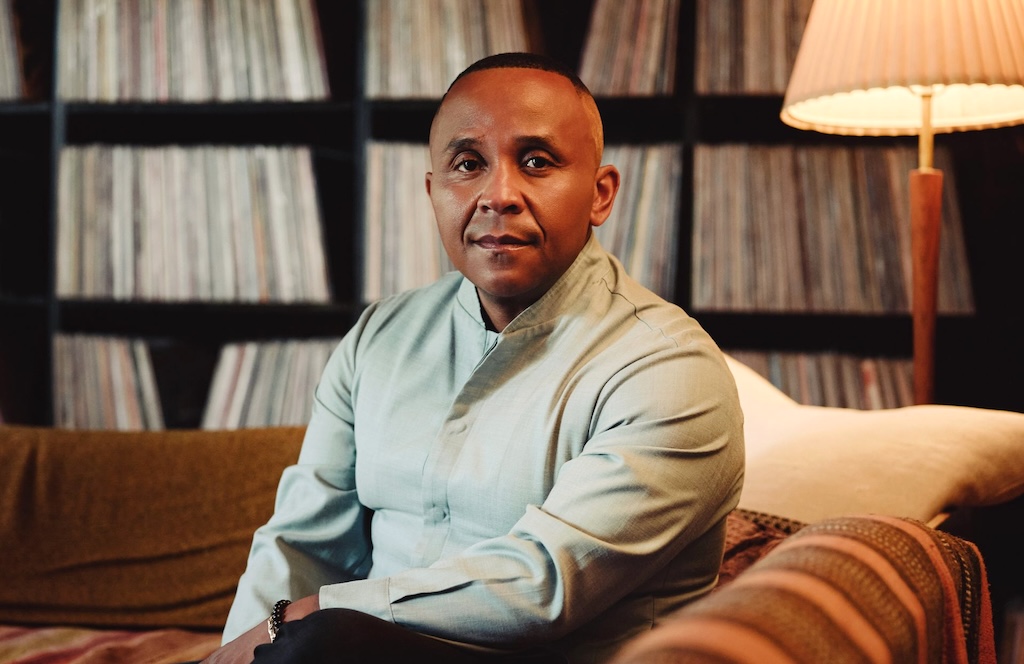
Rashad Robinson learned some of his earliest lessons about power in Riverhead — who had it, who did not, how it was protected and how ordinary people could challenge it.
A Riverhead native and 1997 graduate of Riverhead High School, Robinson has spent much of his adult life applying those lessons on a national stage, leading campaigns for racial justice, LGBTQ+ rights, corporate accountability and criminal justice reform.
Now, in a new book, “From Presence to Power: How to Take On the Fights That Matter and Win,” Robinson is offering readers a strategy for moving beyond protest and into organized, targeted action.
Robinson, 47, opens the book with a memory from early 1990s Riverhead.
He was in middle school, he writes, when a white assistant principal at Riverhead High School selected seven Black students to take part in a police lineup for a robbery suspect. The students’ parents were not asked, Robinson writes. The students were promised $15 each and taken to the police station, where they were dressed in different shirts and baseball caps turned backward.
Robinson was not one of the students placed in the lineup. But he remembers the incident as a defining moment — one that helped him understand how institutions could treat Black children as available for use, and how power could operate without rules, accountability or regard for the lives it affected.
To Robinson, and to many Black residents in Riverhead, the episode revealed something larger than one school administrator’s decision. In the book, Robinson writes that many in the Black community saw the students as being lent out by a person in power, echoing a long history of Black people being treated as if they could be used by institutions without consent.
Three decades later, Robinson has spent much of his adult life studying power, challenging it and teaching others how to build it.
The book, to be released July 28 by One World/Random House, is “not a memoir,” Robinson said in an interview Tuesday. “It is like a strategy book,” Robinson said. “But how I came to strategy is not divorced from how I grew up and from the things I learned” growing up in Riverhead.
A hometown lesson in power
For Robinson, those lessons began in a town where his family’s roots run deep.
“My grandmother went to Riverhead High School when it was [on] Roanoke Avenue,” he said. “If anyone is truly raised and truly a product of Riverhead, it is me.”
His parents met in Riverhead. Both sides of his family lived here for much of their lives. Robinson grew up in Calverton and Baiting Hollow, attended Riley Avenue Elementary School and later Pulaski Street School, where students from Riverhead’s four elementary schools came together in fourth grade.
Before he was analyzing the power of corporations, media companies, political systems and social movements, Robinson was learning how power operated in the everyday life of his hometown.
“There were years throughout Riley where I would be one of one or two Black kids in my class,” he said.
His cousins, attending Phillips Avenue and other schools, had different experiences. His neighborhood life was largely white. His family gatherings and community life were largely Black.
“I did have — kind of — different lives that I was leading,” Robinson said.
Learning to move between those worlds shaped him, he said.
“Learning how to navigate has definitely given me a set of tools that has been important,” Robinson said.
As he grew older, he became more aware of what his parents and other Black parents had to do to protect their children’s opportunities in school and in the wider community. His mother, he said, put together Black History Month displays at Riley Avenue.
At the time, Robinson saw that kind of involvement as something parents simply did. Looking back, he sees it differently.
“We should also live in a world where a kid’s opportunity, a kid’s prosperity is not about how much extra time their parents have or can make,” he said.
Riverhead showed him racial power imbalances, Robinson said, but it also showed him community, connection and possibility.
A community that held him
His family did not attend First Baptist Church, he said, but many of his relatives did. First Baptist and Friendship Baptist Church were more than houses of worship; they were community spaces. He learned about the NAACP in school, then saw the NAACP at work in Riverhead. He took piano lessons from Mrs. McElroy and participated in a “young, gifted and Black” talent program.
The Black community in Riverhead, he said, held him.
But it was not only Black residents who helped shape his belief that change was possible. Robinson said he was also supported by white residents, teachers and business owners along the way. When he started a public-access television show as a teenager, Vinny Villella, owner of Villella Shoes on Main Street and later Riverhead Town supervisor, helped sponsor the show. Steve and Sherry Patterson helped him with a scholarship when he went away to college.
Riverhead, Robinson said, was a town with “deep imbalances” and segregation. But it also contained “kernels of hope and optimism and connection.”
“You don’t go fighting for things if you don’t see something in the world and have a belief,” he said.
That belief, he said, came first from his parents.
“They believed in something better for themselves,” Robinson said. “They built a community of friends and a life for themselves that made me believe that more was possible.”
Making new possibilities visible
Robinson went on to Marymount University in Virginia and began a career in advocacy and organizing. Before leading Color Of Change, he directed advocacy and programmatic work at GLAAD during a pivotal era for LGBT rights. He later spent 13 years leading Color Of Change, helping transform it into the nation’s largest online racial justice organization.
His work has included campaigns aimed at reshaping Hollywood storytelling, pressuring technology companies, challenging corporate support for extremism and helping build support for progressive prosecutors focused on police accountability and criminal justice reform. In 2021, he served as co-chair of the Aspen Institute’s Commission on Information Disorder.
But Robinson said the work he did nationally remained connected to what he had seen and felt locally.
As a young person in Riverhead, he said, he did not see many Black teachers or Black people in positions of power. The image of who was in charge was clear. Without magazines like Ebony, Jet and Essence coming into his home, or television shows like A Different World, he said, he might have had far less visibility into what Black success and possibility could look like beyond the boundaries of town.
His sexual identity added another layer. Robinson said he was very closeted growing up. He knew, in different ways, who he was, but he did not see many visible examples of openly gay, successful Black adults in the community.
“I did not believe that was possible for me,” he said.
He remembered thinking he might someday run for office, perhaps even in Riverhead. But as he became clearer about race, and later about his sexuality, he began to question whether that path would allow him to succeed or be fully himself.
Years later, when Mondaire Jones was elected to Congress and became one of the first openly gay Black members of Congress, Robinson said he was struck by what had changed in just a decade.
“I really relish being part of and leading movements that get to change the air and the water,” Robinson said, “that get to change the environment that makes things possible.”
That, he said, is part of what gives his work meaning: the possibility that young people coming after him can imagine lives he could not yet imagine for himself.
“There are gay kids growing up in Riverhead right now of all races who see things on TV and see acceptance in the world that I helped make possible,” Robinson said. They may not live in a community “waving rainbow flags everywhere,” he said, but they live in a world with more visibility and more possibility.
He thinks about those children often, he said — Black children, Latino children, young girls, LGBTQ children and others who may feel outside the structures of power.
“I think about Riverhead a lot, because I think about the kid that I was, and what I wished was possible for me,” Robinson said.
Beyond showing up
“From Presence to Power” is Robinson’s attempt to give people tools for changing the conditions around them.
The book grew out of decades of organizing wins and losses, he said. It is meant to help readers understand who holds decision-making power, how to pressure that power and how to move beyond simply showing up.
Robinson said protest matters. It builds community, connection and public visibility. It shows that people are not simply going along with what is happening around them.
But protest alone is not enough, he said.
“The protest is important, but it’s one tool,” Robinson said.
That distinction, he said, is especially important now, when demonstrations are drawing people into the streets across the country. The showing up is necessary, he said. But movements also need strategy.
“We won’t have change if people aren’t turning out and engaging,” Robinson said. “But we’re not going to have change just because people are turning out and just because people are protesting.”
No movement for social change wins without disrupting business as usual, he said. That requires pressure, strategy and a willingness to make people uncomfortable.
Robinson said he wanted to write the book he wished he had when he began activism — but updated for the times we live in now. He began organizing in an era of fax machines. Today’s movements operate in a changed media and technology landscape.
The tools have changed, he said, but the work of building power remains.
The book includes exercises at the end of several chapters, designed to help readers apply its lessons to real-world fights. Robinson said an online platform connected to the book will also make workshops and tools available more broadly.
He hopes to bring those tools back to Riverhead.
An offering to Riverhead
Robinson said he would like to return to his hometown for an event, perhaps in late summer or fall. One place that holds special meaning for him is Riverhead Free Library.
As a child, he spent time in the library’s summer program. His mother would drop him and his brother off there between swimming lessons at Wading River Beach, piano lessons and other summer activities. His father served on the Riverhead Free Library Board of Trustees, Robinson said, and may have been one of its first Black members.
The library opened worlds to him. It was there, he said, that he first signed out Alex Haley’s Roots when he was in seventh grade.
That memory gives Robinson’s new book a kind of full-circle meaning: a child shaped by Riverhead’s books, institutions and communities is now offering a book of his own back to the place that shaped him.
“Riverhead has opened so many possibilities for me,” Robinson said. “I hope this book feels like an offering and an invitation to my community, and to anyone in my community who, like me, wants it to be better, but also wants the rest of our world to be better.”
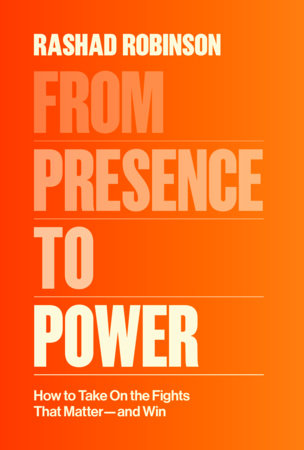
“From Presence to Power: How to Take On the Fights That Matter and Win” will be released July 28 in hardcover, ebook and audiobook formats. The book is available for pre-order now.
Robinson launches his book tour in Manhattan on July 27 with Jane Fonda, followed by a launch event in Washington, D.C. July 28 with Joy Reid. A complete list of his upcoming book tour events is available here.
The survival of local journalism depends on your support.
We are a small family-owned operation. You rely on us to stay informed, and we depend on you to make our work possible. Just a few dollars can help us continue to bring this important service to our community.
Support RiverheadLOCAL today.
