























Most of Riverhead Town government is still heavily dependent on paper files, manual record searches and manual permit processing — a system town officials say is slowing permit reviews, delaying access to public records and consuming hundreds of hours of staff time each year.
The Town Board is now weighing two related modernization proposals: an electronic permitting system for new building department applications and a project to scan, index and place existing town records in an online portal.
The electronic permitting system would cost an estimated $106,190 to initiate and $72,750 per year after that.
The scanning project would cost more than $1.5 million, including document digitization cost of about $1.33 million, and the cost of indexing files and building the storage portal at $194,200. The initial total cost is estimated to be nearly $1.6 million. The annual storage costs will run an estimated $34,000.
Moving forward with both projects would provide savings and new revenues, which would both help offset the costs. The town would earn subscription revenue from a paid-access model for online records, similar to systems used in other municipalities. Likely subscribers include contractors, expediters, architects, engineers, realtors, attorneys, appraisers, title companies, surveyors, developers and environmental consultants. Currently such users must file frequent FOIL requests to obtain public records they need in the course of their work.
Both projects would reduce delays, speed permit processing, preserve public records and relieve pressure on a paper-dependent records handling and access systems, particularly in the building department, which handles hundreds of permit applications, inspections and records requests each year.
The proposals were discussed at Thursday’s work session by Town Board members with planning, building and information technology staff members.
Economic Development, Planning and Building Administrator Dawn Thomas, told the board that department staff began examining the department’s workflow last year after Bob Muller became head of the separtment and Heather Hodun moved into an administrator role.
Muller and Hodun drilled down into the details of what the building department is doing, how they’re doing it, how efficiently it’s being done and how we can make things better, Thomas said.
According to the presentation, the building department processes about 1,200 permits and handles about 1,000 FOIL requests annually, in addition to a host of other duties.,
The current paper-based system consumes staff time and creates delays for residents, contractors, real estate professionals and others seeking records or permits, according to officials.
Electronic permitting
Thomas said the town looked at five companies that provide electronic permitting systems: iWorQ, IPS, GovPilot (formerly SDL), OpenGov and CivicPlus. She said the town favored GovPilot, because it offered features officials believed would best meet the building department’s needs.
The proposed electronic permitting system would allow applicants to submit applications and plans online, check application status, communicate with the department through a portal, schedule inspections, make electronic payments and receive status alerts.
Digitizing existing records
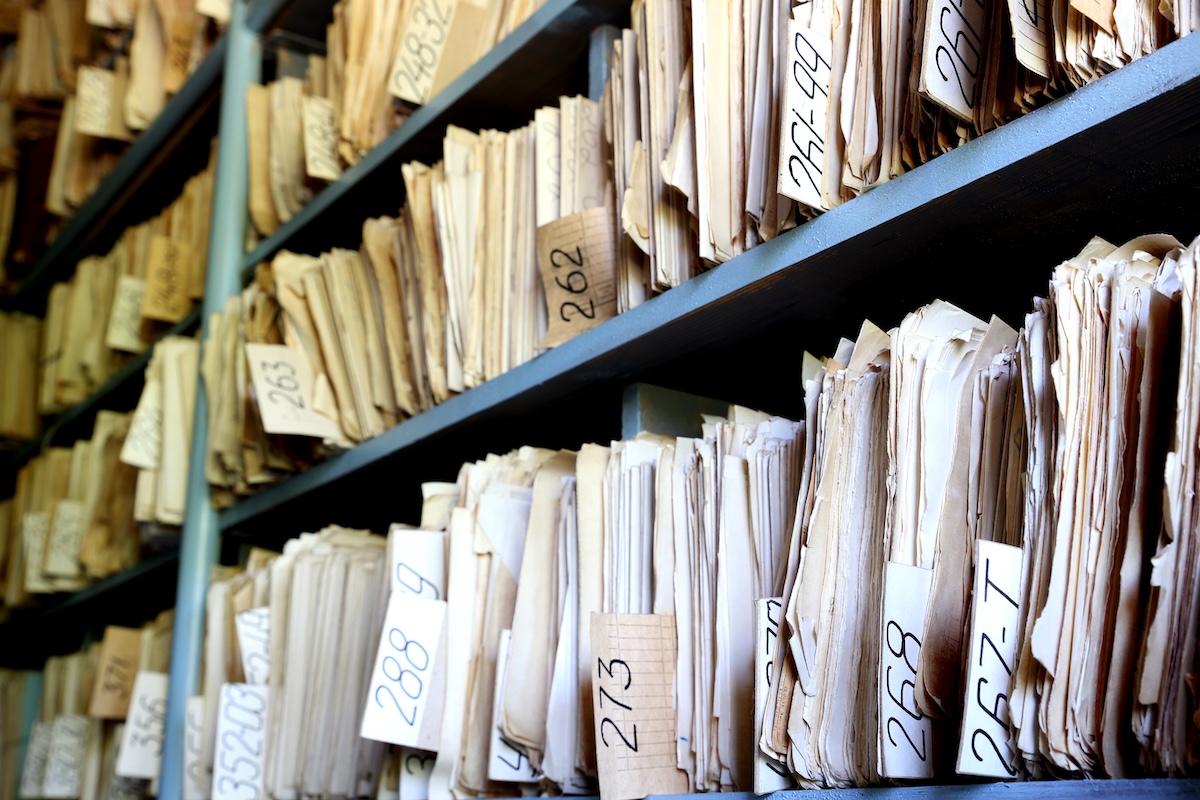
The scanning project would remove the hassles of retrieving copies of existing records, most of which are in paper files, often stored in the basement of Town Hall.
Officials said the records are frequently needed for property sales, permit applications, real estate due diligence and FOIL responses. But retrieving them from paper files can take substantial staff time, especially when the files are older and stored in the basement..
This happened just before Thursday’s work session. A call came from a woman who needed a copy of a survey for a real estate closing on Friday. Ordinarily, he said, that type of request is processed through the FOIL system, with a possible wait of about two months. Muller said he pulled the file from the basement and copied the document so the closing could proceed.
“If this is all online and available by clicking on a map — boom, boom, boom,” Muller said. The phone call and manual search would not have been necessary.
The digitization proposal would scan existing building department files, create an index and place the records in an online repository. Town officials also discussed eventually connecting the records to the town’s geographic information system, so records could be accessed by parcel.
Any fee system for public records would have to preserve access under New York’s Freedom of Information Law. FOIL generally limits agencies to charging up to 25 cents per page for standard paper copies and, for other records, to the actual cost of reproducing the record.. A subscription portal could provide convenience access to records, but it would not replace the town’s obligation to provide public records under FOIL at fees permitted by state law. “It’s not like we can pass the cost on customers,” Council Member Denise Merrifield said.
Preferred-source procurement
Town officials also discussed whether scanning and indexing the records could be done without a traditional competitive request for proposals.
Council Member Ken Rothwell asked Richard Seery of Seery Systems Group, a Garden City Park company that digitizes records to join the discussion and explain to board members how the digitization process works and what his company does. Rothwell said Seery “came in about a year ago, or so, [and] we started working on this project.”
Seery said his company has been in business for 25 years, while he’s been in the industry for over 40 years. “[O]ur core business is scanning documents, digitizing records. In the last 15 years, we’ve primarily focused on government, because that’s where the paper is,” Seery said, noting that the corporate sector was much quicker to adapt to new technology and are now basically “fully digital.”
His company has worked on record digitization projects for Long Island municipalities including Hempstead, North Hempstead, Oyster Bay and East Hampton, Seery said.
Seery Systems provides its services through the New York State Industries for the Disabled, an Albany-based nonprofit that is a state-designated preferred source provider. The nonprofit is designated a preferred source provider for the purposes of procurement under the New York State Finance Law. Governments that buy approved commodities or services from preferred source partners are exempted from statutory competitive procurement requirements.
“New York State Office of General Services requires that certain types of services have been provided by what they refer to as preferred sources. The whole mission of NYSID is to put individuals with disabilities to work …and so we have over 30 people who are disabled who work for us. They do fantastic work, and we’re very proud of them,” Seery said. They’re reliable workers who get the job done, he said.
“That’s fantastic,” Supervisor Jerry Halpin said. He asked Seery to make sure… [you’re] working with Teresa to make sure that’s through the proper channels,” Halpin said, referring to the town’s purchasing director, Teresa Baldinucci. “That’s exciting stuff,” he added.
“So, just to make it clear” Merrifield said, “There’s no RFP involved in this. That’s great.”
Officials also discussed redactions and privacy concerns. Council Member Bob Kern said the town would need to ensure that Social Security numbers, phone numbers and other private information are not posted publicly.
Seery said records can be indexed and restricted by document type, and the town would need to determine what must be redacted or withheld before records are made publicly available online.
Board members were generally supportive of the modernization effort.
Rothwell said the town’s current paper-based records system is antiquated and said digitization would save staff time, reduce FOIL burdens and improve service for applicants and residents.
Rothwell said income on investments of fund balance should be used for projects like this. It’s a great investment and will pay for itself in savings and revenues.
Council Member Joann Waski said reducing paper use would also save money. Merrifield said the project was the kind of modernization effort the town had discussed using fund balance to support.
Thomas said the electronic permitting and digitization projects would improve customer service, reduce frustration for staff and the public, and preserve public records that are now stored in paper form.
The proposal remains under review. Any final action would require resolutions authorizing the work and funding.
The survival of local journalism depends on your support.
We are a small family-owned operation. You rely on us to stay informed, and we depend on you to make our work possible. Just a few dollars can help us continue to bring this important service to our community.
Support RiverheadLOCAL today.
