
























The Suffolk County Water Authority will hold a public hearing Wednesday in Riverhead on its draft environmental impact statement for the North Fork Water Main Project, a major transmission-main proposal now routed through Riverhead on Main Road rather than Sound Avenue.
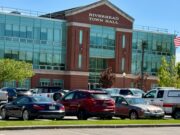
The Aug. 26 hearing is scheduled to begin at 4:30 p.m. at Riverhead Free Library, 330 Court Street. Written comments on the draft environmental impact statement will be accepted through Sept. 11 at 5 p.m., according to SCWA.
The project is intended to move water from SCWA’s south shore low pressure zone to the Southold low pressure zone, where the authority says peak summer demand, shallow aquifer conditions, saltwater intrusion, PFAS, pesticides, nitrates and other contaminants have strained the existing North Fork water system. SCWA says it operates 60 wells across 18 well fields on the North Fork and serves about 9,500 customers there.
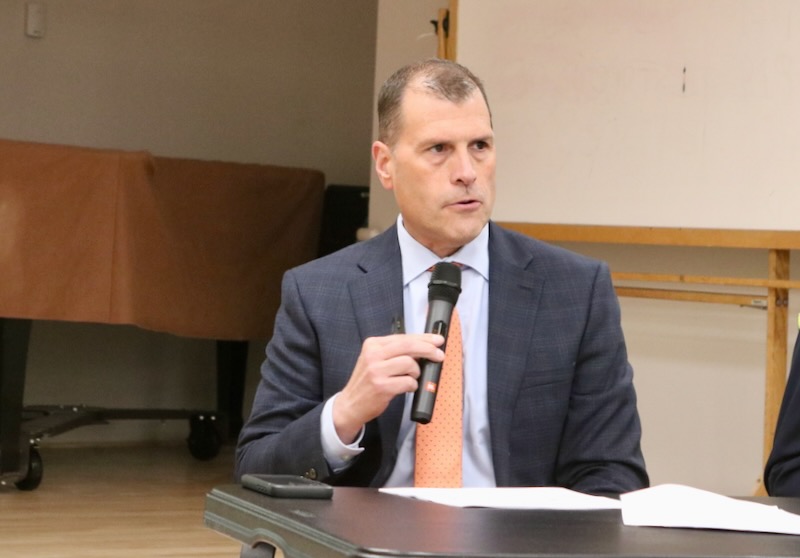
In an interview Friday, SCWA Chief Executive Officer Jeff Szabo said the authority revised the route after public comments and scoping sessions raised concerns about the original Sound Avenue alignment.
“We’ve heard you, we’ve changed and made adjustments,” Szabo said. He said SCWA believes “we think that this is a much better route.”
Main Road route is ‘preferred alternative’ chosen by SCWA
The DEIS evaluates the Sound Avenue alignment as the Proposed Action and the Main Road alignment as the Preferred Alternative. The original route would have run north along Cross River Drive, then along Northville Turnpike and Sound Avenue to a proposed booster station on SCWA-owned property off Pier Avenue before continuing east toward the Southold town line.
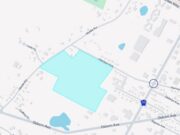
The preferred route would instead turn east onto Main Road (NY-25) from Cross River Drive, use an SCWA-owned parcel near that intersection for a booster station and continue east along Main Road to connect with an existing SCWA main near Franklinville Road and Main Road in Laurel. The DEIS says the Main Road route is about 1.057 miles shorter than the Sound Avenue route and avoids the narrow Sound Avenue corridor that drew many of the traffic, farm-vehicle and seasonal-tourism concerns raised during scoping.
The DEIS says the Main Road route is also hydraulically preferable. Appendix B says the Sound Avenue route would create greater pressure loss because of its higher elevation and the booster station’s distance from the beginning of the line. The report says that, to meet design flows on the Sound Avenue route, SCWA would need either a second booster station or a larger 36-inch main, which could worsen water age and water-quality concerns. The Main Road route can use a 24-inch main, according to the report.
Szabo said the need for the project is immediate. He pointed especially to the Moore’s Lane elevated tank in Greenport, which he said is the authority’s top concern during peak summer demand. He said the tank can drop from more than 30 feet to only a few feet of water during high-demand periods, reducing pressure and backup supply for fires and emergencies.
The DEIS says a major benefit of the project would be ensuring an adequate water supply during emergencies. Appendix B says that during an extended summer heat wave, under the right circumstances, there could be little or no water available to fight a major fire if tank levels are depleted.
Szabo also said PFAS and other private-well contamination issues are driving demand for public water in Southold. “[T]here’s a significant public health crisis out there,” he said.
The project, however, remains controversial in Riverhead because the transmission main would pass through town while providing no customer service connections inside the Riverhead Water District. The DEIS says SCWA is not permitted to serve parcels in the Riverhead Water District.
Asked what Riverhead gets from the project, Szabo said SCWA cannot provide a municipal benefit as a condition of the work. “We’re prevented from providing any sort of gift to any municipality or jurisdiction,” he said.
The DEIS identifies most project impacts as temporary construction impacts, including traffic delays, temporary lane closures, construction noise, short-term driveway access issues, dust, erosion, utility conflicts, work near agricultural land and possible cumulative traffic impacts during peak tourist and farm-event seasons. It also evaluates wetlands, surface waters, groundwater, ecological resources, agricultural soils, golden nematode concerns, historic resources and growth-inducing impacts.
Riverhead sees disruption without local benefits
For Riverhead, the most visible impacts would likely be traffic, construction staging and business or driveway access along Cross River Drive and Main Road. The DEIS says open-cut trenching would typically advance 300 to 400 feet per day in paved areas and up to 600 feet per day in wider shoulder areas. It says unavoidable impacts would include minor traffic disruption and delays even after mitigation.
Proposed mitigation measures include scheduling work to avoid busy summer and fall periods and large events; trained flaggers; signs, lighting, cones, barrels and detour signs where needed; coordination with police, fire and ambulance services; advance coordination with landowners; temporary steel plates or immediate trench backfilling where necessary to maintain access; stabilized construction entrances; dust control; soil containment and equipment cleaning to address golden nematode concerns; stormwater controls; and restoration of disturbed areas. The DEIS also says roadway work would be followed by curb-to-curb paving where required.
Szabo said SCWA will coordinate with transportation agencies and provide detailed information as the project moves toward construction.
“We will work with New York State DOT and comply with all of their rules and regulations,” he said.
Appendix H, traffic-related correspondence, shows NYSDOT has not issued final approval for Main Road work. In an April 2026 email, DOT told SCWA it believed the original route had less impact on the public and traffic, and said work on Route 25 would require engineered drawings and a highway work permit. DOT also said underground utilities in state right-of-way are generally expected to use trenchless methods, and that if continuous two-way traffic cannot be maintained on Route 25, work would have to be performed at night.
Szabo said SCWA would make construction information available to the public and businesses as the work plan develops. He also said the authority would try to limit disruption.
“We will do everything possible to be as least disruptive as we possibly can be doing construction work,” he said.
Riverhead and SCWA remain at odds over local control
The Riverhead hearing comes as the legal and jurisdictional dispute between the town and SCWA continues.
SCWA sued Riverhead in February in State Supreme Court, seeking a judgment that the project is exempt from Riverhead zoning and land-use regulation and challenging the Town Board’s earlier determination that the authority must comply with local approvals for the project. The lawsuit remains pending.
In July, State Supreme Court Justice Alison Napolitano denied Riverhead’s motion to dismiss SCWA’s complaint, allowing the water authority’s Article 78 and declaratory judgment claims to proceed. The ruling was not a final decision on whether SCWA is immune from Riverhead zoning and land-use regulation.
In an Aug. 20 joint letter, attorneys for SCWA and the town asked the court for a conference in late August or early September, before a Sept. 23 court date, to address how the Article 78 claims and declaratory judgment claims should proceed, whether discovery will be needed, and how SCWA’s revised route and booster-station location affect the existing claims and record. The parties proposed an Article 78 briefing schedule that would run through Sept. 21, with the petition returnable Sept. 23.
The dispute centers on the Monroe balancing test, a legal standard used to determine whether one governmental entity is immune from another municipality’s zoning and land-use controls. SCWA held its own Monroe hearings in Octoberand later determined that the project is immune from local municipal jurisdiction. Riverhead disputes that conclusion and came to an opposite conclusion after conducting its own Monroe hearing last August.
Last Tuesday, the Riverhead Town Board adopted a resolution scheduling another Monroe hearing for Sept. 1. The resolution says the town objects to SCWA’s designation of Riverhead as an interested agency rather than an involved agency in the environmental review. It also says SCWA’s prior Monroe determination was based on the earlier Sound Avenue route and should not simply be incorporated into the DEIS for the revised Main Road route. The town resolution says Riverhead is the host community and has jurisdiction to decide whether and to what extent SCWA is exempt from local zoning and land-use regulations.
Szabo declined substantive comment on the pending litigation, saying it is a legal matter. But he said SCWA will continue the public review process and conservation messaging.
“Our commitment to conservation and our commitment to continuing sort of the dialogue with the public and with other jurisdictions like townships can help us in that messaging about the value of water and the importance of conserving,” Szabo said. “conservation alone will never be enough.”
The survival of local journalism depends on your support.
We are a small family-owned operation. You rely on us to stay informed, and we depend on you to make our work possible. Just a few dollars can help us continue to bring this important service to our community.
Support RiverheadLOCAL today.
