























The Riverhead Town Board is scheduled to decide tomorrow whether a new commercial communications tower at Wading River Fire Department headquarters is exempt from its local zoning laws.
If approved by a board majority, a resolution on the tomorrow’s agenda would exempt the proposed tower from the town’s zoning laws, conditioned on the approval of Riverhead’s building and fire safety officials, as well as the execution of a co-location agreement that allows the town and its special districts to locate “necessary” wireless communication equipment, including for the town police department, at the tower.
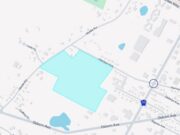
The telecommunications company Elite Towers, Verizon Wireless and the Wading River Fire District are seeking approval to locate a 190-foot-tall pole with cellular and fire district communications antennas behind the department’s headquarters. The total height of the proposed structure, including the antennas, is 213-feet. The tower is not allowed under the current zoning at the site, which is right in the middle of a residential area; the applicants are asking the Town Board to exempt the project from local zoning and land use regulations, which is authorized by a 1988 ruling of the state’s highest court in County of Monroe v. City of Rochester.
To decide whether the application is exempt, the Town Board must apply the standard spelled out the 1988 court case, known as the “Monroe Balancing Test,” which can be used to exempt certain projects on government land if the project is in the public interest.
Wading River Fire District officials said the fire department needs a new communications antenna because of poor radio connection. Failure of the current communications equipment could threaten the lives of residents and fire responders, according to Wading River Fire District Commissioner Terry Culhane. Improved service in the area would also help residents trying to contact emergency personnel from their cell phone, the applicants said.
The project has the attention of more than two dozen Wading River residents, who have petitioned the board to decline the requested zoning exemption. Residents are worried about the tower’s height and aesthetic impact to the area; effects on their property values; and the potential health effects of radio frequency waves emanating from cellular antennas.
A petition signed by 24 Wading River residents, said the location of the cell tower “poses unnecessary health, environmental, and aesthetic risks to our community. We urge the local authorities and decision-makers to seek alternative sites that will not compromise the well-being and character of our neighborhood.”
After some residents spoke against the project at a hearing on Nov. 7, Gregory Alvarez, an attorney for the applicants, sent a letter to the Town Board on Nov. 18 addressing their concerns.
The letter says that the maximum anticipated emissions from the communication tower at ground level is less than .5% of the permitted Federal Communications Commission standard; the standard is 50 times below recommended safety levels, the letter states.
Federal regulators, including the Federal Communications Commission, have maintained that there is no causal link between wireless device use and illnesses such as cancer. Since 1996, the FCC requires radiation emitted by cell phones and other electronic advice be below levels it has deemed as harmful to humans. According to the FCC, “there is no basis on which to establish a different safety threshold than our current requirements.”
But the issue is more complicated than it seems, and the link between cell phone emissions and negative health effects is understudied, according to a report by the investigative news organization ProPublica published in January 2023. Determining wireless radiation’s health effects with certainty is difficult, the report says, but a growing body of research has found evidence of health risks even when people are exposed to radiation below the FCC limits.
Alvarez’s letter said that articles and evidence submitted by residents concerning emissions from the communications tower — including a study cited by residents during the hearing that reported finding “brain abnormalities” in firefighters from firehouses hosting cell towers — did not support a causality between communication towers and negative health effects. The FCC continually reviews studies involving emissions from cell towers and has not changed its standards even after an investigation, Alvarez wrote.
Residents also recommended the communication tower be built at an alternative location. Alvarez’s letter says that alternate locations would not provide the Wading River Fire Department with the efficient use of the cell tower, nor allow the fire department to save on any costs pursuant to the developers agreement. The fire department would not be able to use revenue received from the cell tower to maintain and upgrade its communications equipment, the letter says.
Alternative sites were reviewed by the co-applicants, the letter states. Certified letters sent to nearby sites, including the St. John the Baptist Church, the Rock Golf Club and The Shoppes at East Wind were never responded to. Suggested locations for the tower, including a nearby cemetery and the decommissioned Shoreham Nuclear Power Plant, would present regulatory hurdles and create added time and cost, the letter says.
In an affidavit submitted to the town, Elite managing partner Tanya Negron, who was responsible for locating locations for a cell tower in the area, said “the absence of many commercially-utilized parcels in the area eliminates much of the land mass in the vicinity from consideration. Further, due to the varying topographical terrain with tall vegetation in the area, this largely prevents the ability to propose a lower-height structure to provide communications to the surrounding area.”
The fire department headquarters is “the ideal location” for the tower, the letter says.
In reference to residents’ concerns on impacts to property values, the applicants submitted a report from a licensed appraiser, dated Nov. 13, 2024, that shows that properties near communication towers would not have an adverse impact on property values.
Editor’s note: This article has been amended to correct an erroneous reference to the Riverhead Fire District, rather than the Wading River Fire District, in the text of the version originally published.
The survival of local journalism depends on your support.
We are a small family-owned operation. You rely on us to stay informed, and we depend on you to make our work possible. Just a few dollars can help us continue to bring this important service to our community.
Support RiverheadLOCAL today.
