















A one-of-a-kind non-profit animal sanctuary on the North Fork, Critterville on Sound Avenue in Riverhead is run by a 20-year-old woman who at the age of 11 knew that caring for animals was her passion.
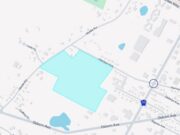
Currently pursuing her college degree in animal science, Claire DiMenna is providing a haven for 90 animals on the former Zilnicki 70-acre potato farm that was most recently growing sod.
“I was born loving animals and as a kid I had all sorts of pets, snakes and gerbils,” she said. “But when I was 4, I went to a birthday party with a mobile petting zoo and met a baby goat there. I have never been a people person; I spent the whole time with the baby goat,” she said.
After that, she constantly lobbied her mother for a goat of her own. At age 11, she got her first three goats off Craig’s List. “And then we rescued a donkey and people started reaching out to see if we could take in animals. My mom has always been my biggest supporter,” she said.
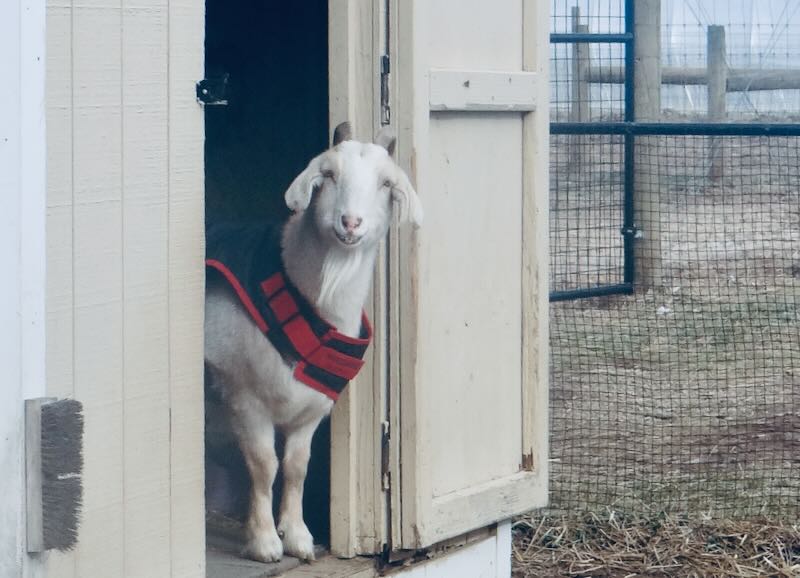
DiMenna has rescued cows, cats, goats, mini donkeys, turkeys, pigs, ducks, geese and horses from a variety of situations. In some cases, people bought animals as pets only to discover they weren’t able to take care of them. Some were victims of neglect, others saved from slaughter and some were strays.
She’s a full-time student at the University of Connecticut, living there and hopping on the ferry to be at the sanctuary every weekend.
“While at school I manage things like the animal intake requests, social media, especially Instagram posts. And fundraising, administrative stuff, the financials and volunteers,” DiMenna said.
At first, her father’s five-acre farm in Water Mill was the refuge, but two years ago, “We needed more space and the freedom to build more infrastructure and there’s more farmland in Riverhead,” DiMenna said.
After cleaning up the property and fencing it all in, the equipment barn was converted to accommodate animals
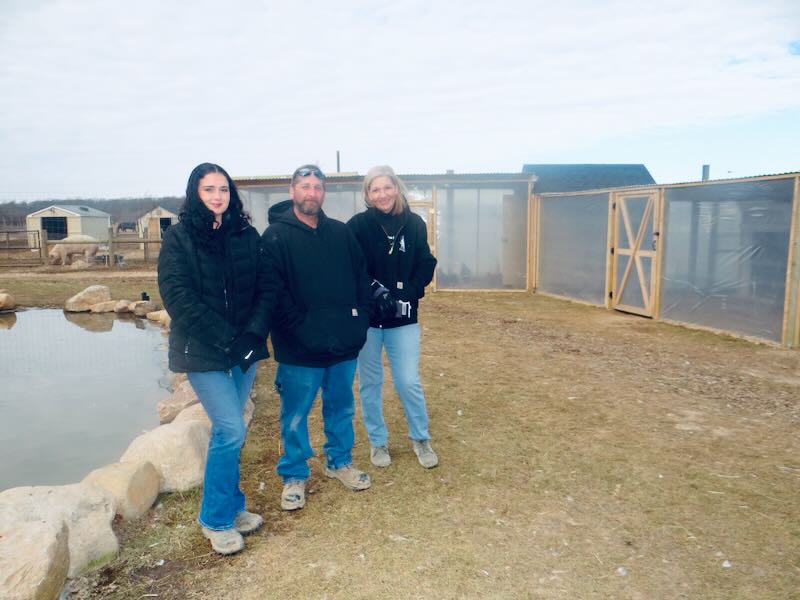
Financially, Critterville runs primarily on donations and support from sponsors as a 501(c)(3) nonprofit.
The name, Critterville, started as a joke. “People used to say ‘Claire and her critters’ and in 2018 when we became official, the name just stuck,” DiMenna explained.
She said she gets requests almost every day to take in another animal but said it’s not sustainable to have too many animals. “That would mean less time and care for all the animals. Usually we can take in one or two a month.”
Species she can’t care for are referred to other sanctuaries in upstate New York or New Jersey. “We’re a community and a family here. Everyone comes together for the animals,” DiMenna said.
On a recent tour of Critterville, a cacophony of cackling, squawking, chirping, cooing filled the main barn; most of the bird calls came from some very vocal geese.
Two walls of the barn have a row of four-foot-high wooden pens; each holds a bird, cat, pig, or turkey that need to be in a warm environment right now with a hay-covered floor and fencing separating them from their neighbors.
Barn cats have a separate enclosure from feral cats who don’t like to be touched; one is a “tripod” cat because he only has three legs.
All of the animals have been spayed or neutered so there’s no breeding. In another pen are two white Cornish cross chickens which DiMenna said have been genetically modified and so one is very overweight, with a note on the pen to volunteers not to “overfeed.”
One of the “indoor” animals — those who can’t be housed outside because of health issues and/or temperament, is Min, a 14-yer-old black pig with osteoarthritis. He is one of five pigs housed at Critterville. Nestled in the hay under a blanket, Min was taking a nap.
A few pens away is Schmidt, a special needs turkey who is immobile after never fully recuperated when a previous owner overfed him, causing permanent damage to the bird’s ability to stand on his feet. His life is now spent on a special foam bed.
Another turkey wandering around his pen, Sweeney, came to the farm after his owner put him on Craig’s List. “The owner decided not to kill him for Thanksgiving, so we took him,” DiMenna said. White ducks named Paco and Leila came rushing to the front of their pen. “They’re a couple in love,” DiMenna said.
Two neighbors of Sweeney’s are special needs chickens; one is blind and the other has a neurological issue. And next to them are three domesticated ducks who, according to DiMenna, were found on the side of the road. They’ll go outside when the weather warms and probably spend a lot of time in a “kidde pool”— several personal-sized pools for a group of ducks or geese.
All of the animals get personalized attention: meds, wound care, cleaning, specially tailored meals and even physical therapy and massage from a dedicated team of board members and volunteers.
Board member Gretchen Renner, who described Schmidt as “sweet” said, “He looks at me with gratitude when I take care of him and he’s spoiled! We even put ice packs under his arms when it’s hot in the summer!”
Renner emphasized that the farm is not a petting zoo. “We’re here to care for the animals.”
She oversees a dedicated team of about 15 volunteers, some who travel from an hour away. Their first job is to “scoop the poop and do food prep.” Several women focus solely on cleaning and chopping vegetables into “a bird safe size.”
Renner also drives to the farm stands, picking up food scraps; the animals have two meals a day.
Fundraising is another task for Renner. “Most of our kitchen supplies and the refrigerators were donated.” One side of the kitchen is stocked with meds the animals need. A row of wooden bins house chicken feed, turkey grain, waterfowl feed and big pig grain. On the wall hangs several “menus” — lists volunteers follow to put together tailored meals to address the ailments each animal has.
Giant pumpkins and squashes – donated by Zilnicki farm, Bay View Farm and Briermere Farms, among others — sat in a big crate, waiting to be boiled, chopped and smashed into a nourishing meal for the critters.
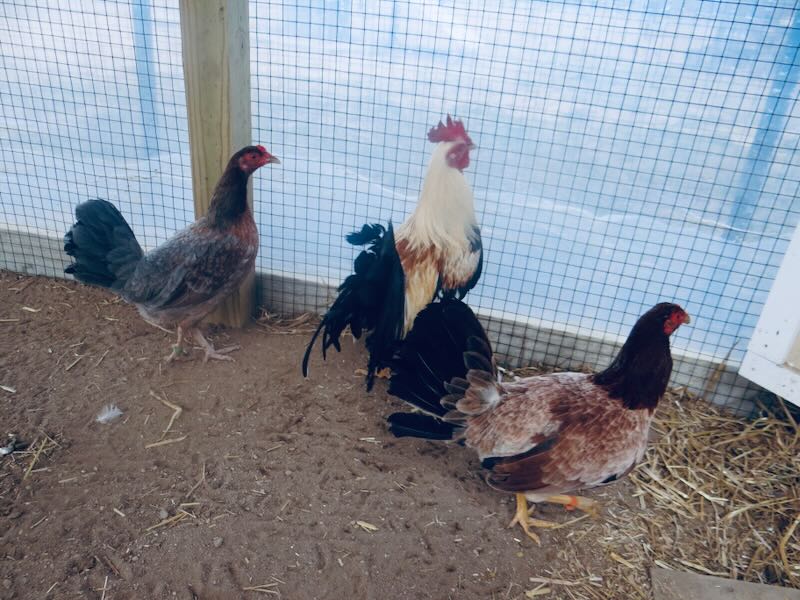
Outside, a trio of male geese came rushing over to a visitor, squawking at full volume, their tails wagging. The backyard is ringed by wooden winterized pens containing birds. One held three colorful roosters, rescued from a large cockfighting ring in Pennsylvania, according to DiMenna.
In an outdoor pen with a small house for shelter are two goats, both with a progressive autoimmune disease. “It’s contagious so they are kept separate,” DiMenna said.
Another pen is home to the first goats DiMenna rescued nine years ago. They all came running to the fence, where DiMenna hugged and petted them.
Several outdoor pens that right now are filled with ducks, hens and roosters are all kept warm by plastic sheeting covering the fences on their homes.
Bruce White, a Riverhead electrician, said he came to Critterville one day and “I never left. I fell in love with the place.”
His expertise along with building all the pens is focusing on keeping the kidde pools operating and he’s also the go-to guy for the tractor and other vehicles.
“The people who come here are caring and that suits me,” White said.
A new horse barn was constructed in December; it provides a home right now for five rescued horses but has stalls for three more.
In another outside pen, several animals that are in the “witness protection” program. DiMenna explained they are fostering these animals who awaiting the outcome of a legal case. The owner has to be found guilty or relinquish the animals who were rescued by police, before they can find a permanent home, she said.
All of the animals have been named and, like people, they all have different personalities; some are shy, others sassy, even mean, but most are friendly and love attention
“When I name them, I go on their vibe and energy when we welcome them into the farm. Like Chip and Dale, the names I gave two of our ducks. I wanted to have a name that is a cute pair. Sweeney’s name means protection,” said DiMenna. She bent down to put her arms around Shiloh, one of the turkeys. “He loves to be hugged and his name means tranquil.”
Critterville is not open to the public, but tours and events are posted on Instagram. The team is gearing up now to begin planting hay in their fields and growing vegetables – tomatoes, carrots, lettuce- in their greenhouses this summer. “Whatever the animals don’t eat, we’ll sell,” said White.
When asked if she will be devoting the rest of her life to animals, without hesitation, DiMenna said “Yes! I think I’m good at it and I can’t imagine doing anything else.”
The survival of local journalism depends on your support.
We are a small family-owned operation. You rely on us to stay informed, and we depend on you to make our work possible. Just a few dollars can help us continue to bring this important service to our community.
Support RiverheadLOCAL today.
