












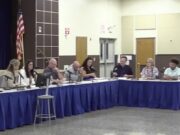








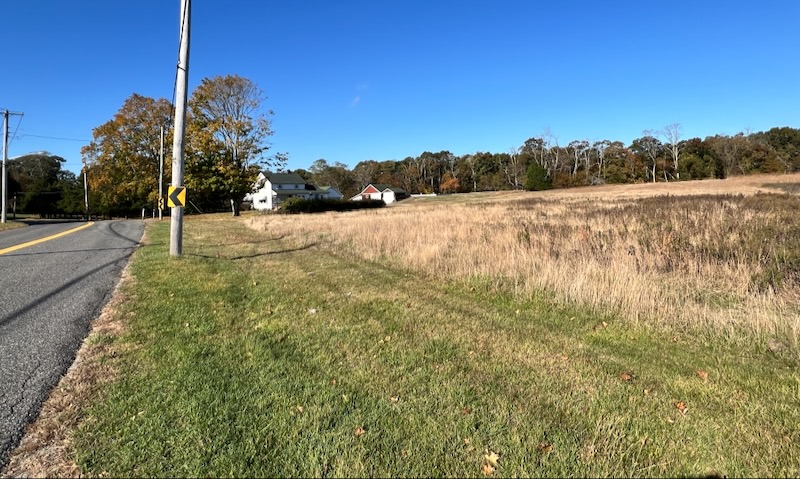
Revised plans for a proposed cannabis cultivation greenhouse in Calverton were aired at the Riverhead Planning Board meeting Thursday. The changes are intended to eliminate the need for zoning variances previously denied by the Riverhead Zoning Board of Appeals.
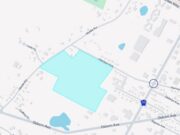
The applicant behind the proposed Brother Bear Canna greenhouse on Middle Road reduced the project’s impervious surface coverage by eliminating paved parking areas and shrinking the size of the greenhouse, according to Senior Planner Greg Bergman.
The revised site plan came before the Planning Board for discussion only. No action was taken.
The project seeks approval to construct a greenhouse of roughly 31,000 square feet for cannabis cultivation, along with related site improvements including drainage systems, lighting, mechanical equipment and onsite wells.
In January, following a lengthy hearing a month earlier, the Zoning Board of Appeals denied requests for variances related to an 8-foot deer fence and impervious surface coverage in the Agricultural Protection Zoning district.
MORE COVERAGE: Proposal by cannabis grower for Calverton farmland hits a wall at ZBA
In response to those denials, the applicant removed the proposed paved parking areas and now proposes grass and dirt parking areas delineated by railroad ties, Bergman said. The revised plans also call for demolition of an existing house and detached garage on the property and relocation of the greenhouse farther south on the parcel.
But during Thursday’s review, Bergman said a newly submitted slope analysis identified approximately 18,100 square feet of slopes exceeding 15%, which cannot be counted as buildable area under town code.
Excluding those steep slopes pushes the project’s impervious surface coverage above the 15% maximum allowed in the APZ district, he said.
Attorney John Anzalone, representing the applicant, said the greenhouse will be reduced by approximately 2,700 square feet to bring the project into compliance and eliminate the need for a variance.
State Ag and Markets weighs in on cannabis cultivation as agricultural use
Bergman told the board he requested a formal opinion from the New York State Department of Agriculture and Markets after hearing concerns from residents and some board members about whether the proposed facility is considered an agricultural use. The Agriculture and Markets Law states that cannabis, when cultivated in accordance with the Cannabis Law, is considered a crop.
Agriculture and Markets Law defines the term “farm operation” as including all on-farm buildings, equipment, and practices that contribute to the production, preparation, and marketing of crops, including cannabis, Bergman said.
In its opinion letter, the State Department of Agriculture and Markets concluded that cannabis cultivated in accordance with state Cannabis Law is considered an agricultural crop and that the proposed greenhouse operation is agricultural in nature under state Agriculture and Markets Law.
Since cannabis cultivation is a use that is agricultural in nature, the town must apply the same zoning and land-use rules for this use as for any other agricultural use, Bergman said.
Water, noise and property value impacts discussed
The State DEC informed the town that the area has been impacted by fluorinated compounds and recommended consultation with the Suffolk County Department of Health Services regarding treatment for PFAS. Bergman said he has contacted the county health department and is awaiting a response.
Regina Bykov of PW Grosser, consultants to the applicant, said the company is prepared to install filtration or carbon treatment systems for irrigation water drawn from onsite wells.
Bergman said he wants the applicant to provide a narrative describing the proposed filtration system for review by the Riverhead Water District superintendent.
The applicant also submitted a sound study based on measurements taken at a cannabis cultivation facility in Hagerstown, Maryland. Bergman acknowledged the Maryland facility was not identical to the proposed Calverton greenhouse, describing it as a “repurposed industrial building.” He noted that the noise level at 300 feet from the building was measured at 52 decibels.
“The equivalent noise level for 52 decibels is like a light rainfall, or a low conversation, or like a dishwasher, so it’s not really significant noise impact,” Bergman told the board. He also noted that noise studies are not required for farm operations.
Residents press concerns about the proposal
While there was no public hearing on the proposed site plan on the board’s agenda Thursday, concerned residents who live near the Middle Road site turned out in force for the afternoon meeting. The Brother Bear Canna site borders two residential communities, one of which is a large 55-and-over condominium complex; it is across the road from a large 55-and-over manufactured home community.
Multiple residents, as well as the president of the Greater Calverton Civic Association addressed the Planning Board about the proposed site plan during the portion of the meeting set aside for public comment on any matter. All expressed concern over potential odors and noise, as well as potential negative impacts on the value of their homes.
Some continued to press the issue of the nature of the proposed use, arguing that it should properly be considered industrial rather than agricultural.
Claudette Bianco of Baiting Hollow cited the potential for 24-hour operation as an indicator of an industrial use.
Bianco questioned the value of the noise study report because the facility being used for comparison is “not an identical system.”
Kerry McKillop of Baiting Hollow questioned whether the applicant actually holds a cannabis cultivation license from the state.
Bergman emphasized that the Planning Board is reviewing a site plan application for a greenhouse, not a cannabis license application.
“The town does not approve or issue permits for cannabis cultivation,” Bergman said, noting that licensing authority rests with the state Office of Cannabis Management.
Town Attorney Erik Howard said that enforcement of state licensing laws rests with the state, not the town.
Planning Board member Ken Zilnicki told residents the board cannot legally deny a use permitted under state law and town zoning. The town cannot treat this application any different from any other agricultural application, he said.
“We cannot deny something that is legal, that is by code,” Zilnicki said, urging opponents to direct concerns to state lawmakers and the governor.
Barbara Rippel of Windcrest East said nearby homeowners fear the greenhouse will diminish their quality of life and property values.
“The whole thing is beneficial to a few people, and the rest of us will pay the bill,” Rippel said. She asked if the town can guarantee that the proposed cannabis cultivating operation will not negatively impact the value of her home.
Greater Calverton Civic Association President Toqui Terchun said local residents overwhelmingly oppose the project and argued the operation could shift tax burdens onto other property owners if it is taxed as an agricultural use, which receives tax breaks.
“The sentiment in Riverhead is not for this project,” Terchun said.
The applicant must now submit revised plans as discussed during Thursday’s meeting, reflecting the reduced greenhouse footprint. Then the Planning Board can move forward with scheduling a public hearing.
The survival of local journalism depends on your support.
We are a small family-owned operation. You rely on us to stay informed, and we depend on you to make our work possible. Just a few dollars can help us continue to bring this important service to our community.
Support RiverheadLOCAL today.
