
















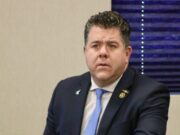

I have spent much of my life in and around the marine business on the East End. For decades, I had the privilege of serving boat owners, mechanics, marinas, fishermen, families, and weekenders who all shared the same simple goal: keeping their boats running and enjoying the waters that make this place so special.
So when I read the news that West Marine had filed for Chapter 11 bankruptcy protection, I had mixed feelings.
On one hand, West Marine has served many boaters over the years. Many good people work in those stores. Customers rely on them. Employees rely on them. Vendors rely on them. No one should take any joy in seeing a company go through a difficult restructuring, especially when local jobs and community access to marine supplies could be affected.
But on the other hand, moments like this are a reminder of something important: local ownership still matters.
When a large national chain runs into trouble, the decisions about which stores stay open, which stores close, which employees remain, which vendors get paid, and which communities continue to be served are often made far away from the people affected by those decisions. They are made by lenders, restructuring advisors, private equity firms, consultants, lawyers, and executives looking at spreadsheets.
That is not meant as criticism. That is how large companies work.
But it is very different from how a local business works.
At a locally owned business, decisions are not made in a boardroom hundreds or thousands of miles away. They are made right here. By people who know the customers by name. By people who shop in the same stores, support the same Little League teams, donate to the same fire departments, eat in the same restaurants, and understand that a business is not just a line on a financial statement.
It is part of a community.
That idea mattered deeply to me when it came time to look for the next owner of Lighthouse Marine. After building relationships in this community for so many years, I did not want to see the business become just another asset on somebody’s balance sheet. I wanted it to remain in local hands. I wanted the next owner to understand that Lighthouse is more than a store — it is a responsibility.
That is why it mattered to me that Mike was local, committed, and serious about carrying forward the values that made Lighthouse what it is. Mike understands that this business depends on trust. He understands that customers are neighbors, not account numbers. He understands that when a mechanic, marina, fisherman, or family boater needs help, the answer cannot always be found in a corporate policy manual. Sometimes it takes experience, urgency, and a real commitment to doing right by people.
For years, Lighthouse Marine has been more than a place to buy parts. It has been a place where a mechanic could walk in with a problem and talk it through. A boater could bring in an old part and ask for help identifying it. A marina could call in a rush because a customer’s boat was down on a holiday weekend. A local family could get advice from someone who actually understood the waters, the engines, the seasons, and the urgency.
That kind of service is hard to measure on a corporate spreadsheet.
It does not always show up cleanly in a quarterly report. It does not always fit neatly into an efficiency model. But it matters. It matters when someone’s boat is out of the water. It matters when a commercial customer loses a day of work. It matters when a marina has a customer waiting. It matters when a family’s short boating season is being interrupted by a part that needs to be found quickly.
Local businesses carry a responsibility that is different from national chains. We are accountable not only to banks and vendors, but to neighbors. If we make a bad decision, we see the impact. If we fail to serve someone well, we may run into that person at the grocery store, at the dock, or at a local event. That accountability makes local business personal.
And personal is not a weakness. It is a strength.
The marine industry on Long Island has always depended on relationships. Mechanics, marinas, boatyards, suppliers, captains, fishermen, and recreational boaters all rely on each other. The system works best when the people in it are invested in the community for the long term. Not just for a season. Not just for a financial cycle. Not just until the next restructuring.
That is why locally owned businesses deserve community support.
When you buy from a local business, more of that money stays close to home. It supports local employees. It supports local landlords. It supports local service providers. It supports local accountants, lawyers, tradespeople, delivery drivers, and families. It helps preserve a business ecosystem that can respond quickly when people need help.
This does not mean every purchase has to be local. We all live in the real world. Price matters. Convenience matters. Online options matter. But there is a difference between buying a commodity and supporting a business that is there when something goes wrong.
The test of a local business is not only whether it can sell you something. The test is whether it will stand behind you, help you solve a problem, and still be here when you come back next season.
As West Marine works through its situation, I hope its employees, customers, and vendors are treated fairly. I hope the stores that serve important boating communities remain open where they are needed. And I hope this moment reminds all of us that the health of a community depends in part on the businesses that are rooted in it.
Locally owned businesses are not perfect. We face the same pressures everyone else faces: rising costs, supply chain challenges, labor shortages, rent, insurance, taxes, technology, and changing customer habits. But we also have something that large chains often struggle to maintain at scale.
We have roots.
We have history.
We have relationships.
We have a reason to care that goes beyond the numbers.
For neighbors, by neighbors — that is not just a slogan. It is a way of doing business. And in times of uncertainty, it matters more than ever.
Clete Galasso is the former owner of Lighthouse Marine Supply. He lives in Eastport.
The survival of local journalism depends on your support.
We are a small family-owned operation. You rely on us to stay informed, and we depend on you to make our work possible. Just a few dollars can help us continue to bring this important service to our community.
Support RiverheadLOCAL today.
