






















Public hearings should be for the public.
That may sound obvious, but anyone who has watched enough Riverhead Town Board hearings knows it is not always how they function.
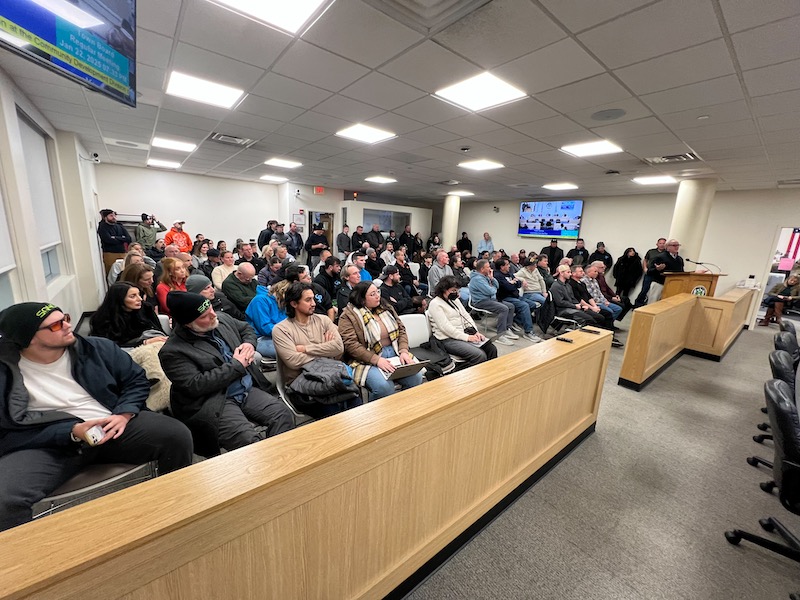
The Town Board holds public hearings on a wide range of matters, from zoning code amendments, large and small, to special permits, site plans and more complex matters, such as the eminent domain hearing held May 20. These are not small procedural exercises. They are moments when residents are invited to speak before the board acts.
Too often, the public is given little more than the title of a hearing notice, a planner’s rapid-fire technical summary or a lawyer’s explanation wrapped in legalese.
This is a recipe for confusion.
When residents do not fully understand the specifics of what a hearing is about, they come to the podium with questions and objections that may have little to do with the legal question before the board. That is especially true when the topic is controversial, as it was during the recent eminent domain hearing related to the science center property.
Some residents opposed the project itself. Others seemed unsure whether the town was already taking the property, authorizing litigation, ordering an appraisal or simply preserving an option to move forward. That confusion was understandable. Eminent domain is not familiar territory for most people. The process is technical, intimidating and emotionally charged.
But when the purpose of a hearing is unclear, the hearing quickly becomes less useful for everyone. Residents feel frustrated. Board members become defensive. Instead of taking public comment, they debate residents, argue with them or make speeches of their own. The exchange generates more heat than light.
It can also create a messy record.
That matters. In some proceedings, the record of the public hearing may later be reviewed in court. If board members stray into argumentative exchanges, make loose statements or appear to prejudge issues, they may give future challengers unnecessary material to work with. This is particularly risky in quasi-judicial matters, where the board is supposed to be building a clear, orderly record to support its decision.
None of this is necessary.
Before every public hearing, the town could provide a short, plain-English explanation of what the hearing is about. Not a legal memo. Not a planner’s shorthand. Not just the title of the notice or even the legal notice itself. A few clear paragraphs, posted in advance on the town website, attached to the meeting agenda.
For a zoning amendment, explain what the law currently says, what would change and what practical effect the change could have. For a special permit or site plan, explain what the applicant is asking for and what standards the board must apply. For eminent domain, explain where the hearing fits in the process — for example, whether the board is deciding to proceed with an appraisal or potential legal action, not actually taking property that night.
This would not limit anyone’s right to speak. It would make public comment more informed and more useful.
The board would get better input. Residents would better understand the stakes. The record would be cleaner. The town would reduce unnecessary ill will.
And overall, hearings would be less contentious and more efficient.
A public hearing should not be a test of whether residents — or board members, for that matter — can decode bureaucratic language in real time. If the public is being asked to participate, the town has an obligation to make sure the public understands what it is being asked to participate in.
The public, for its part, should keep comments focused on the specific subject of the hearing. Board members should resist the temptation to speechify or get into debates — with the public or with each other. That is especially important in an election year, when public hearings can too easily become campaign theater.
The survival of local journalism depends on your support.
We are a small family-owned operation. You rely on us to stay informed, and we depend on you to make our work possible. Just a few dollars can help us continue to bring this important service to our community.
Support RiverheadLOCAL today.
