





















The Riverhead Central School District’s administration is proposing a $201.4 million budget for next school year — an increase of $9.4 million, or roughly 5%, over its current budget.
The proposal would require the tax levy be raised 3.34%, the maximum allowable under the school district’s tax levy cap. A tax hike at or under the cap allows the budget to be passed with a simple majority of voters. The levy increase will enable the district to raise an additional $3.48 million, bringing the total revenue raised by property taxes to $107.8 million.
In addition to the increased revenue from property taxes, the school district will use an additional $2.68 million from reserve funds (totaling $6.8 million) and an additional $3.67 from state aid (totaling $80.87 million) to fund the rest of its expenditures. The state aid numbers are based on the governor’s budget proposal and district administrators have said they hope to receive more aid in the final state budget.
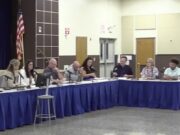
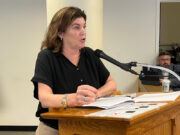
The most significant cost increases in the budget come from what the district will need to pay in employee benefits and health insurance, and what it will need to pay for instruction, according to documents prepared by the district’s interim assistant superintendent of business, Marianne Cartisano. Cartisano presented the district’s revenue and spending plan to the Riverhead Board of Education during its meeting Tuesday.
Cartisano said the district is budgeting for a 0% increase in salaries district-wide. “We are going to do a better job in staffing and allocating our faculty resources,” she said.
Watch Cartisano’s presentation below.
During the last board meeting, Cartisano warned the board that the district was approaching a “fiscal cliff” with the loss of nearly $20 million in temporary federal coronavirus funding it has received over the past three years. She said the budget proposal would focus on stability and long term financial planning.
| MORE COVERAGE: Riverhead school district approaching a ‘fiscal cliff,’ business official tells school board |
Cartisano has also posted more than a dozen documents and presentations related to the proposed budget on the school district’s website, including a line-by-line breakdown of the proposal compared to this year’s adopted budget and what was spent last school year. The documents can be viewed on the school district’s website here.
“One of the charges from the board was to build this public’s trust financially and to move forward with the understanding that deadlines were not suggestions, that deadlines were there for a reason,” Cartisano said.
The process of creating a budget with transparency at the forefront was “painstaking but necessary,” Cartisano said. “If you’re going to build the financial trust in the district, this is what your district deserves. And this is the level that your community should expect from you. At least they should expect it from me.”
Cartisano did not say Tuesday how staffing would be affected by the proposal and only provided the raw numbers for the budget. She will discuss the district’s instructional and non-instructional staffing plans at the board’s March 19 and April 2 meetings. The school board is scheduled to vote on adopting the budget on April 16 and hold a hearing on the budget May 14. Voters will take to the polls and vote on the budget on May 21.
Here’s a breakdown of the four sections of the budget and how they would change under Cartisano’s proposal:
Instructional programs
Instructional programs are the largest part of the school district’s budget, making up nearly 60% of total expenditures. This part of the budget is where most of the district’s employees, including teachers, administrators, IT staff, social workers and school psychologists are paid from.
Instructional programs are currently funded at roughly $113 million. The proposal would increase that amount by $4.84 million, or 4.28%, to $117.8 million.
The largest increase in this section would be $3.1 million for special education services. The district’s special education services are underfunded by roughly $2 million, Cartisano said, which district officials had to make up in the proposal.
Undistributed
The “undistributed” part of the budget is the spending plan for employee benefits, including health insurance and retirement benefits, as well as the funds to pay off the district’s debt service.
This section would increase from $51.9 million to $55.7 million, or 7.42%. All of that increase is due to the rising cost of employee benefits, according to Cartisano’s presentation.
The employer contribution rates for retirement, which are set by the state, have increased for both instructional and non-instructional staff, requiring the district to spend an additional $700,000. Health insurance costs for the district are increasing $3.1 million, according to the proposal.
General support services
General support services is a category that encompasses several district functions. It includes the budgets for the Board of Education; the salaries of the district clerk and superintendent; the budget for the district’s business office; the budget for its legal counsel and personnel department; and the costs and salaries for school security and custodial staff, among other costs.
The general support services budget would increase from $17.9 million to $18.1 million, or 1.43%.
“When you add up everything that is in general support, which typically that increase would be anywhere from 10 to 15%, our increase is $225,000, or 1.43%. So included in that is your facilities, it’s your electricity, it’s all of these [items] that are going up by natural increases, where we have gone into these budgets and made decreases in other areas,” Cartisano said. The increase is “very conservative,” she said.
Cartisano specifically mentioned the district’s business office, which she has been tasked by the board to restructure. The business office was “one of the most expensive forms of operating that I have seen in 32 years,” she said. In the 2022-23 school year, the district used a remote accounting service through a BOCES service that cost the district $316,000, an “outrageous number,” she said. The district is using another remote accounting company this year, she said, and is on track to spend $170,000-$180,000 this year.
Cartisano said an in-house accountant would be more practical and less expensive. The district hired that accountant during the meeting. Joseph Cocco was hired as the district’s treasurer at a salary of $165,000 a year; Cartisano he will be the district’s accountant and act as treasurer.
Transportation
The budget for the district’s transportation department is increasing $516,643, or 5.6%. The transportation budget covers costs associated with the maintenance of school buses and the bus garage, the salaries of bus drivers and transportation staff, and contracts with outside agencies and companies for transportation of district students.
Previously, the cost of a contract to transport sports teams was covered by a grant, Cartisano said. The loss of grant funding means the district will need to fund it with $244,000 this year, she said. Other rising expenses include required salary increases.
The survival of local journalism depends on your support.
We are a small family-owned operation. You rely on us to stay informed, and we depend on you to make our work possible. Just a few dollars can help us continue to bring this important service to our community.
Support RiverheadLOCAL today.
