


























Keep an eye out for this bug. And if you see it, take pictures, kill it, collect it and report it.
That’s the word from the State Department of Agriculture and Markets, which is tracking populations of the spotted lanternfly across the state and in particular on the North Fork of Long Island, because the insect poses a serious threat to vineyards.
It’s important to raise public awareness about the threat of this insect and what people who see them should do, Kareem Massoud, winemaker at Paumanok Vineyards in Aquebogue said in an interview Friday.
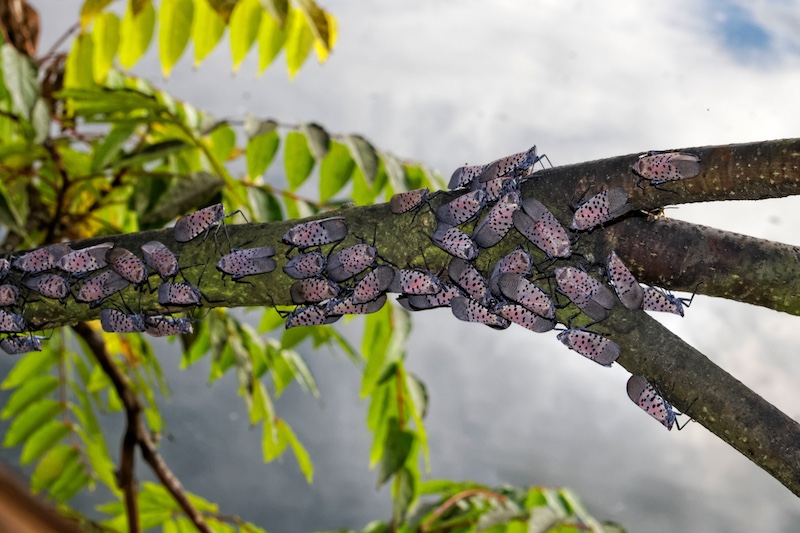
Grapevines are among the insects’ favorite plants to feed on and a spotted lanternfly infestation in a vineyard can do serious damage to the vines, including defoliation, dieback, loss of crop yield and even plant death.
An infestation is what vineyard owners are most worried about. When there’s an infestation, the vine is just crawling with them, Massoud said.
While there have been documented sightings on the North Fork this season, the good news is that there have been no known infestations at local vineyards, he said.
Vineyard managers have been setting out traps for the insects and so far, Massoud said, the traps in his vineyards have not captured any and he has not heard of other local vineyards finding or trapping them. The Massoud family owns Paumanok Vineyards and Palmer Vineyards, both based in Aquebogue.
“We’re bracing ourselves,” Massoud said.
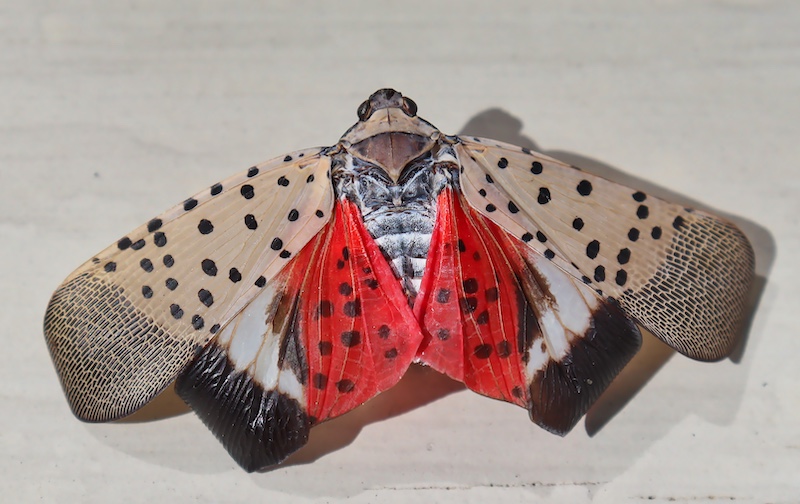
The spotted lanternfly is an invasive species native to China, thought to have arrived in the U.S. in 2012 as egg masses on a shipment of stone, according to Cornell College of Agriculture and Life Sciences. It has been in the U.S. for a little more than a decade. The first known infestation was in central Pennsylvania in 2014.
The insects have been moving east and have established populations in western Suffolk. They were first detected on the East End in small numbers during the past two years.
The first infestation at a vineyard in the Finger Lakes wine region upstate was reported in July.
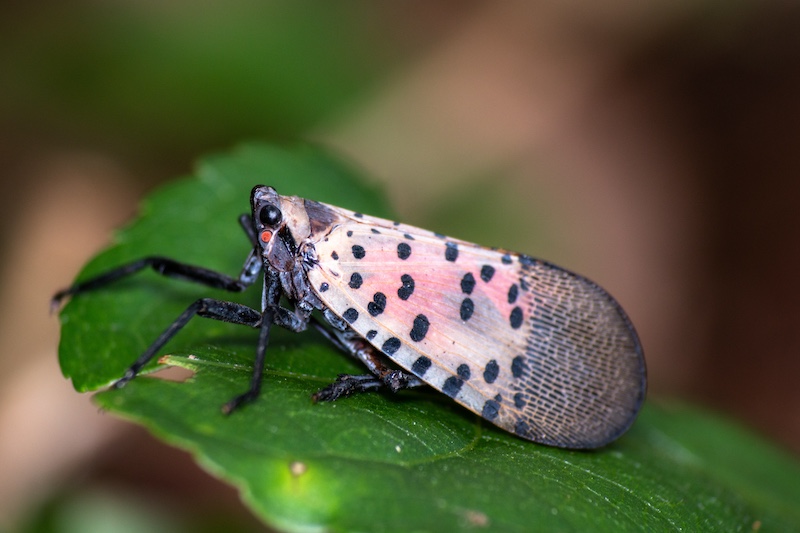
Despite its name, the spotted lanternfly has little in common with any other type of fly, and though the adult lanternfly resembles a moth, it’s not a moth. It is a “true bug,” a plant hopper “more closely related to cicadas, brown marmorated stink bugs, aphids, and leafhoppers. All insects in this order have piercing-sucking mouthparts that allow them to drill into the phloem of a plant to feed directly on the sugary sap,” according to Cornell College of Agriculture and Life Sciences.
The bugs do not not bite, sting or damage structures, but they are having an economic impact on agriculture in the state, said the State Department of Agriculture and Markets, which is coordinating with the State Department of Environmental Conservation and the Cooperative Extension Service agencies across the state to control the spread of the species and protect vulnerable crops, through quarantine, trapping and insecticide application where necessary.

The adults of the species begin to appear in July and are active as late as December. The bugs lay eggs from September through November, or to the first killing freeze. The eggs are laid in masses on almost any type of outdoor surface. The eggs begin to hatch in May as tiny nymphs. In July through mid-August, they molt and become adults. The adult stage is when the bugs do the most damage.
Spotted lanternflies can move three to four miles by walking, jumping and flying. They are most commonly transported by human activity as hitchhikers during all life stages —eggs, nymphs and adults, according to the New York State Integrated Pest Management website. For example, they can move from one region to another in and under vehicles. It’s important to make sure the bugs are not hitching a ride in, on or under your vehicle when returning home from areas where spotted lanternfly populations are established.
For more information about the spotted lanternfly, visit the New York State Integrated Pest Management website.
The survival of local journalism depends on your support.
We are a small family-owned operation. You rely on us to stay informed, and we depend on you to make our work possible. Just a few dollars can help us continue to bring this important service to our community.
Support RiverheadLOCAL today.
