




























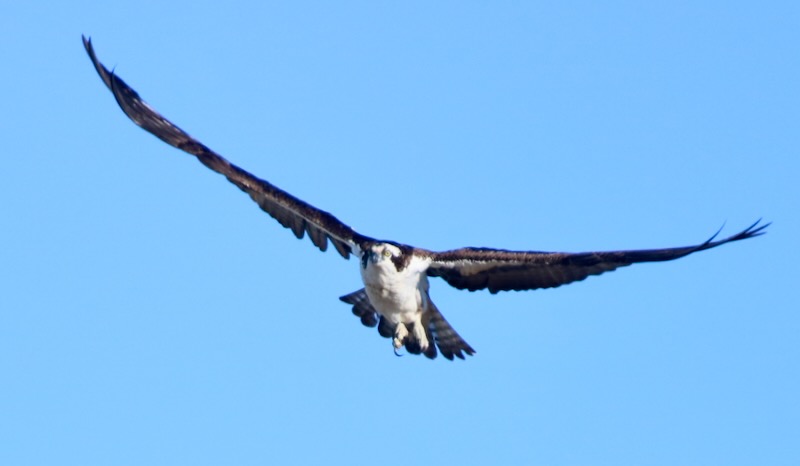
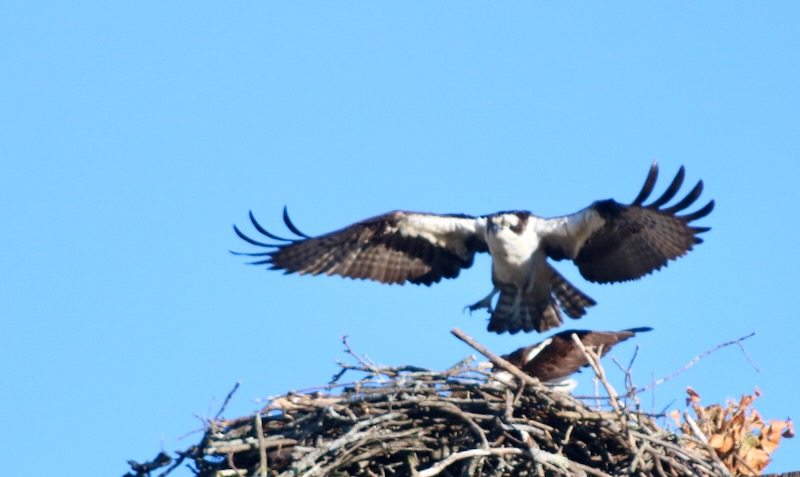
The majestic osprey, a fish-eating raptor once in danger of extinction because of impacts of the pesticide DDT, continues to rebound, the Group for the East End said this week after analyzing the results of its triennial monitoring survey of the local osprey population.
Group for the East End staff, along with expert birders and volunteers, visited approximately 500 nests in Riverhead, Southold, Shelter Island, Southampton and East Hampton, and documented 385 active nesting pairs, which produced 386 fledglings. Fledglings are chicks that have survived to the point of sustained flight.
While the total number of active osprey pairs on the East End increased by about 9% since 2022, the number of fledglings fell by about 24%, and productivity dropped from 1.43 fledglings per pair to 1 fledgling per pair — a decline of about 30%.
Nevertheless, “the population is still strong,” the Group for the East End said in a press release Sept. 4. The monitors said they were encouraged by the number of ospreys that are nesting across the East End.
There are several factors that could impact the number of fledglings recorded in this year’s survey.
Monitors reported noticeably smaller chicks still in the nest during phase two of the survey, the Group for the East End said. This could be due to the significant weather events that occurred early in the breeding season this year, the organization said. Strong storms may destroy nests entirely, or directly impact eggs and chicks when they are most vulnerable.
When that happens, ospreys may lay eggs a second time, though this often results in fewer eggs and late-season fledglings.
Also, predators like bald eagles — another bird of prey whose population has rebounded locally — owls, and raccoons in ospreys’ natural nesting areas could impact the population, the organization said.
“Ospreys are also great indicators of local water quality because their lives depend so much on the health of the waterways they live on,” Group for the East End assistant director of environmental education Jennifer Skilbred said.
“For example, if a local watershed is suffering from nitrogen pollution, which is a well-documented issue in some of our local waters, it can lead to lower oxygen levels, less clear water, harmful algal blooms, and ultimately, fewer fish for ospreys and their chicks.”
The Group for the East End’s osprey monitoring program allows the organization to track changes in the population and explore reasons for these changes. This data will be compiled and shared with New York State, which keeps track of the local population, the Group said.
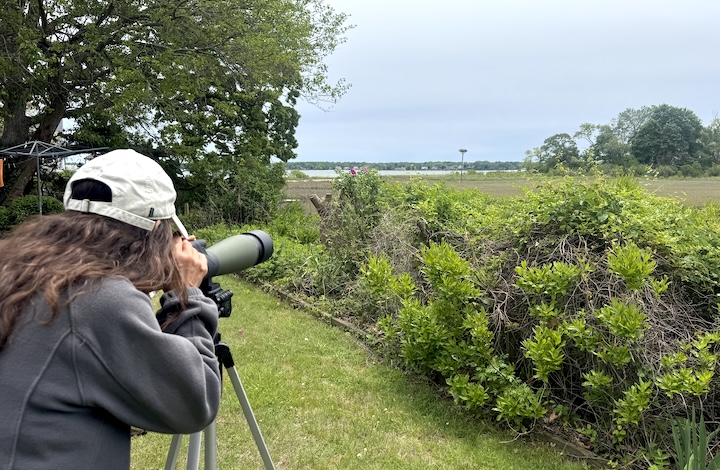
2025 monitoring data
Across the East End, Group staff and volunteers monitored 587 sites, 385 of which showed activity, producing 386 fledglings. In Riverhead, 18 nests were active, producing 21 fledglings. In Southampton, west of the Shinnecock Canal, 34 nests were active, producing 14 fledglings. East of the Shinnecock Canal in Southampton, the team monitored 86 active nests and counted 79 fledglings. In East Hampton, there were 59 active nests, with 69 fledglings counted. In Southold, there were 138 active nests, producing 156 fledglings. On Shelter Island, 50 nests were active and produced 47 fledglings.
The survey does not include Shelter Island’s Mashomack Preserve, East Hampton’s Gardiner’s Island, or Southold’s Robins Island, Plum Island, or Fisher’s Island.
Reasons for population increase
A significant reason for the robust increase can be traced to changes in fishing regulations over the past decade, specifically regarding the limit on the amount of “bunker” or menhaden, a smaller fish that is predated on by larger fish, such as bluefish and striped bass. The regulations were put in place to help increase the local fishing economy – industrial and recreational; however an indirect but beneficial result has been an increasingly available food source for the region’s osprey population, which maintains a diet of roughly 99% fish.
East End osprey history
The decline of the osprey in the 1950s through the 1970s was caused by DDT-induced eggshell thinning, greatly reducing the reproductive efforts of osprey and hurtling the iconic “fish hawk” on a path to local extinction or extirpation from New York State, Group for the East End said. In 1976, the species was listed as endangered in the state.
With the ban of DDT in 1972, the population slowly began to rebound in the early 1980s. In 1983, the osprey was downgraded to “threatened.” By 1995, there were 230 breeding pairs on Long Island and four years later, osprey was downgraded again to “species of special concern,” which is its current status.
In addition to the threat of pesticides, wetland destruction also carved away the osprey’s nesting habitat at an accelerating pace. As the osprey population increases, many birds have begun to nest naturally in trees while others find themselves on docks, chimneys, light, and utility poles. Nesting in these areas can lead to conflicts with humans or injuries to the birds.
PSEG Long Island partnership
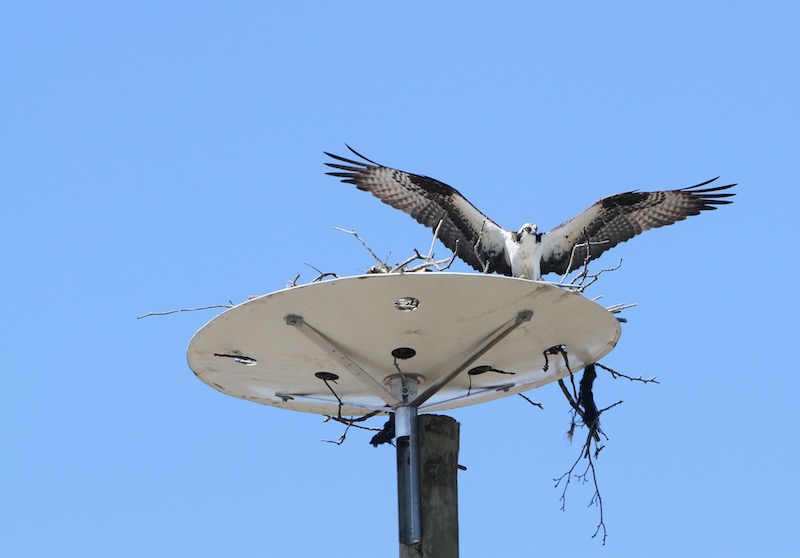
Tree nests are ideal and were far more common prior to the osprey’s decline across the region. Nesting on utility poles has also become more common, though this can be very hazardous to the birds. Nesting osprey are in regular contact with water and their repeat visits back and forth to nesting sites with wet fish and sticks used in nest construction can lead to contact with electrified lines that can spark fires and lead to the electrocution of both adults and young, which are unable to fly.
PSEG Long Island has become an important conservation partner by working with the Group for the East End and local community members to safely remove dangerously located nests and provide far safer elevated nesting platforms, in areas where the birds demonstrate a strong interest in establishing a nest.
PSEG Long Island’s osprey conservation team has also pioneered a physical deterrent that can be placed over dangerous electrical equipment — keeping the birds safe and discouraging new nests in areas that are dangerous to the ospreys, the Group said.
The public has been integral to the success of the osprey, according to the Group.
Answers to common questions, including what to do if an osprey nests on a home structure, a nest appears to be in danger, damaged osprey platforms, and more can be found at the Group’s website. Also available there are live video feeds of osprey nests in Bridgehampton and Oyster Bay. Follow the Group on social media for updates on different pairs at @groupfortheeastend.
Did you know?
Ospreys are generally monogamous and most pairs mate for life, returning to the same nest together each spring — with the caveat that survival and competition can affect that fidelity.
Most North American ospreys that nest on the East Coast head to the Caribbean and South America for winter; many Long Island birds travel down Florida, hop to Cuba/Hispaniola, then cross to South America. Adults take fairly direct routes; juveniles wander more and migrate on their own.
Typically, ospreys return to Long Island in March, nest in April, hatch mid-May, and fledge by July. Southbound migration peaks late August–September. (The young birdsoften leave later.)
Daily migration pace averages 150 miles per day in fall and 200 miles per day in spring, when adults fly faster.
The survival of local journalism depends on your support.
We are a small family-owned operation. You rely on us to stay informed, and we depend on you to make our work possible. Just a few dollars can help us continue to bring this important service to our community.
Support RiverheadLOCAL today.
