























Dying is a part of life. Ignoring death won’t make it go away. Preparing yourself for death and thinking about and communicating your Life Wishes can be an important, fulfilling part of life.
 In medicine we regularly deal with serious life-threatening situations. Just today we heard three Code Greys overhead, the page signaling a new suspected stroke arriving to the ER. The medical teams mobilize to attempt to save lives. Yesterday there were three rapid responses and one Code Blue, or cardiac arrest. Four times we mobilized, acted quickly, acted to prevent someone’s death, if that’s what they wish.
For us it becomes routine. Run to the room, assess the situation, do the compressions, give the meds. They either live or they don’t. After many years of this, a certain amount of detachment is required for self-preservation. If we take every death to heart we would be emotionally shattered very shortly after we start. As physicians, death is part of our jobs. For us, death is a part of life.
But when you’re just starting out, caring for the dying patient is very intimidating. As a third-year medical student, new to actual patient care, being part of a dying person’s life is an eye-opener, a true honor and privilege. I will never forget my first patient death.
She was 79, a pale but vibrant African American woman who was so clearly adored by her family. The nurses all knew her to be a frequent flier in the hospital and they adored her too. I took my time doing her admission, because as a third-year medical student you have lots of time. I immediately bonded with her over shared stories about our equally crazy families. She was being admitted for emergent dialysis due to new onset acute kidney failure. Despite her youthful appearance and astounding functional capacity, she had a long-standing history of uncontrolled high blood pressure and diabetes.
I enthusiastically rounded on her every day as if I had been her primary care doctor for the last 20 years. She showed how her new dialysis catheter interfered with a tattoo she got in her 20s, when she was wild and crazy. She told me that she’s no longer wild, but she’s still crazy. She called me Dr. Lexi and commented often on how proud my parents must be. That made me feel so good.
Several days into her admission, an unexpected lab abnormality turned her otherwise routine admission into her last week of life. On hospital day seven, everything else was improving, but her white blood cell count spiked into the high 70s, with normal being somewhere between four and 10. The hematologist consulted shook her head confirming her suspicions as her eyes scanned the microscope slide. Acute myelocytic leukemia. She likely won’t live through the weekend, the wise old doctor told me.
Hematologist/oncologists have it rough, in my opinion. They form long relationships with patients, many of whom bear terminal diagnoses. But this patient would have mere days to come to terms with her prognosis. You know how people always ask, “what would you do if you have six months to live?” I was witnessing a person being told that she would likely die within the next week, even with aggressive treatment.
She wanted none of it. She wanted to go home and see her dog and kiss her grandkids. She didn’t want catheters impairing what remained of her youth. She didn’t want to pee on a commode or be awoken by bells or phlebotomists. She wanted to sleep in her bed and wake up with the birds. Or not. She has lived a full life, done all she needed to do, said all she needed to say.
I was furious. How could she just give up? We are American doctors. We can cure anything. We can make people live forever. My naivete revealed an inner hope, a high standard I had set for myself, that I could save people’s lives. What I hadn’t yet learned was that not everyone wants to be saved. Some people have set out their plans for their death. They are comfortable with the fact that they will indeed die one day. And some people even have the ability to decide how they how they want their experience with death and the dying process to be.
After we disconnected all the tubes and lines, I held Miss Alice’s hand. She wasn’t strong enough to go home. She had deteriorated so quickly. She wished me well and told me that I had cared for her body and her soul in our short time together and that was the greatest gift anyone could give a person who was about to die. It was an honored I incidentally acquired when I was randomly assigned to her admission a week prior. But it was an honor I took seriously.
I watched as she breathed her last breath and remember vividly the empty feeling I felt when I realized she was gone. There was a coldness to the room. Like the warmth of her heartbeat had up and walked out the door. I was afraid. I was alone in a room with a dead body. It was so palpable that Miss Alice was not there though her body lay before me.
Ten years and many, many more deaths later, I sat at my mother’s bedside discussing with her the details of her impending memorial service. She had come to accept that she was dying, even though I continually encouraged her to be positive. She had the wisdom and intuition to know what was ahead for us. She was not concerned with her journey, she only feared that we would be left to mourn. She didn’t want us to have to make decisions on her behalf. She wrote down her Life Wishes, as she called them, a detailed plan for her own memorial and for what remained of my family’s life.
She wanted Stevie Wonder to be played. She wanted a print from her bedroom displayed alongside all of her favorite children’s books. She wanted us to know that, if she has a choice, she would choose to come back as water, so that every time we play in the ocean, or boil a pot of macaroni, or water a plant – that would be her. She wanted my brother and me to promise that we would encourage my father to find companionship and love and, if he ever did, that we wouldn’t feel that he loved her any less. She listed her inner circle, those she wanted to stand up as representatives of her love of family and friendship. She even drew out the order in which she wanted us to stand.
I was afraid to read her Life Wishes while she was still alive because I felt that would mean I conceded to her fate. But when she ultimately died, and I read the eloquent words she left for us, I thought it to be the greatest gift she could have given us. How absolutely empowering it must have been for her to control her life even after her life existed no more. How strong she needed to be to realize her fate and decide how her final days would be.
In my private practice and my hospital work, I discuss advanced directives with every patient I encounter. Even healthy young people have the opportunity to look at their lives and evaluate what they would want to happen if they were to face an imminent or sudden death. We are American doctors and can accomplish great feats, but death truly stops for no one.
To be prepared and to have the courage to announce your wishes is incredibly powerful. It is a discussion that, based on my recent experiences, absolutely needs to become more acceptable. We, as a society, need to understand that death is a natural, and can be a beautiful peaceful part of life. We need to plan for it, just as we plan for college, and babies and retirement. We should be able to understand what each living soul wants for their death as we are able to discuss and understand what they want for their lives.
I encourage you all to have an open, honest discussion about what you think death is, what the dying process is like, and what your wishes are for treatment or non-treatment. Your physician can help you to document your wishes so that your family is not left to decide what they think you would want. Pegasus House Palliative Care Service, under the direction of Denise D’Ambrosia, N.P. and Dr. Louis Avvento, is a tremendous resource for anyone facing chronic illness, palliative care or hospice needs.
To get the conversation started, I’ll share my Life Wishes with you.
1. If possible, all available organs are to be donated to those in need.
2. If there is no reasonable chance of recovery to a meaningful existence, I would prefer not to be kept alive by artificial means.
3. Should I be facing a terminal illness and have no ability to recover with or without treatment, I wish to be kept pain free in the comfort of my own home, surrounded by those I love. I wish for music and laughter and joy to fill the emptiness of my absence.
4. I wish for those who know me to remember me as a righteous person who loved with reckless abandon.
5. I wish for my children to remember the lessons I have taught them and to extend that favor to their children. I wish for my name to be spoken to my grandchildren. I want my children and grandchildren to know that, they will be able to feel me even though they can’t see me, just like the wind.
6. I wish that my husband to know that he is my split-apart, my soul mate and my best friend. I wish that he be encouraged to find love and companionship. I would like him to buy a Porsche with my life insurance money.
7. I want my family to know how proud I am to have lived and died a Venutolo-Mantovani-Hugelmeyer.
8. I would like my father and brother to know tat if I meet Jimi Hendrix in heaven I will definitely thank him on their behalf.
9. I would like my friends to know how they have enriched my life and continually challenged me to be better and do more.
10. I want anyone struggling with grief to read “The Fall of Freddie the Leaf.”
11. I would like big donations made in my name to the two places that shaped my education and my future: Pinelands Regional High School and Villanova University.
12. I would like to be placed to rest wearing a Giants Jersey, a Villanova Men’s Basketball hat and my ruby red slippers.
13. I wish for my patients and colleagues to know what an honor it has been to care for and learn from them. Being in their presence has never felt like work.
14. I want no funeral, no pomp and circumstance. I would like anyone who loves me to gather for a party to celebrate a life well-lived, to share stories of good times and laugh and laugh and laugh.
15. I would like to be cremated and my ashes to be mixed with my husband’s when his time comes. I would like our joint ashes to be spread at the following locations: Villanova University, where we met and married; Davis Park, Fire Island, our favorite oceanfront spot, where my husband grew up and where we buried our beloved nephew; and the Pine Barrens of Tuckerton, New Jersey, where I was so lovingly raised.
16. And finally, I would like my mother’s words to be kept in mind. “There is no such thing as goodbye. So-long, see ya later, hasta la vista. But never goodbye.”
17. I’d like my loved ones to think of me whenever they hear the following songs: Sleepwalk by Santo and Johnny, Midnight Train to Georgia by Gladys Knight and the Pips, The Ocean by Led Zeppelin, and Boss Johnny by The Everymen. I’d like them to smile and remember me when they see red Ford Mustangs and any F-150.

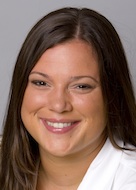
Alexis Hugelmeyer, D.O. is the wife of Michael, mother of Isabella, 5, and Lance, 3, and a family physician whose passion is hands-on manipulation for treatment and healing of any and every type of medical problem. She is the director of community outreach education at Peconic Bay Medical Center and also a private practitioner in Riverhead. A graduate of Villanova University and New York College of Osteopathic Medicine, she lives in Baiting Hollow.
Look for Dr. Mom every Saturday on Riverheadlocal.com
{loadposition tab20}
{loadposition tab1}
The survival of local journalism depends on your support.
We are a small family-owned operation. You rely on us to stay informed, and we depend on you to make our work possible. Just a few dollars can help us continue to bring this important service to our community.
Support RiverheadLOCAL today.
