









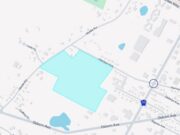













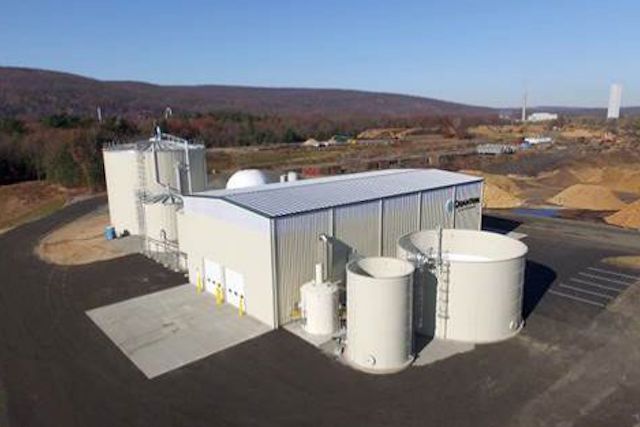
A food waste-to-energy facility is not permitted by the zoning code at the Calverton Enterprise Park, the Riverhead Zoning Board of Appeals ruled on Thursday, denying the appeal of CEA Energy, a Melville company that seeks to build an anaerobic digester facility on Scott Avenue.
In a unanimous vote, the ZBA denied the appeal and upheld Building and Planning Administrator Jefferson Murphree’s determination, as the town’s zoning officer, that the use “falls within the prohibited uses” in the zoning for the proposed site.
Anaerobic digesters are not among the listed prohibited uses in the Planned Industrial Park zoning use district. But the zoning officer ruled that the facility, is “akin to specifically prohibited uses: ‘Dumps’ and ‘Garbage disposal dumps, landfills, incinerators, or transfer stations.’” Anaerobic digesters use biological processes in an oxygen-free environment to convert source-separated food and organic wastes to biogas and compost products.
In its decision denying CEA Energy’s appeal, the ZBA urged the Town Board to consider adding the use to the industrial park zoning code. After listening to the testimony at its April 14 public hearing on the appeal and reviewing materials submitted with the application, the ZBA concluded “the use could be beneficial to the taxpayer and provide renewable energy as well as an additional opportunity for recycling” and encouraged the Town Board “to give it due consideration.”
The Town Board is the legislative body for the town and the only entity that can amend the town code.
CEA Energy representatives asked the town board to do just that at a July 1 Town Board work session. They got a lukewarm reception.
CEA consultant Victor Prusinowski, a former Riverhead councilman, suggested the board amend the zoning to allow the facilities by special permit, which would give the Town Board control over the siting and operation of a facility.
Councilman Tim Hubbard said he saw little benefit to the Town of Riverhead in allowing the construction of a commercial facility like the one CEA Energy is proposing. Riverhead produces less than 20 tons per day of food waste, while the CEA facility would have the capacity to handle 200 tons per day. The rest of the waste processed at the facility would come from outside the town.
“Riverhead seems to be a catch-all for purposing everybody around us, not just us. And I’m starting to get a little bit concerned about what we do just for our Riverhead folks and not as concerned about what we do for everybody outside of us,” Hubbard said at the work session.
If Riverhead were to allow the waste-to-energy facility, the company should enter into a community benefit agreement, similar to the agreements the town has signed with commercial solar facilities, Hubbard said. Those agreements, with two solar companies that have obtained approvals to construct utility-scale solar arrays in Calverton, have provided the town thus far with $2.5 million in cash payments. A third agreement in connection with a third solar facility is still being negotiated, according to town officials.
Hubbard said CEA Energy’s offer to “take most of our leaves” for processing “means nothing.”
Prusinowski said the town would also get “a portion of the tipping fee” paid for each delivery of waste at the facility.
Councilman Ken Rothwell said the matter should be taken up by the town’s code revision committee.
The Town Board already held a hearing June 21 on a draft code that would add anaerobic digesters to the list of prohibited uses in the industrial park zoning code.
Community members who spoke at the hearing said they supported the concept of food waste recycling, but objected to a commercial facility sized to take the vast majority of the waste to be processed from outside of Riverhead.
Barbara Blass of Jamesport, a former member of both the Town Board and Planning Board, said “an anaerobic digester may have a place in a municipality’s overall (solid waste) management strategy,” but supported prohibiting “anaerobic digesters of the size and scope that would require importation of waste from outside of the Town of Riverhead.”
Blass said Riverhead Town has a “long history of addressing regional issues, while absorbing significant impacts.”
Murphree told board members at the July 1 work session the planning department would draft another revision to the Planned Industrial Park zoning to allow anaerobic digesters by special permit in the PIP district and he would submit that to the board for its reconsideration.
Separately the board is also considering extending a moratorium on new solar facilities, which is set to expire in October, and expanding the moratorium to include all renewable energy systems, including food waste-to-energy facilities.
The survival of local journalism depends on your support.
We are a small family-owned operation. You rely on us to stay informed, and we depend on you to make our work possible. Just a few dollars can help us continue to bring this important service to our community.
Support RiverheadLOCAL today.
