





















A Riverhead program is helping people with nonverbal autism learn and use an alternative form of communication.
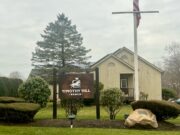
The Phoenix Studio, which operates out of a two-story house on Middle Road, helps develop literacy skills in people who can’t easily express themselves because of their autism, and pursue a diploma, using a method called spelling to communicate, according to its founder.
The nonverbal person, with the assistance of a communication board with letters, numbers and punctuation held by another person, can form their own sentences. The technique is also known as the rapid prompting method, which was developed by a mother while homeschooling her autistic son.
The use of the rapid prompting method and spelling to communicate is controversial. Professional organizations such as the American Speech-Language-Hearing Association and American Association on Intellectual and Developmental Disabilities, advise against these methods and question their efficacy, because they say they have not been scientifically validated.
Physician Andrea Libutti said she founded the Phoenix Studio in response to her experience trying to educate her son Jack, who has limited verbal abilities. She said the public school system is flawed in how it treats autistic students. She tried several private schools, but said the cost of sending Jack was not sustainable.
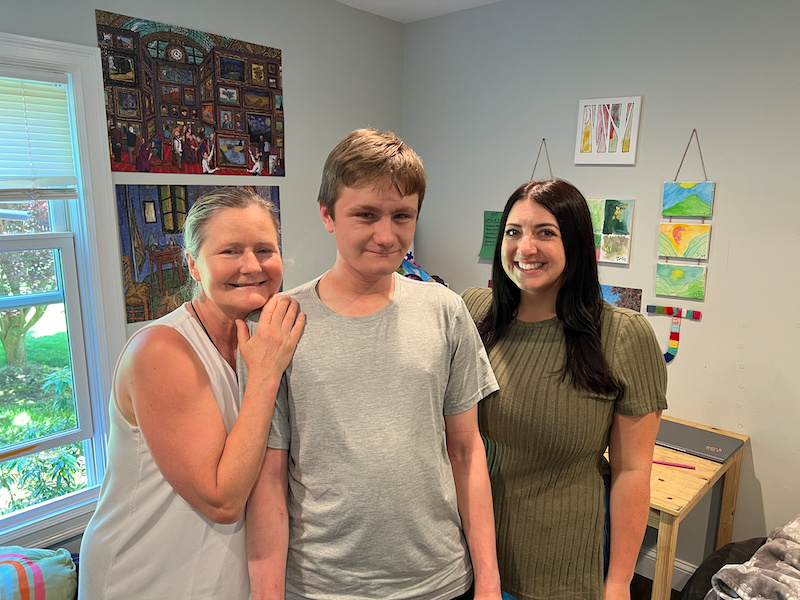
For the 2020-21 school year Libutti hired a special education teacher for Jack trained in spelling to communicate. “We could tap into what was actually going on in his brain,” Libutti said. The training ended up giving him the skills to complete age-appropriate academics, she said.
“What we’ve discovered is these so-called low functioning kids — that we think low functioning cognitively — are so incredibly brilliant,” Libutti said.
For the next school year Libutti brought together a group of kids who, like Jack, were taught spelling to communicate. The Phoenix Studio was born.
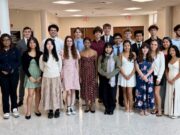
“We have a small group of high schoolers that are all working on their diploma and none of these kids would have ever had access to being able to get a high school diploma if they couldn’t communicate,” Libutti said. “Nobody knew what was in their brain. So it’s just in this amazing journey of possibility and opportunity for them.”
The studio has 12 students in total who are in their teens or 20s. Libutti hopes to grow the program and expand it to include younger children. The Phoenix Studio will soon be moving into the former Peconic Community School space at Our Redeemer Lutheran Church in Aquebogue.
In addition to their studies, the students post about their experiences learning and communicating through spelling in a blog on the Phoenix Studio’s website.
In a blog post titled “How has your life changed since you’ve had access to communication?,” the students write about how they have agency over their lives with spelling. They are able to express themselves, when before they were frustrated, alone and sad.
“I loved my family but they did not know me. I was a stranger to all people,” one student named Rose wrote. “I am better now. I feel in control of my life now. It is like sunshine after all darkness. It is hope and love and connection. I am free now. I can share my mind.”
In a blog post introducing himself, Libutti’s son Jack, 20, wrote that being able to spell lets his “light shine out.”
“I am happy you are reading my words. Being autistic, I have both more and less connections to the world,” he wrote. “More connected because I am so deeply in tune in the world around me. Less connected because I can’t always share my thoughts. I am so happy I have a way to share them now. I love that I have a voice to use.”
The survival of local journalism depends on your support.
We are a small family-owned operation. You rely on us to stay informed, and we depend on you to make our work possible. Just a few dollars can help us continue to bring this important service to our community.
Support RiverheadLOCAL today.
