
























The auto dealerships that line Riverhead’s Route 58 commercial corridor are bracing for the impacts of 25% tariffs on imported autos and auto parts — though precisely what those impacts will be remains uncertain.
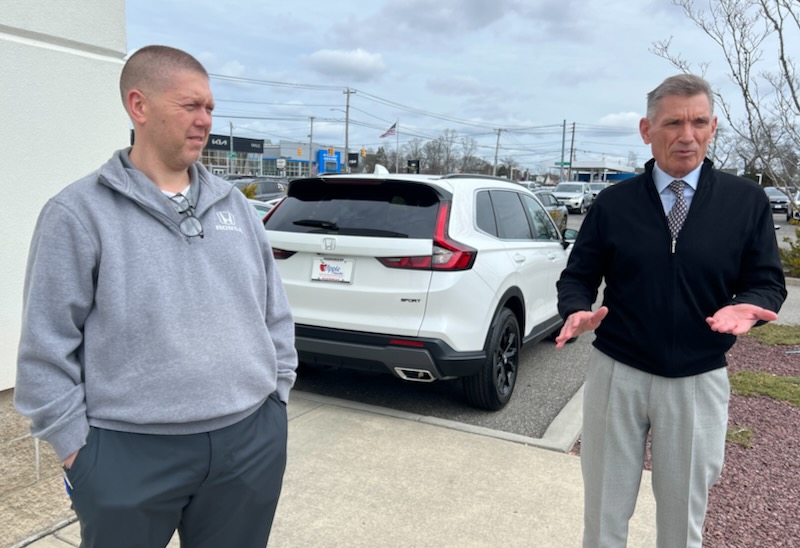
“I don’t know one car dealer that says, ‘Gee, this is a great idea.’ We look at the future and worry,” said Bill Fields, general manager at Apple Honda.
The auto tariffs, announced by President Donald Trump March 26, remain in place despite the 90-day pause on many other tariffs the president announced Wednesday.
Fields said 70% of the cars Apple Honda sells are manufactured in the United States. Honda is among the top three auto manufacturers in the nation, he said.
But no vehicles assembled in the U.S. are built with 100% domestic content, according to a study released last week by the Center for Automotive Research. The 25% tariffs on imported auto parts will cost U.S. automakers an average of $4,239 per vehicle, according to the same study.
The average tariff cost per imported vehicle is estimated to be $8,722, the Center for Automotive Research said in its report.
“The tariffs are going to make a lot of these cars hard to afford,” Fields said.
He said he’s also concerned about the supply chain disruptions that the tariffs may cause — and the effect those disruptions will have on vehicle inventory, as well as service and repairs. Auto dealers have finally emerged from the shortages caused by supply chain disruptions during the coronavirus pandemic of 2020.
“A lot of parts come from China,” Fields said. Goods imported from China will be subject to a much higher import duty. The president ordered tariffs of 145% on Chinese imports.
“It’s still a very fluid situation,” Fields said. “You have to look at it day by day.”
Meanwhile, he said, “We’re running out of cars.” There’s a rush to buy before the tariffs affect prices on the lot.
Adonai McCormack, general manager at Eagle Chevrolet and Eagle Kia, said there’s been “an uptick in traffic in the last two weeks” that he believes is a result of “buyers trying to get ahead of the tariffs.”
Chevrolet and Kia vehicles are built both in the U.S. and elsewhere, depending on the model. And like all other makes, parts come from all over the world. “Will there be delays? Factories are trying their best to reassure us,” he said.
“These are uncertain times,” McCormack said. He said he’s still not sure how much inventory will be affected.
“Consumers are afraid. We want them to know we are looking after their best interests,” he said. “We’re not going back to the Covid times,” he said. During the pandemic, supply chain disruptions created a sort of panic, with vehicles being priced over the manufacturers suggested retail price.
Now, McCormack said, “No markups. I don’t want to create that sort of frenzy. “It will be sticker price minus incentives. I believe we’ll be able to offer the customer options to offset added expense,” he said.
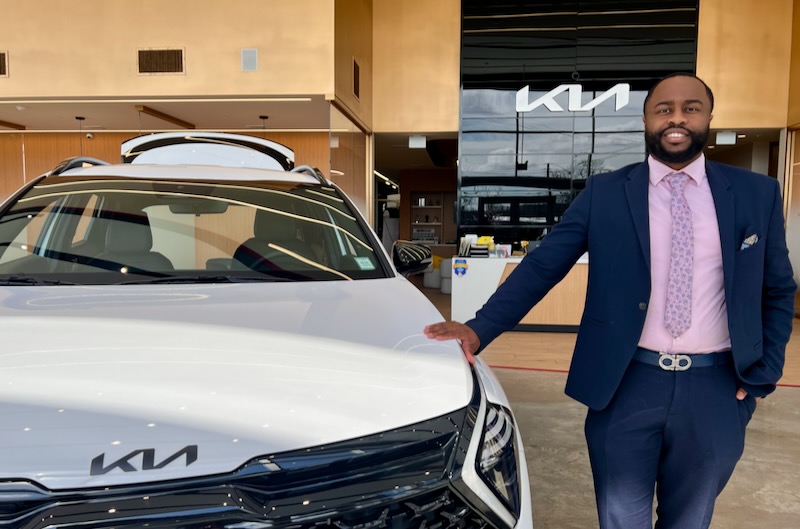
“We hope when we get help from the factory it will offset added expenses so it doesn’t affect our employees,” McCormack said. “The manufacturer adding support helps us help our sales consultants. If we don’t get added support, margins of earnings get smaller. Ultimately it affects commissioners,” he said. And that impacts the take-home pay of sales consultants.
“It’s a trickle down effect,” McCormack said. “A tightrope. Everybody’s walking it.”
Tom Williams, general manager of Riverhead Ford and Riverhead GMC, said it’s important to remember that the tariffs on imported vehicles are on the “actual cost of the car — not the list price of the car.”
“I’m talking true cost — right back to the factory, before their profit, before the factory made profit, before the shipping, before the dealer, before the dealer’s profit. So it’s not as horrible as everybody thinks,” Williams said.
“If a car is $50,000, you’re not going to pay a 25% tariff on 50 grand,” he said. “You might pay a 25% tariff on 5,000 15,000 or 20,000 of that $50,000 car. Who really knows,” he said.
“But the bottom line is… people need cars,” said Williams, who has 40 years in the business. “They bought cars in recessions. They bought cars when interest rates were 1.9%, they bought cars when interest rates were 13.9%, they bought cars through COVID,” he said. “They’re going to buy cars after the tariff. They’re just going to fit it into their budget because they need a car,” he said.
“It’s probably going to slow it down,” he said. “Like right now, Ford’s doing a friends and employee pricing on all their cars. So there’s no better time to buy a car,” Williams said.
“Any car that is in stock in any of the four stores that we have are not affected by tariffs,” Williams said. Riverhead Ford, Riverhead GMC, Riverhead Mazda and Riverhead Toyota are all part of a family-owned automotive group that’s been operating in Riverhead since the 1950s.
“Cars coming in down the pipeline in 90 to 120 days may very well be affected by [tariffs], and they will cost you more money,” Williams said. “So if you’re thinking about buying a car in the near future, now would be the time to do it.”
The survival of local journalism depends on your support.
We are a small family-owned operation. You rely on us to stay informed, and we depend on you to make our work possible. Just a few dollars can help us continue to bring this important service to our community.
Support RiverheadLOCAL today.
