




















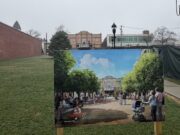


A push to seek National Register recognition for Riverhead’s Polish Town is moving forward, with town officials asking residents to help document the neighborhood’s buildings and collect the stories and records that could support the designation.
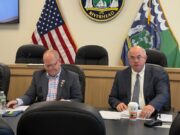
The idea was discussed Jan. 15 during a Riverhead Town Board work session, when Landmarks Preservation Committee chair Richard Wines outlined plans to form a small subcommittee to begin the survey work needed for a National Register of Historic Places historic district nomination.
Wines said the proposed district could encompass a large area — potentially hundreds of properties — and the first step is a comprehensive survey that includes photographing buildings, doing archival research and interviewing people familiar with the neighborhood’s history.
“We’re going to need to photograph all of the buildings, all of the resources,” Wines told the board, describing the effort as a community-driven project that will rely on volunteers to gather information and help identify people who have documents, photos or firsthand knowledge to share.
Councilwoman Joann Waski, who invited Wines to present at the work session, said the undertaking is substantial and will require broad participation to keep Polish Town’s legacy from being lost.
A National Register district is different from a locally regulated historic district, Wines said. Listing on the National Register does not, by itself, impose restrictions on private property owners. Instead, he said, the practical “strings” are tied to tax credits: owners who seek preservation-related credits must meet rehabilitation standards to qualify, but owners who do not pursue credits are not automatically bound by new rules.
Wines told the board that one goal of the designation is to make state and federal incentives available for rehabilitation work. In the work session discussion, he described a 20% state historic tax credit for certain owner-occupied work and the possibility of combining state and federal credits for income-producing properties that undertake substantial rehabilitation projects.

The effort, Wines said, is also about recognition — formal acknowledgment of a neighborhood shaped by Polish immigrants and Polish Americans, and of an immigrant story that played out in Riverhead’s streets, churches, businesses and social organizations.
The 2024 Comprehensive Plan Update recommended seeking the National Registry listing. Wines and Waski discussed the idea with the Town Board at its Feb. 27, 2025 work session.
“Polish immigrants started arriving in Riverhead in the 1880s and 1890s,” Wines said, and they almost all came as farm workers.
The only Catholic church in Riverhead was St. John’s, which was predominantly Irish. The Polish farmers got together and organized a society, which they named after the patron saint of farmers, Saint Isidore.
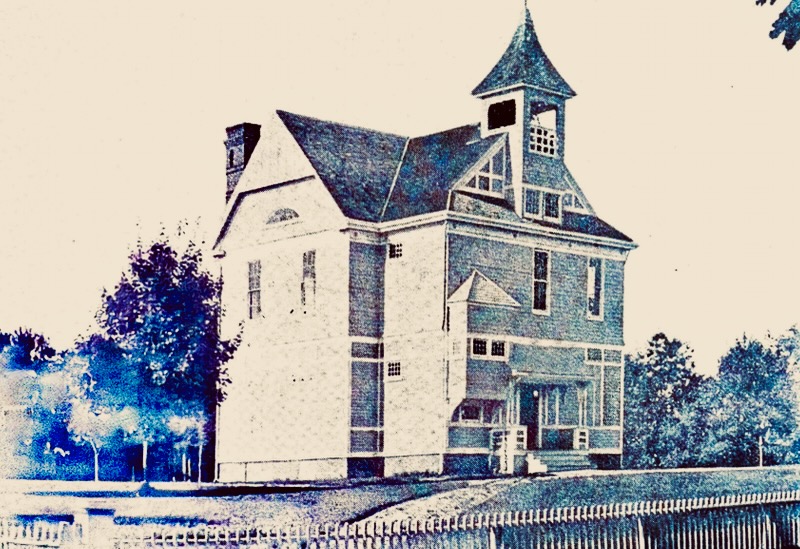
A building that once housed the Riverhead Academy was available, Wines said. The Riverhead Academy was kind of a private high school, he said. It was located “way on the outskirts of town, on the northwest side of town,” on what was then called Cemetery Street, Wines said. After Riverhead opened a new four-year public high school, the Riverhead Academy closed in 1900. The Roman Catholic Society of St. Isidore, established by Polish farmers, bought the vacant building and land for $3,000 in 1903 and petitioned the bishop in Brooklyn for permission to build a church. When the bishop consented, they remodeled the old academy building to accommodate a church and house a priest. They immediately began raising money to build a new church, Wines said. They raised the equivalent of a million and a half dollars within four years to build the church.
The church they built is “really an amazing building,” Wines said. It’s modeled after, of all things, this church in Rome. It was designed by a German architect who was the favorite architect of the bishop of Brooklyn, Wines said. “You can see some of the other buildings he built in Queens and you can see the similarity there.”
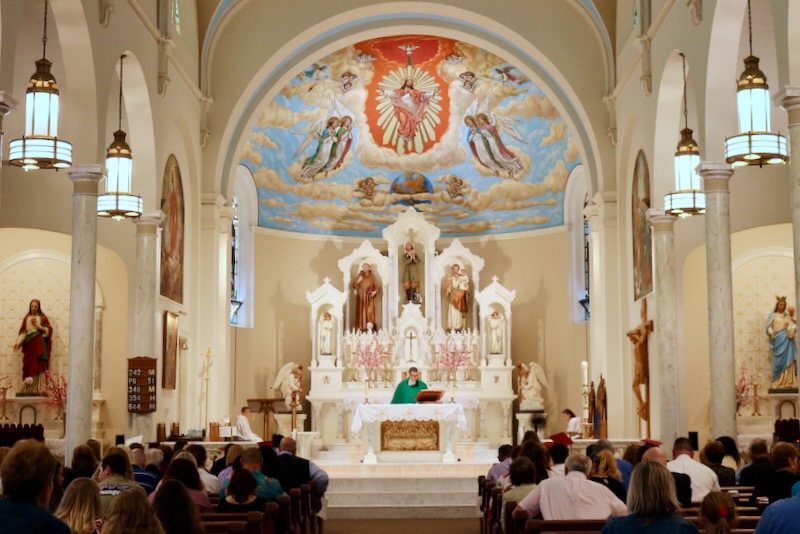
When St. Isidore’s Church was built in Riverhead in 1907, the Brooklyn Eagle newspaper called it “the finest Roman Catholic edifice on Long Island,” Wines said.
“It was really an amazing undertaking for these immigrant farmers to raise all that money and build that building,” Wines said. “Most of them were still farm laborers at that point.”
Very quickly after that, also in 1907, Polish Hall was built —n ot the current Polish Hall, which was built in 1929, Wines explained, but its predecessor.
Prior to construction of the church and the social center, that area of town was mostly empty, he said.
“Before you knew it, merchants started building in that area. And so all these immigrants from all the outlying areas could come to Riverhead because there were no other Polish churches” on the East End then. “And of course, you could buy anything you needed without having to speak a word in English,” Wines said. “So this is really the beginning of Polish Town. It started with the Riverhead Academy, the Saint Isidore Society, with the church, Polish Hall, and then the merchants,” Wines said. “And then, of course, they started building houses around it,” he said.
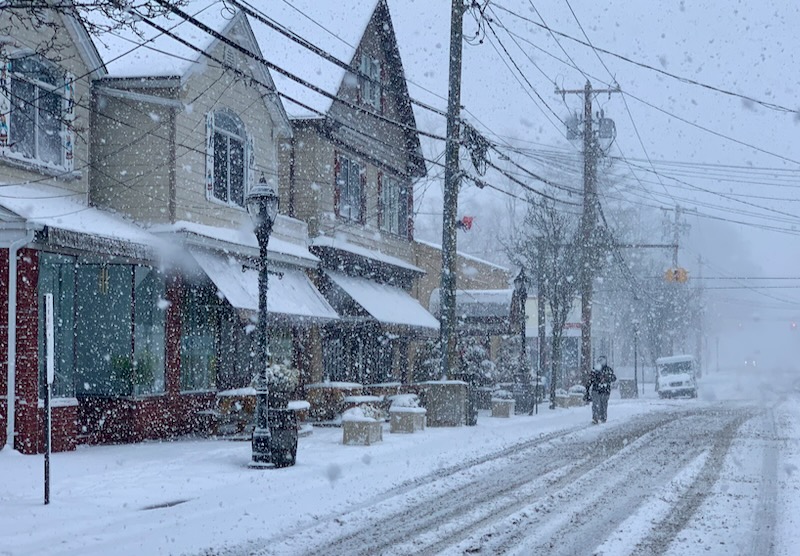
“So this is the history that we want to develop and celebrate and put a bigger spotlight on,” Wines told the board at the work session last February.
Since then, Wines said, he’s been working with the state historic preservation office, discussing the potential historic district and with the town, which has created a map of the potential district showing every parcel of property and indicating on each one the year in which the house was built.
Wines said he has been discussing with the State Historic Preservation Office a tentative cut-off year of about 1962, noting that, as a general matter, resources more than 50 years old may be eligible. Mapping efforts suggest that most of the area’s building stock predates that early-1960s threshold.
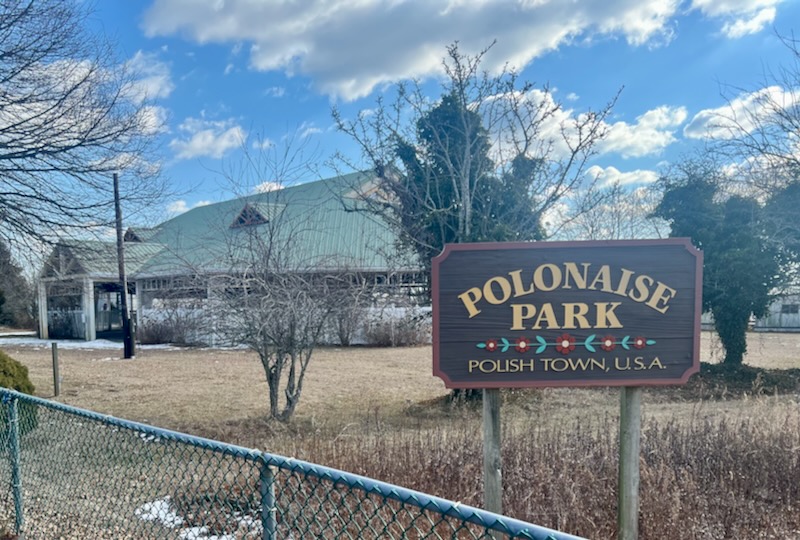
For many residents, Polish Town is most visible as the setting for the annual street fair and festival that helped brand the neighborhood as “Polish Town USA.” Over the years, the civic association and volunteers have also worked to preserve tangible pieces of that heritage.
In 2014, the Polish Town Civic Association reopened a restored Polish Immigrant Museum at the civic association’s Lincoln Street headquarters, where artifacts and photographs dating to the late 1800s and early 1900s were on display for the Polish Town fair.
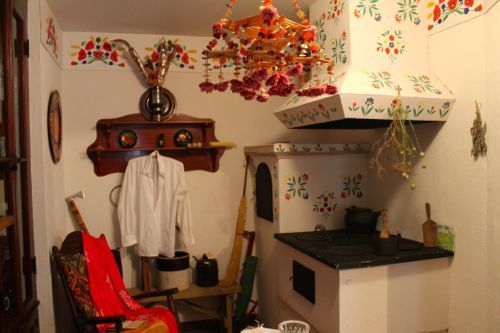
That kind of community memory is exactly what the historic district effort aims to organize, verify and preserve in a formal way, Wines said — before records are scattered or the people who can interpret them are no longer here to do it.
Wines said the subcommittee’s immediate objective is practical: assemble a small, reliable volunteer team to begin fieldwork and research, then build a wider network of residents willing to share information or point the team to photographs, property records, family papers and stories that help establish how Polish Town developed and why the area is significant.
Waski said people interested in helping should contact her office so volunteers and potential sources can be connected with the subcommittee and the Landmarks Preservation Committee as the work begins.
The survival of local journalism depends on your support.
We are a small family-owned operation. You rely on us to stay informed, and we depend on you to make our work possible. Just a few dollars can help us continue to bring this important service to our community.
Support RiverheadLOCAL today.
