




























Framing April 20 not as a celebration of cannabis culture but as a public-health warning, Suffolk County officials, law enforcement leaders and addiction treatment providers gathered Monday at Wellbridge Addiction Treatment and Research in Calverton to sound the alarm about cannabis use disorder, cannabis-induced psychosis, youth access to THC products and drugged driving.
The event, hosted by Wellbridge, featured County Executive Ed Romaine, District Attorney Ray Tierney, Sheriff Errol Toulon Jr., Suffolk police Chief of Department William Doherty, Riverhead Town Supervisor Jerry Halpin and clinicians from Wellbridge and Outreach Development Corp.
Again and again, speakers returned to one central point: marijuana may be legal in New York, but driving while impaired by cannabis is not.
“There is no excuse for driving under the influence of alcohol or drugs,” Doherty said, noting that Suffolk police made more than 1,500 arrests last year for driving while intoxicated or impaired by drugs. He said 11 people were killed in crashes involving impaired driving in 2024, five were killed in 2025 and two people have died so far this year.
Tierney said his office has prosecuted cases involving fatal crashes, children sickened by THC-laced edibles and illegal sales to minors. He cited the 2023 death of Franklin Blake in Southampton, saying the driver who struck and killed him was high on cannabis and Xanax.
But while the public officials focused largely on impaired driving and enforcement, the most detailed warnings about cannabis itself came from the treatment providers and clinicians.
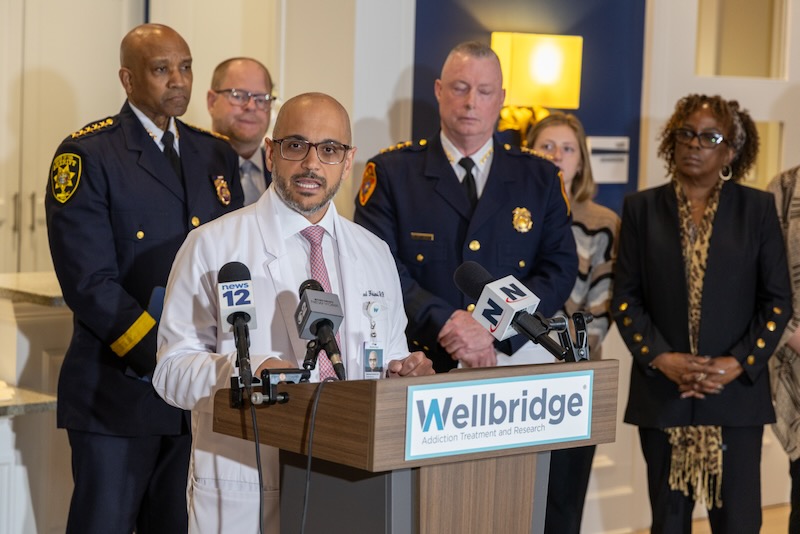
Dr. Edmond Hakimi, Wellbridge’s medical director, said the cannabis now commonly available is far more potent than marijuana used decades ago and argued that the rise in high-THC products has changed the risk profile dramatically.
“It’s not the same drug anymore,” Hakimi said, describing cannabis concentrates with THC levels far above those seen in plant marijuana in past decades.
Hakimi said Wellbridge is seeing patients admitted for treatment for cannabis use alone and said clinicians are increasingly concerned about psychiatric consequences, particularly among frequent users of high-potency products and among younger people whose brains are still developing.
He described patients arriving paranoid, hallucinating and, in some cases, losing touch with reality. He also warned that regular cannabis use can be especially risky for people with a personal or family history of mental illness.
That message generally aligns with federal public-health guidance, though in more measured terms. The CDC says cannabis can impair coordination, judgment, memory and reaction time, all of which are critical to driving safely, and says use is associated with impaired driving and crash risk. The agency also says long-term or frequent cannabis use has been linked to increased risk of psychosis or schizophrenia in some users.
Federal health agencies also say cannabis products have grown more potent over time. NIDA’s potency monitoring data shows average THC levels in seized cannabis products have risen sharply over the past few decades, and CDC guidance says about 3 in 10 people who use cannabis develop cannabis use disorder, with higher risk among those who start young and those who use more frequently.
John Venza, vice president at Outreach, a behavioral health services organization, focused his remarks on adolescents and young adults, arguing that many parents still think of marijuana as the far less potent drug they may have encountered decades ago. Today’s products, he said, include vape cartridges, concentrates and edibles that deliver much larger doses of THC and can affect young users differently, especially when delayed onset leads them to consume more.
Venza said youth often view cannabis-impaired driving as safer than drunk driving, a perception he said is dangerously wrong.
Sheriff Toulon said his office is hearing troubling reports from students during school visits and said more young people are experimenting with marijuana, vaping and other substances. He said sheriff’s deputies made nearly 30 arrests for drugged driving last year and were planning an additional DWI enforcement detail Monday night.
Romaine and Tierney both pressed for changes in state law and better roadside tools for detecting cannabis impairment. Romaine said lawmakers need to address the gap between legalization and enforcement, arguing there is still no marijuana equivalent of a Breathalyzer. Tierney said technology exists but is not yet in use.
That difficulty is reflected in federal guidance as well. The CDC says cannabis can impair driving, but also notes that linking THC levels in a person’s body to actual driving impairment is far more complicated than it is with alcohol.
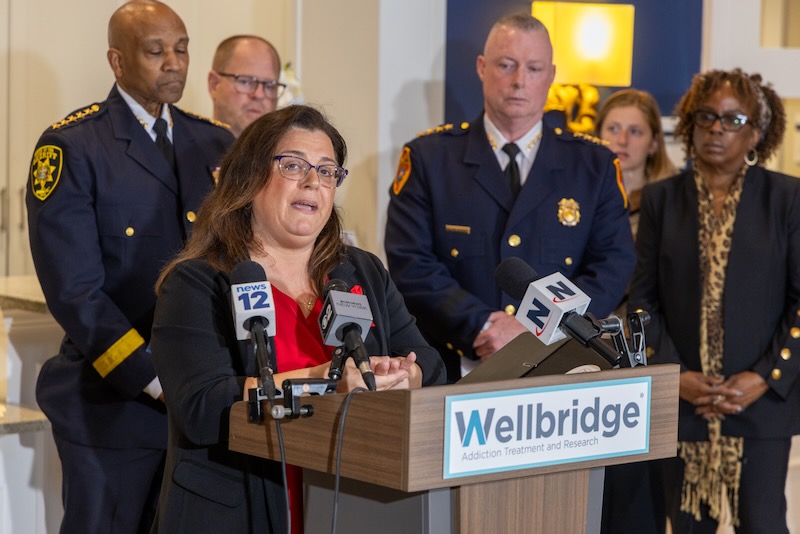
The event also featured emotional testimony from Alisa McMorris of the Andrew McMorris Foundation, who spoke about the 2018 crash that killed her son, Andrew, when an impaired driver plowed into a line of Boy Scouts in Manorville.
“There is no name for this. The visceral and undeniable pain is lifelong,” she said.
“What happened to Andrew was not an accident,” McMorris said. “It was a crash and it was preventable.”
McMorris spoke of the pledge she made, as she bade goodbye to her deceased son, to do everything in her power to eliminate such preventable tragedies.
She urged policymakers, law enforcement and the public to treat cannabis impairment the same way they would alcohol impairment and said families need clearer warnings about the risks, including mental-health consequences for young users.
The press conference took place at Wellbridge, the 130-bed addiction treatment and research facility on Jan Way that was envisioned as the first such “learning laboratory” for addiction treatment launched by a major academic health system in the country. New York legalized adult-use cannabis on March 31, 2021.
By the end of the hourlong event, the message from speakers was less about revisiting legalization than about urging people to take cannabis risks more seriously.
Treatment providers said help is available for people struggling with cannabis use disorder. Law enforcement officials said they will continue targeting impaired driving. And clinicians warned that, particularly for teenagers, frequent users and people consuming high-potency products, cannabis is not the harmless substance many still assume it to be.
The survival of local journalism depends on your support.
We are a small family-owned operation. You rely on us to stay informed, and we depend on you to make our work possible. Just a few dollars can help us continue to bring this important service to our community.
Support RiverheadLOCAL today.
