






















A doctor’s most difficult dilemma: When a patient refuses to accept medical advice, respecting his autonomy — even when the result may be fatal.
Last week I had a 35-year old patient who was 100 pounds overweight, with cholesterol a
nd blood pressure through the roof. He was red-faced, short of breath and walked with a limp because of arthritis in his hip.
He refused to go to the emergency room to have his blood pressure treated. In fact, he even refused to take the medication that I prescribed because he wanted to try a more natural approach to controlling his diseases.
Many patients come to my office because I utilize a holistic, natural approach, which means that I will always try to be as conservative as possible. I use as little medicine and surgery as I can to achieve the outcomes we need. I routinely prescribe exercise, dietary changes, stretching, mind-body medicine, stress-reduction either instead of, or in combination with medication.
So, it is a very difficult situation when I have to explain to my patients that no amount of lifestyle modification is going to get us to a target blood pressure. Sometimes, you just can’t exercise your way to a normal cholesterol level.
The goal for any healthcare decision to choose the option that gives the most benefit with the least amount of harm. Sometimes, the side effects of a medicine are worse that the course of the disease itself. Other times, I find myself just trying to convince my patient to take a medicine that I know might save his or her life. Knowing my patients well means I know when these conversations are going to occur, and my anxiety sets in.
My inner voice begins to brainstorm…. This nice young man wants to treat his invasive colon cancer with Vitamin C therapy??!! Surgery, radiation and chemotherapy are what we know works. They are what can save his life. How will I convince him?
An elderly woman with lethal levels of calcium refuses to have surgery to remove the gland causing her condition. She wants to try modifying her diet to see if that helps. WHAT???? If she just has the surgery, the condition will be cured!
The man with the life-threatening hypertension is going to have a stroke if I can’t convince him that, yes, he needs to make lifestyle modifications, but he also needs to get his blood pressure under control, like yesterday. We can certainly talk diet, exercise and natural pain control, but he’s not going to live through the weekend if I can’t help him understand the severity of his condition. It’s particularly frustrating because if he allowed me to, it would be rather easy to correct his high blood pressure with medicines we use safely all the time.
Oftentimes, the scientist in me wants to shake some sense into my patients because research tells us which regimen gives us the best change of a successful outcome. Because I care so deeply for my patients, respecting their wishes when they are not consistent with what I suggest is sometimes difficult for me to do. It has taken me a very long time to be able to explain a condition, offer the treatment options and accept whatever the patient decides without being judgmental.
There is a difference between convincing a patient what they should do and educating a patient about his options and letting him decide. Just because I don’t necessarily agree with the decision, just because my past experiences can help me predict the outcome, doesn’t mean that I have any right to be doing any persuading. It is implied that because patients are coming to see me, that they are coming for advice about a problem. They want me to suggest a plan. But just because they show up, doesn’t mean they have to do as I say.
Such was the case with this 35-year old man. I spent 40 minutes explaining the treatments for high blood pressure and cholesterol; the risks, benefits and alternatives; a concept known as informed consent. I told him that he was at increased risk of heart attacks, strokes, diabetes and even death. He was awake, alert and oriented. He heard and understood the options fully and still exerted his autonomy and decided against following my recommendations.
When it comes to end-of-life care it becomes even more complicated. For the dying patient, sometimes the end can’t come soon enough, even though the family (and often the physicians) want the patient to continue to fight. Respecting someone’s desire to die is an incredibly taxing moral dilemma. I am supposed to be in the business of saving lives, and here I am withholding medicine that will allow a patient to willfully die.
But again, we always come back to most good/least harm. When a person is begging you to die because the pain is too severe, we must think about our objective. Are we just keeping a heart beating or are we helping sustain a certain quality of life? Oftentimes, with hospice patients, the most good is done when the suffering ends.
Either way, the decision to be non-judgmental requires a tremendous amount of respect and self-control. It is particularly difficult for me because I am very close with my patients. And I give them the same advice I would give my own family hoping for the best for them. Luckily for me, the majority of my patients are not sick. Most of them are healthy, but with a chronic condition that requires optimal wellness. So, I get to play teacher more than doctor. Most of the time I am educating about prevention instead of prescribing plans to cure a disease.
But every now and then, the patient presents and my ethics training continually reminds me that respecting a patient’s autonomy is not only the good option, it’s the only option.

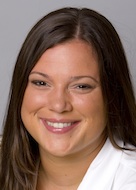
Alexis Hugelmeyer, D.O. is the wife of Michael, mother of Isabella, 5, and Lance, 3, and a family physician whose passion is hands-on manipulation for treatment and healing of any and every type of medical problem. She is the director of community outreach education at Peconic Bay Medical Center and also a private practitioner in Riverhead, where she has founded The Suah Center for Natural Healthcare. A graduate of Villanova University and New York College of Osteopathic Medicine, she lives in Baiting Hollow.
Look for Dr. Mom every Saturday on Riverheadlocal.com
{loadposition tab20}
{loadposition tab1}
The survival of local journalism depends on your support.
We are a small family-owned operation. You rely on us to stay informed, and we depend on you to make our work possible. Just a few dollars can help us continue to bring this important service to our community.
Support RiverheadLOCAL today.
