
























Riverhead Town will soon add six buildings to its registry of local landmarks.
The owners of all six buildings have requested that they be granted landmark status by the town, Landmarks Preservation Commission chairman Richard Wines told Riverhead Town Board members at their work session on Thursday.
The Second Street Firehouse, the Perkins Carriage House (Yellow Barn), the Preston House, the Riverhead Elks Lodge, the Daniel Tuthill House and the J. Victor Wilson barn will be added to the town’s landmark registry if the town board approves the designations.
None of the board members raised any objection to the proposed designations after Wines finished a power point presentation highlighting each of the buildings.
Designation as a town landmark does not provide the tax benefits that come along with being listed on the state and nation registers of historic places.
Nor does a town landmark designation make it any easier to get a property listed on the state or national registers, Wines said.
Different property owners have different motives for seeking the designation. Some just want bragging rights. Others are interested in grant opportunities only available to designated landmarks.
“The most important thing for most private owners is it’s a way for them to protect the historic significance of the building after they’re gone,
a way to ensure the town will provide long-term stewardship,” Wines said in an interview.
Two of the proposed local landmarks are located in the downtown Riverhead historic districts — which are listed on the state and federal registers.
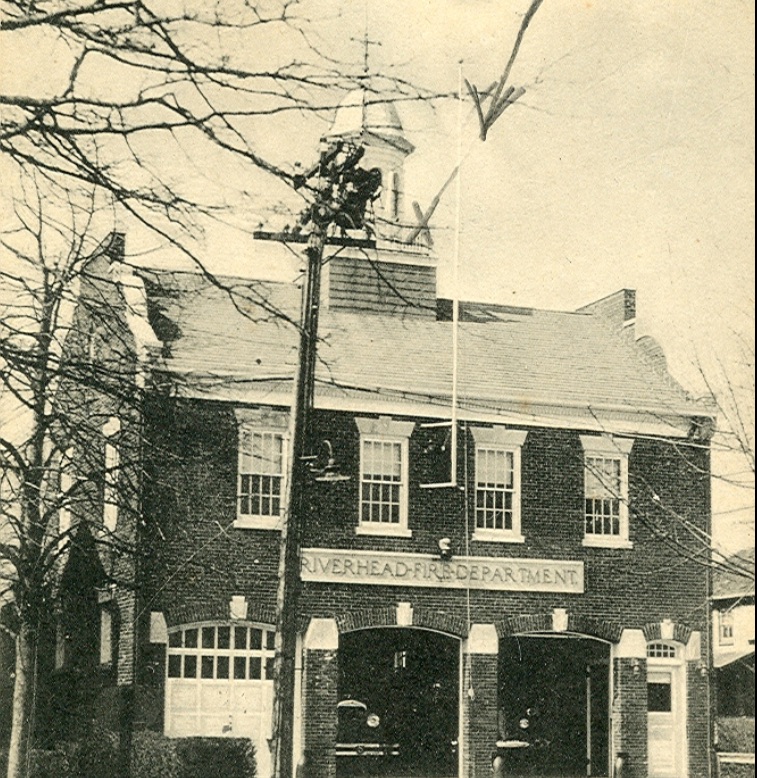 The Second Street Firehouse was built in 1931 as the new headquarters of the Riverhead Fire Department. The original brick structure is in the Dutch Colonial Revival style and features a large bell-roofed cupola. It was designed by William Sidney Jones. The building was occupied by the Riverhead Fire Department until 2008, when it moved into its new headquarters on Roanoke Avenue. It is owned by Wolf Properties Associates whose managing partner, Bob Castaldi restored and reopened the historic Suffolk Theater. Castaldi is renovating the firehouse to house a microbrewery and offices.
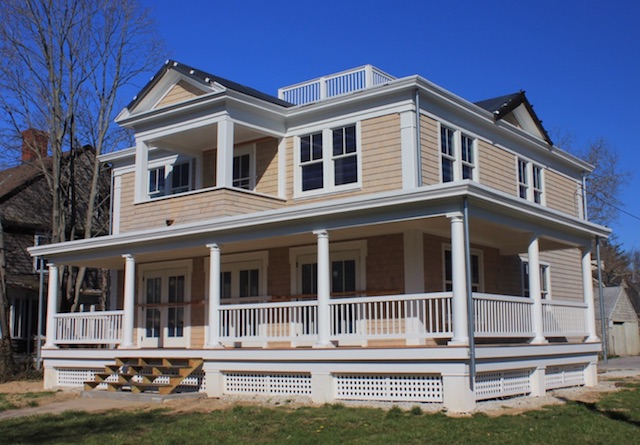
The Preston House, located on the corner of East Main Street and Ostrander Avenue, was built in 1905 by Henry H. Preston, Suffolk County’s first full-time sheriff. A Shelter Island native, Preston moved to Riverhead after his election as sheriff in 1902. Preston had volunteered at age 16 to fight for the Union in the Civil War and was wounded in the final campaign of the war, just hours before Appomattox.
The home is currently being restored by Joe Petrocelli, who is renovating it for use as a restaurant.
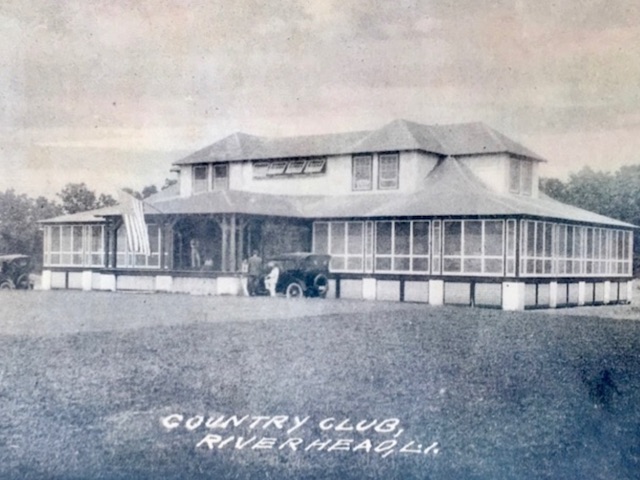
Riverhead Elks Lodge, built in 1921 as the clubhouse of what was likely the town’s first golf and country club. The club was an important center of Riverhead’s social life until it closed due to financial troubles in 1936, in the midst of the Great Depression. The building served as the Riverhead American Legion Post from 1946 to 1960 and has been owned by the Elks Lodge since 1960.
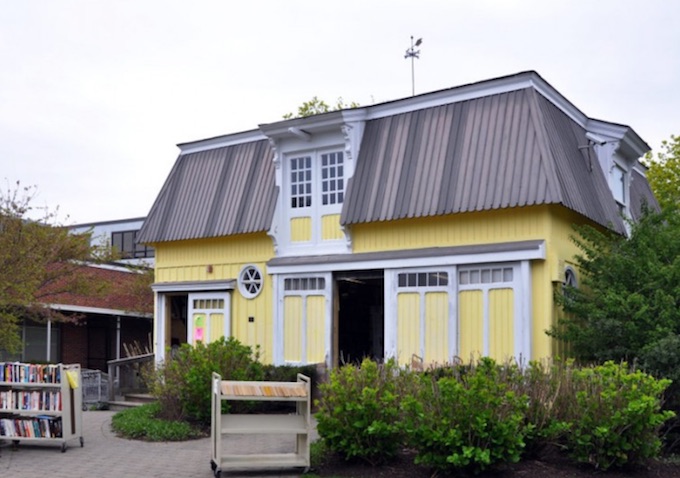
The Perkins Carriage House, better known as the Yellow Barn at Riverhead Free Library, dates back to approximately 1880. It was built by John R. Perkins, one of the town’s leading businessmen, a longtime justice of the peace and town supervisor. He was a director of Suffolk County National Bank and a trustee of Riverhead Savings Bank. He was also a principal in one of Riverhead’s first electric light companies. The carriage house was an accessory structure to the circa 1880 Perkins mansion located on the same property. The mansion was razed in the 1960s and the property sold to the Riverhead library association. Riverhead Free Library restored the carriage house and operates a used bookstore within.
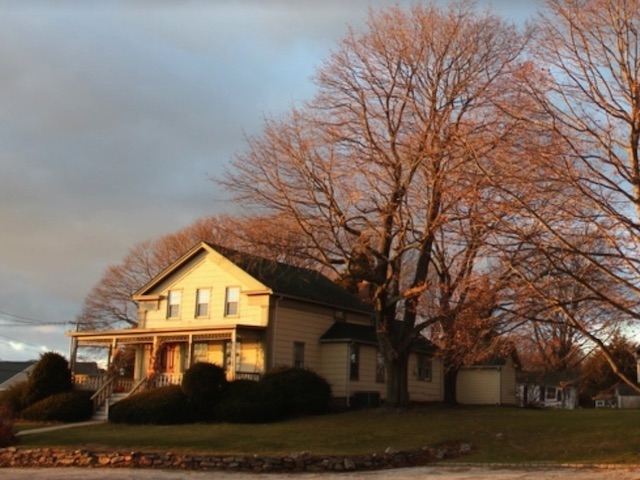
The Daniel Tuthill House on Main Road in Jamesport was likely built in the 1840s by a cousin of James Tuthill, for whom the hamlet of Jamesport is named. The Tuthills first settled in Jamesport in 1733. The property also includes an English-style barn built in 1884 and a rare surviving underground potato storage barn likely built in about 1930. The property was listed on the National Register of Historic Places in 2015.
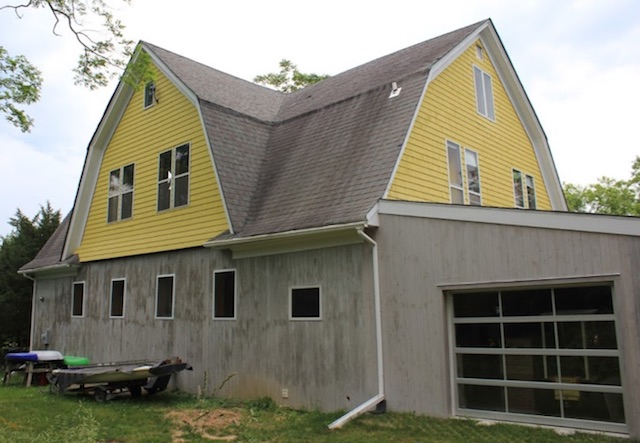
The J. Victor Wilson Barn, on Main Road in Aquebogue, built in 1908 by J. Victor Wilson, was originally part of a large estate that included a home on Peconic Bay Boulevard overlooking Peconic Bay. The barn was originally used for breeding pedigree livestock and was later used as a potato storage barn.
The Landmarks Preservation Commission adopted resolutions in March 2016 recommending the six new designations.
The survival of local journalism depends on your support.
We are a small family-owned operation. You rely on us to stay informed, and we depend on you to make our work possible. Just a few dollars can help us continue to bring this important service to our community.
Support RiverheadLOCAL today.
