





















People want to see the Peconic Riverfront enhanced, a new “town square,” more small, local businesses on Main Street and improved streetscapes, according to the planning consultants hired by Riverhead Town to develop a “pattern book” for future downtown development.
At a community forum in November and in an anonymous online survey, residents were asked to identify downtown’s strengths and weaknesses, threats and opportunities.
People want to see more green space and park area on the riverfront, more retail shops, more evening entertainment options and more parking.
Safety/perceived lack of safety and flooding were the top threats identified by the community. Other threats identified included perceived inadequate parking, lack of diverse housing supply, vacancies and future zoning restrictions that might hamper continued redevelopment.
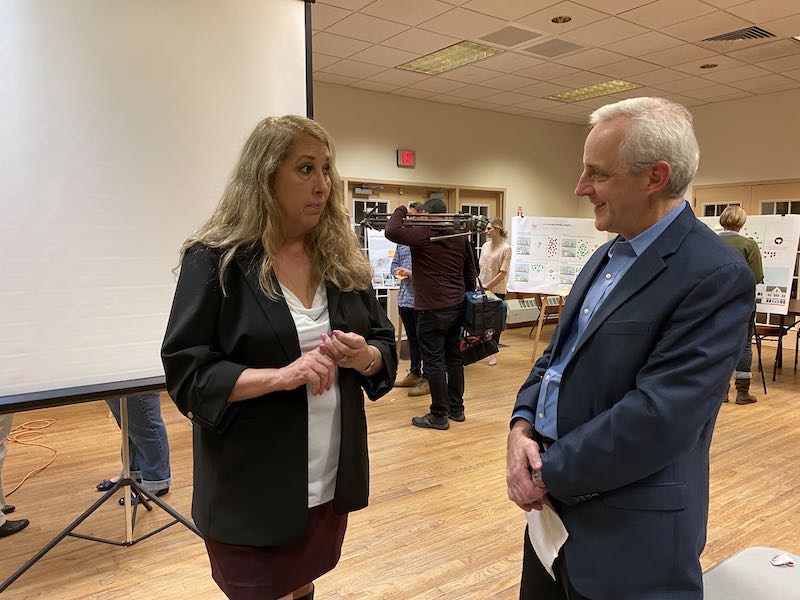
Urban Design Associates, the Pittsburgh planning firm hired by the town board in August to create the pattern book — a guidebook for land use and architectural design — updated the town board and the community in two separate public sessions Thursday. The planning consultants also conducted a second round of meetings with stakeholder groups on Wednesday and Thursday.
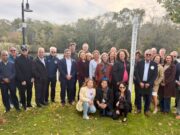
The planning process relies on stakeholder and community participation and input, said Barry Long, UDA’s managing principal and CEO. The participation in Riverhead has been great, he said. There was “a tremendous turnout” at the Nov. 14 community forum, Long said. Attendance at the second forum Thursday night equaled the November turnout. As of Thursday morning, about 1,100 people had responded to the online survey, Long said. He called that response “incredible.”
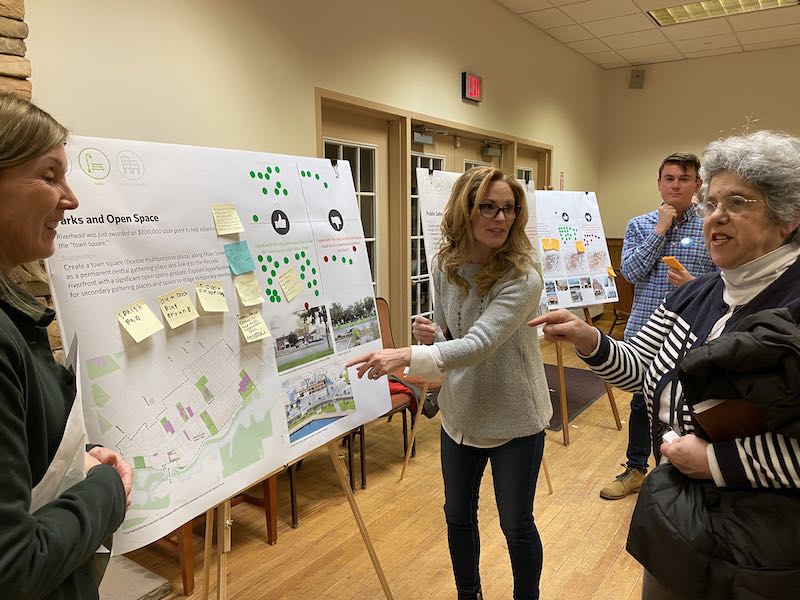
At the second forum on Feb. 13, people who attended were asked to give thumbs-up or thumbs-down to responses to a series of questions presented on boards placed around the room. They were also invited to leave comments on sticky notes.

The questions were in three categories: policy, public areas and development. Those are the three main elements of a pattern book, Long explained : policy issues like parking, land use, flooding; guidelines for public areas, e.g. streets, parks squares, passages; and guidelines for private development, addressing things like building height, scale, mass, setbacks and materials.
Urban Design Associates will tabulate the results from the meetings, forums and surveys — a second online survey is planned, Long said — and begin to develop recommendations for the pattern book.
“There are metrics for what makes a great downtown,” Long told the town board at its work session Thursday morning, like strong local entertainment, retail and beverage focus.
“You have that,” he said, though “retail is little skinny here right now as it is in many downtowns.”
- Other “great downtown” metrics include:
- people living or staying within walking distance of downtown;
- public social gathering places; and
- retail beautification.
“Your vacant storefronts look terrible,” Long said. “To be honest your zoning ordinances says that’s not permitted.” He urged the town to enforce its already existing codes. The town adopted tougher standards for vacant storefronts and blight in 2018.
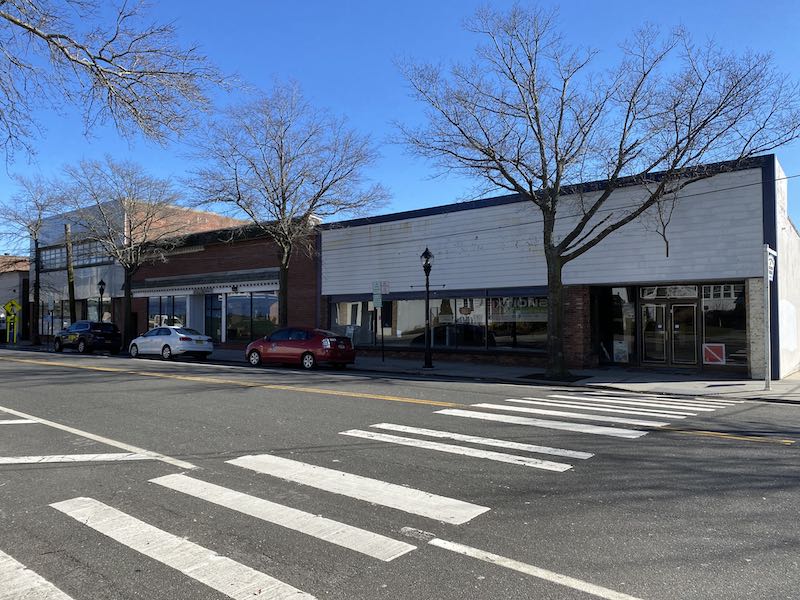
“Activities and entertainment to bring life to the street are important metrics,” Long said.
“Focus on activities and experiences — not buildings,” he said. While people may appreciate architecture, they come to a downtown for the experience, he said.
“And we’re all experts in this,” Long told the board. “How does it feel walking past Perabell when people are dining and the windows are open — versus walking by a vacant building? How does it feel walking past open dumpsters and stacks of pallets? How does it feel walking down a passage with nothing going on? It’s all about experiences,” Long said.

“You’re really curating an experience. The buildings are a stage set for life. It’s a theater set. If you have great buildings but nothing going on on the street – so what? You have to populate it with programming and activities,” he said.
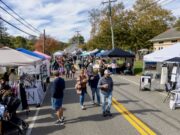
“People like social interactions,” he said, noting 85% of respondents said there should be more downtown events.
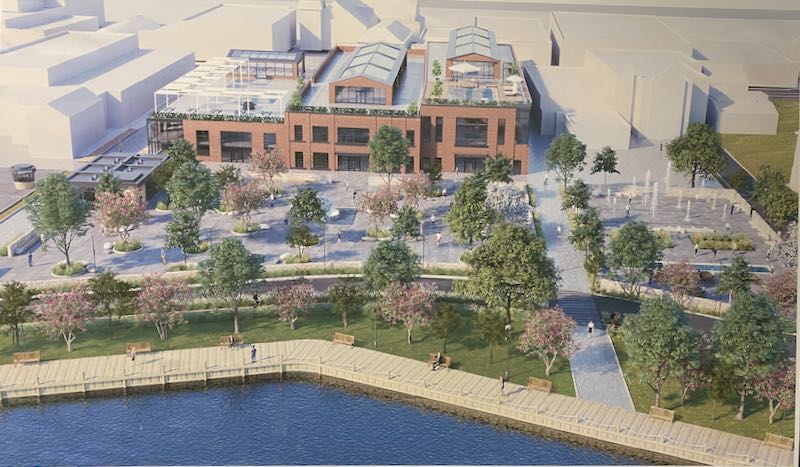
A public social gathering space on the riverfront — for which the town was recently awarded an $800,000 Empire State Development grant — ranks high on the public’s list of aspirations for downtown.
Safety concerns are on people’s minds, Long said.
“A big issue for people is lighting,” Long said. Lighting is the most important factor in how people perceive public safety, he said. Lighting downtown is “not good right now,” Long said.
The second public safety perception factors is cameras — which Riverhead has already in the works for some areas of the downtown district.
Number three, Long said, “is letting people know you have cameras.” That should be done in a friendly way, with signs sporting smiley faces urging visitors to “smile — you’re on Candid Camera.”
Way-finding signs are also important, Long said.
Riverhead has already ordered the signs, said community development administrator Dawn Thomas. There was a delay in getting signed contracts from the county, which awarded the town a grant to pay their cost. The town expects delivery of the signs soon, she said.

Other streetscape amenities, like plantings and flower boxes, benches and tables, are also important — and they are small improvements that go a long way to improving the downtown experience, he said.
Long urged the town board to pursue plans to deal with downtown flooding — and pursue funding to implement the plans.
“This issue is in a lot of towns,” Long said. “You need to be at the front of the line (for mitigation money) because that line is going to be very long.”
Supervisor Yvette Aguiar said one of the first things she did upon taking office was reaching out to the Army Corps of Engineers, which Rep. Lee Zeldin’s office facilitated. Zeldin’s district manager, Mark Woolley, said he expects the Army Corps will make a site visit to Riverhead to see the riverfront and discuss flooding conditions.
The third element of the pattern book — the character of future development — requires the town to do some soul-searching, in effect.
“What is in this exotic soup that defines downtown Riverhead and makes it difference from everyplace else?” Long asked.

Photo: Denise Civiletti
He noted that the buildings downtown “are all of their time,” that is, they were contemporary when they were built and reflect the architectural styles of those eras.
“That means the town is eclectic and it’s authentic,” Long said. “You have a very unique downtown — there’s only one Riverhead.”
Yet 75% of survey respondents said they favored architectural character controls, something Long said he found somewhat puzzling since Riverhead followed a different pattern, where new buildings were always contemporary — in their own time.
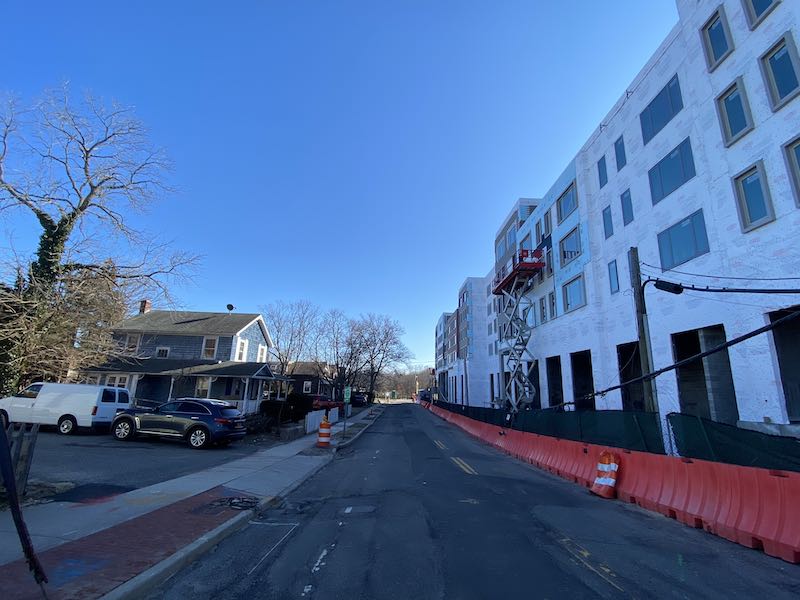
Photo: Denise Civiletti
With significant pushback from the public on five-story construction on Main Street, the town asked the planning firm to look at building height and mass.
“There always has to be an economic discussion when we talk about architecture,” Long said, “because without economic development downtowns die too.”
The town must be mindful of that when regulating building height and mass. If developers don’t get a satisfactory return on their investment, they’re not going to develop, he said.
There are things the town can do to make tall buildings less imposing, allow for more sunlight and create wider sidewalks, but Long said UDA planners are not bug fans of “shoving all the buildings way back.” Portions of buildings can be set back, while other areas can pop out. It has the same effect “experientially” but doesn’t negatively impact the developer’s return as much and also provides for more variety in the streetscape.
“It’s about curating an experience,” Long said.

The survival of local journalism depends on your support.
We are a small family-owned operation. You rely on us to stay informed, and we depend on you to make our work possible. Just a few dollars can help us continue to bring this important service to our community.
Support RiverheadLOCAL today.
