






















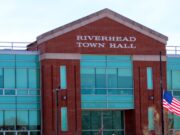

Supervisor Aguiar is right. Riverhead’s Code of Ethics needs a fresh, hard look and some important revisions.
We don’t agree, however, that the town’s ethics code should be simply replaced with the state comptroller’s Model Code of Ethics, as the supervisor seemed to suggest at this week’s work session. The comptroller’s model code is lacking in some important respects.
For example, the model code doesn’t prohibit town officers and employees from soliciting applicants, or their attorneys and consultants, for campaign contributions or fundraising event tickets to benefit a political party or candidate. The town code of ethics doesn’t do that either. This means a town officer or employee who’s reviewing a pending application or proposal can ask the applicant to contribute to a particular political party or candidate or purchase tickets to a campaign fundraiser for a particular party or candidate.
The model code also doesn’t restrict town officers, employees or appointed members of certain unpaid boards, from holding political party positions. Political parties holding power in government use jobs or the promise of jobs to buy loyalty as well as willingness to actively work for a particular party and its candidates.
These things are all grist for the political mill — and therefore important means by which political parties retain their power in government — so its no surprise even a “model” ethics code promulgated by an elected politician like the state comptroller doesn’t go anywhere near them.
From the standpoint of good government and the public interest, these things are not insignificant. Town officers and employees should not be allowed to solicit contributions or ticket purchase from people, companies, lawyers and consultants that have matters pending before the town. And town officers and employees should not be allowed to serve as party bosses — or among the bosses’ cadre of foot soldiers — in a position to exert influence over appointed and elected officials who are, in their day-to-day work for town government, their supervisors.
Yet these situations are allowed by both the model ethics code and the town ethics code. The Town Board amended the ethics code in 2015 to prohibit town officers and employees from serving on the executive board — chairperson, vice-chairperson, secretary and treasurer — of any political party committee. The amendment came after a battle royale between the town supervisor at the time and an assessor, since retired, who was the Riverhead Republican Committee chairperson.
But the ban didn’t go far enough because it doesn’t apply to the entire committee. It allows a situation where even town employees in confidential positions, such as the town attorney and deputy town attorneys, can hold political party positions.
That meant that when a Democrat served as town supervisor on a Republican-controlled Town Board in 2018, the town attorney she needed to consult for advice and assistance on the proposed massive land deal at EPCAL was a member of the Riverhead Republican Committee, whose members and leadership publicly supported the deal. How does that work? (It didn’t.)
Town officials should be able to rely on the town’s legal counsel for advice and that relationship must be as divorced from partisan politics as possible. The town’s law department is no place for party officials.
If these things were the only matters the town’s ethics code neglects, we’d be in better shape. But the Riverhead Code of Ethics doesn’t prevent a lot of things we believe should be considered ethical breaches.
For example: The code doesn’t prevent a town officer or employee from reviewing and even approving an application by or contract with a person, company, lawyer or consultant that the same town officer or employee is working for as an independent contractor or consultant in another jurisdiction. In fact, the ethics code pretty much closes its eyes to work done by town officers and employees in other jurisdictions.
So a town board member can work for a developer or work hand-in-hand with consultants in Brookhaven or Southampton, for instance, and then review and approve an application in Riverhead from the same developer (or its members in a separate shell company) and the same consultants. The same is true of members of the Planning Board, Zoning Board of Appeals and any other town officer or employee.
The town ethics code requires public disclosure, in writing and as part of the written record of the agency, of any interests in any contract with the town.
But the code exempts the officer or employee from written public disclosure if they have filed with the town clerk an annual disclosure statement. Those disclosure statements are not made part of the record of any proceeding. They are required to be filed in duplicate with the town clerk every year. One copy goes to the ethics board and the other sits in the clerk’s files. In short, they are a kind of “silent” disclosure.
The relationship of the town’s ethics code to members of various town committees is unclear. For example, is a member of the town’s business advisory committee or its comprehensive plan update steering committee or its downtown revitalization committee a “town officer or employee” for purposes of the ethics code?
The code’s definition of “town officer or employee” includes an officer or employee “whether paid or unpaid…including members of any administrative board, commission or other agency thereof.” Are all town committees included in the phrase “any administrative board, commission or other agency?”
Members of some committees, while they can and do wield influence over town policies and legislation — and not always in the light of day — don’t have to file disclosure reports. Nothing prevents them, as committee members, from advocating for or against proposed codes that will directly or indirectly affect them and/or their clients. And we have seen this happen in Town Hall more than once.
The town’s ethics code was written and adopted in 2005. It has been sporadically and minimally amended since then. A lot has happened in and to Riverhead since 2005. In many ways, our town is now in the crosshairs of big developers with big money to spend to get what they want. The ethics code should do everything legally possible to protect the public against undue if not patently corrupt influences on government policies, legislation and development applications. The current ethics code comes up short.
Editorials are the opinion of RiverheadLOCAL and are written collaboratively by Denise Civiletti, Katie Morosky and Alek Lewis.
Got an opinion about this or any other local topic? Send a letter to the editor.
The survival of local journalism depends on your support.
We are a small family-owned operation. You rely on us to stay informed, and we depend on you to make our work possible. Just a few dollars can help us continue to bring this important service to our community.
Support RiverheadLOCAL today.
