











The trip back in time was a difficult and emotional journey for a local youth group that toured portions of the southeastern U.S. last month on a quest to understand what it was like to be a Black American in the eras of slavery and Jim Crow.
Members of the Butterfly Action Group will share what they learned on their six-day journey last month during a free event at the Westhampton Beach Performing Arts Center Friday evening.
“The Untold and The Unseen” panel discussion will detail the experiences of the six youths and two mentors on a journey from Louisiana to Georgia, where they visited “historically significant yet overlooked locations to uncover forgotten truths.”
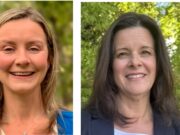
The Butterfly Action Group, a program of the Butterfly Effect Project, took the trip to learn about and experience Black history first hand, in an area of the United States where the economy was built around the enslavement of Black people. Butterfly Effect founder and executive director Tijuana Fulford and BAG program ambassador Lisa Miller accompanied the teens on the journey to many places rich in the untold history of Black America.
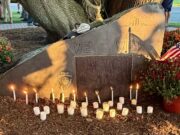
Among them were the Legacy Sites in Montgomery, Alabama, which delve into the history of slavery and racism in America. The Legacy Sites include a museum on the site of a cotton warehouse where enslaved Black people were forced to labor, the National Memorial for Peace and Justice and Freedom Monument Sculpture Park.
The Legacy Museum’s exhibits include holograms of actors portraying enslaved people speaking directly to museum visitors.
“You’re sitting on a bench — because you need a moment to process what you’ve seen —and then this enslaved woman appears, begging you to free her,” Fulford said. “And then, just when you think your heart can’t break anymore, her two kids appear, hanging onto her clothes. They don’t want to be torn away. And like, for me, as a Black person, I’m feeling like this is real. Like, I can’t help you,” Fulford said. “The holograms are so real,” she said, recalling how the young people she took on the trip broke down in tears because they wanted to help. “And then you see them reaching, and it’s a hologram, so you’re reaching, and can’t help. It was hard.”
The group also visited the Emmett Till Interpretive Center in Sumner, Mississippi. The museum is dedicated to educating the public through storytelling and historic preservation, to fostering community healing and understanding to create a more equitable future, according to its website.
It really hit home, Fulford said.
“It’s very interactive,” she said. For example, Fulford said, there’s a phone that keeps ringing and when you answer the phone, you hear a recording of the voice of Emmett’s cousin, calling to tell Emmett’s mother, Mamie Till-Mobley, what had happened to her son. “It is the voice of the actual cousin who made that call,” Fulford said. Today, he is a man in his 70s.
On display is the letter Emmett’s mother received from her son three days after he was murdered. He asked her to buy him a bike. It cost $4.75, he wrote, and he had $2 saved up.
“I’ll pay you back,” Emmett wrote to his mom.
The group learned about the town of Oscarville, Forsyth County, Georgia, a thriving Black community of farmers and business owners that developed during the Reconstruction era. It was destroyed in 1912 by white mobs seeking vengeance for the rape and murder of a 19-year-old white woman, Mae Crow, who was found unconscious near Oscarville. She died in a hospital two weeks later.
Three Black men who lived in Oscarville were arrested and charged with the assault. A mob lynched one of the men and the other two were convicted by an all-white jury and executed.
Mobs of “night riders” torched Oscarville, setting fire to homes and businesses and firebombing the church. Residents fled, many with just the clothes on their backs. More than 1,000 Black residents were forced to leave the county. Oscarville was completely destroyed.
Four decades later, the construction of a dam on the Chattahoochee River by the Army Corps of Engineers created a 58–square-mile reservoir known as Lake Lanier on the land where Oscarville once stood. Lake Lanier obliterated Oscarville — and the history of what happened there.
More on the history of the forced migration of Black residents from Forsyth County.
In pursuit of that history, the group visited a library in neighboring Gwinnett County, Georgia, where they asked for information about Oscarville and the history of Lake Lanier. Their visit made the librarian, a white woman, visibly uncomfortable, Fulford said.
“I knew I wasn’t supposed to be there. I knew what I was asking was offending her — it was like me asking her to do her job for the information I was looking for made her uncomfortable,” Fulford said.
“Everyone came out of the library in silence, because everyone felt like that was a really eerie experience,” she said.
The group then went to Lake Lanier. “It was very beautiful,” Fulford said. But it was a sobering experience. “We understood what was in there. We understood what was under that water. For me it was like the drowning of history,” Fulford said. “Black people were easily disposed of. And no one ever cared,” she said. “And it’s not taught in schools.”
Lake Lanier was the last stop on the group’s journey.
“I came back a changed person,” Fulford said. “Every location, every state, was a profound lesson,” she said, not just for the youth on the trip, but also for herself and Miller.
“We need to have courageous conversations and start really tackling not the symptom, but the root,” Fulford said. “And I think that’s where we fall short in society, like something happens, and we go after the symptom,” she said.
“For me, coming back, I’m just kind of like, eyes wide open.”
Fulford, Miller and the youth who took the trip will share what they saw and experienced during their journey through the South Friday evening from 7 to 8:30 p.m. at the Westhampton Beach Performing Arts Center.
“The Untold and The Unseen” panel discussion and Q&A will be followed by a cultural reception including a delicious spread of soul food, according to the invitation. The event is free and all are welcome. RSVP here.
The survival of local journalism depends on your support.
We are a small family-owned operation. You rely on us to stay informed, and we depend on you to make our work possible. Just a few dollars can help us continue to bring this important service to our community.
Support RiverheadLOCAL today.
