


























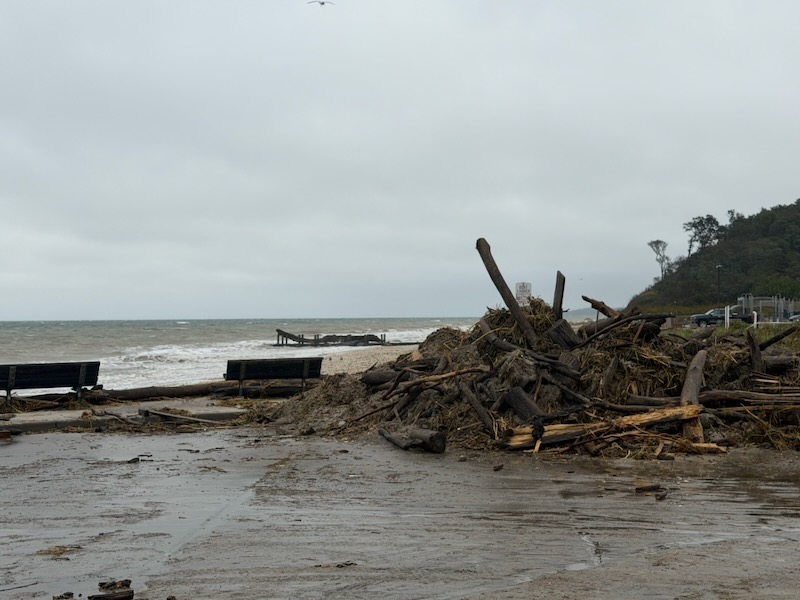
Riverhead Town officials, farmers and vineyard operators were assessing the effects of the weekend nor’easter Monday after heavy rain, strong winds and coastal flooding battered the area for more than two days.
Initial inspections found no significant structural damage to town facilities, other than torn canvas coverings on both of the highway department’s salt/sand storage facilities at its Osborn Avenue headquarters.
Local growers reported some crop damage but said the storm’s full agricultural impact may not be known for several days.
Police Chief Ed Frost, who also serves as the town’s emergency management officer, said Monday he inspected town beaches and facilities along with the town’s Engineering Department. They found that town beaches generally held up well.
“The beaches fared as well as they could,” Frost said.
There was a large amount of debris deposited on beaches by the storm, he said. Buildings and Grounds crews were working Monday to remove it from town beaches.
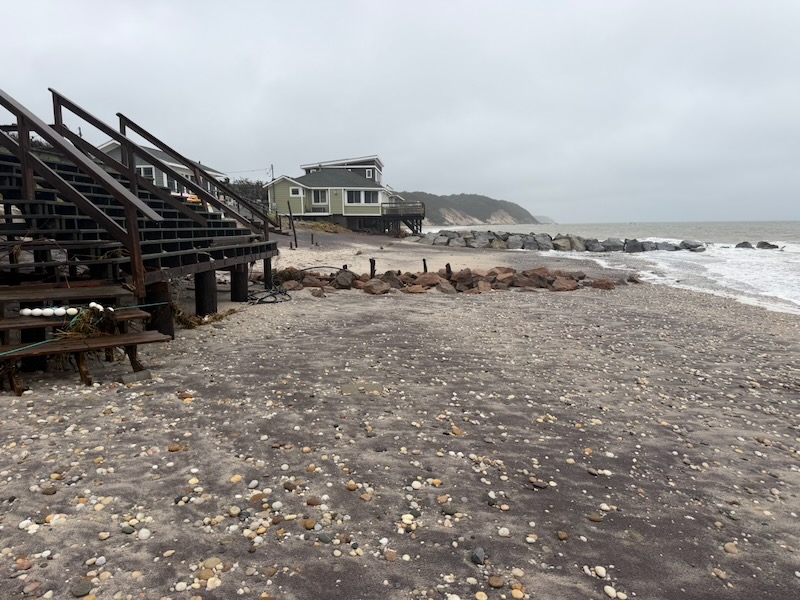
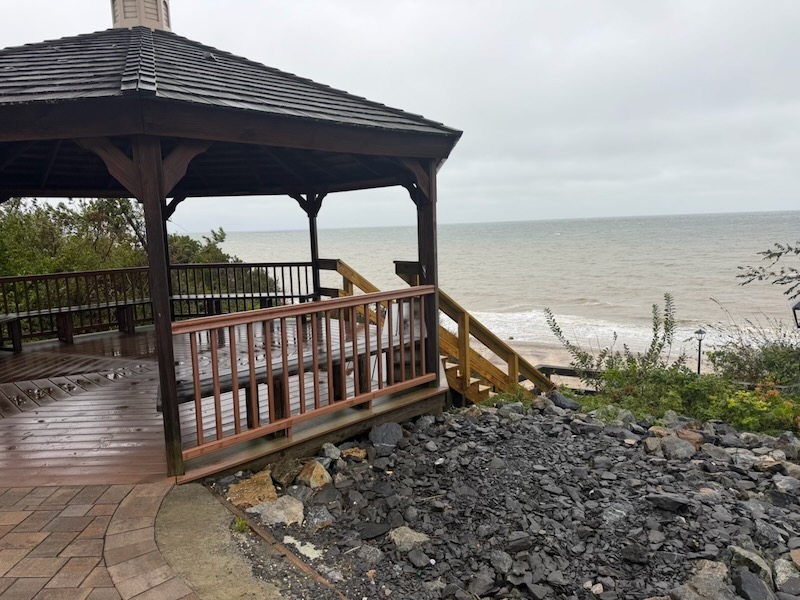
At Oakleigh Avenue, several steps at the bottom of the beach-access stairway were lost. Sand also shifted around the stairs at Reeves Beach and will have to be regraded, Frost said.
At Iron Pier Beach, where the shoreline is lower, flooding reached into the parking lot, but engineers found no structural damage.
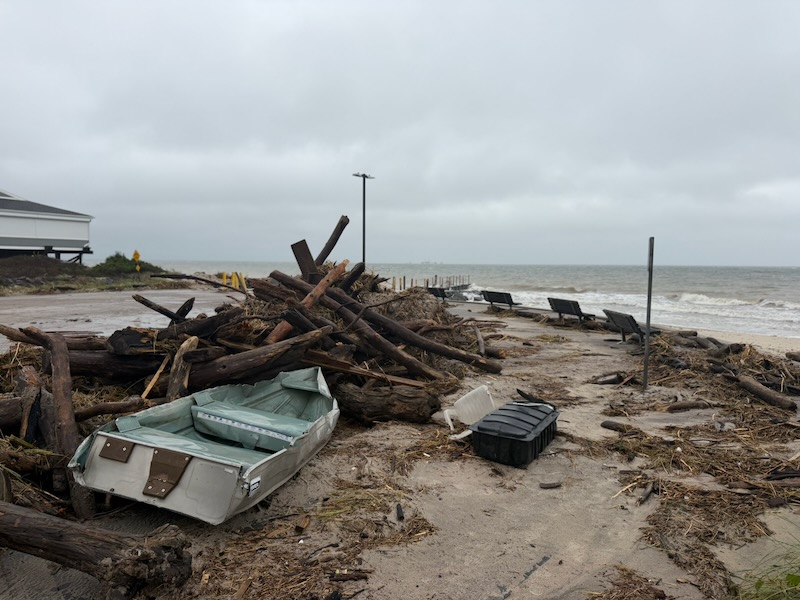
The storm also caused substantial erosion along portions of the Sound shoreline, exposing old jetties and other structures that had previously been buried beneath the sand. Frost said erosion appeared generally similar across the town beaches he inspected.
Along the Peconic Riverfront, water levels rose during the storm and later receded without causing apparent structural damage, Frost said.
“We’re not seeing any structural damage from it,” he said, citing the Engineering Department’s preliminary assessment.
Although coastal flooding was significant, Frost said conditions downtown did not approach those seen during Superstorm Sandy, when water reached much farther inland, even inundating large portions of Main Street.
Growers assess crop damage and economic losses
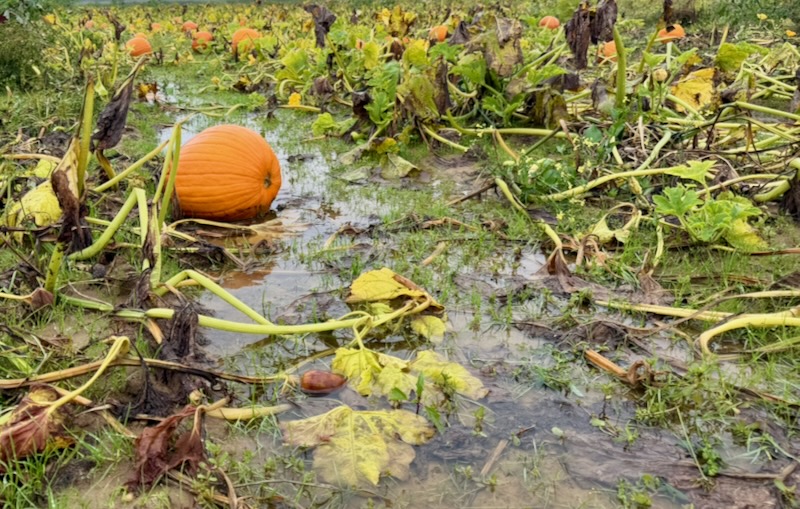
The prolonged rain and wind also hit farms and vineyards during a critical point in the harvest season.
Dave Fink of Fink’s Country Farm in Manorville said his farm received a little more than four inches of rain. His corn maze sustained some damage, as did younger fall crops including broccoli and cauliflower, but he said conditions were not as bad as he had feared.
“Honestly, all in all, we did okay,” Fink said. “I thought it was going to be a lot worse.”
Pumpkins remained in the fields Monday, but Fink said some effects of the storm will not become apparent until later in the week.
“That stuff you really don’t know the damage until days after the rain,” he said.
Light to moderate rainfall conditions continued across the region throughout the day Monday.
Fink’s family farm grows about 60 acres of vegetables, including tomatoes, peppers, eggplant, watermelon, broccoli, cauliflower, pumpkins, squash, beans, cucumbers and zucchini. He also lost a few trees in a newly established six-acre pasture, but reported no major damage there.
The storm comes during what Fink described as an already difficult year for farmers, with rising costs for fuel and other goods.
“The cost of goods is up, fuel’s up, and then to get hit with this — it’s definitely rough,” he said. “It’s gonna sting, that’s for sure.”
Bill Zalakar, administrative director of the Long Island Farm Bureau, said he had heard reports of some minor storm damage but nothing major as of Monday.
“There was some minor damage,” Zalakar said. “I haven’t heard of anything real major.”
But he said the larger impact for many farms is likely economic rather than physical.
“The main thing overall is just the economic loss that the agriculture industry got hit with,” Zalakar said. “No sales at all during this weekend, and it’s a big weekend.”
For farms that depend heavily on fall visitors, losing even one weekend can be significant, he said.
“In the fall, everyone only has maybe eight weekends, and every one is so vital,” Zalakar said. “That just really hurts. Each one is maxed out pretty much if it’s good weather.”
Zalakar said the storm also came during a season that has already been difficult for farmers, with frequent rain and rising fuel and fertilizer costs.

For Long Island vineyards, the nor’easter arrived as the grape harvest was beginning.
Kareem Massoud, whose family owns Paumanok Vineyards in Aquebogue and Palmer Vineyards in Riverhead, said vineyard crews accelerated harvesting before the storm, successfully bringing in all of their white grape varieties before the rain arrived.
“The nor’easter is not a desirable event when you’re trying to ripen your crop,” Massoud said.
White grapes are generally more vulnerable to wet weather because their skins are thinner than those of red varieties, Massoud said. Red grapes also ripen later and were therefore in a better position to withstand the storm.
Massoud said 2026 would be remembered for what he called a “super El Niño,” which has brought excessive rainfall, but he remains optimistic about the vintage.
“There’s still plenty of potential quality left in the vintage,” he said. “I am confident we’re going to make high-quality wines this year.”
He said he does not expect 2026 to be what winemakers call a “grand vintage,” but believes it can still produce good wines.
One factor working in local vineyards’ favor is the North Fork’s sandy, well-draining soil, Massoud said. Excess rain moves quickly through the soil rather than remaining around grapevine roots.
“Grapevines don’t like to have wet feet,” he said. “What we have on the North Fork are exceptionally well-draining soils.”
“It’s not all bad news,” Massoud said. “It’s not desirable, but it’s also something we can work through.”
Town continues damage assessment

Frost said the town remains in the early stages of its damage assessment, with individual departments checking municipal facilities.
Depending on the extent of damage found locally and elsewhere in Suffolk County, the county may establish a reporting system for residents and businesses to submit information about storm losses.
Such reports help emergency management officials calculate the total damage and determine whether losses meet thresholds for possible state and federal disaster assistance.
Frost cautioned that, if the county decides to establish a reporting system for this storm event, filing a report would not guarantee reimbursement.
The process begins with local and county assessments. Suffolk County must reach certain damage thresholds before information can be forwarded to New York State, and statewide losses must in turn meet federal requirements before Federal Emergency Management Agency assistance may become available.
Residents who sustained property damage should contact their insurance carriers and photograph the damage before making repairs, Frost said.
“Document everything with pictures,” he said.
Residents should also watch for announcements from the town in case a system is opened for reporting private property damage.
Frost stressed that the reports would be part of the damage-assessment process and would not mean residents would ultimately receive government reimbursement.
Police handled 91 storm-related calls
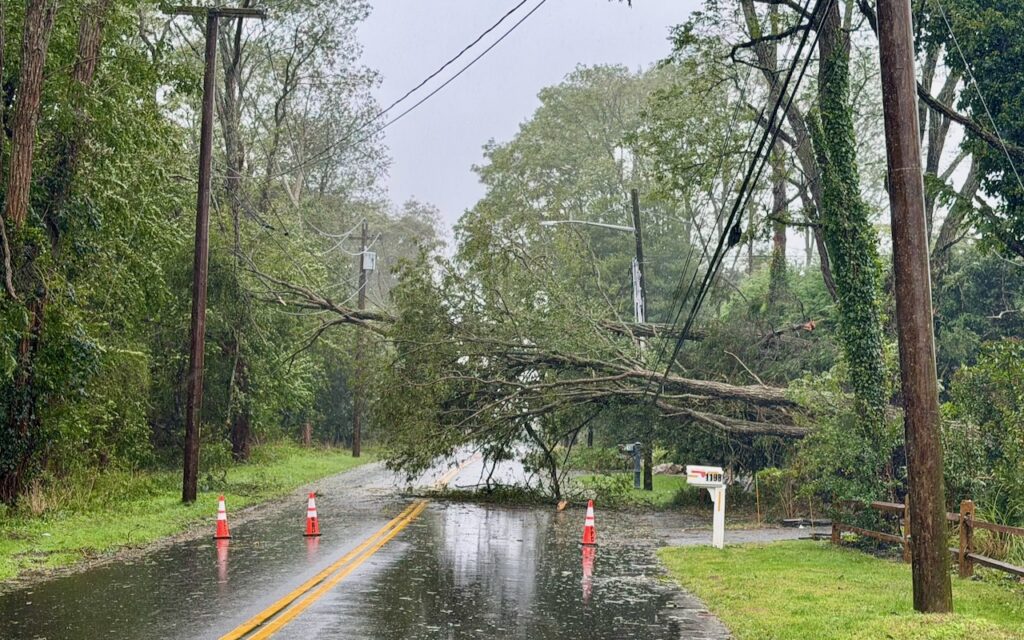
Riverhead Town Police handled 273 calls for service during a 64-hour period beginning at 3:30 p.m. Friday and ending at 7:30 a.m. Monday, Frost said.
Of those, 91 were storm-related.
Calls included hazardous conditions, trees and branches in roadways, downed wires, malfunctioning traffic signals, alarms and vehicles that went off the roadway.
Thirty-eight incidents were serious enough to be entered into the emergency management system used to coordinate storm response among local agencies, utilities and other entities, Frost said.
The town operated its emergency operations center from police headquarters during the storm and used a Suffolk County web-based emergency management system that allows participating agencies — including emergency services, PSEG Long Island and the MTA — to see incidents and requests for assistance in real time.
The system allows the town to coordinate remotely with Suffolk County and other agencies rather than sending personnel to the county emergency operations center in Yaphank, as was required in the past.
Frost praised the town’s police officers, public safety dispatchers, local fire departments, the Riverhead Volunteer Ambulance Corps and the Town Highway Department for their work throughout the storm.
Highway crews worked in dangerous conditions to remove trees and keep roads passable, he said.
“They did an excellent job keeping everything open,” Frost said.
He also thanked first responders for their “dedication to keeping the public safe” while making sure their own personnel returned home safely.
The town will continue inspecting its facilities and assessing damage as cleanup and recovery work continues.
The survival of local journalism depends on your support.
We are a small family-owned operation. You rely on us to stay informed, and we depend on you to make our work possible. Just a few dollars can help us continue to bring this important service to our community.
Support RiverheadLOCAL today.
